
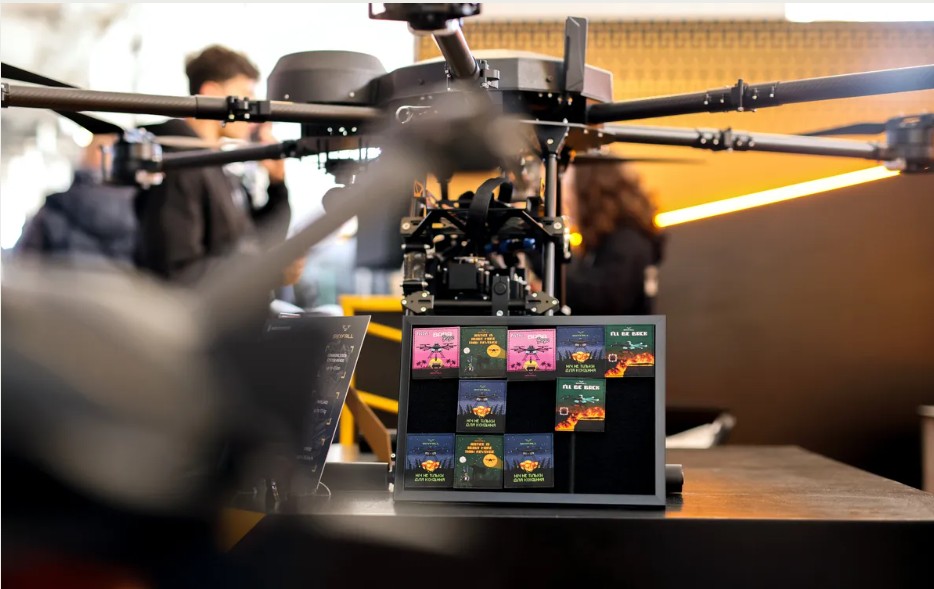
Amid the ongoing conflict with Russia, Ukraine has become a hotbed of rapid, cost-effective weapons innovation, according to this article by IEEE Spectrum. Rather than relying solely on traditional, large-scale systems, Ukrainian engineers and private-sector startups have adopted a “fast-moving, high-volume” approach to armaments. Cheap drones, repurposed hobby craft vehicles, and modular upgrade kits now line the front line, delivering high lethality per dollar.
One key shift: the move from high-cost missiles to swarms of inexpensive drones. These drones, often built from commercially available components and augmented with AI or autonomous flight modes, can strike targets by the thousands. In one cited operation, as many as 41 Russian aircraft were destroyed or damaged using such tactics. Ukraine’s defense-tech ecosystem now emphasizes iteration over perfection, turning weapon platforms into consumables rather than prized assets. With jamming and spoofing commonplace, autonomous navigation and AI-based targeting have become critical.
Geopolitically, the war is providing a real-world arms lab for innovations that once were only conceptual: sea drones, rats-to-swarm tactics, and civilian hardware repurposed for combat. The dual-use angle is strong: many of the technologies being deployed have civilian roots and can scale fast. Ukrainian-designed systems are already drawing international attention for their adaptability and low cost.
Systems thinking must now account for rapid prototyping, modular upgrades, autonomous behaviors, and “cheap redundancy” rather than single, high-capacity units. Weapon-system lifecycles are shorter; failure is built in. Ukraine’s innovations prove that battlefield pressure accelerates development cycles, and that value may shift from topology and mass to speed, iteration, and distributed effect.
