

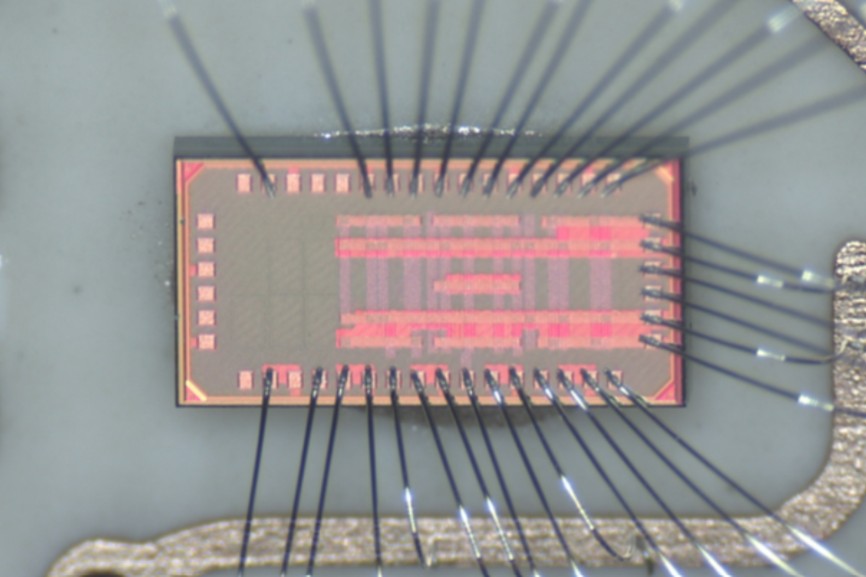
Pushing the boundaries of particle physics often depends on solving equally extreme engineering challenges. The article from Lawrence Berkeley National Laboratory focuses on the specialized electronics being developed for the LEGEND-1000 experiment, a next-generation detector designed to search for neutrinoless double-beta decay.
At the heart of the challenge is sensitivity. The detector must capture extraordinarily faint signals while operating in a cryogenic environment, where temperatures drop to extremely low levels. To meet this requirement, engineers are designing custom application-specific integrated circuits, or ASICs, that can function reliably under these harsh conditions. These chips must amplify tiny electrical signals without introducing noise that could obscure the data.
The electronics are positioned very close to the detector itself, a choice that improves signal quality but introduces new constraints. Materials used in the circuitry must be exceptionally pure to avoid generating background radiation that could interfere with measurements. This requirement forces engineers to rethink conventional electronic design, balancing performance, size, and radiopurity.
Miniaturization is another key factor. By integrating multiple functions into a single chip, the team reduces both the physical footprint and the complexity of the system. Smaller components generate less heat and consume less power, both critical advantages in a cryogenic environment where thermal stability is essential.
The work also reflects a broader trend in experimental physics: the increasing importance of electronics as a limiting factor in discovery. As detectors become more sensitive, the supporting hardware must evolve to match. In the case of LEGEND-1000, success depends not only on the physics of germanium detectors but also on the ability to extract clean signals from an environment filled with potential interference.
Ultimately, these innovations enable the experiment to pursue one of the most fundamental questions in science: whether neutrinos are their own antiparticles. Achieving this goal requires not just advanced theory but engineering precision at the smallest scales, where even the slightest noise can determine whether a rare event is seen or missed.
