

Researchers at Cornell University have developed a method to 3D-print concrete structures underwater, a breakthrough that could change how maritime construction and repair are done. This work blends additive manufacturing with ocean engineering to deposit concrete on-site beneath the surface, reducing the need for traditional, disruptive construction techniques, tells Cornell Chronicle.
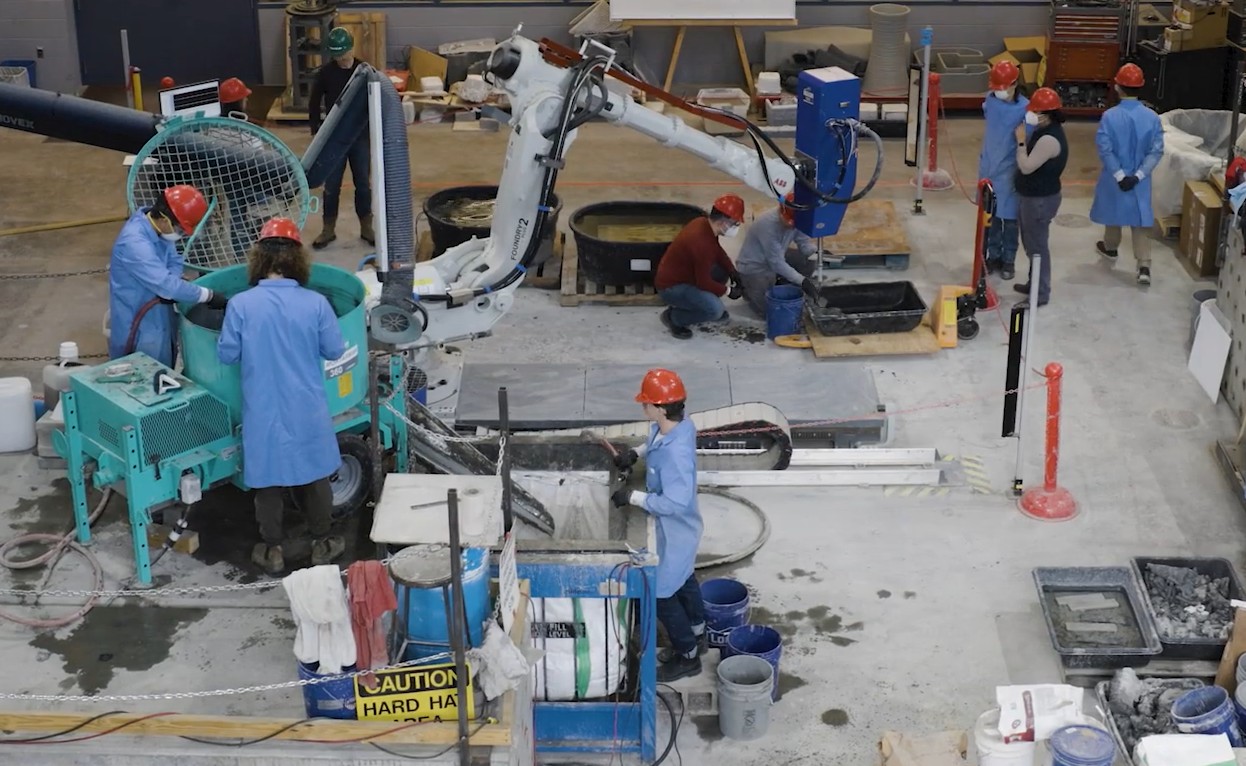
The initiative is led by civil and environmental engineering faculty member Sriramya Nair, whose team responded to a challenge from the Department of Defense’s Defense Advanced Research Projects Agency. DARPA’s call focused on creating concrete that could be 3D-printed several meters underwater within a tight timeframe. Cornell’s group adapted a large industrial robot they had been using for above-ground concrete printing and developed a mixture that withstands constant water exposure.
One of the biggest technical hurdles is “washout,” where water prevents cement particles from binding, weakening the material. Typical anti-washout additives make concrete mixtures harder to pump. The researchers had to balance pumpability, shape retention, and strong bonding between layers while avoiding chemical agents that could complicate the process.
DARPA added another requirement: the concrete needed to be composed mostly of seafloor sediment, with minimal cement. Using local sediment reduces the logistics of transporting large quantities of cement by ship to offshore sites. In tests, the Cornell team showed they were nearing this target, marking a major milestone.
The project draws on expertise from across disciplines. The team is divided into subgroups focused on material design and fabrication. Over months of testing in a water tank, they have monitored how underwater printed layers behave in terms of strength, shape, and texture. An upcoming phase of the DARPA competition will require teams to print an arch underwater.
If successful, underwater 3D printing could streamline the construction of maritime infrastructure, from piers and offshore platforms to coastal defenses, with less environmental disruption and lower logistical costs.
