

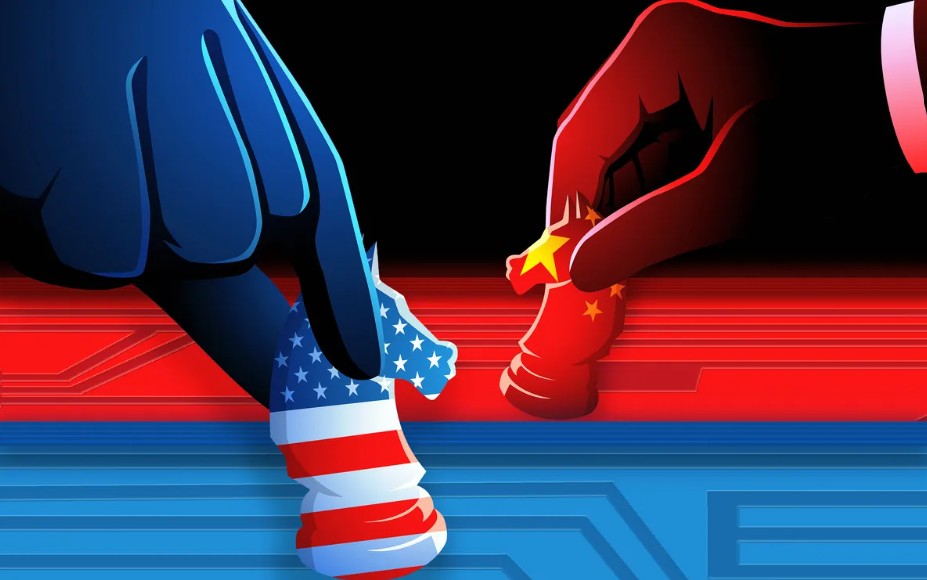
The United States and China are both major players in artificial intelligence development, but they are not following identical trajectories. Rather than competing toward a single finish line, each country’s AI strategy reflects its distinct economic structure and policy goals, says IEEE Spectrum. In the United States, much attention focuses on advancing large-scale AI systems and foundational models that push computing performance and general-purpose capabilities. American research and investment remain strong in building and scaling complex AI architectures that power services such as large language models, cloud platforms, and data-driven applications. By many metrics, the United States continues to lead in these areas.
China, on the other hand, tends to apply AI as a tool for broad industrial productivity and real-world impact rather than solely chasing frontier models. Chinese firms and government initiatives push AI deeply into manufacturing, healthcare, energy, and agriculture to improve efficiency and address socioeconomic challenges. As a result, AI systems tied to specific tasks, such as computer vision in factories and clinical decision support, are widespread across China’s digital ecosystem. This practical emphasis contrasts with the U.S. approach, where much effort goes into generalized systems that excel at handling unstructured data and generating new content.
The framing of the U.S.–China AI dynamic as a “race” can be misleading, since it suggests symmetric goals and a single competition endpoint. Experts caution that defining leadership solely by benchmarks such as model size or raw compute may overlook deeper differences in national priorities and risk encouraging a zero-sum mindset that undercuts collaboration on safety and governance.
Competition does exist in areas such as AI chip development and supply chains, where China is striving for self-reliance amid export controls. Both countries see strategic value in AI for economic growth, security, and global influence. Yet the paths they follow illustrate differing conceptions of what AI leadership means—one focused on scaling foundational models and services, the other on integrating AI deeply into existing economic sectors.
