

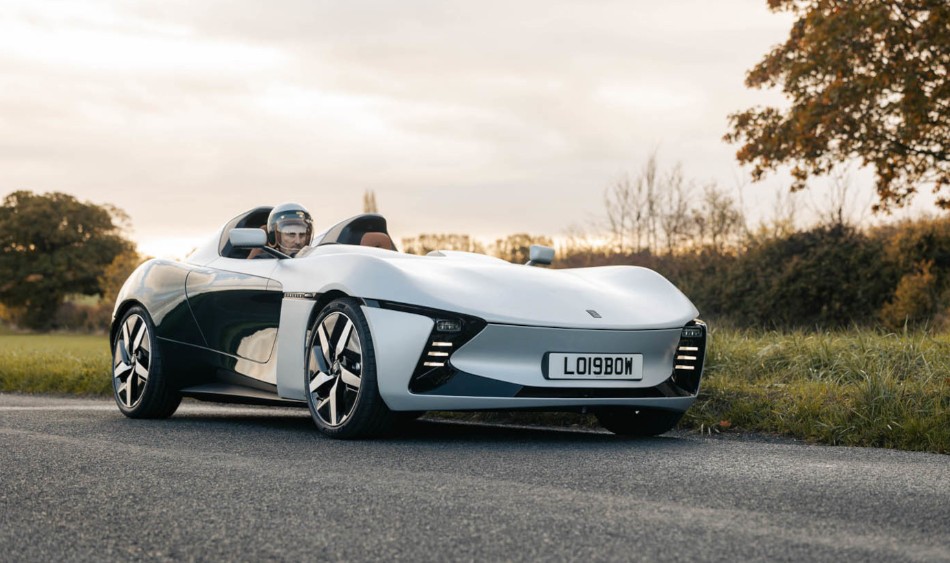
Avant Design, a small British consultancy, has embraced virtual reality as a central tool in its automotive design workflow. The studio demonstrated this approach during the development of the Longbow, a lightweight electric sports car concept unveiled at CES 2026. By combining immersive modeling, CAD tools, and advanced visualization systems, the company has created a design pipeline that replaces several traditional stages of automotive development, tells Develop 3D.
Historically, automotive designers relied heavily on physical clay models to evaluate vehicle forms at full scale. Avant Design instead moves quickly from sketches to immersive digital models. Designers develop concepts in VR using tools such as Gravity Sketch, which allow them to sculpt and manipulate surfaces in a virtual environment. Standing inside a VR suite large enough to display a full-scale vehicle, team members can walk around the model, reshape surfaces, and assess proportions as if working with a real clay prototype.
Once the design concept matures, the model transitions into traditional CAD systems such as Autodesk Alias. The team then imports the data into visualization software such as Autodesk VRED, where materials, lighting, and scene environments are applied. In this stage, designers and clients review the vehicle in immersive VR environments to critique details and evaluate alternatives.
Virtual reality also plays a role in presentation and decision-making. Avant builds configurable scenes where stakeholders can examine multiple design variations simultaneously, adjust colors and lighting conditions, and compare different configurations. According to the team, displaying numerous prototypes in one virtual space can provide the equivalent feedback of several physical prototypes at a fraction of the cost and time.
High-performance hardware supports the workflow, including custom workstations equipped with powerful GPUs and Varjo XR-series headsets that provide high-fidelity visualization. The immersive approach allows the studio’s small team to compete with larger automotive companies by accelerating iteration and improving collaboration between designers, engineers, and clients.
Although VR cannot fully replace physical prototypes, Avant estimates that immersive modeling provides roughly 80% of the feedback traditionally gained from clay models. Combined with emerging tools such as AI-assisted visualization and rapid prototyping, the workflow illustrates how digital environments are reshaping the future of automotive design.
