

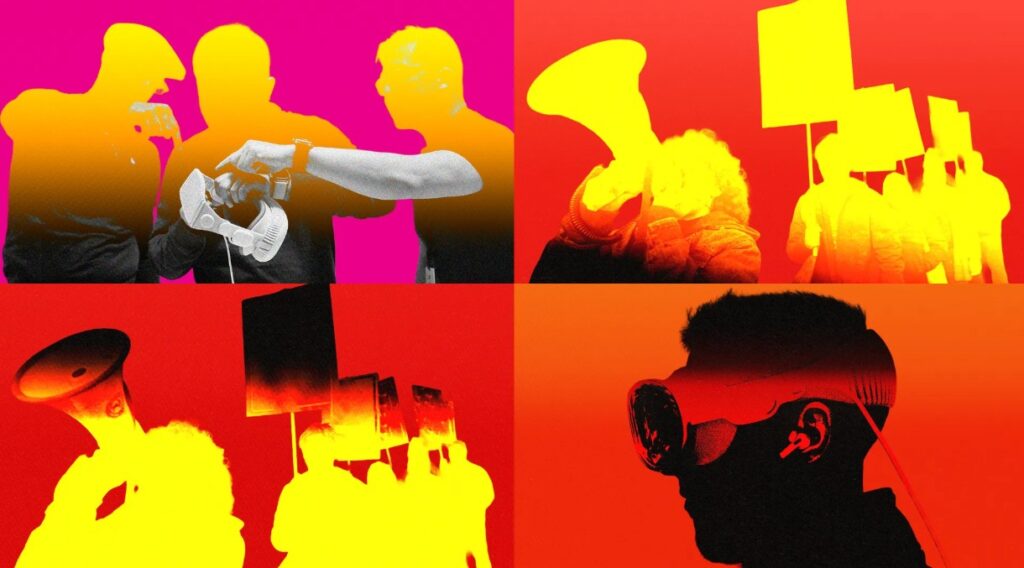
The launch of Apple’s Vision Pro headset was intended to showcase the company’s next leap in computing, but instead exposed underlying weaknesses in its retail operations. The Wired excerpt from Noam Scheiber’s book Mutiny portrays a rollout marked by ambition, secrecy, and ultimately, execution challenges that strained both employees and customers.
Apple designed an elaborate introduction for the headset, requiring retail workers to undergo tightly controlled training sessions at its Cupertino campus. Employees were sworn to secrecy and immersed in carefully choreographed demonstrations meant to deliver a premium, almost theatrical customer experience. The process relied heavily on scripted interactions and precise handling of the device, reflecting its technical complexity.
In practice, however, the rollout faltered. Many stores were understaffed, and employees received far less training than planned. Some workers reported only brief exposure to the device before being expected to guide customers through detailed demos. The demanding script, combined with crowded and noisy store environments, led to inconsistent presentations and mounting frustration among staff.
These issues were compounded by broader changes in Apple’s retail culture. Over time, the company had shifted toward leaner staffing and greater emphasis on efficiency, moving away from the earlier model that prioritized deep training and customer engagement. According to Scheiber, this evolution left employees less prepared to handle a complex product such as Vision Pro, undermining what had once been a key strength of Apple’s retail strategy.
The result was a disappointing commercial performance. Despite initial curiosity, customer interest waned quickly, and sales remained limited. For employees, the experience intensified existing dissatisfaction, contributing to growing labor tensions and union activity within Apple stores.
The episode illustrates a broader lesson about innovation. Even groundbreaking technology depends on human systems to succeed. When those systems weaken, the gap between vision and reality becomes difficult to bridge.
