

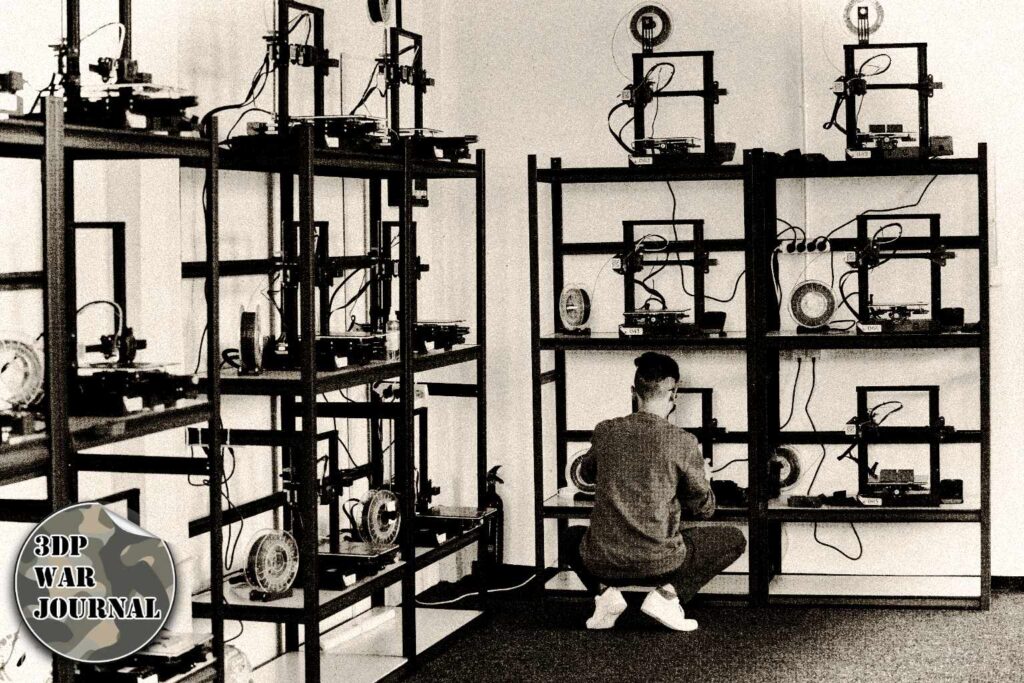
The 3D Printing Journal article reflects on a practical dilemma faced by a former 3D printing entrepreneur: what to do with more than 50 desktop 3D printers that have become technologically outdated. The author, Pawel Slusarczyk, recounts how a fleet of Creality Ender 3 MAX and Ender 3 V2 machines once formed the backbone of a small manufacturing operation. These printers were originally used to produce innovative advertising stands made from a biodegradable material derived from wheat bran. At the time, outsourcing 3D printing services to specialized providers appeared to be a viable business model.
Over time, however, the economics of additive manufacturing changed dramatically. As affordable consumer printers improved and became easier to operate, many companies began purchasing their own machines rather than outsourcing production. This shift undermined service-based 3D printing businesses, including the author’s venture. Faster and more capable machines, particularly modern CoreXY-based printers, now operate at speeds far exceeding earlier desktop systems that printed at roughly 35 mm/s.
At the same time, improvements in workflow tools have simplified the printing process. The increasing adoption of the 3MF file format, which stores complete print instructions such as part orientation, supports, and material information, has reduced the need for specialized operators. Many of the skills once required to prepare prints have been embedded directly into software tools. As a result, the traditional role of a dedicated 3D printer operator has diminished.
The article highlights a broader lesson about the rapid pace of technological change in additive manufacturing. Equipment that was state-of-the-art only a few years ago can quickly lose relevance as new machines deliver higher speeds, improved reliability, and simplified workflows. For entrepreneurs who invested heavily in earlier technologies, the challenge becomes deciding whether to repurpose, sell, or simply retire outdated hardware.
Ultimately, the article illustrates the shifting economics of desktop 3D printing and the constant pressure to adapt as the industry evolves.
