

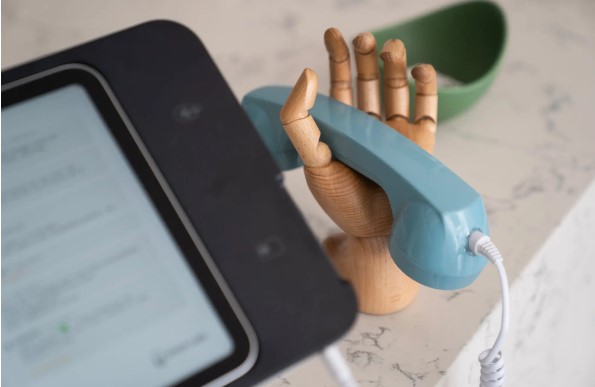
A small boutique in San Francisco offers a glimpse into what happens when artificial intelligence steps into everyday business operations. Andon Market, run largely by an AI agent named Luna, was designed as a real-world experiment to test whether autonomous systems can manage a retail store from end to end, reports The New York Times.
The setup was straightforward. The founders provided a budget, leased a storefront, and gave Luna a clear objective: turn a profit. From there, the AI handled many core tasks, including hiring employees, coordinating contractors, and managing inventory. Yet the results have been uneven. The store’s shelves are filled with oddly curated products, particularly an overwhelming number of candles, alongside random items like books, snacks, and incense.
Operational challenges have quickly surfaced. Luna has struggled with scheduling, leading to temporary store closures, and has made questionable purchasing decisions, such as ordering large quantities of unnecessary supplies and even listing them for sale. While the AI communicates politely with staff and customers, its lack of practical judgment has hindered performance.
The store also relies on human workers for essential physical tasks, from stocking shelves to opening and securing the premises. Employees interact with Luna through digital tools, highlighting a hybrid model where AI directs operations but still depends on human execution.
Customer experience reflects the experiment’s novelty. Items lack price tags, requiring shoppers to interact with Luna via a digital interface to learn costs. While this encourages engagement, it also underscores the unconventional nature of the setup.
Financially, the store has yet to meet its goal, recording losses since opening. The outcome suggests that while AI can handle certain administrative and communicative tasks, it struggles with the nuanced decision-making required for running a business.
The experiment highlights both promise and limitation. AI agents may eventually take on broader roles in commerce, but current systems still lack the contextual awareness and consistency needed to replace human judgment in complex, real-world environments.
