

Facial recognition technology has advanced rapidly, but its growing use is exposing serious flaws with real-world consequences. The IEEE Spectrum article examines how misapplied systems are leading to wrongful identifications, biased outcomes, and escalating risks as deployment expands.
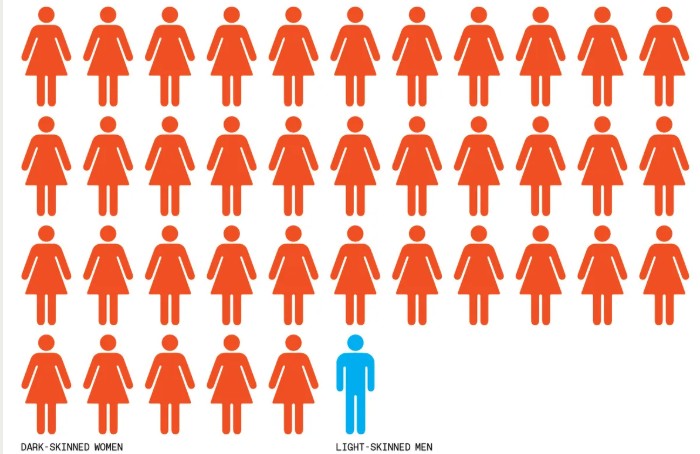
One of the most persistent issues is uneven accuracy across demographic groups. A landmark 2018 study found error rates up to 40 times higher for dark-skinned women compared to light-skinned men. While technical improvements have been made, disparities remain, especially when systems are used outside controlled conditions.
The problem intensifies at scale. Even a system with 99.9% accuracy can produce significant errors when applied to large populations. For instance, matching faces across a database of thousands may yield only a handful of mistakes, but scaling to millions of individuals increases the number of false positives dramatically. In large national databases, this can translate into hundreds of thousands or even millions of incorrect matches.
Real-world examples highlight the stakes. Cases include wrongful arrests based on mistaken identity, legal action against companies for biased systems, and misidentifications by law enforcement agencies. In one instance, U.S. immigration authorities using a facial recognition app generated large volumes of matches from a database of over a billion images, inevitably increasing the likelihood of errors.
Several factors contribute to these failures. Training data may not represent diverse populations, leading to biased outcomes. Image quality, lighting, and facial variations also affect performance. Additionally, pressure to deliver quick results can push operators to rely too heavily on imperfect matches.
Experts argue that the risks are not purely technical but systemic. As facial recognition is applied to higher-stakes scenarios such as policing and border control, even small error rates can produce significant harm. Responsible use requires multiple layers of verification and a clear understanding of limitations.
The article frames the issue as a mismatch between capability and application. Facial recognition can be useful in controlled settings, but its widespread deployment without adequate safeguards is creating consequences that are increasingly difficult to ignore.
