

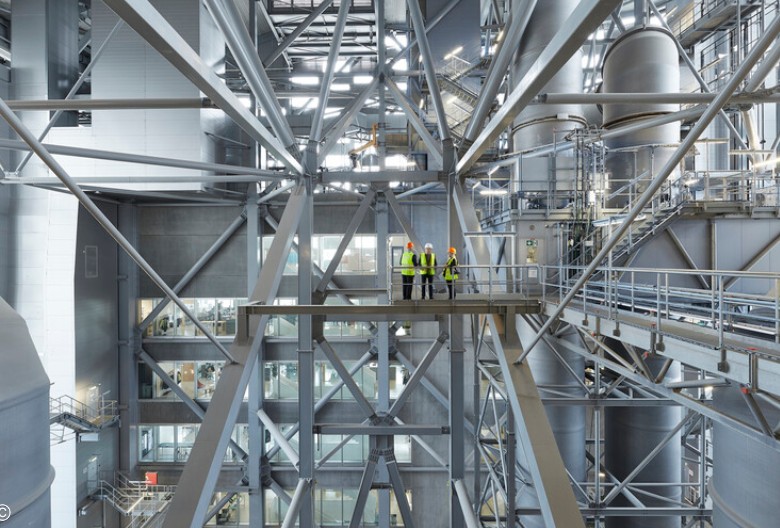
For much of modern history, large-scale infrastructure operated out of sight, positioned at the edges of cities and designed primarily for efficiency rather than public engagement. Ports, power plants, and energy systems played a critical role in urban development, yet their architectural presence remained largely secondary. A recent article in ArchDaily argues that this condition is now shifting as infrastructure becomes increasingly visible and integrated into the urban fabric.
One key example is Copenhagen’s CopenHill, a waste-to-energy plant that doubles as a public recreational space. Rather than concealing industrial processes, the project exposes them, combining energy production with amenities such as a ski slope and climbing wall. This approach transforms infrastructure from a hidden utility into an active civic landmark, making energy systems legible and accessible to the public.
The article also highlights the Shenzhen Energy Mansion, which represents a different dimension of infrastructure. Instead of housing physical production, the building accommodates the administrative and strategic functions that coordinate energy networks. Its design responds to environmental conditions while asserting a strong presence within the city skyline, emphasizing that infrastructure includes not only physical systems but also the institutions that manage them.
These examples reflect a broader transformation in architectural thinking. As global systems of energy, trade, and communication grow more complex, the buildings that support them are no longer treated as neutral containers. Instead, they are designed with spatial, symbolic, and civic intent, reshaping their relationship with urban life.
The shift signals a redefinition of infrastructure itself. It is no longer hidden in the background but is increasingly expressed through architecture, influencing how cities are experienced and understood. By making systems visible, architecture bridges the gap between technical operations and public awareness, turning essential urban functions into shared, perceptible elements of the built environment.
