

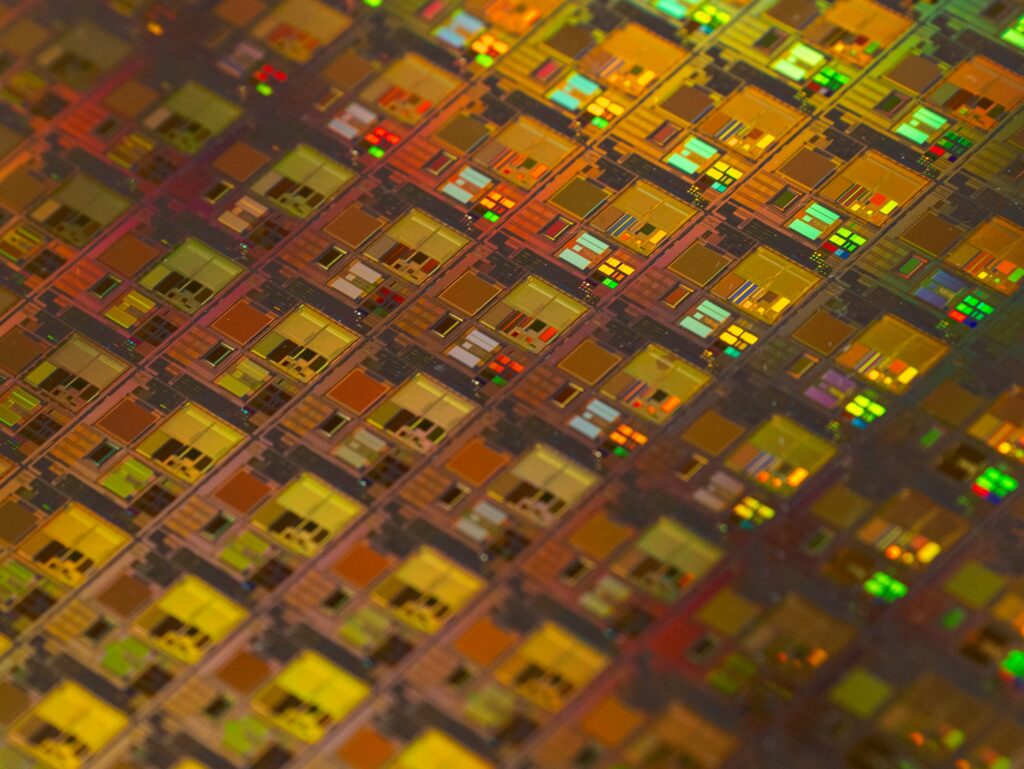
The semiconductor industry is confronting a widening gap between how materials behave in controlled environments and how they perform in real-world manufacturing. The Semiconductor Engineering article explains that for decades, engineers relied on a predictable chain: materials were tested in the lab, translated into specifications, and then validated in production. That model worked when chip designs were simpler, and material interactions were limited. Today, that assumption is breaking down.
Modern chips increasingly rely on heterogeneous integration, in which multiple materials and components are integrated into dense, multilayered packages. This shift dramatically increases the number of interactions across thermal, mechanical, and chemical domains. As a result, failures are less likely to originate from a single material defect and more likely to emerge from complex interactions between materials under specific process conditions.
A key issue is that no laboratory setup can fully replicate the exact conditions of a production environment. Each fabrication process introduces unique variables such as thermal budgets, adjacent materials, and sequencing constraints. These factors can significantly alter how a material behaves once integrated into a complete system. What appears stable in isolation may behave unpredictably when exposed to real manufacturing conditions.
Compounding the challenge is the limited availability of accurate materials data. The most precise data is often proprietary and closely guarded, forcing simulation models to rely on generalized or incomplete inputs. This weakens predictive accuracy and makes it harder to anticipate failures before production.
The article underscores a broader shift in semiconductor engineering. As systems grow more complex, reliability can no longer be ensured by testing materials in isolation. Instead, engineers must account for system-level interactions and process-specific realities. The misbehavior of materials is not due to flawed chemistry but to the increasingly intricate environments in which they are deployed.
