

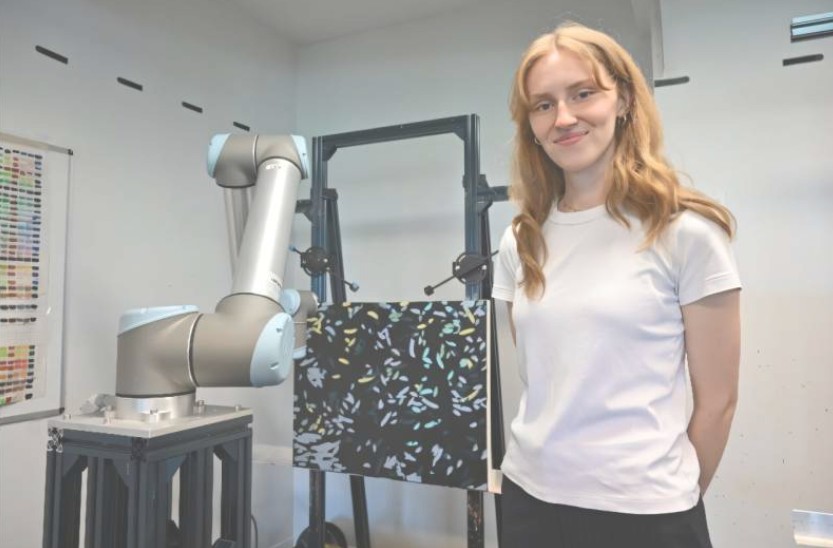
In a recent effort to support working artists, a Montreal-based startup called Acrylic Robotics is offering a service: a robotic arm that reproduces artworks stroke by stroke, in close collaboration with the artist. Audrey-Eve Goulet, one painter who lent a piece of her art to the system, said she was “surprised, in a good way,” when the robot held a brush, mixed color, and re-created her painting with precision, tells Tech Xplore.
The impetus behind the company came from its founder, Chloe Ryan, who found herself frustrated with how little artists often earn per hour after all the time and effort invested in each piece. At 14, she began selling her own paintings, and eventually studied robotics at McGill. The disappointment over her income led her to explore automation, not to replace artists, she claims, but to amplify their output and income. Acrylic Robotics works only with artists who opt in, giving them control over how their work gets reproduced.
Goulet noted that the replica created by the robot “truly looks like one of [her] works,” with visible strokes and brush shapes similar to hers. But she also felt the difference: the replica lacks some of the history, emotion, and intention behind the original, things a machine can’t quite capture. Ryan and her team say they are aware of concerns about AI and robotics eroding the value of creative labor. That’s why they adhere to what they call the “three Cs”: consent, credit, and compensation. Artists who work with them get recognized, credited, and paid fairly.
Looking ahead, Acrylic Robotics plans to scale so that artists can upload digital images of their work and have replicas made on demand. Clients might request portraits in the style of particular artists. While technology can mimic style and surface features, it can’t yet conjure the deeper story or emotional labor behind a piece, but for many artists, it could mean more income without more hours.
