

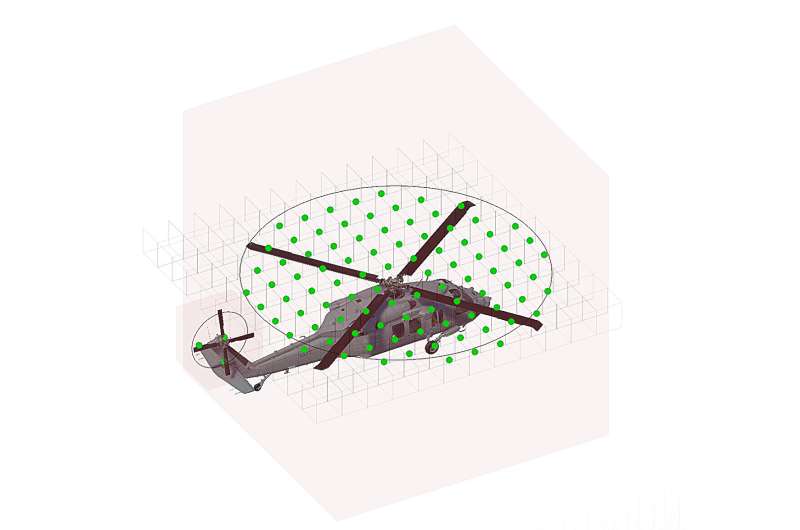
Researchers at the University of Glasgow have developed a new wildfire helicopter simulation system that could significantly improve pilot training for aerial firefighting missions. Reported by Tech Xplore, the project introduces a real-time simulation framework capable of modeling the highly unpredictable conditions pilots face while battling wildfires from the air.
Aerial firefighting is one of aviation’s most dangerous specialties. Helicopter crews often operate close to the ground in low visibility, navigating smoke, unstable winds, and rapidly changing fire behavior while dropping water or retardants on active blazes. Traditional simulators generally rely on simplified or “pre-baked” environmental conditions, limiting their ability to recreate the chaotic physics of real wildfire scenarios.
The Glasgow research team aimed to overcome those limitations through a prototype software system integrated into the Daedalus I flight simulation framework. Their model simulates the interactions between helicopter rotor downwash, atmospheric turbulence, flames, and water deployment in real time. According to the researchers, this is the first simulator capable of dynamically modeling the complete aerial firefighting environment instead of relying on static approximations.
One of the project’s major advances is its use of consumer-grade graphics hardware rather than supercomputers. The system was tested using an Nvidia RTX 4090 GPU, allowing the software to process complex fluid dynamics through parallel computing methods based on the Lattice Boltzmann Method. This makes advanced simulation more accessible and potentially affordable for pilot training centers.
Lead researcher Oyedoyin Dada noted that there are relatively few pilots with the specialized skills required for helicopter firefighting, and real-world training exercises are costly and hazardous. The simulator could help close that gap by enabling pilots to rehearse dangerous scenarios safely while improving their understanding of fire behavior and aircraft response.
The project also reflects growing urgency around wildfire preparedness. As climate-driven heat and drought intensify wildfire frequency worldwide, demand for trained aerial firefighting crews is expected to rise sharply. The researchers position their simulator as a tool that could expand training capacity while improving operational safety in increasingly extreme fire environments.
