

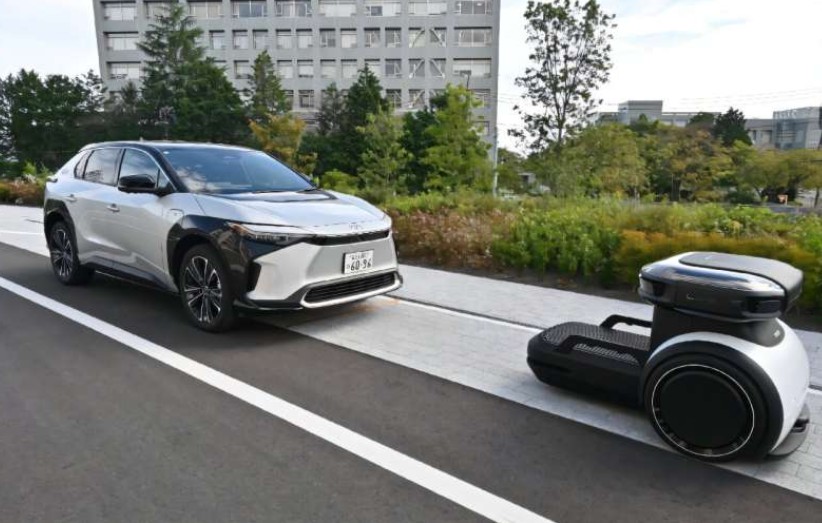
Toyota has officially opened a new high-tech village in Japan called Woven City, designed as a real-world testbed for autonomous vehicles, robotics, and urban infrastructure innovation, tells Tech Xplore. Built near Mount Fuji on the grounds of a former car plant, the city is being positioned as a “living laboratory” where mobility, buildings, energy, and AI integrate in daily life.
One of the first visible deployments is an autonomous robot that guides shared cars indoors, moving vehicles from parking to pick-up zones without human drivers. This exemplifies the ambition: not just isolated demos, but systems operating in realistic contexts. Over time, the plan is to test smart streets, adaptive lighting, integrated energy systems, robotic assistants, drone support, and more.
For now, a few hundred Toyota employees and their families will inhabit the early phase. The long-term vision aims for up to 2,000 residents. The intention is not only to trial technologies, but to generate data and evidence about safety, social integration, and system performance over time.
Toyota is collaborating with internal units and external firms, inviting partners to deploy their innovations in mobility, AI, housing, and smart infrastructure inside Woven City. In one instance, interior systems aimed at filtering pollen are already being tested by a tier-one participant.
This step shifts Toyota beyond vehicle manufacturing toward systems thinking in cities and mobility. As tech trials move from labs to lived environments, Woven City may become a proving ground for how smart cities evolve, and how automakers compete as infrastructure innovators.
