

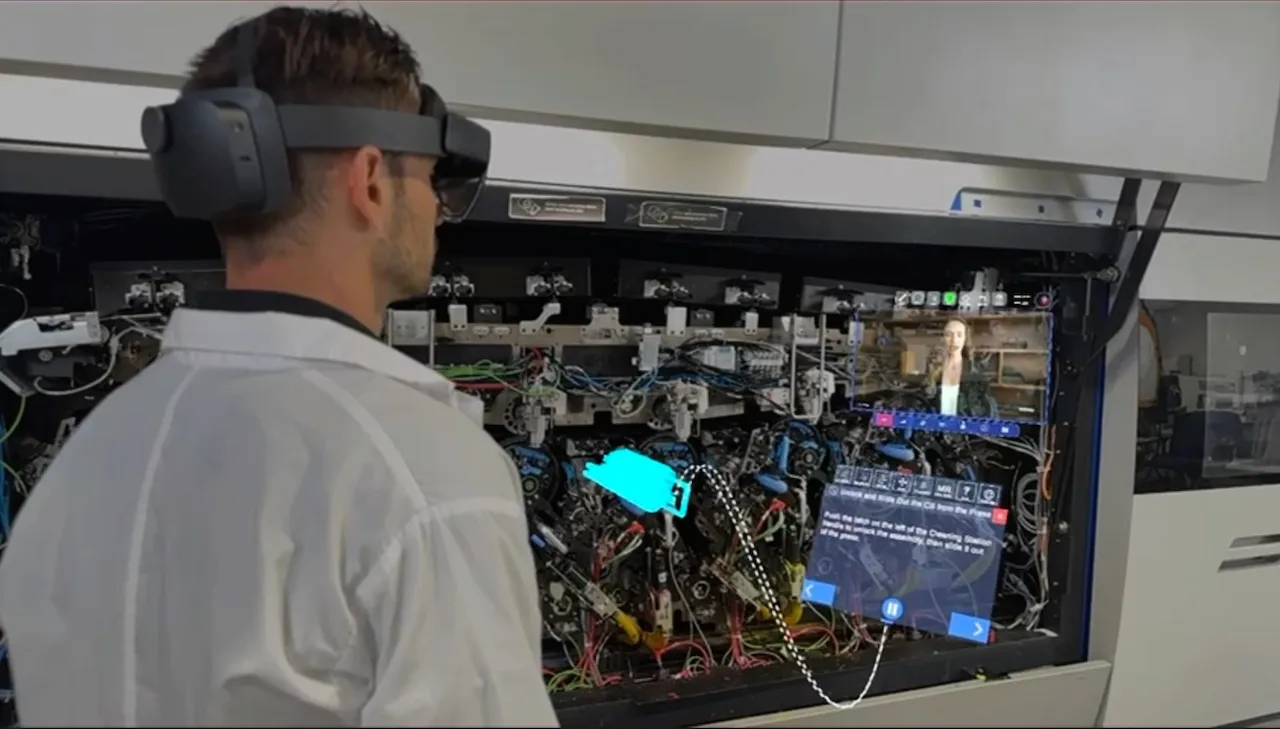
Manufacturers are facing a workforce crunch. Many seasoned employees are approaching retirement just as companies struggle to fill open positions. That combination threatens production continuity and risks losing decades of institutional knowledge. Extended reality (XR) training—virtual, augmented, and mixed reality environments—is emerging as a practical response to those pressures by simulating real factory conditions for new and existing workers, tells Design News.
Traditional training methods, such as classroom instruction or paper manuals, often fail to connect theory with hands-on practice, particularly for complex machinery. Younger workers raised on interactive media expect engaging learning formats. XR training addresses both worlds: it lets recruits practice operating and maintaining equipment in safe, digitally recreated environments before they touch physical systems. These immersive sessions build familiarity and reduce onboarding time while minimizing risk to people and machines.
Another advantage of XR systems is their ability to capture and preserve the deep expertise of retiring personnel. Veterans can record task sequences, problem-solving techniques, and safety routines within digital twin environments. These recordings become reusable modules, giving new hires access to practical insights that would otherwise be lost when mentors leave. That preservation of tacit knowledge supports long-term workforce development rather than ad hoc skill transfer.
Remote XR training also broadens access. Teams dispersed geographically can receive identical immersive instruction, boosting consistency and reducing travel costs. XR can adapt to individual learning curves using AI-driven scenarios that adjust complexity, helping trainees progress without the pace constraints of traditional classrooms.
Beyond onboarding, XR contributes to retention and engagement. Younger workers respond positively to interactive, tech-enabled training that mirrors familiar digital experiences. By making training more accessible, adaptable, and immersive, XR technologies help bridge the generational divide in manufacturing, preserve expertise that might otherwise vanish, and build a more capable, resilient workforce poised to meet tomorrow’s production challenges
