

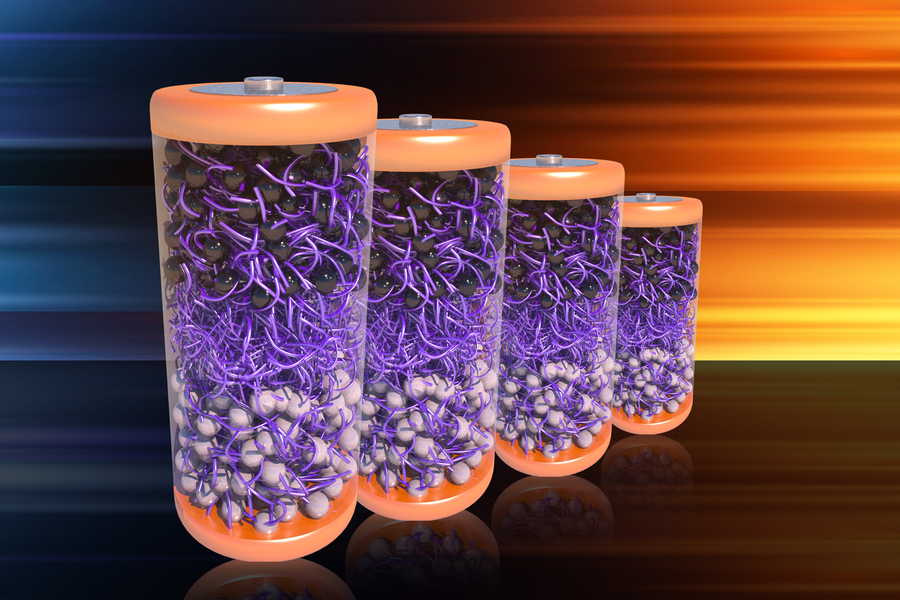
MIT researchers have developed a breakthrough electrolyte composed of aramid amphiphiles (AAs)—molecules that self-assemble in water into nanoribbons reminiscent of Kevlar in both strength and structure. These AAs form a mechanically stable, lithium-ion conducting network within a solid-state battery. The result is a functioning battery cell that can be dismantled almost instantly by submerging it in common organic solvents, triggering the electrolyte to revert to its molecular building blocks. This causes the battery to disassemble, making recycling dramatically simpler and safer, tells MIT News.
This “recycle-first” design flips the industry norm. Instead of focusing on high performance and addressing end-of-life challenges later, the team began with recyclability as the core design principle. By building recyclability into the material from the start, batteries can be dismantled without shredding, toxic chemicals, or high heat—a cleaner, less energy-intensive process.
Experimentally, the team created a solid-state cell using these nanoribbon electrolytes alongside standard lithium-ion materials, i.e., LiFePO₄ cathode and Li₄Ti₅O₁₂ anode. While ion transport showed room for improvement, polarization slowed the movement of lithium ions into electrodes; the proof of concept is clear. The electrolyte layer, when immersed, dissolves like cotton candy in water, separating from the electrodes and enabling straightforward component recovery.
The research paves the way for a more sustainable battery lifecycle. It offers a path to reuse valuable materials like lithium domestically, which could ease future supply constraints and reduce the need for new mining operations.
This innovation doesn’t just promise recyclable EV batteries; it rethinks how we design them. Start with recyclability, and the rest follows. New layers of this electrolyte could be integrated into existing designs or next-gen battery architectures, making recycling more efficient without compromising performance.
