

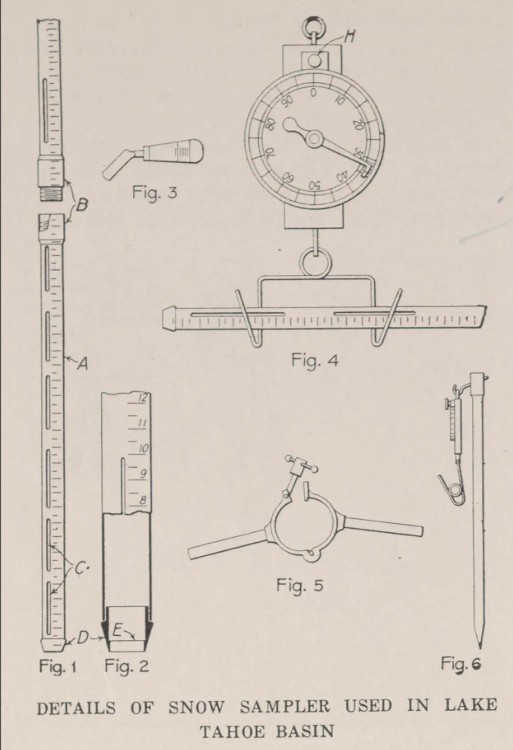
A simple metal tube invented more than a century ago continues to play a central role in predicting drought across the western United States. The Grist article highlights the enduring relevance of the Church Sampler, a low-tech device used to measure snowpack and estimate future water availability.
Developed in the early 1900s by James Church, the device works by extracting a core of snow and weighing it. This measurement reveals the snow water equivalent, that is, the amount of water that will be released when the snow melts. Because much of the western United States depends on mountain snow for its water supply, these measurements provide an early indicator of how much water will be available in rivers and reservoirs during the summer months.
Over time, this method has become foundational to water management. What began as a localized practice in the Sierra Nevada expanded into a coordinated system used across multiple states. Governments and scientists now rely on regular snow surveys to guide decisions about agriculture, urban water use, and drought preparedness.
The importance of this data has grown as climate change alters precipitation patterns. Warmer winters are reducing snowpack in some regions and replacing snowfall with rain. Unlike snow, which stores water for gradual release, rain runs off immediately, increasing the risk of floods in winter and water shortages in summer. In some monitoring locations, long-standing measurement sites no longer consistently accumulate snow, complicating long-term comparisons.
Despite advances in remote sensing and automated monitoring, the Church Sampler remains widely used due to its reliability and simplicity. Its continued use underscores a broader reality: even as technology evolves, foundational measurement techniques remain essential for understanding complex environmental systems.
The article ultimately frames snow science as both a legacy and a necessity. In a period of increasing climate uncertainty, accurate measurement of snowpack is more critical than ever for anticipating drought and managing limited water resources effectively.
