

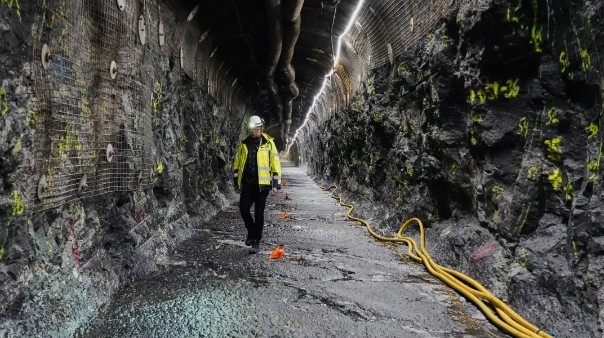
A workable plan for managing nuclear waste is beginning to emerge, but it looks far more complex than a single technical fix. The MIT Technology Review article explains that the core challenge is not scientific uncertainty as much as political gridlock and fragmented policy. For decades, countries such as the United States have produced spent nuclear fuel without establishing a permanent disposal solution, leaving waste stored in temporary facilities.
The most widely accepted long-term strategy remains deep geological storage. This involves sealing radioactive waste deep underground in stable rock formations, isolating it for thousands or even millions of years. Scientists broadly agree that this method is safe when properly engineered, and several countries are moving ahead with permanent repositories.
However, the article stresses that disposal alone is not enough. Recycling nuclear fuel, often promoted as a solution, has significant drawbacks. While it can recover usable materials, it is expensive, technically complex, and raises concerns about nuclear proliferation. Even with recycling, a portion of highly radioactive waste still requires permanent storage.
New reactor designs add another layer of complication. Advanced systems may produce different types of waste, sometimes in larger volumes or with unfamiliar chemical properties. That means future waste strategies must adapt to technologies that do not fit the assumptions of older disposal models.
The article argues that the missing piece is a coordinated national or global plan. This includes selecting repository sites through public consent, creating interim storage systems, and aligning policies with emerging reactor technologies. Without political commitment, even the best technical solutions remain stalled.
In the end, nuclear waste is less a technical mystery than a governance problem. The path forward requires combining proven storage methods with realistic expectations about recycling and a willingness to make long-delayed decisions.
