

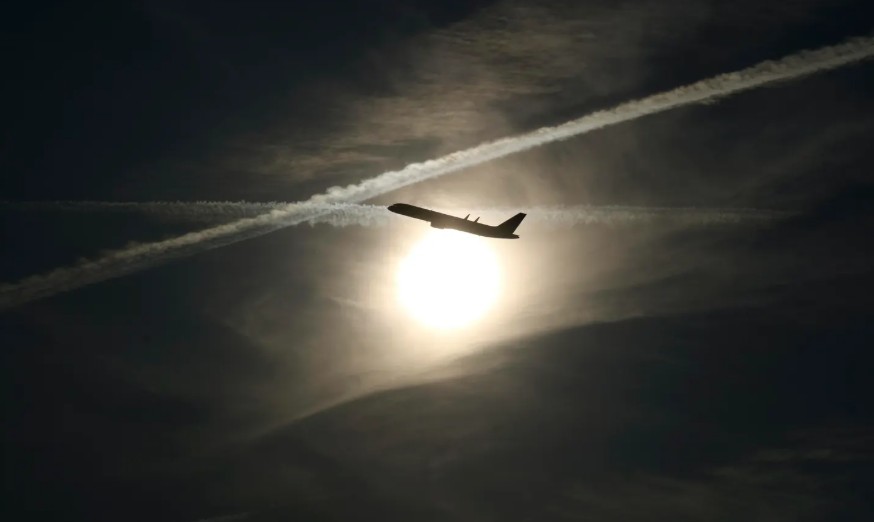
A common misconception suggests that airplanes feel warmer at cruising altitude because they are closer to the sun. The Forbes article firmly debunks this idea, explaining that temperature in the atmosphere is governed by physics, not proximity to the sun.
Commercial aircraft typically fly in the upper troposphere, around 30,000 to 40,000 feet. At these altitudes, temperatures are significantly colder than at the Earth’s surface, often dropping to around −50°C. This occurs because the atmosphere is heated primarily from the ground up. The Earth’s surface absorbs solar radiation and then warms the air above it. As altitude increases, the air becomes thinner and holds less heat, leading to colder conditions.
The misconception arises from a misunderstanding of how solar radiation works. While it is true that airplanes are physically closer to the sun by a small margin, the difference is negligible compared with the vast distance between Earth and the sun. This slight change has no meaningful effect on temperature. Instead, atmospheric structure plays the dominant role.
The article also connects this misunderstanding to another common confusion about contrails. Some people assume that condensation trails cannot form because it is too warm at high altitudes. In reality, contrails form precisely because the air is extremely cold. Water vapor from aircraft engines freezes quickly, creating visible ice-crystal trails.
More broadly, the discussion highlights the importance of basic atmospheric science in interpreting everyday observations. Temperature patterns in the atmosphere are shaped by pressure, density, and heat transfer processes rather than simple distance from the sun.
The takeaway is straightforward: flying higher does not mean flying into warmer air. Instead, aircraft operate in some of the coldest regions of the lower atmosphere, where physics—not intuition—determines the environment.
