

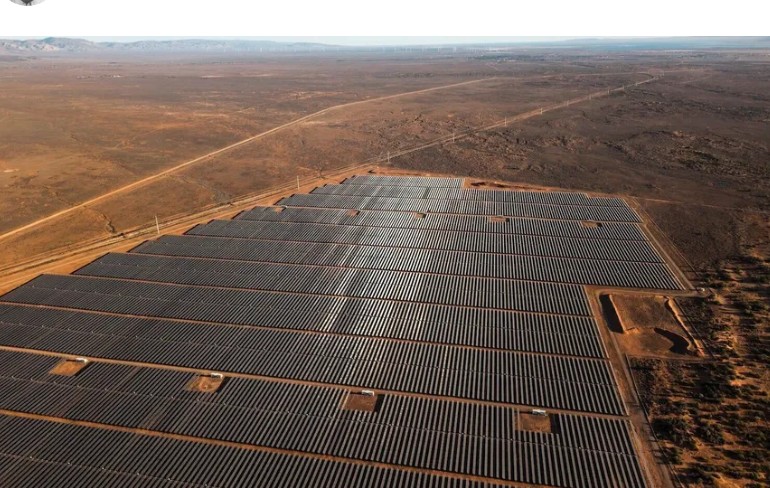
Australia is shaping up to be a case study in the global energy transition. According to the Australian Energy Market Operator (AEMO), the country’s National Electricity Market, which serves roughly 90% of homes and businesses, is on a successful trajectory toward phasing out coal-fired generation in favor of wind, solar, and storage. Accelerating this shift is driven by economics as much as policy: the levelized cost of renewables and batteries has fallen sharply, making them the cheapest available sources in many regions, tells this Canary Media article.
The article notes that Australia is not relying on vague goals alone. With coal plants aging and scheduled retirements underway, renewables are filling the gap. States such as South Australia are already producing more power from renewables than they consume, and the excess is exported to neighboring regions. In addition, investments are ramping up: large-scale solar and wind contracts are winning approval quickly, and battery capacity is expanding to support higher renewable shares without sacrificing reliability.
However, the path is not without obstacles. Grid integration, permitting delays, transmission constraints, and the need for flexible generation are all mentioned. The transition will require systematic upgrades to infrastructure and coordination across states. The article emphasises that the market is preparing, not just ideologically, but technically, for a post-coal era.
Australia’s energy system is moving from aspiration to execution. By aligning falling renewable costs, retiring fossil-fleet assets, and expanding storage and transmission, the nation is offering a model for how a coal-dependent grid can evolve into a renewables-dominant one. While challenges remain, the momentum is clear: the era of coal-first electricity is giving way to clean-energy leadership.
