

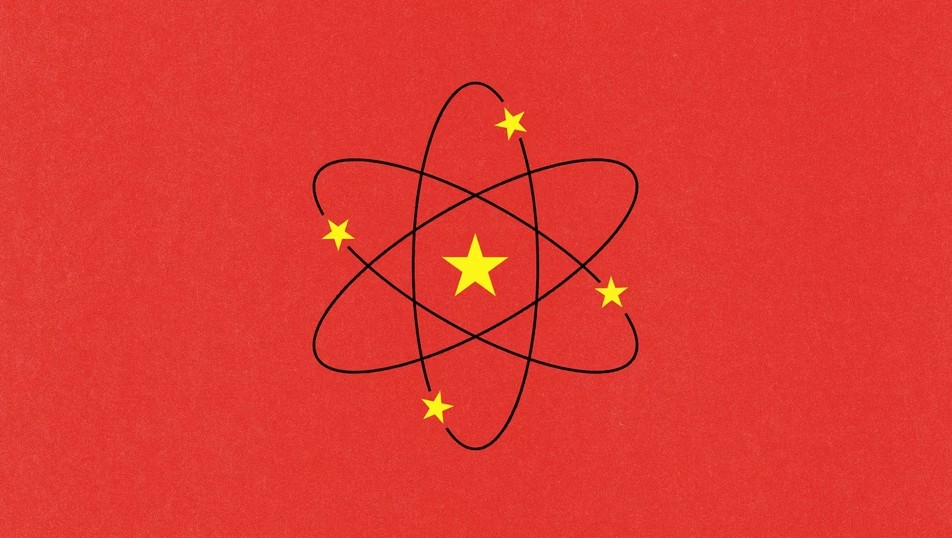
A shift in global scientific leadership, if it happens, will not arrive with spectacle. It will emerge gradually, visible first to specialists tracking research output, collaboration patterns, and institutional momentum. This article from The Atlantic (full article available to subscribers) argues that China’s rise as a scientific power is already unfolding in this understated way, marked less by singular breakthroughs and more by sustained, systemic growth.
China’s transformation rests on decades of deliberate investment. The country has expanded funding, built research infrastructure, and scaled its scientific workforce at a pace unmatched by most nations. These efforts have translated into measurable results: Chinese researchers now produce a large share of the world’s most-cited papers and are increasingly leading international collaborations.
Yet the article stresses that scientific dominance is not only about volume. China’s strength lies in its ability to operate science as a coordinated national system. Government policy, industrial strategy, and academic research are closely aligned, allowing the country to move quickly in priority areas such as artificial intelligence, materials science, and energy technologies. This model contrasts with the more decentralized approach common in the United States and Europe.
At the same time, the United States retains advantages that are harder to quantify. Its research ecosystem still excels at originality, interdisciplinary thinking, and foundational discoveries. American institutions attract global talent and foster risk-taking in ways that centralized systems often struggle to replicate. The competition, therefore, is not a simple race but a divergence in scientific styles and strengths.
The article frames the emerging landscape as a long-term structural shift rather than a sudden handover of power. China’s ascent reflects persistence, scale, and coordination, while Western science continues to rely on openness and creativity. The outcome will likely shape not only technological leadership but also the norms and priorities that guide global research in the decades ahead.
