

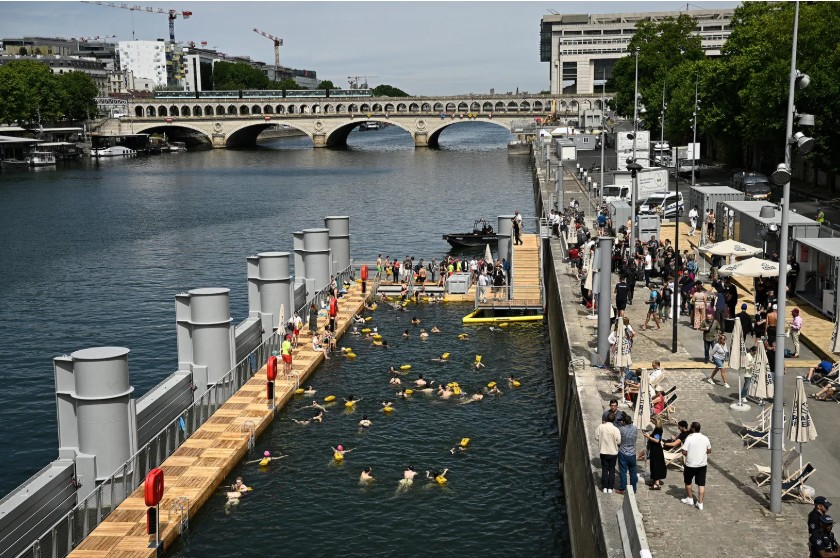
Cities are turning to river- and lake-based cooling systems as an efficient alternative to traditional air conditioning, especially as rising temperatures and heat waves push cooling demand higher. These systems circulate water (or use water via heat exchangers) to absorb heat from buildings, lowering both electric load and the urban heat island effect, tells Wired.com.
The Louvre in Paris illustrates this well. The museum uses a district cooling network fed by the River Seine, supported by a network of pipes and heat exchangers. On average, the Louvre draws about 12 megawatts of cooling power, much more than an average office building nearby. The network avoids dumping heat into the open air. Instead, the system transfers warmth from buildings into the river in a closed-loop arrangement.
Similar projects are underway elsewhere: in Toronto, a lake-based cooling system pulls cold water from deep beneath the surface to serve a hundred-odd buildings. Cornell University’s campus does something similar with Lake Cayuga, using water drawn from 76 meters deep to meet almost its full cooling load.
These systems deliver high efficiency. For example, in Paris, even in summer, when the Seine warms, the coefficient of performance (COP), ratio of cooling output to energy input, stays above 4, and in winter rises to near 15. Cornell’s lake-source system gets a COP of around 20.
But there are challenges. Bodies of water are warming too. As water temperature climbs, cooling effectiveness drops. Regulations also limit how hot discharged water can be, reducing the margin for systems to use warmer water. Infrastructure costs are high, and expanding networks in dense or historic cities can be complex and costly.
Still, the cooling systems are becoming popular, both for energy savings and climate adaptation. Cities including Paris, Rotterdam, Toronto, and schools such as Cornell see them as part of resilient future infrastructure. The potential is strong, but maintaining performance as the climate warms will require smart design and regulation.
