

As artificial intelligence systems grow larger and more power hungry, the heat generated inside data centers has become one of the industry’s most urgent engineering problems. A Tech Xplore report highlights new research showing that specially designed copper cold plates could sharply reduce the enormous amount of electricity currently spent on cooling advanced computer chips.
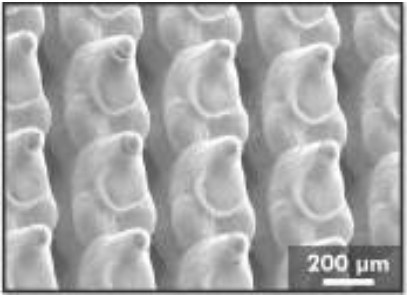
The technology was developed by mechanical engineers who combined mathematical optimization algorithms with advanced additive manufacturing techniques. Instead of relying on traditional rectangular cooling fins, the researchers created intricate fin structures with jagged and pointed geometries designed to maximize heat transfer while minimizing resistance to liquid flow. These designs would be nearly impossible to manufacture using conventional machining methods.
To produce the cooling system, the team used electrochemical additive manufacturing (ECAM), a process that builds pure copper components layer by layer with extremely fine detail. Copper’s superior thermal conductivity makes it ideal for heat dissipation, but the metal has historically been difficult to 3D print effectively. The ECAM method solved that limitation while enabling more complex internal structures.
Testing showed that the optimized cold plates achieved up to 32% better cooling performance than conventional designs while reducing pumping pressure by as much as 68%. The broader implications for large-scale AI infrastructure could be substantial. According to the researchers, a one-gigawatt data center that currently requires roughly 550 megawatts for air cooling could reduce cooling energy demand to only 11 megawatts using the new liquid-cooling approach.
The work reflects a growing shift toward liquid-based thermal management as modern AI processors exceed the practical limits of air cooling. Beyond data centers, the researchers believe the same computational design and manufacturing workflow could eventually support cooling systems for other electronics, industrial technologies, and energy-intensive applications.
