

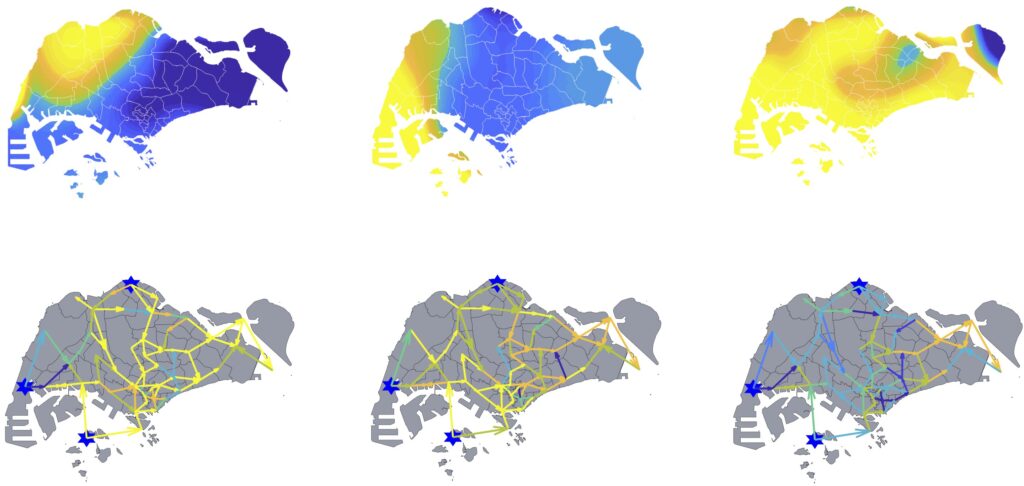
Tropical cities aiming to rely heavily on solar energy face a persistent challenge: sudden and frequent drops in power generation caused by afternoon thunderstorms. A recent study highlighted in Tech Xplore explores an unconventional solution—using electric vehicles (EVs) as distributed energy storage systems to stabilize urban power grids.
Solar power in tropical regions can fluctuate sharply when cloud cover rapidly reduces sunlight. These short disruptions can destabilize the electricity supply, especially in cities with high solar penetration. Researchers propose that parked electric cars, which spend most of their time idle, could temporarily supply stored energy back to the grid during these moments of reduced generation.
The concept relies on coordinating EV charging and discharging at a local level. During periods of strong sunlight, vehicles would charge using solar power. When storms pass through and generation drops, those same vehicles could feed energy back into the grid, smoothing out fluctuations. Once sunlight returns, the cars would recharge again, creating a continuous balancing cycle.
The study suggests that this decentralized approach could reduce the need for large-scale infrastructure investments, such as additional power plants or extensive grid upgrades. By managing energy flows within neighborhoods, cities could improve resilience without relying solely on centralized systems.
This strategy is particularly relevant for tropical urban areas, where a significant portion of the global population is expected to live in the coming decades. As these regions expand their use of renewable energy, maintaining grid stability will become increasingly important.
While the concept shows promise, it depends on widespread EV adoption, smart charging systems, and coordinated grid management. Still, the findings point to a future where vehicles are not just modes of transport but active components of urban energy systems, helping cities transition toward more reliable and sustainable solar-powered infrastructure.
