

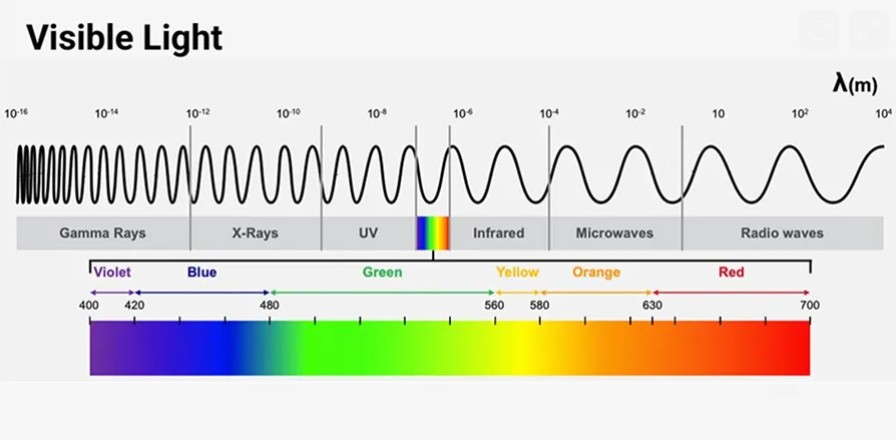
The article by Packy McCormick from the Not Boring blog argues that electromagnetism is the hidden foundation of nearly every modern system, even though most people barely understand it. Wireless communication, GPS, radar, fiber optics, and even the signals inside computer chips all rely on electromagnetic waves shaped by engineered structures. In effect, much of the modern economy runs on the ability to generate, control, and interpret these waves.
Despite its central role, electromagnetism remains difficult for humans to grasp intuitively. Only a small number of specialists can mentally visualize how electromagnetic fields behave. This limitation creates a bottleneck in innovation, particularly in fields such as radio frequency engineering, chip design, and advanced communications systems.
The article places this challenge in the context of accelerating electrification. As vehicles, infrastructure, and devices shift from mechanical to electrical systems, the importance of electromagnetic design continues to grow. Electronics already account for a significant share of costs in industries such as automotive and defense, and that share is expected to increase further.
To overcome human limitations, the authors propose using artificial intelligence to build models that can understand and manipulate electromagnetic fields. These proposed systems, described as Large Field Models, would develop a kind of machine intuition for how geometry shapes electromagnetic behavior. This could drastically lower the cost and complexity of designing advanced hardware while unlocking new capabilities, from improved radar systems to faster data transmission and novel defense technologies.
The broader implication is that AI could move beyond calculation into discovery. By recognizing patterns humans cannot see, such systems might help generate new ideas, experiments, and even breakthroughs in physics. The article suggests that mastering electromagnetism through machines could expand technological possibilities and reshape entire industries.
Ultimately, the article frames electromagnetism as both a constraint and an opportunity: a force that already powers the world, but whose full potential remains largely untapped due to human cognitive limits.
