

A new study is turning espresso making into a more predictable science by introducing an equation that describes how water flows through coffee grounds. The Phys.org article explains that the key lies in understanding the “puck,” the tightly packed bed of ground coffee through which hot, pressurized water passes during brewing.
Traditionally, producing a good espresso has relied heavily on trial and error. Baristas adjust grind size, tamping pressure, and water flow to achieve the right balance of flavor, but outcomes can vary widely even with small changes. The new research, published in Royal Society Open Science, aims to reduce this uncertainty by modeling the permeability of the coffee puck—essentially, how easily water can pass through it.
The equation is based on percolation theory, a branch of physics used to study how fluids move through porous materials such as rock or soil. By applying these principles to coffee, researchers were able to link measurable factors—such as grind size, particle surface area, and how densely the grounds are packed—to the rate at which water flows. This flow rate determines how long water interacts with the coffee, directly affecting flavor extraction.
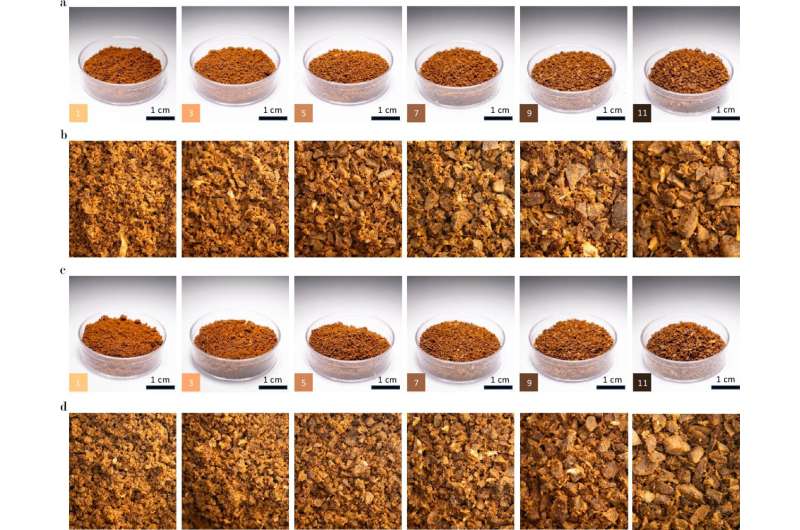
To validate the model, scientists used imaging techniques such as X-ray microtomography to analyze the internal structure of ground coffee. This allowed them to compare theoretical predictions with real-world behavior, showing strong agreement between the model and actual brewing conditions.
The implications extend beyond improving taste. A more precise understanding of espresso physics could help reduce wasted coffee, standardize brewing across machines, and even enable automated systems to optimize parameters for different beans.
Overall, the research reframes espresso preparation as a controlled physical process rather than an intuitive craft. By quantifying the interaction between water and coffee, it offers a pathway toward consistent, high-quality results while highlighting how everyday experiences can be explained through fundamental scientific principles.
