

The article from Phys.org reports a striking shift in how scientists understand one of physics’ most established principles. For centuries, friction has been described by the Amontons–Coulomb laws, which state that the force resisting motion is proportional to the load pressing two surfaces together. These rules, first explored by early thinkers such as Leonardo da Vinci and later formalized in the 17th and 18th centuries, have long served as the foundation of tribology.
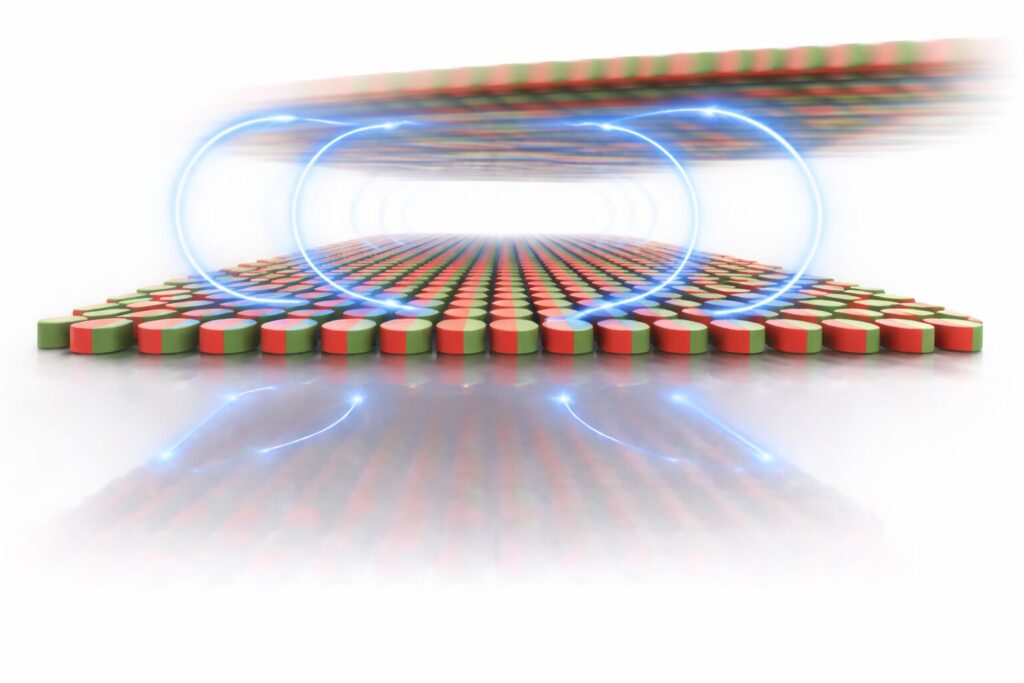
New research, however, suggests that this classical picture is incomplete. Scientists at the University of Konstanz have identified a mechanism in which friction arises even without direct mechanical contact between surfaces. Instead of relying on surface roughness or physical interlocking, the observed resistance emerges from collective interactions at the microscopic level.
This finding challenges the traditional assumption that friction is purely a contact-based phenomenon. In the classical model, resistance depends on how surfaces press against each other and the resulting microscopic contact points. The new results show that friction can also be driven by non-contact effects, reshaping the understanding of how energy is dissipated during motion.
The implications extend across engineering and physics. If friction can occur without contact, it may explain previously puzzling behaviors in nanoscale systems, where conventional laws often fail. It also opens pathways to control friction more precisely, potentially enabling technologies that reduce wear, improve efficiency, or even create tunable friction systems.
More broadly, the work reflects a growing realization that friction is far more complex than the simplified laws taught in introductory physics. While the classical framework remains useful for many practical applications, it does not capture the full range of mechanisms operating at small scales or under specialized conditions.
By uncovering a new origin of friction, the research marks a conceptual shift. A phenomenon once thought to be well understood is now being reexamined, revealing deeper layers of physics that could influence everything from microdevices to large-scale mechanical systems.
