

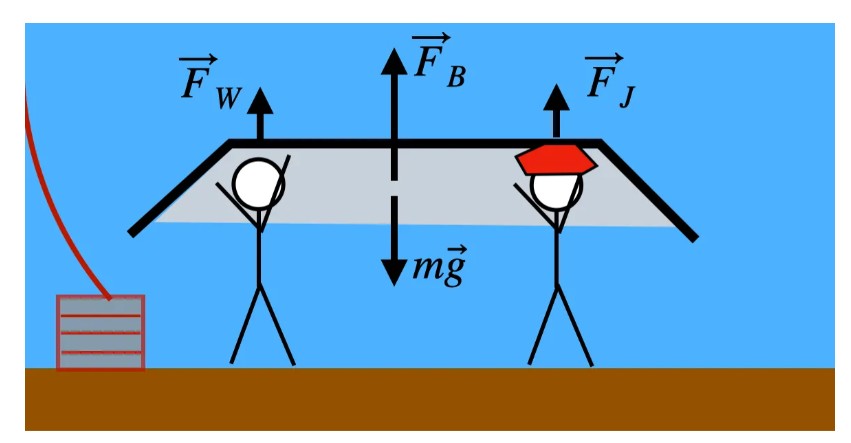
A Wired.com exploration dives into the memorable scene from Pirates of the Caribbean where Jack Sparrow and Will Turner walk along the ocean bottom using an upside-down rowboat to trap air and breathe. The article uses that cinematic moment to unpack the physics behind buoyancy and whether such a stunt could ever work outside of Hollywood. In short: it can’t.
It starts with the basics of buoyancy, that is, the upward force that pushes objects in water, equal to the weight of displaced fluid. Even though you feel light underwater, gravity still acts on you; bodies close to the density of water end up nearly neutrally buoyant. That’s why things float, sink, or hover depending on their density relative to the water around them, fundamental principles first described by Archimedes more than two millennia ago.
An overturned rowboat full of air displaces a large volume of water, creating a huge buoyant force. Calculations show that a 3-cubic-meter air pocket produces around 6,600 pounds of upward force in freshwater. A typical wooden boat weighs far less than that, meaning it would never stay on the seafloor; it would be forced upward by buoyancy. To counteract this, you would need thousands of pounds of ballast, far more than an overturned dinghy could realistically carry.
The article also considers air compression at depth. While water pressure does reduce the volume of trapped air, even at significant depths the decrease isn’t enough to make the buoyant force manageable. And deeper dives introduce serious risks like decompression sickness (“the bends”) for anyone trying to breathe trapped air.
In the end, the idea of walking on the seafloor under an air chamber remains pure fantasy. The physics simply doesn’t support it, even though it makes for an entertaining movie moment.
