

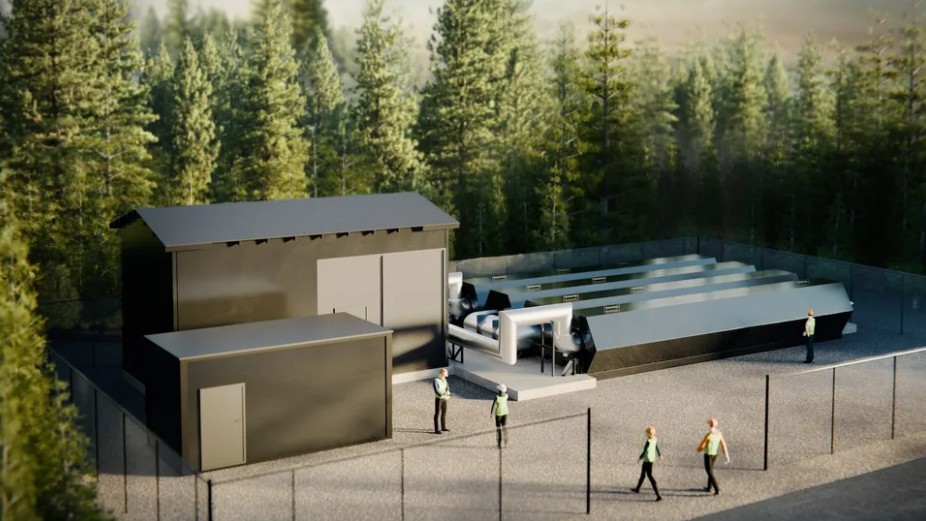
A new generation of “sand batteries” in Finland is moving beyond heat storage to address one of renewable energy’s biggest challenges: converting stored energy back into usable electricity. The project, led by Polar Night Energy, builds on earlier systems that store excess wind and solar power as heat in sand, now advancing toward a full power-to-heat-to-power cycle, tells Live Science.
Traditional sand batteries work by heating sand or similar materials to high temperatures using surplus renewable electricity. This stored heat can later be used for district heating, industrial processes, or hot water. The new system takes a further step by attempting to convert that stored thermal energy back into electricity that can be fed into the grid, making it a more versatile energy storage solution.
Engineers are testing the system in Valkeakoski, Finland, where a pilot facility is expected to run for several years. The design differs from earlier versions, including a horizontal configuration rather than a vertical silo. Researchers are also experimenting with higher operating temperatures and new materials to improve performance and durability.
Efficiency remains a key factor. The electricity conversion process is expected to achieve around 30–35% efficiency, comparable to some conventional power plants. However, when both heat and electricity are used together, overall system efficiency can reach as high as 90%, making it attractive to industries that require both forms of energy.
The technology could help stabilize power grids by storing excess renewable energy and releasing it when supply drops. It also offers a pathway to reduce reliance on fossil fuels and lower emissions.
Cost, however, remains a major barrier. High upfront investment and competition from cheaper energy sources, such as wood-based fuels, could slow adoption. Even so, the project signals a broader shift toward long-duration energy storage systems that can bridge the gap between intermittent renewable generation and continuous energy demand.
