

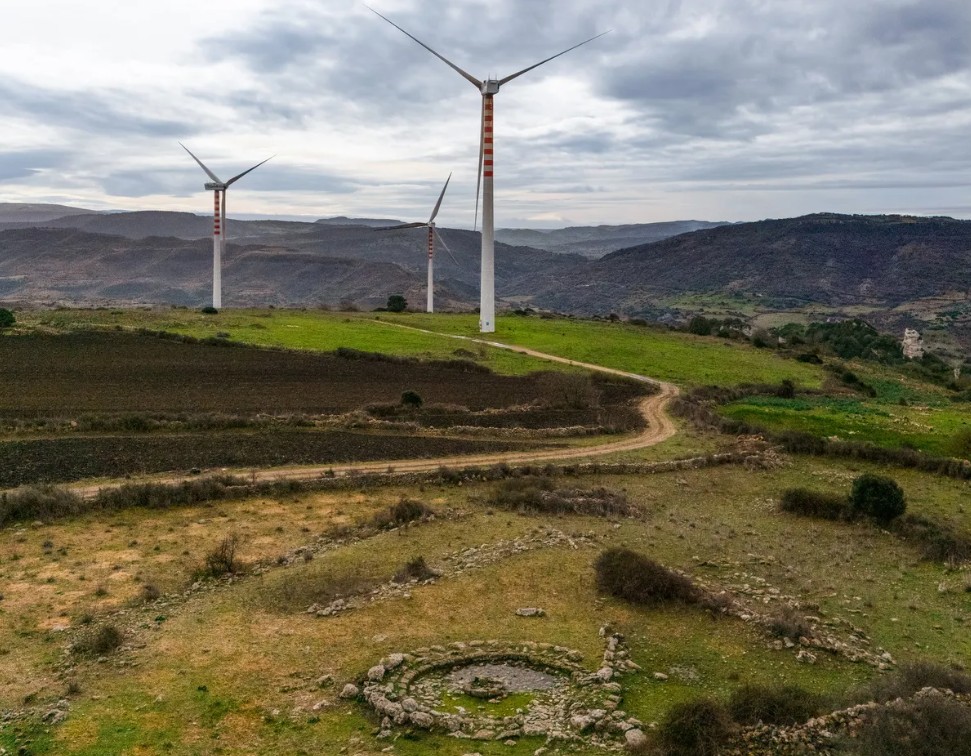
Sardinia appears, at first glance, to be an ideal candidate for renewable energy expansion. The Italian island has abundant sunlight, strong wind resources, aging coal plants scheduled for closure, and limited domestic fossil fuel production. Yet despite those advantages, Sardinia has become one of Europe’s most intense battlegrounds over renewable energy development. An article in IEEE Spectrum explores why local opposition has grown so fierce and what it reveals about the broader challenges of the global energy transition.
Resistance on the island extends far beyond concerns about visual impact or tourism. In 2024, a grassroots petition opposing new wind and solar projects gathered more than 210,000 certified signatures, representing a significant portion of Sardinia’s electorate. The campaign pushed regional leaders to impose an 18-month moratorium on renewable energy construction before Italy’s Constitutional Court later overturned the measure.
The opposition is deeply connected to Sardinia’s cultural identity and historical memory. Many Sardinians view large-scale renewable projects as another form of external exploitation imposed by mainland Italy and outside investors. Over centuries, the island experienced repeated invasions, resource extraction, and political marginalization. Those historical grievances continue to shape public attitudes toward modern infrastructure projects.
The article highlights how renewable energy conflicts are often less about technology than about trust, governance, and local participation. While many residents support climate action in principle, they reject what they see as top-down decision-making that ignores community priorities. The backlash has complicated Italy’s efforts to phase out coal and modernize Sardinia’s energy system.
At the same time, engineers are working to address the island’s technical limitations. Sardinia’s power grid was originally designed around centralized coal generation rather than distributed wind and solar systems. Projects such as the Tyrrhenian Link, a major undersea high-voltage cable connecting Sardinia to Sicily and mainland Italy, aim to improve grid flexibility and reliability.
The situation illustrates a broader reality facing renewable energy worldwide. Clean energy technologies may be technically viable, but successful deployment increasingly depends on whether governments and developers understand local histories, cultural identities, and public trust. Sardinia’s conflict demonstrates that the energy transition is as much a social challenge as an engineering one.
