

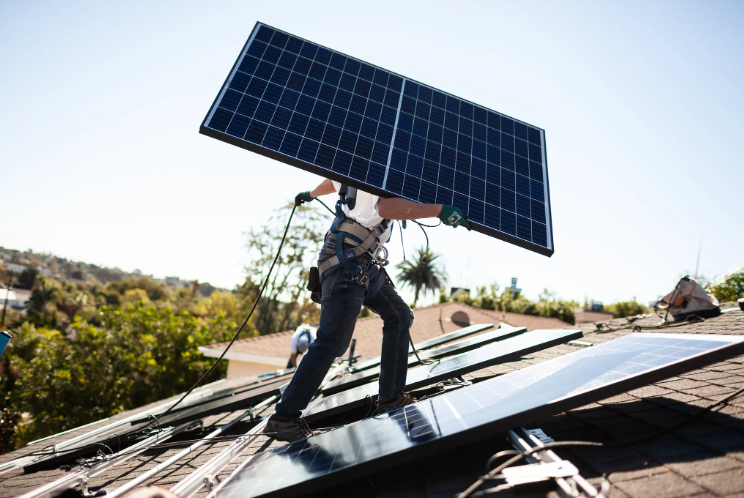
Rooftop solar in the United States is shifting away from ownership toward subscription-style models, and Sunrun is at the center of that transition. Instead of selling solar panels outright, the company focuses on leasing systems or offering power-purchase agreements, where homeowners pay a monthly fee for the electricity generated by the panels. According to The New York Times article, the approach lowers upfront costs and appeals to households that want cleaner energy without taking on debt or maintenance responsibilities.
Sunrun installs, owns, and maintains the solar equipment, while customers lock in predictable electricity prices that are often lower than those of local utilities. For many households, especially those facing rising power bills, the appeal lies in stability rather than maximum long-term savings. Subscribers avoid repair costs, inverter replacements, and performance risks, which remain Sunrun’s responsibility.
The model has helped Sunrun become the largest residential solar provider in the country, even as the broader rooftop solar market has slowed. Higher interest rates have made solar loans more expensive, hurting companies that rely on customers financing for panel purchases. Subscription plans, by contrast, are less sensitive to borrowing costs for homeowners, shifting financial risk onto the company instead.
Critics argue that leasing customers may save less over decades than homeowners who buy their systems outright. Others point out that contracts can be complex and difficult to exit, especially when selling a home. Sunrun counters that most customers prioritize convenience and near-term savings over maximizing lifetime returns.
The company is also positioning subscriptions as part of a broader energy service. Many systems now include batteries, allowing homes to store power, ride through outages, and reduce strain on the grid during peak demand. Utilities in some states are experimenting with tapping these distributed batteries as virtual power plants, creating new revenue streams.
Sunrun’s strategy reflects a larger shift in clean energy toward service-based models. As solar adoption spreads beyond early adopters, ease, predictability, and risk reduction may matter more than ownership. The bet is that for millions of households, solar works best not as a product to buy, but as a utility-like service to subscribe to.
