

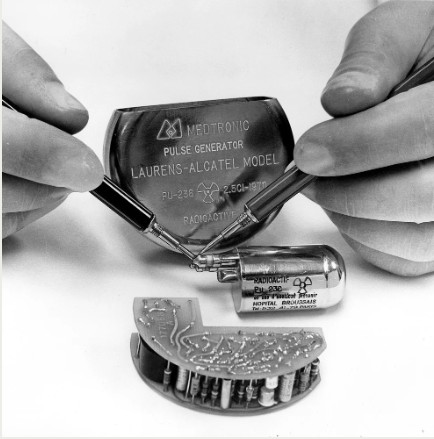
Nuclear batteries, also known as radioisotope power sources (RPS), are quietly making a comeback. Once used in the 1970s in pacemakers and remote lighthouses, these devices fell out of favor due to safety and disposal challenges. Lately though, startups and research groups are reviving the concept with modern twists aimed at practical, long-duration use, tells IEEE Spectrum.
These batteries capture energy from radioactive decay via mechanisms such as betavoltaics or thermoelectrics and convert it into electricity, much like a cross between a solar cell and a heat engine. The advantage is lifetimes spanning decades, or even centuries, with minimal maintenance.
A wave of organizations, e.g., UKAEA, City Labs, Infinity Power, Beijing Betavolt, and others, are working on semiconductor-based or electrochemical designs using isotopes such as nickel-63, tritium, or carbon-14. Some aim for real-world uses in robots, sensors, medical implants, drones, and solar farms.
Where does a nuclear battery actually make sense? For deep-space missions, they’re a no-brainer. Solar power drops off too fast beyond Jupiter, leaving RPS as the reliable choice for decades-long operations. On Earth, they also excel in powering remote, unreachable stations like Arctic sensors or unmanned lighthouses without the need for maintenance.
Still, they’re not universal replacements. Their use is limited by high cost, meticulous licensing, and the burden of tracking and disposing of radioactive materials. Devices needing regular maintenance, such as smartphones or wearables, are better off with conventional batteries or energy harvesting.
Nuclear batteries come alive when you need low-wattage power, decades of autonomy, and zero hands-on upkeep. The challenge is finding the sweet spots where those traits justify the complexity and regulation.
