

Electricity is becoming abundant, but getting it to where it is needed has emerged as the defining challenge. The article from the website It’s Time to Build argues that the United States does not face a shortage of energy generation. Instead, the real constraint lies in the infrastructure required to deliver that power reliably across the grid.
The core issue is transmission and distribution. Building new generation capacity, especially from renewables, has become faster and cheaper. However, expanding the grid to connect that energy to homes, factories, and data centers remains slow, complex, and capital-intensive. This mismatch creates a bottleneck where available electricity cannot be fully utilized.
A key component of this challenge is grid hardware, particularly transformers. These devices are essential for stepping voltage up or down, enabling efficient long-distance transmission and safe local delivery. Yet supply constraints have become severe. Lead times for large transformers can stretch to several years, delaying projects and increasing costs.
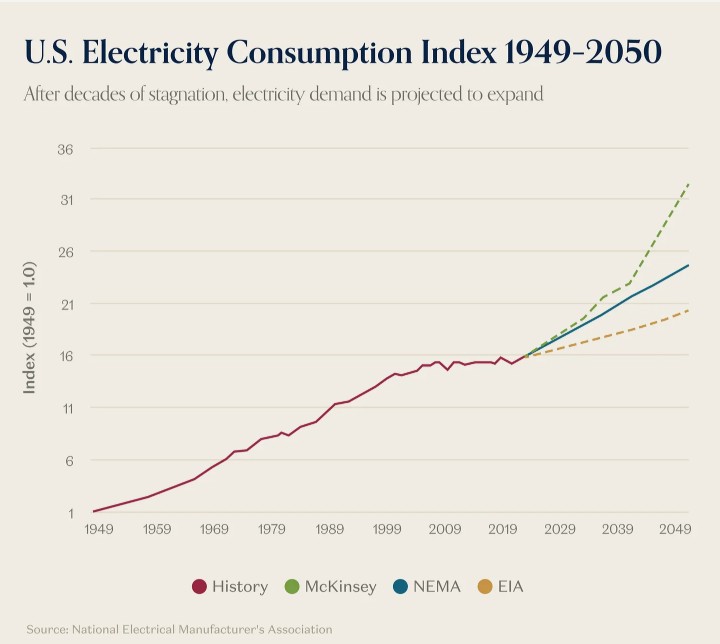
At the same time, demand for electricity is rising rapidly. Electrification across sectors, including electric vehicles, industrial processes, and especially data centers, is driving a surge in consumption. This growing demand puts additional strain on an already constrained grid, amplifying the consequences of slow infrastructure expansion.
The article highlights a structural problem: the energy system was designed for steady, predictable growth, not the sharp increases now underway. While generation technologies have improved quickly, grid infrastructure has not kept pace. Regulatory hurdles, fragmented planning, and long permitting timelines further slow progress.
Solving the problem requires shifting focus from generation to delivery. Investments must prioritize grid modernization, including upgrading transmission lines, scaling transformer production, and rethinking system design for a more distributed and electrified future.
Ultimately, the transition to abundant clean energy will succeed or fail based on infrastructure. Producing electricity is no longer the hardest part. Moving it efficiently, reliably, and at scale is the challenge that now defines the energy system.
