

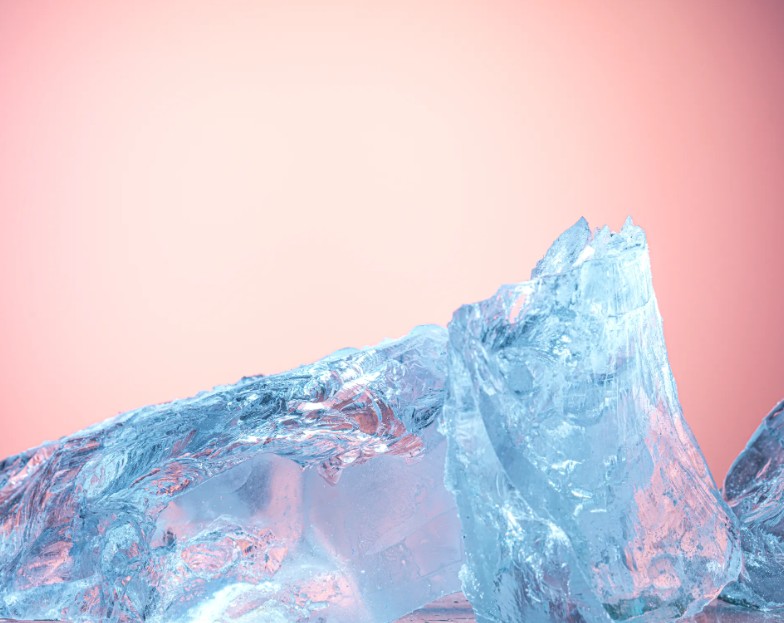
A quiet obsession has taken hold in cocktail culture: ice. Not just any ice, but dense, crystal-clear cubes marketed as premium ingredients, sometimes sourced from glaciers or shipped across continents. The appeal lies less in function and more in storytelling, aesthetics, and perceived purity. Yet, the reality is far less exotic, tells Wired.com. According to experts, the qualities that define “luxury ice” can be replicated at home with basic techniques grounded in physics rather than geography.
The defining feature of high-end ice is clarity. Unlike cloudy cubes, which trap air bubbles and impurities, clear ice forms as a single crystal structure. This reduces visual distortion and slows melting, helping drinks retain their intended flavor longer. While companies promote glacial origins as a mark of purity, scientists argue that laboratory methods can produce even cleaner ice by eliminating dissolved gases and contaminants entirely.
The key lies in directional freezing. In a typical freezer, water freezes from all sides inward, trapping air and minerals in the center. By contrast, freezing water slowly in one direction allows impurities to be pushed out as the ice forms. This principle is used in industrial machines and can be mimicked at home with an insulated container, such as a cooler, where freezing occurs gradually from top to bottom. Once frozen, the cloudy portion can be removed, leaving a clear block.
Water quality also plays a role. Filtering or using deionized water reduces mineral content, while boiling removes dissolved gases that contribute to cloudiness. Together, these steps improve clarity without specialized equipment. However, extremely pure water is not meant for regular consumption, as it lacks essential dissolved minerals.
Ultimately, the mystique surrounding luxury ice reflects more about presentation than performance. With a cooler, clean water, and patience, the same visual and functional results can be achieved at home, minus the environmental cost and inflated price tag.
