

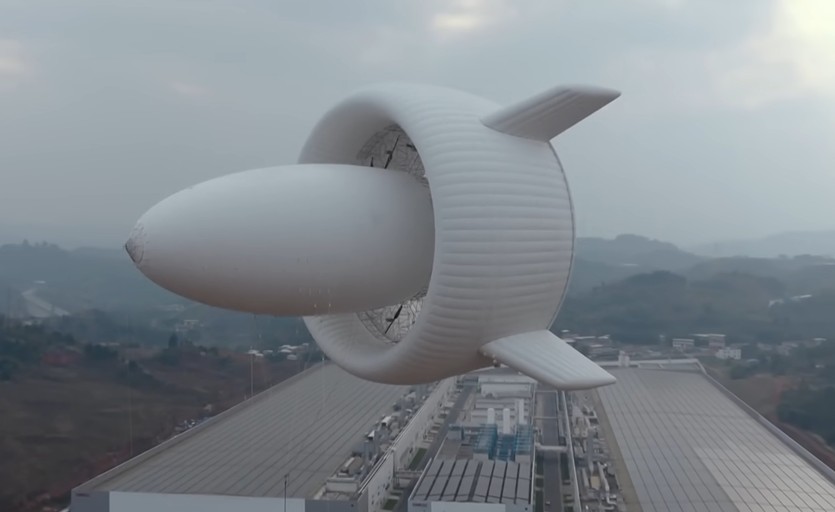
China’s first megawatt-class flying wind turbine achieved a milestone in renewable energy by generating electricity high above the ground using stronger, more consistent winds. During a test in southwestern China’s Sichuan Province, a tethered wind power system called the S2000 Airborne Wind Energy System reached an altitude of about 2,000 meters (roughly 6,560 feet) and produced 385 kilowatt-hours of electricity, enough energy to power a typical U.S. household for nearly two weeks. The system’s ability to tap high-altitude winds could unlock new potential for wind power in locations where traditional turbines are constrained by terrain or urban density, tells Live Science.
The S2000 design combines an airship-like platform with multiple wind turbines attached to its frame. Filled with helium, the airborne structure lifts the turbines into powerful wind streams that are both stronger and steadier than those near the surface. Electricity generated aloft travels to the ground through a long tether that also stabilizes the system and connects it to infrastructure. This airborne approach leverages the higher wind energy density found at altitudes, which increases the potential energy captured compared with conventional land-based or offshore wind farms.
Developers see possible use cases in remote or off-grid settings, where conventional power infrastructure is limited, as well as in densely populated regions where land availability limits conventional wind farm deployment. By complementing existing renewable sources, high-altitude wind systems could broaden access to clean energy.
Still, significant challenges remain before widespread adoption. The long tether raises safety issues for aviation, and regulatory frameworks will need to evolve to manage these risks. Maintenance at altitude and the cost of deployment also pose hurdles for commercialization.
Despite these obstacles, the successful test signals a step toward harnessing winds unreachable by ground-based turbines, expanding the frontier of renewable energy technology.
