Interview: Greg Mark, CEO and Cofounder of Backflip

The following is a transcription of a conversation with Greg Mark, CEO and cofounder of Backflip. Most know Greg as the founder and CEO of Markforged, a continuous carbon fiber 3D printer manufacturer. He is now heading Backflip, which makes 3D shapes from prompts or sketches. Greg left Markforged in 2021 after selling it for $2.1 billion.

Roopinder: Hello, Greg! It’s been a long time.

Greg: It has.

Roopinder: Where are you these days?

Greg: It’s complicated. I split my time between New Hampshire, where I live, and San Francisco. I’ve been busy, though. We’ve got three printing rooms here now. We’re just moving out of this office, setting up a new shop. It’s been quite a journey. But let’s dive in. Where do you want me to start?

Roopinder: Start at the beginning, after you left Markforged. What came next?

Greg: After I left Markforged, I took a step back. I retired and moved to New Hampshire. It’s like the adult Disney World—the happiest place on Earth. I’m an aerospace guy at heart and always have been. I’ve flown planes, piloted helicopters and collected cars. I even indulged in some hobbies I’d always wanted to try. But after a while, I realized I missed building things. I missed creating.

I started talking to people in the industry again. I’d chat with friends, buy startups and explore what was out there. That’s when it hit me—I still had more to contribute. I wanted to build something again. At Markforged, we tackled the back half of manufacturing: taking a CAD model and turning it into something tangible, whether it was carbon fiber, titanium, or steel. But what about the beginning of the design process? That’s where I saw the potential for something new.

Roopinder: What inspired you to focus on the design side?

Greg: I spent a lot of time studying productivity—specifically, human productivity throughout the industrial revolution and beyond. The tools we use to design and create have a profound impact on what we can achieve. For example, the manufacturing processes we have today—casting, sheet metal bending, welding—were already around in the 1960s. What changed? Design. The way we approach design has transformed and that’s where innovation lies.

I’ve always wanted to live in the future, to see it come to life. To get there, we need to drive productivity per human. That’s what brings spaceships, advanced technologies and breakthroughs into reality. But the gap in productivity often stems from the difficulty in turning an idea into a design. Many brilliant craftspeople—woodworkers, metalworkers, artisans—can visualize their creations in their minds but lack the tools or knowledge to translate them into CAD models. That’s the problem I wanted to solve.

Roopinder: And that’s where Backflip comes in?

Greg: Exactly. Backflip’s mission is to bridge the gap between imagination and creation. We’re leveraging AI to help people turn their ideas into 3D models effortlessly. Imagine being able to type, “I need an angular, aggressive aluminum motorcycle gas tank,” and getting options within minutes. You can refine those options, make edits and even turn them into printable or machinable models.

Roopinder: How does it work, exactly?

Greg: It starts with a prompt. You can describe what you want in text, upload a sketch, or even provide a photograph. The AI generates multiple options based on your input. If you’re not happy with the initial results, you can refine them. Once you have a design you like, you can convert it into a 3D mesh. From there, it’s ready for 3D printing, CNC machining, or whatever fabrication process you need.

Backflip makes pretty good guesses at the shape you envision. You can modify the shapes Backflip comes up with. Here, the brush strokes below the tank are like prompts, telling Backflip to cut off a sharp edge at the bottom of the tank to make it more rounded.

We also provide tools for fine-tuning the models. For instance, if you’re working on a gas tank and want to carve away sections or modify its shape, you can do that interactively. It’s all about giving people control while keeping the process intuitive and fast.

Roopinder: That sounds revolutionary. How has the response been so far?

Greg: It’s been incredible. We launched just a week ago and over 20,000 people signed up. The demand has been overwhelming—we’ve got a backlog of users waiting to get in. It’s clear there’s a real need for this kind of tool.

Roopinder: What formats does Backflip support?

Greg: Right now, we support OBJ and GLB formats, among others. You can export entire scenes or individual parts. We also support importing various formats so users can bring in their own assets. Whether it’s character models, structural components, or props, you can integrate them seamlessly into your designs.

Roopinder: Do you see Backflip as a standalone tool or as a complement to existing CAD software?

Greg: We view Backflip as a front-end to CAD. It’s not meant to replace traditional CAD software but to make it more accessible. Many small businesses and individual users can’t afford to spend thousands of hours learning advanced surfacing techniques. Backflip empowers them to create complex designs without that steep learning curve.

For example, if you’re in Orange County Choppers and want to design a custom gas tank, you can iterate quickly with Backflip. Once you’re happy with the design, you can export it to SolidWorks or another CAD package for further refinement. It’s about turbocharging the design process.

Roopinder: Have you shown Backflip to industry leaders? What’s the feedback been like?

Greg: Yes, we’ve demoed it to some key players, including Onshape. The feedback has been overwhelmingly positive. People see the potential for Backflip to complement their existing workflows and make design more accessible to everyone.

Roopinder: Do you see a future where AI could become a geometry kernel for CAD programs like Parasolid is to SolidWorks?

Greg: Absolutely. I think AI will become an intrinsic part of the CAD process and experience. It could exist as a standalone product or integrate as a plugin within CAD software. What’s exciting is that we’re exploring uncharted territory. No one’s built something like this before, so we’re learning alongside the users about what they truly need.

One of our lighthouse customers, who hasn’t been announced yet, is very excited about an integration.

Greg: How do you feel about what CAD companies are doing these days?

Roopinder: Honestly, I’m frustrated. They’ve been stagnant for a long time and they’re not embracing innovation, especially in AI. When I talk to them, they dismiss AI as impractical. They say large language models aren’t relevant to engineering and paint AI with the same brush. But they’re wrong. Engineers don’t want to be stuck making brackets. They want AI to assist in meaningful ways, like generating designs based on context.

Greg: Are any CAD companies stepping up?

Roopinder: Not really. I see startups like Backflip are leading the charge. Some smaller companies are exploring similar ideas, but the big players haven’t made significant moves yet. One startup I saw recently, Identic AI, converts photographs of furniture into 3D models. They’re still small—only about eight people—but their work is intriguing.

Greg: I’m a huge fan of AI in mechanical engineering. It’s frustrating to see its potential go untapped.

Roopinder: Same here. Engineers need AI to be an assistant, not a designer. Generative design has been overhyped—it’s just topology optimization with a lot of marketing. Most generative designs result in impractical shapes that can’t be manufactured efficiently. I’ve challenged CAD companies to create better tools, but they’re stuck in their ways.

Greg: At Markforged, we avoided the generative design hype. It’s more of a marketing tool for 3D printing than a practical solution for engineers. Engineers know what works. We don’t need AI to reinvent the wheel; we need it to streamline the design process.

Roopinder: Exactly. Tubes, I-beams, they work. AI should help engineers create using them, not replace them with blobby shapes. I’ve issued challenges to CAD companies, like redesigning a bicycle frame. None have accepted. Instead, they make wild shapes that are impractical and inefficient. A good AI design assistant would understand the context of a project, learn from past designs and make intelligent suggestions. For example, if I’ve designed hundreds of brackets, the AI should recognize patterns and offer relevant versions.

Greg: That’s the future we’re building toward. Engineers don’t want to waste time sketching basic shapes or creating repetitive designs. AI should handle those tasks so we can focus on innovation.

Greg: Generative design often seems more like art than engineering. It’s marketed as the future, but it’s rarely practical. Engineers prioritize functionality and manufacturability. The real challenge is integrating AI into workflows without disrupting established processes.

Backflip focuses on leveraging existing manufacturing knowledge. We’re not here to disrupt the toolchain but to enhance it. The factories of the future will use the same principles and tools, but with better designs and faster iterations.

Roopinder: Have you looked at what nTop is doing? They can create organic shapes for applications like heat exchangers. CAD can’t handle that level of complexity. If AI could collaborate with tools like his, it would open new possibilities.

Greg: We’re going to work within the constraints of manufacturing while enabling innovation. For instance, car interiors might have complex, organic shapes on the outside, but on the inside, the structural components will still rely on tried-and-true methods like injection molding or stamping. The goal is to combine AI’s creativity with engineering practicality.

Roopinder: Sounds like making generative AI for shapes fit within traditional manufacturing. It reminds me of Jensen Huang of NVIDIA at CES when he talked about designing humanoid robots that can work in traditional settings. Instead of robots in a cell on a line, humanoid robots roam around the floor. This way, Backflip shapes would  integrate into existing engineering workflows, enhancing what we already do well.

Greg: Exactly. AI is a tool for progress, not a replacement for expertise. At Backflip, we’re empowering engineers to bring their ideas to life more efficiently, while respecting the realities of manufacturing. The future of design lies in collaboration between human ingenuity and AI capabilities.

Roopinder: The goal is to make CAD less of a barrier to creativity and more of a tool for inspiration, right?

Greg: Exactly. CAD, when mastered, feels like a superpower—you can create amazing things. But the challenge is getting people into that ecosystem. If we can inspire more people to use CAD and 3D tools, we’ll unlock solutions to some of humanity’s biggest challenges. Think about carbon capture, Mars colonization and electric vehicles. These aren’t software problems; they’re hardware problems. We need to make hardware creation accessible to more people and fully utilize the talents of those already working in the field.

For most of human history, we’ve worked with materials directly—carving wood, shaping metal. CAD requires us to start with a blank screen, which isn’t natural for many people. At Markforged, we focused on making tools user-friendly and we’re carrying that ethos into Backflip.

Roopinder: I often rush into the shop to make something without a CAD drawings. Even for those familiar with CAD, CAD is limiting. I’m an amateur woodworker. The shapes we admire, like organic forms in furniture or nature, are hard to recreate in traditional CAD programs.

Greg: That’s where AI can shine. A year from now, the tools we have now will seem basic compared to what’s coming. AI will enable you to design those organic shapes, test variations and visualize them in 3D before building. You’ll be able to create without being constrained by the traditional limitations of CAD.

Roopinder: How did you train Backflip’s AI to design?

Greg: We built the world’s largest synthetic dataset of 3D models. Right now, it’s trained with 20 million models. By the end of the year, we’ll reach 250 million. Creating this dataset was like a Manhattan Project for CAD. Unlike text or images, CAD doesn’t have a global repository like the web. We had to generate our own data to teach the AI how to think in 3D.

Roopinder: Are you using photogrammetry to expand your dataset?

Greg: We’ve developed our own tools and are very data-private. While tools like photogrammetry are useful, they often lack precision. For instance, a photograph might require background removal or scaling. We’re building features to handle these issues intuitively, so users can quickly generate accurate 3D models from photos or scans.

Roopinder: Are you drawing inspiration from other industries, like Nvidia’s work on AI for robotics?

Greg: Absolutely. Robotics faces similar challenges in data scarcity and complexity. At Markforged, we spent a decade debugging and printing every shape imaginable. That experience taught us how to build robust 3D shape generators. We’re applying those lessons to Backflip, creating tools that understand manufacturing constraints while enabling creativity.

Roopinder: Do you think we’ll eventually see a world without traditional CAD?

Greg: Maybe 100 years from now. For now, CAD serves several critical functions, like assembling parts and creating technical drawings. AI will integrate with CAD, making it faster and more intuitive, but the core principles will remain. The future is collaborative—between humans, AI and existing tools.

Roopinder: What’s next for Backflip?

Greg: We’re doubling down on technology development. You’ll see a series of releases this year, including new tools and features. Backflip itself will evolve and we’ll also launch complementary products. Think of it like AI models—each iteration will be more powerful and user-friendly.

Roopinder: It’s been great talking to you, Greg. This is an exciting time for design and engineering.

Greg: Likewise, Roopinder. It’s been a pleasure. Let’s catch up again soon and continue exploring how to bring the future of design into the present.

RIKEN Partners with Siemens for Next-Gen AI Research

Plano, TX, Jan 16, 2025 – Siemens Digital Industries Software has announced that RIKEN is enhancing its research on next-generation AI devices with Siemens’ comprehensive Veloce Strato CS emulation and Catapult high-level synthesis (HLS) platforms to conduct architecture and design space exploration of AI accelerator devices.

“RIKEN’s adoption of Siemens’ emulation and HLS capabilities enables the team to conduct the necessary explorations during our research into next-generation AI devices for ‘AI for Science’ and maintain our position as the creators of the world’s most powerful supercomputer,” said Dr. Kentaro Sano, team leader of the processor research team at the Center for Computational Science, RIKEN. “Our goal is the establishment, management, and continuous enhancement of the computational infrastructure essential for the creation of generative AI models tailored for scientific discoveries – and Siemens’ tools play an essential role in this research.”

The RIKEN Center for Computational Science, part of Japan’s research organization for computational science and a world leader in a diverse array of scientific disciplines, is known for developing supercomputers such as the K computer and Fugaku.

“We are delighted to support RIKEN’s groundbreaking research on AI devices. Our latest Veloce Strato CS and Catapult HLS platforms provide RIKEN with the comprehensive tools to achieve their research goals and drive innovation in the field of AI,” said Jean-Marie Brunet, vice president and general manager, hardware-assisted verification, Siemens Digital Industries Software.

“Siemens is incredibly proud to support the cutting edge research and development taking place at RIKEN, and we look forward to supporting the organization as it works to achieve its goals to explore the outer boundaries of what’s achievable when bringing the power of AI to scientific research at vast scale,” said Yukio Tsuchida, vice president for Japan, electronic design automation, Siemens Digital Industries Software.

The combination of Siemens’ hardware-based Veloce Strato CS and Catapult HLS platforms provide RIKEN with world-class technology for enabling rapid synthesis and emulation of large-scale Application Specific Integrated Circuits (ASICs). These Siemens tools support RIKEN’s efforts in evaluating the performance of optimized AI computing circuits and the system-on-chips (SoCs) that incorporate these circuits. The AI accelerator developed through this research will be a candidate for deployment in the next-generation supercomputers following the supercomputer Fugaku, scheduled to start operation around 2030 at the latest.

Source: Siemens

SolidWorks Announces Keynotes for 3D Experience World 2025 in Houston

SolidWorks has announced the keynote speakers for 3DEXPERIENCE World 2025. This year’s lineup features industry leaders who are shaping the future of technology, design, and exploration.

Day 1 Keynote

On Day 1, Marc Raibert of Boston Dynamics will showcase ‘Spot’, the agile robot dog redefining how robots navigate complex environments. ‘Spot’ demonstrates how robotics can solve real-world challenges, from construction sites to advanced research labs. During the lunch break on Monday, the audience will also have the chance to meet ‘Spot’ in person during a live demonstration.

Day 3 Keynote

On Day 3, designer Karim Rashid will share his approach to creating bold, functional designs that span luxury goods, public spaces, and cutting-edge technology. Karim’s work, featured by brands such as Samsung, Swarovski, and Alessi, offers a glimpse into the future of design and its impact on everyday experiences.

DraftSight Keynote

Daniel Goldin, NASA’s longest-serving Administrator, will deliver the DraftSight Keynote. He will highlight his leadership on projects like the International Space Station, the Mars Pathfinder, and the repair mission for the Hubble Space Telescope. Goldin will share valuable lessons on turning ambitious visions into reality, emphasizing the importance of collaboration and persistence.

There will be more eminent speakers including Todd Blacksher from MetalWorks, Aurora De Acutis from Bio3Dmodel, DraftSight speaker Terence Barry, Jennifer Scott from the Society of Women Engineers, Kyle Doerksen of Onewheel, and KangKyu Lee from Aniai.

Source: SolidWorks

TELO, Aptera Announce Solar Panel Options for TELO MT1

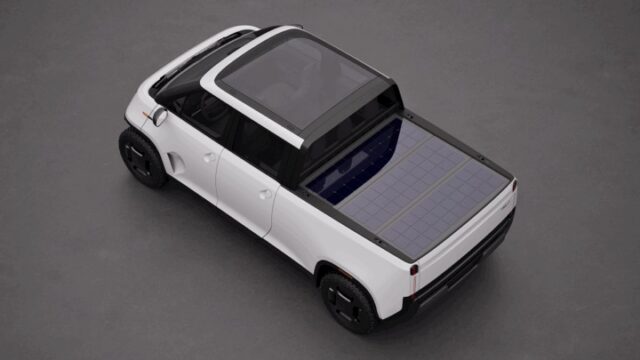
SAN CARLOS, CA, Jan 16, 2025 – TELO Truck has partnered with Aptera to introduce integrated solar panel options for the TELO MT1. Buyers can choose up to three solar kits and enable portable charging with increased energy freedom, even in remote locations. The available solar panel options include:

  • Rooftop Truck Cab Solar Paneling – Integrated panels over the cab maximize daily energy generation.
  • Tonneau Truck Bed Cover Solar Paneling– A solar-equipped bed cover adds power while preserving storage versatility.
  • Camper Shell Solar Paneling – Panels extending from the cab over the bed increase charging capacity and storage options.

Aptera’s solar panels generate up to 200 watts each at peak sunlight, delivering 1-2 kWh per day based on location and season. Using a glass-glass configuration ensures optimal efficiency and durability. TELO vehicles consume just 200-300 kWh/mi, significantly reducing energy needs and extending range with solar options. Ideal for adventurers and daily drivers alike, the technology enhances TELO’s sustainability and delivers freedom from the grid.

Car buyers will be able to tailor their pickup truck precisely to their needs by selecting their desired TELO solar configuration during the time of pre-order. These options support TELO’s goal of creating efficient, sustainable vehicles for work and recreation purpose. Aptera, a trailblazer in solar-powered commuter vehicles, unveiled their groundbreaking technology at CES 2025. This partnership merges Aptera’s expertise with TELO’s design, boosting compatibility and performance.

“Our unique curved solar cell design makes it the perfect application to propel automotive utility further than ever before,” said Steve Fambro, co-founder & co-CEO of Aptera. “Together with TELO, we’re harnessing the power of the sun to make life off the grid a reality for everyone by putting the sun to work for them.”

Thanks to TELO’s newest offering of solar power charging, the company continues to redefine the possibilities of EV ownership.

Jason Marks, CEO and co-founder of TELO Trucks – adds, “Whether buyers are looking for a commuter vehicle, a safer, more sustainable option to serve their family’s needs, a rugged, dependable pickup truck for outdoor adventuring, or a highly-functional fleet vehicle that increases their business’s efficiency, TELO continues to be a first-in-class automotive option to satisfy the many needs of car buyers.”

TELO and Aptera will make these solar panel options available for pre-order later this year. The fully realized drivable prototype is currently in production at Aria Group, which joined forces with TELO in 2024 after a successful $5.4M strategic funding round led by Neo and Spero Ventures.

Source: Aptera

Nemetschek Unveils AI Assistant in ALLPLAN and Archicad at BAU 2025

MUNICH, Germany, Jan 16, 2025 – The Nemetschek Group has introduced its latest AI advancements to drive innovation, creativity and productivity. Key highlights include the integration of the AI Assistant, the Group’s first AI-agent-based technology, into ALLPLAN and Archicad by Graphisoft.
At BAU 2025 the Nemetschek Group introduced the AI Assistant starting with two of its brands – ALLPLAN and Graphisoft. It simplifies workflows and fosters collaboration by unifying the ecosystem under a cohesive, intelligent interface.

“Our AI Assistant represents a foundational shift in how we approach innovation and collaboration. By unifying our ecosystem with a seamless, intelligent AI Assistant and by combining cutting-edge AI capabilities with decades of expertise in the AEC/O industry, we are enabling our users to push boundaries and reimagine workflows, while offering trust and reliability,” said Charles Sheridan, chief AI and data officer at the Nemetschek Group.

“The AI Assistant is our first AI agent-based technology, and it builds on the AI layer announced in October 2024,” explained Julian Geiger, VP, head of AI product and transformation at the Nemetschek Group. “The AI Assistant delivers a consistent and cohesive user experience across our brands, empowering users to enhance creativity and productivity with smarter tools while seamlessly transitioning between brands through a familiar interface.”

Within Archicad by Graphisoft, the AI Assistant is embedded directly into the software as an integrated AI chatbot. It provides features such as product knowledge, industry insights, BIM model queries, and AI Visualizer integration, enabling users to design and refine projects through a streamlined chat interface. In ALLPLAN, the AI Assistant showcases multi-touchpoint functionality by extending its capabilities to the internet. It provides access to product knowledge, AECO industry insights, and advanced tools to tackle complex project requirements.

With its unified design principles, the Nemetschek Group aims to expand the AI Assistant to other brands within the company in 2025 and onwards, showing its dedication to empowering architect, engineers, contractors, and other professionals with innovation in the AEC/O industry.

Source: Nemetschek

Siemens Bags Two EV Infrastructure Projects in Italy

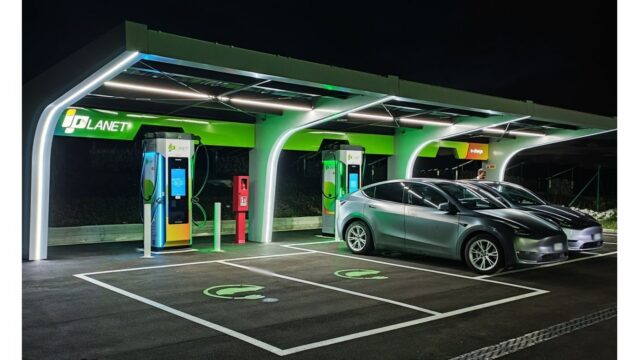
IPLANET has tasked Siemens eMobility with equipping over 120 logistics sites with advanced charging infrastructure. Source: Siemens AG.

IPLANET has tasked Siemens eMobility with equipping over 120 logistics sites with advanced charging infrastructure. Source: Siemens AG.

ZUG, Switzerland, Jan 16, 2025 – Siemens eMobility has been selected as the technology partner for two major electric vehicle (EV) charging infrastructure projects in Italy. Partnering with Autolinee Toscane and IPLANET, Siemens eMobility is leading efforts to electrify public transportation and repurpose gas stations into key service hubs. These changes support sustainable mobility across the region.

73 charging points for Autolinee Toscane S.p.A.

Siemens eMobility is electrifying multiple bus depots for Autolinee Toscane, a public transport operator and part of RATP DEV Italia Group, in the cities of Florence, Prato and Lucca, supporting the rollout of the company’s zero-emission bus fleet. Leveraging Siemens’ innovative charging infrastructure technology, the project ensures effective and steadfast operations across Tuscany’s public transport network.

The project consists of a total of 73 SICHARGE UC charging points, capable of supplying 100 and 150KW of power to charge electric vehicles. In addition, Siemens supplies medium and low voltage electrical distribution systems with switches equipped with IoT modules to ensure reliable and transparent energy supply. Siemens eMobility also provides DepotFinity for monitoring, reporting, programming and managing charging operations within the depots. The main benefits for Autolinee Toscane are the monitoring of charging processes with the implementation of optimized smart charging logics of loads based on the operator’s service, pre-conditioning functionality of vehicle batteries and reporting of the kilometers traveled by each vehicle.

Advanced charging infrastructure for 120 IPLANET service sites

In another project, IPLANET, an energy transition solutions provider, has tasked Siemens eMobility with equipping over 120 logistics sites with advanced charging infrastructure, featuring integrated Point of Sales (POS) systems compliant with Alternative Fuels Infrastructure Regulation (AFIR), activation via app or QR code, and interactive screens ensuring accessibility also for users with disabilities. The network features hundreds of 300-400 kW charging stations, all monitored remotely through secure connections to ensure reliability and uptime. The sites also incorporate Siemens medium and low voltage electrical distribution systems, scalable compact transformer substations, and telecontrol capabilities, enabling integration with renewable energy sources. Additionally, some of the turnkey service areas, including photovoltaic installations, parking area battery energy storage systems (BESS), and facilities for heavy-duty EV charging (e-trucks), are already operational.

“Driving sustainable mobility together”

“Projects like these underscore Siemens eMobility’s mission to integrate sustainable mobility into everyday life. By combining cutting-edge technology and strong partnerships, we’re helping to transform the transportation and logistics sectors for a more sustainable future,” said Markus Mildner, CEO of Siemens eMobility.

Source: Siemens

AMEXCI, EOS Join Hands with Saab in Project Squadron 2020

The Finnish Navy – Naval Vessels. Image: EOS

KRAILLING, Germany, Jan 15, 2025- Squadron 2020 is a project of the Finnish Navy. Its aim is to replace the seven vessels the Navy will decommission. Four modern corvettes will be procured to replace the vessels to be decommissioned. A multi-role corvette is a surface combatant capable of conducting effectively the range of Navy tasks at sea all year round.

As part of Squadron 2020 Industrial Participation, AMEXCI and EOS, together with Saab, will develop new capabilities to manufacture defense components in Finland with metal additive manufacturing (AM). The project focuses on developing AM solutions both for spare parts and new product development. New and enhanced competencies will contribute to improving the overall security of supply in Finland. Additive manufacturing can enable spare part production for the Finnish Defense Forces (FDF) and critical industries, as well as the rapid deployment of new innovative equipment.

The project participants are industry forerunners in their respective areas of expertise. AMEXCI is a metal additive manufacturing service provider, with a 3D-printing production and know-how on developing AM solutions for customers. EOS is the world leading company in metal additive manufacturing solutions, with an understanding of materials and process development as well as quality assurance. Saab has successfully implemented metal additive manufacturing in its production processes. Saab is on a continuous process transferring expertise to foster new competencies in Finnish industries.

Finnish Defense Forces (FDF) states: “The project increases the capabilities of domestic industries in designing and manufacturing components for challenging military environments using AM. The Finnish Defense Forces sees the project as fulfilling the needs and supporting the interest of national military defense and security of supply.”

Johannes Karjalainen, managing director, AMEXCI comments: “I’m thrilled to be involved in developing new technologies and creating novel Nordic collaboration with Saab and EOS. I believe our new competencies developed within this project will be beneficial for many companies and stakeholders, and it will strengthen Finnish supply chain resilience in challenging situations.”

Paula Kainu, senior metal solutions architect, EOS, voices: “Over the years, we have developed comprehensive know-how on AM materials with an extensive material data bank, which we will leverage in this project. By combining our extensive experience with the specific application requirements, we can develop an AM solution that perfectly fits. Not only advancing this project but adding value to many companies alike.”

Source: EOS

Trimble Introduces Tiered Core, Pro, Premium Plans

WESTMINSTER, CO, Jan 15, 2025 – Trimble has announced the availability of three new Trimble Works Subscription plans – Trimble Works Core, Pro and Premium.

A Trimble Works Subscription offers contractors a simple, low risk way to scale operations, providing flexibility in selecting and utilizing the right civil construction technology, hardware coverage and price point for their business needs.

For contractors already using Trimble technology, the new subscription plans provide a method for keeping all machines on the same software version, enabling connected workflows for jobsite operations.

How Trimble Works Delivers

With each Trimble Works Subscription plan, contractors can purchase select civil construction software solutions, such as Trimble Earthworks Grade Control Platform and Trimble Siteworks Software. Device licensing, along with software and firmware maintenance are included for the entire subscription term. Each plan also includes Trimble WorksManager field-to-office software to ensure the seamless integration between field operations and office management.

Trimble Works Core

The Trimble Works Core plan allows customers to bring newly purchased or existing Trimble and supported non-Trimble on- and off-machine hardware components into their subscription. This allows easy management and updates to construction technology while reducing upfront costs for software licenses.

Trimble Works Pro

The Trimble Works Pro plan helps contractors reduce downtime and avoid unexpected repair costs, keeping projects on schedule and within budget.

Trimble Works Premium

For contractors who require a greater level of technology protection and service, the Trimble Works Premium plan includes all the benefits of Works Pro, as well as hardware upgrades at no additional cost. This plan keeps users equipped with the latest technology, helps maximize uptime and limits disruptions at worksites.

“Since its introduction three years ago, our Works subscription offerings have delivered greater operational flexibility to civil contractors worldwide,” said Elwyn McLachlan, vice president of civil solutions at Trimble. “This new subscription program meets the varying needs of customers of all types and sizes — from large fleet operators to local excavation companies. These new tiers are a direct result of customer feedback and reflect our ongoing commitment to help them improve their productivity and profitability.”

Availability

Trimble Works subscriptions are available worldwide through the Trimble SITECH distribution channel and select authorized resellers. For more information, visit https://heavyindustry.trimble.com/en/products/trimble-works-subscription.

Source: Trimble

Heitec Uses AI to Check for Flaws on Auto Assembly Line

Advanced CT analysis software enables grey-value-based, shape-based, or machine-learning-based segmentation of 3D data. These defined regions of interest (ROIs) can be used to perform further analyses.

The moving assembly line has certainly proven its worth over the 100-plus years since Henry Ford introduced the industrial time-and-motion breakthrough in his Michigan automobile factory in 1913. The addition of robots (by GM in 1962) alongside human workers has further increased efficiency.

A Heitec engineer monitoring a robotic CT scan and analysis system as it inspects a manufactured component.

The success of the assembly line is tied to the quality of the components fed to it from production. As the complexity of modern vehicles has risen dramatically in recent decades, particularly in the case of electric vehicles (EVs), the value of pre-assembly quality checks at key stages during active production has become increasingly apparent. In addition to various methods of surface scanning, some of the leading automotive manufacturers (along with others in aerospace, energy and electronics) are using computed tomography (CT) to inspect inside components.

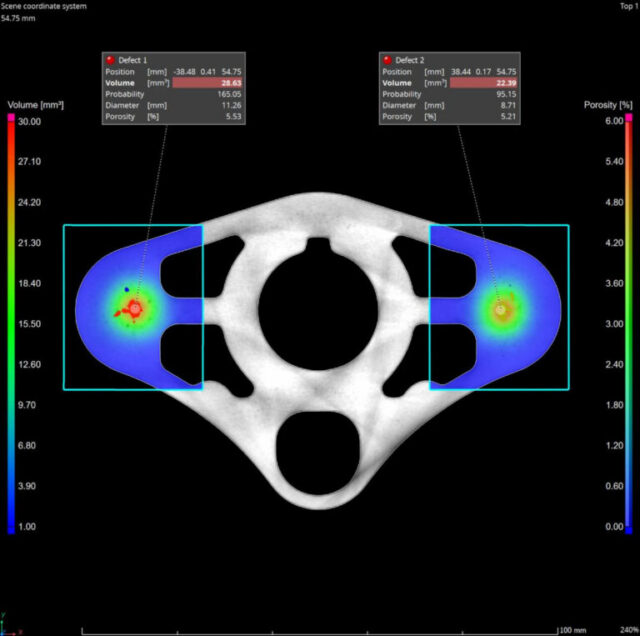
Examples of CT-scan-data analysis of an automotive part.

Germany’s luxury automaker, BMW, is doing CT scans of every engine housing in their iX EVs.

The iX is based on an independent platform, unlike the company’s other electric vehicles, However, it it uses the same drive unit (motor, inverter, transmission) known as HEAT (Highly-Integrated Electric Drive Train) that is employed in the other BMW models. Ensuring the consistency and quality of this valuable drivetrain is clearly a priority for the automaker.

How In-line CT Quality Inspection Works

During quality testing with in-line computed tomography (CT), an X-ray source emits radiation that penetrates objects and is attenuated depending on the material and geometry of the workpiece to be tested. A detector attached at the opposite side of the source creates a shadow image of the workpiece from the remaining radiation; the varying grey tones of the shadow images represent the differences in the nature of the test specimen. Control software then generates a 3D model of the object from the 2D X-ray image stacks. Finally, holistic analysis and visualization software is used to view and analyze the digital model from a variety of specific perspectives to either detect potential faults or to certify acceptable quality.

Robots and Scanners and Software—On the Line

At its Landshut, Germany, facility, BMW is using a combination of in-line robotics, CT scanning and detection, and analysis and visualization software, to inspect their HEAT e-engine housing during active production. The entire system was installed and integrated into their production line by Heitec, a global engineering solutions provider for a broad range of industries.

Heitec’s installation delivers a continuous-flow process in which a robot plucks an aluminum housing off the production line, deposits it on a platform that feeds it into a HeiDetect Inline CT scanner, then shifts to the other side of the scanner to retrieve an already-scanned component and moves that one back to the line. Each scan takes place in 50 seconds.

Post-scan, Heitec’s proprietary software quickly generates a digital model of each housing from the CT data, then transfers the model to Hexagon’s VGinLINE software for rapid segmentation and analysis. Viewable onscreen by engineers, graphic-and-colored alerts are automatically generated to call out any significant porosity, cracks, geometric inconsistencies, or other production or material flaws that deviate from BMW’s quality specifications.

Delivering Production Insights—at Speed

Christian Abt of Heitec

“Doing all this in the cycle time of the production line is the challenge,” says Heitec co-founder Christian Abt. “You have to speed everything up to stay within that time—or even several seconds less than that.”

Achieving this kind of fine-tuned industrial automation has become second nature to Heitec, which has been installing increasingly “smart” factory systems worldwide for more than 26 years. After completing his engineering degree, Abt first worked at the Fraunhofer Institute in Germany (“for a young engineer, a fantastic playground for robotics”). He left to co-found Heitec as robots were becoming a commodity, deciding to strengthen his young company’s automation offerings with the addition of CT scanning.

“Prior to that time, most CT was being used in the laboratory,” he says. “We saw an opportunity to bring these machines into real-world production, supporting the guys in blue jackets on the factory floor with our x-ray technology, our robots, and our knowledge of automation.”

“Manufacturing companies that are now coming to us for in-line CT have usually checked out all other possibilities but found no other solution that provides the level of quality assurance they are looking for,” says Abt. “They are demanding answers that work for them.”

Heitec customizes every installation to the specific industrial customer, sets up the robot(s) and CT scanner(s)—and then must deliver the promised rapid-inspection results. “If you’re familiar with using industrial CT in the past, you may remember hours for scanning and gigabytes of data to sift through for defects,” Abt says. “That’s not the case here in production—there’s no time for that kind of delay.”

The Secret’s in the Scan—and the Software

The solution to the time crunch? Employing lower-resolution industrial CT scans that need significantly less time to capture an image—plus Heitec’s scanner-integrated software designed to process this “less-heavy” information and reconstruct the component’s volume data into a 3D computer model. This data is then loaded into holistic analysis and visualization software that queries the digital model, employing sophisticated algorithms and, most recently, deep learning—to reliably identify, interpret and report potential quality issues despite the noisy images—within a much shorter time window.

“For the kind of advanced data processing software that would deliver the metrology results our customers were asking for, we found our way to Hexagon’s VGSTUDIO MAX and VGinLINE,” says Abt. “We had evolved from software developed for research to the situation where industry was asking for more standard and pre-qualified digital tools. Everyone was aware of VG software; it was, and is, the standard in CT software.

“The complete infrastructure of VGinLINE is a ready-to-use software package that allows us to easily integrate our own modules and functions, enabling us to combine accepted standards with flexibility. We just drop out a volume and VG starts to analyze it. This process is also easy to parallelize to more than one computer to speed things up in case the time for analyzing the data is slightly longer than the time to scan the part.”

The VG CT-data analysis and visualization software has undergone over a quarter century of evolution and development, with process automation and, most recently, deep- and machine-learning, increasingly being integrated into its offerings. Says Hexagon’s general manager for VG products, Dr. Daniela Handl, “The huge quantities of design and engineering data that can be captured by CT needs a holistic approach, coupled with robust computational capabilities, to be most valuable. Rapid results delivery is critical for engineers looking for real-time insights into production-line quality as well as how manufacturing-parameter variations might be affecting outcomes.”

Key to determining which data is significant in the scan of a component is the process of segmentation—the extraction of regions of interest (ROIs) from the 3D image data. Abrupt discontinuities in voxel grey-values typically indicate edges that define a region. By partitioning a scan into discrete regions, the software can more rapidly focus on and catalogue the characteristics of the voxels in each segment. Segmentation thus enables the processing of only the important portions of a dataset—which takes a lot less time.

Customizing Proprietary Solutions with Machine Learning

But how do you determine which segments are the important ones? Especially since, in a lower-resolution CT scan obtained on a production line, the less-crisp image slices can be more challenging to understand. This is where deep- and machine-learning, forms of artificial intelligence (AI), comes into the picture: using trainable algorithms, AI can be harnessed to process and make decisions based on noisy CT data as accurately as on hi-resolution data.

“Trainable” is the key word here. The algorithms compare what they see against an existing database of all known identifiable defects that have been customized to each manufacturer’s product geometries (which is where the “training” comes in). The algorithms “learn” to identify specific manufacturing flaws by interpreting what the less-crisp voxels show.

Over time, deep learning gets even better at what it does; by comparing what it sees against real-world product data for which the solution is known, it learns to recognize patterns and features and call out deviations from the norm. In this way, it can provide highly accurate snapshots of what’s actively happening on a particular production line—supporting confident decision-making about whether to accept or reject a part. This in turn informs production-variable changes, the effects of which can be captured, collated, and statistically examined. EV batteries are another area in which machine learning can be used in this way.

How to optimize this kind of AI methodology is what BMW is now exploring—as are forward-thinking manufacturers in other industries. Working closely under NDAs, with innovators such as Heitec and Hexagon, these companies are creating and curating their own internal data sets with which to train in-house deep learning systems.

“Training a deep learning system to one’s proprietary data understandably takes some time,” says Handl. “But it pays off by saving highly valuable time and resources on the production line.” Actionable insights into what’s happening on one’s own factory floor are contributing to the further evolution of smart manufacturing, enabling companies across many industries to identify ways to improve quality while making their products more competitive.


Sponsored content, source: Heitec.
See Sponsor to get your article or news posted on ENGtechnica.

Dómhnal Slattery Appointed Chairman of Vertical Aerospace

Dómhnal Slattery, Chairman, Board of Directors, Vertical Aerospace

LONDON, UK and NEW YORK, NY, Jan 15, 2025 – Vertical Aerospace has announced the appointment of Dómhnal Slattery as chairman of its Board of Directors with immediate effect. Mr. Slattery brings over three decades of global aviation industry expertise to Vertical and rejoins the Board having previously served as chairman from Jan 2022 to Aug 2023 during which time Vertical built a strong order book and listed on the New York Stock Exchange.

Mr. Slattery is one the world’s leading aircraft leasing and finance pioneers having founded and built Avolon and SMBC Aviation into leading industry players. As of present day, they are respectively ranked as the number two and three aircraft leasing companies in the world. Dómhnal Slattery is also CEO and chairman of Clahane Capital.

Vertical will benefit from Mr. Slattery’s leadership and capital markets expertise and, in particular, his understanding of and track record in the global aviation sector. The businesses he has founded and built have collectively raised and deployed over $75 billion in capital.

Mr. Slattery was the 2023 recipient of the International Society of Transport Aircraft Trading (ISTAT) Award and the “Outstanding Contribution to the Aviation Industry” award at the Aviation Industry Awards in 2016. He was also awarded an honorary doctorate from Dublin City University in 2022 and the NYU Lewis L Glucksman Award for Ethical Leadership in 2020 – both of which recognized his contribution to aviation and entrepreneurship.

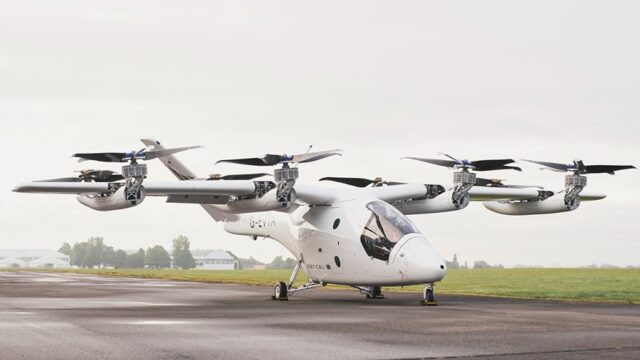
The appointment of Mr. Slattery as Chair follows significant progress for the business on its path to commercialize zero emissions air travel. Vertical recently strengthened its balance sheet by $180 million including securing $50 million of new committed funding. Vertical also became the second company in the world to achieve piloted thrustborne flight with a full-scale vectored thrust eVTOL aircraft.

Stephen Welch, the outgoing chairman, will continue to serve on the Vertical Board as a non-executive director.

Dómhnal Slattery, Vertical chairman, said, “Vertical is leading one of the most transformative shifts in aviation history, driving the transition to zero-emissions flight. I am excited to re-join the business at such a pivotal time. We have the team, technology and vision to pioneer electric aviation and deliver on our ambition to be the world’s leading eVTOL company by the end of the decade.”

Stuart Simpson, CEO at Vertical Aerospace, said: “Dómhnal’s remarkable track record of founding and scaling world-class businesses positions him perfectly to guide Vertical’s journey. His leadership, understanding of capital markets and deep industry expertise will be invaluable as we accelerate towards achieving our Flightpath 2030 goal of becoming the global leader in the eVTOL sector.”

Source: Vertical Aerospace

0FansLike
0FollowersFollow
0SubscribersSubscribe
Google search engine

Recent Articles

Trending Now