Built-In AI Has Different Jobs Across CAD and PLM
Source: Leo AI.
Source: Leo AI.


AI assistants embedded in CAD and product lifecycle management software perform different jobs, even when their descriptions sound similar. Leo AI’s comparison argues that engineering teams should evaluate each tool by the information it can access and the tasks it can complete.

Dassault Systèmes’ AURA draws on the 3DEXPERIENCE platform, connecting requirements, geometry, simulation, and analytics. The article distinguishes that platform coverage from the evolving capabilities available inside desktop SolidWorks, noting that some functions remain in beta.

Onshape separates guidance from automation. AI Advisor answers questions using documentation and training resources, helping users learn commands and troubleshoot workflows. It does not generate designs or make engineering decisions. The FeatureScript MCP server supports a different activity: helping AI agents write, test, and refine code for reusable custom features that teams can share. onshape.com

Siemens similarly separates application assistance from product knowledge. NX Design Copilot focuses on guidance and learning. Teamcenter Copilot answers questions using managed engineering information, provides source references, and respects access permissions. Its usefulness depends on the content included in its knowledge base and the connections available to users.

PTC organizes Creo AI into Advise, Assist, and Automate. The article presents these as expanding capabilities, moving from guidance toward executing modeling operations. Their differing release stages matter when distinguishing usable functions from development plans.

Leo’s central argument is that assistance within individual applications does not automatically resolve knowledge scattered across CAD, PDM, PLM, shared folders, and enterprise resource planning systems. It positions its own product as a search layer spanning those sources, making the comparison partly a commercial case for additional software.

However, platform boundaries require qualification. Siemens documents Microsoft 365 Copilot integration that combines Teamcenter context with other enterprise information. Teams should therefore verify integrations, permissions, and supported tasks before assuming any assistant’s reach stops at its vendor’s platform.
Teradyne Introduces Magnum E2 for Memory and Logic Testing

Image: LinkedIn
Image: LinkedIn

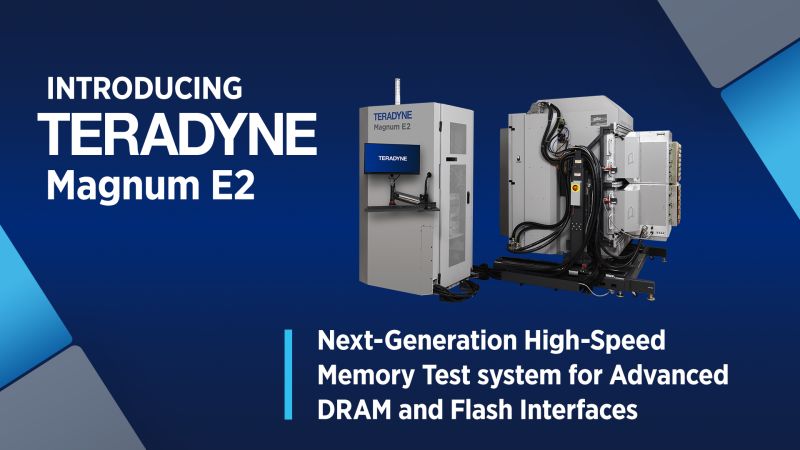
NORTH READING, MA, Oct 1, 2026 – Teradyne has introduced Magnum E2, a semiconductor tester that combines memory and logic testing on common hardware and software. Magnum E2 supports engineering configurations through production, including testing for LPDDR6, DDR6, GDDR7 and NAND flash.

The tester uses Teradyne’s Near-DUT Test (NDT) architecture for applications like AI data centers, edge computing and enterprise solid-state drives. Higher memory speeds, wider I/O interfaces and PAM3 signaling require test pins and parallel testing capacity while maintaining signal integrity.

“The memory inside an AI accelerator is as critical to system performance as the compute die itself, and the test requirements have never been more demanding,” said Ben Han, president of the memory test division at Teradyne. “As the industry moves to advanced DRAM and high-speed NAND flash for enterprise SSDs, our customers cannot afford a test platform that forces a choice between signal integrity and throughput. Magnum E2 was built to eliminate this trade-off and give leading memory manufacturers a platform they can qualify today and grow with for the future.”

Magnum E2’s features include:

  • Instrument placement: Digital instruments sit close to the device to preserve signal integrity and AC margin.
  • Signaling and protocol support: The tester supports high-speed NRZ, PAM3 and PAM4 signaling. Its programmable APG architecture accommodates current and emerging DRAM and NAND standards on common hardware without requiring tester replacement.
  • Memory and logic testing: Built-in logic test capability allows manufacturers to consolidate test insertions within one system.

Source: Teradyne

About Teradyne

Teradyne, Inc. is a technology company founded in 1960. It designs and manufactures automated test equipment and robotics systems. The company provides semiconductor test systems for logic, memory, analog, and mixed signal devices. It also offers system-level test equipment for circuit boards, storage products, and wireless devices. Its robotics portfolio includes collaborative robots and mobile robots for manufacturing and warehouse operations. Teradyne serves semiconductor manufacturers, electronics producers, and industrial companies worldwide. Its customers include chipmakers and technology firms in computing and communications sectors. The company operates engineering, manufacturing, and support facilities in multiple regions. Teradyne employs about 6,500 people globally. Its headquarters is in North Reading, MA.

CAD’s MCP Connections Offer Different Capabilities

Source: Leo AI.
Source: Leo AI.


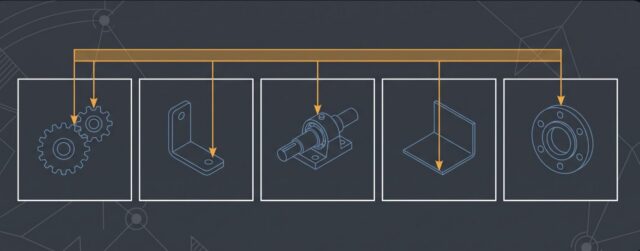
Connecting an AI agent to CAD software does not guarantee access to the information or operations an engineer needs. Leo AI’s comparison examines Model Context Protocol servers for SolidWorks, Onshape, Fusion, and Creo, emphasizing differences in ownership, maintenance, and scope.

MCP standardizes how AI applications discover and invoke tools. It does not certify their capabilities. Teams must establish who maintains a connection, which functions it exposes, where it runs, and whether existing permissions protect the data involved.

According to the article, SolidWorks relies on community projects rather than an official Dassault Systèmes server. These projects can expose functions such as custom properties, bills of materials, drawing exports, and macros. However, compatibility and reliability vary, leaving users responsible for evaluation and maintenance.

Onshape offers an official FeatureScript MCP server through its Labs program. It helps AI clients generate, execute, and refine code for reusable custom features. Its focus is creating the instructions that produce geometry, rather than providing assembly analysis or unrestricted model editing.

Fusion separates its official capabilities between two servers. Fusion Data MCP handles hubs, projects, folders, permissions, and information. It connects through Autodesk authentication and does not manipulate geometry. Fusion MCP instead connects to a running design session, supporting modeling operations and changes through Fusion’s API and scripting capabilities. Choosing the correct server therefore depends on whether the task concerns project administration or work inside a model.

For Creo, the article describes an experimental MCP interface built around the community CREOSON toolkit. Demonstrated tasks include drawing generation and assembly configuration changes, but incomplete API coverage and unreliable sketch automation remain limitations.

The comparison also promotes Leo’s own search product for information spanning CAD, PDM, PLM, and ERP. That commercial perspective underscores a useful distinction: controlling one CAD application and retrieving engineering knowledge are separate problems requiring different capabilities.

TASKING Joins SDVerse With Software Development Tools

Image: TASKING
Image: TASKING

NORTHVILLE, MI, Oct 1, 2026 – TASKING has joined SDVerse so that automakers get access to information about its embedded software development tools. Its portfolio covers compiling, debugging, tracing and testing for electronic control units, central and zonal controllers, and advanced driver-assistance systems (ADAS).

“As vehicles evolve into AI-defined platforms, the ability to build, test and validate embedded software with confidence becomes a strategic capability,” said Prashant Gulati, CEO of SDVerse. “TASKING brings deep, trusted expertise across the software development lifecycle, strengthening SDVerse with the AI-assisted tools automotive engineering teams need to manage growing software complexity, meet critical safety and security requirements, and bring next-generation vehicle programs to market faster.”

Architecture and Standards Support

TASKING’s toolchain supports processor architectures and microcontroller families including Infineon AURIX/TriCore, Arm, RISC-V and Renesas RH850. Its tools support ISO 26262 and ISO/SAE 21434 development requirements, supporting applications through ASIL D.

Engineering and procurement teams will be able to review capability through SDVerse and contact TASKING. Buyers can use the information to assess tools against their processor architectures, technical requirements and safety objectives.

The initial portfolio presented through SDVerse includes:

  • Compiler toolsets for Arm, Infineon TriCore, Renesas RH850 and RISC-V.
  • Debugging tools, including winIDEA and iC7 BlueBox debuggers.
  • Test and verification tools, including the LDRA tool suite and Productivity Package for Automotive.

“The transition to software-defined vehicles and the availability of powerful AI are fundamentally changing how automotive software is developed,” said Gerard Vink, industry specialist at TASKING. “As software becomes more complex and development increasingly AI-assisted, engineering teams need integrated tools that help them manage performance, functional safety and cybersecurity across the entire development lifecycle. By joining SDVerse, we can make TASKING’s AI-assisted compile, debug and test toolchain more accessible to automotive development teams and engage with customers earlier as they define their next-generation vehicle architectures.”

Source: TASKING

About TASKING

TASKING, founded in 1977 and headquartered in Munich, Germany, develops embedded software tools. Its products support code compilation, debugging, tracing and testing. The portfolio includes compiler toolsets, winIDEA development software, BlueBox debugging hardware and LDRA testing products. Customers include automotive manufacturers, suppliers, aerospace and defense contractors, industrial firms, medical-device companies, robotics developers and consumer electronics manufacturers. TASKING supports Infineon AURIX/TriCore, Arm, RISC-V and Renesas RH850 architectures. Its tools support development for vehicle control units, driver-assistance systems, factory equipment, medical devices and aerospace applications. The company also provides tools and documentation for development under standards such as ISO 26262 and ISO/SAE 21434. Some products support development up to Automotive Safety Integrity Level D.

About SDVerse

SDVerse is an automotive software marketplace founded in 2024 and headquartered in Southfield, MI. General Motors, Magna and Wipro established the company to connect automotive software buyers and sellers. Its marketplace allows suppliers to list software products, features and technical specifications for review by potential buyers. Automakers and suppliers can search and compare offerings and submit requests for information. SDVerse focuses on software for software-defined vehicles and related automotive engineering and development workflows. Users include automakers, Tier 1 suppliers, software providers, technology companies and automotive engineering organizations. The marketplace includes software products and engineering services covering different stages of vehicle development. SDVerse reports more than 35 participating companies, 650 users and 450 listed products.

Pickering Launches Switching Matrix for Test Systems

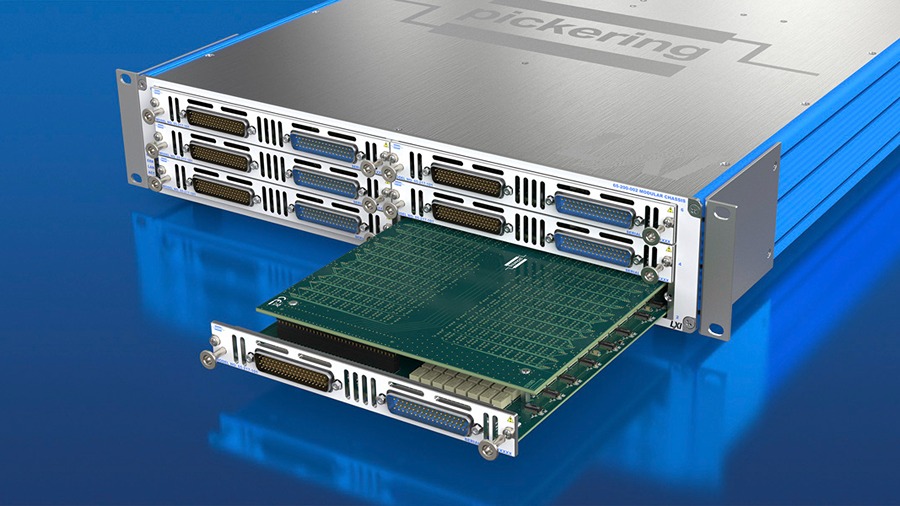
Image: Pickering Interfaces

CLACTON-ON-SEA, UK, Oct 1, 2026 – Pickering Interfaces has introduced the 65-217, an Ethernet-controlled LXI switching matrix that engineers can expand without removing the chassis from the test rack. The 65-217 switching matrix also supports RF crosstalk measurements on unterminated signal paths for aerospace and automotive applications.

“The 65-217 gives users a practical way to start with the matrix size they need today and expand it later,” said Steve Edwards, head of product management at Pickering. “Up to six plug-in modules can be installed in a 65-200 chassis, creating a single matrix rather than separate 64×8 elements. The control software handles the path identification offsets between modules, reducing programming complexity.”

Designed for Pickering’s 65-200 LXI chassis, each plug-in provides a 64×8, single-pole matrix. Configurations reach 384×8 within a 19-inch, 2U chassis. Front access also allows engineers to replace modules for servicing. Versions are available with or without front-panel Y-axis access, while switched Y-axis loop-through connections support expansion across multiple chassis.

A dual Y-axis analog bus lets multiple external instruments access different portions of the matrix. Users can also divide the system into two independent matrices. Switched Y-axis points disconnect unused sections to help maximize bandwidth.

Relay cycle counting helps users schedule preventive maintenance and balance usage across signal paths. Integrated Built-In Relay Self-Test (BIRST) and external eBIRST tools can identify failed or worn relays. Each plug-in carries spare relays for servicing.

The 65-217 switches up to 300 VDC or 250 VAC and 2 A, with maximum power ratings of 60 W or 62.5 VA. Pickering provides a three-year warranty and guarantees product support.

Source: Pickering Interfaces

About Pickering Interfaces

Pickering Interfaces, founded in 1988 and based in Clacton-on-Sea, UK, designs and manufactures modular signal switching, sensor simulation and cabling products for electronic test and verification. Its portfolio supports PXI, LXI, PCI and USB platforms and includes cable and connector assemblies, diagnostic test tools and software developed in-house. The company serves customers in automotive, aerospace and defense, energy, industrial equipment, communications, medical technology and semiconductors. Pickering’s products are used in test systems deployed worldwide. The company maintains operations in the United States, UK, Germany, Sweden, France, the Czech Republic, Malaysia and China, with additional representation across the Americas, Europe and Asia. It employs about 200 people globally.

Pre-Met Plans 75-Metric-Ton Press With Automated Feed

Image: Pre-Met
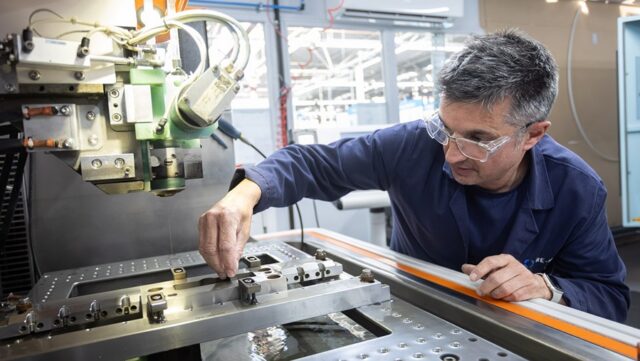
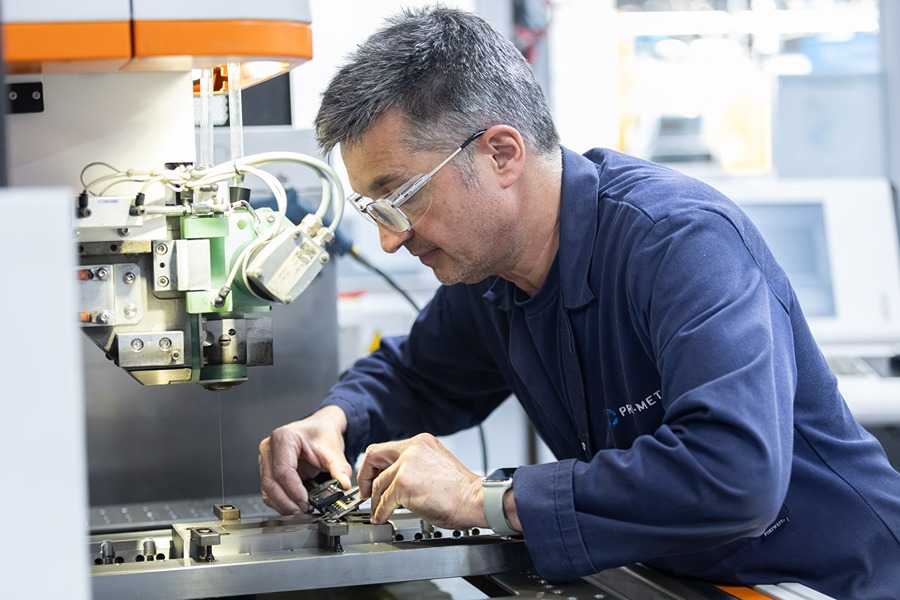
Matt Harrison, Toolroom Manager, operating the new AgieCharmilles wire erosion machine. (Image: Pre-Met)

Pre-Met has secured £500,000 in new business across automotive, aerospace, defense and rail after expanding production capacity. The company has installed an AgieCharmilles wire erosion machine and plans to install a Cincinnati Milacron 75-metric-ton press with an automated feed.

“We have worked really hard to identify new markets and how we can strengthen how we support existing customers,” explained James Leng, managing director of Pre-Met.

“It’s an approach that has started to pay off, with six wins across automotive, aerospace, defense and rail. In fact, the latter has seen us take on larger, more complex work for a long-term client that was only made possible by the investment and process improvements we’ve made.”

He continued: “With so many external pressures on industry, it’s a sign the team we’ve got can respond and find ways to make savings, work smarter and, through additional machinery, secure new orders.”

Pre-Met has spent the past 12 months integrating the Quality Springs & Pressings operation into its Studley Road site. The work included reorganizing operations, modernizing the toolroom and changing processes. These changes have reduced costs and waste.

Pre-Met also joined JOSCAR, the supplier qualification system for aerospace, defense and security. It supplies components worldwide to aerospace, defense, mobility, medtech, construction, electrical and transport customers.

James continued: “Quality is a big part of what we do, and we are currently triple accredited for ISO 9001, ISO 14001 (environmental) and IATF 16949 (automotive).”

“The performance goes way beyond getting the standards. It’s all about the culture we instill and the desire from everyone in the business to deliver right first-time parts to customers.”

He concluded: “This has seen us achieve an overall PPM score of 99.64% with zero defects in automotive and rail. The trust this generates is significant with our global client base.”

Source: Pre-Met

About Pre-Met

Pre-Met, based in Redditch, United Kingdom, began operating in 1973, producing pens, cufflinks and telecommunications parts. It now manufactures precision metal pressings, spring components and assemblies for aerospace, automotive, medical technology, electrical, construction and transport customers. Its services cover concept development, design, prototyping and manufacturing at low, medium and high production volumes. Pre-Met holds ISO 9001 and IATF 16949 certifications and appears on the JOSCAR supplier accreditation system used in defense and aerospace. In 2023, it acquired Quality Springs & Pressings, expanding its wire forming and spring manufacturing capabilities and bringing its workforce to 64. The acquisition also increased press capacity and introduced robotic and manual welding.

Autodesk’s AI Platform Depends on Connected Data

Source: Beyond PLM.
Source: Beyond PLM.


Autodesk Platform Services (APS) is moving toward AI-assisted development, with tools intended to help developers discover capabilities, build applications, manage software portfolios, and distribute solutions. At Autodesk University 2026, the company presented a future in which developers describe their goals and AI helps assemble the services, tells Beyond PLM blog.

APS connects design and project information through APIs, supporting viewing, data access, and cloud automation. Autodesk Assistant helps developers identify APIs and assess business value. The APS Workflow MCP is designed to understand API dependencies and help coding agents produce working applications, allowing developers to concentrate on reviewing and improving them.

Availability matters. Workflow MCP remains in private beta, while conversational administration and deeper integration of marketplace applications are future plans. Existing APIs and Assistant capabilities provide the starting point.

In Beyond PLM, Oleg argues that the evidence for APS comes from customers organizing fragmented information. One engineering consultancy connected project records across Autodesk services, SharePoint, and Outlook. During a controlled test, its agent identified conflicting generator capacities in calculations and an electrical diagram. The example illustrates the value of bringing records together before asking AI to interpret them.

Other examples reinforce that sequence. A substation engineering firm established structured project data before adding automation, reporting a 25% improvement in initial design delivery. JE Dunn reduced project update times from 12 hours to 5 minutes after investing in connected enterprise data.

The article also raises an ownership question: Autodesk may connect information while another platform supplies its business context and meaning. Manufacturing examples remain limited, although a Vault-to-ERP connector demonstrates proposed bill-of-materials changes requiring human approval.

For engineering organizations, Oleg’s argument is practical: structure and connect data first, then apply agents with people responsible for decisions. Easier integration can reduce programming effort, but understanding relationships, checking proposals, and exercising engineering judgment remain essential.

Multiphysics Simulation Moves Validation Earlier

Simulation workflows replace trial and error (source: Phuttaphat Tipsana for iStock/Getty Images Plus via Getty Images).


Electronic products combine tightly connected electrical, thermal, and mechanical behavior. Evaluating these effects separately can leave failures undiscovered until hardware is built, when redesign becomes expensive. Multiphysics simulation addresses this problem by examining interactions earlier, helping engineers identify weaknesses before committing to physical prototypes, tells Design News.

Guided workflows also make simulation more accessible to engineers without specialist analysis skills. Structural checks can assess drop, shock, and vibration performance against standards such as MIL-STD, IEC, and JEDEC. Integrating these checks into development helps teams investigate reliability while design changes remain practical, potentially reducing repeated prototype cycles and late corrections.

Writing in Design News, Keysight’s Chris Mueth explains why this approach matters across electric vehicles, data centers, aerospace systems, and advanced semiconductor packages. Heat, airflow, electromagnetic effects, and structural behavior increasingly influence one another, requiring coordinated engineering decisions.

Instead of handing work sequentially between departments, teams can analyze shared geometry in parallel. Mechanical, thermal, and radio-frequency specialists can assess competing requirements and resolve trade-offs before manufacturing begins. Physical testing then serves primarily to confirm predictions rather than reveal design problems.

Mueth illustrates the approach through a precision measurement instrument. At the system level, engineers evaluate enclosure manufacturing, cooling, transport loads, and structural durability. At the subsystem level, electromagnetic, circuit, and thermal simulations examine microwave performance and packaging effects under realistic conditions.

Board-level analysis checks power delivery, signal quality, and timing. Mechanical simulations also investigate solder joints, vias, and materials exposed to thermal cycling and vibration, helping reveal reliability problems that might otherwise emerge after deployment.

Connecting these levels enables continuous validation throughout development. The resulting structured engineering data can support AI workflows that coordinate and accelerate optimization. For engineering teams, the proposed benefit is earlier visibility into interactions, fewer costly redesigns, and more confidence that a product will perform reliably beyond ideal laboratory conditions.

Vectorworks Named Finalist for Six Construction Computing Awards

Image: Vectorworks

COLUMBIA, MD, Sep 30, 2026 – Vectorworks is a finalist in six categories at the 2026 Construction Computing Awards. The nominations cover Vectorworks Architect, Morpholio Trace, the company itself and the Vectorworks–Morpholio Trace integration released in Vectorworks 2026 Update 5.

Now in its 20th edition, the awards program is also known as “The Hammers.” It covers technology for designing, constructing, maintaining and modifying commercial buildings, residential and social housing, and civil engineering projects.

“It’s an honor to see both Vectorworks and Morpholio recognized across these categories,” said Anna Kenoff, director of marketing – cloud and mobile at Vectorworks. “These nominations reflect the creativity and impact of Morpholio’s design tools, while the recognition for the Vectorworks and Morpholio Trace integration highlights what becomes possible when designers can move more fluidly from early ideas to developed project information.”

The six finalist entries are:

  • BIM Software of the Year 2026: Vectorworks Architect.
  • Architectural Design Software 2026: Vectorworks Architect.
  • Mobile Technology of the Year 2026: Morpholio from Vectorworks – Morpholio Trace.
  • Product of the Year 2026: Vectorworks Architect.
  • Company of the Year 2026: Vectorworks.
  • Innovation of the Year 2026: Vectorworks and Morpholio Trace Integration.

The awards include categories assessed by a judging panel and accept votes through the Construction Computing Awards website until Oct. 30, 2026. Winners will be announced at the awards ceremony Nov. 12, 2026, at the Leonardo City Hotel in London.

Source: Vectorworks

About Vectorworks

Vectorworks is a software company based in Columbia, MD. The company was founded in 1985 and develops design and BIM tools. Its software supports CAD, 3D modeling, rendering, documentation and project coordination. Products include Vectorworks Architect, Landmark, Spotlight, Fundamentals and ConnectCAD. The software serves architects, landscape architects, entertainment designers, engineers, contractors, educators and students. Users apply it to building design, site planning, urban design, stage production, lighting design and event planning. Vectorworks operates as part of the Nemetschek Group and sells through partners and resellers. Its products serve the architecture, engineering, construction and entertainment industries. Vectorworks reports more than 685,000 users in 85 countries. The company employs about 450 people globally.

Simcenter Testlab 2606 Prepares Test Data for AI

Source: Siemens.
Source: Siemens.


Engineering teams may have test results yet still lack suitable data for training artificial intelligence models. Siemens presents Simcenter Testlab 2606 as a way to close that gap by connecting measurement, validation, labeling, storage, and delivery within one environment.

The article identifies seven requirements: quality, validity, traceability, completeness, quantity, accessibility, and connectivity. Poor measurements can teach models to reproduce sensor errors, while missing context makes results difficult to interpret or compare. Siemens SCADAS acquisition systems retain calibration, connectivity, and overload information alongside measurements. Testlab Process Designer automates checks on recorded signals and processed results.

Consistent annotation makes those results understandable. The Descriptive Model and Template Editor lets teams establish metadata structures and prepare templates before testing. Operators then add information specific to measurements. Engineers retain access to that context during analysis and reporting, helping them identify what was tested and compare results meaningfully. Metadata can also be corrected or expanded as work progresses.

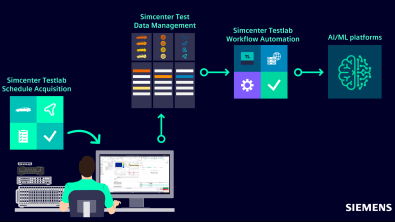
The new Schedule Acquisition workbook brings expert procedures into Testlab Neo. Engineers define instrumentation, measurement tasks, operator instructions, annotation, processing, and reporting before a campaign begins. Software then guides operators through the prescribed sequence. Reusing settings and procedures makes campaigns more comparable and reduces dependence on individual experience. External applications and Python scripts can be included for specialized tasks.

Where physical measurements are insufficient, component-based Transfer Path Analysis and virtual prototype assembly can supplement datasets with simulated results. Centralized Testlab Data Management makes measurements searchable by attributes rather than filenames.

Workflow Automation also gains direct access to this database in version 2606. Teams can define searches, retrieve matching measurements, reprocess them, and export results to AI training platforms such as RapidMiner AI Studio.

For engineers, the emphasis is on preparing reusable data throughout testing, reducing the cleanup required before machine learning can support prediction and design decisions.

0FansLike
0FollowersFollow
0SubscribersSubscribe
Google search engine

Recent Articles

Trending Now