ABB Introduces Infinitus DC Power Portfolio for AI Data Centers
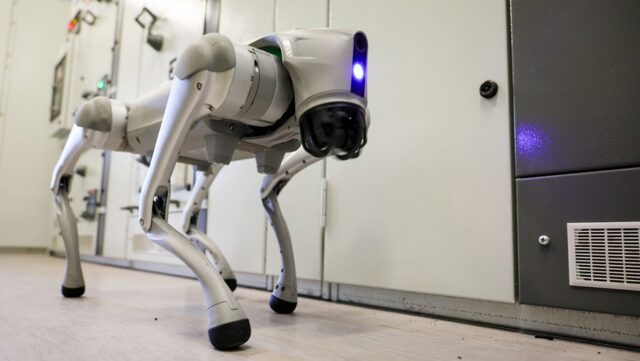
Image: ABB
Image: ABB

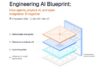
ZURICH, Switzerland, Oct 1, 2026 – ABB has introduced its Infinitus Direct Current (DC) portfolio to supply power from the source to server racks in AI data centers. It combines power conversion, distribution, protection and cooling equipment for facilities transitioning from AC to hybrid AC/DC or DC-native systems. Presented at Data Center World Asia, the portfolio covers medium-voltage powertrains, DC sources and power quality, DC distribution, DC protection and cooling optimization.

ABB expects next-generation AI chips to push rack power demand from almost 200 kW to 1 MW or more. The company estimates that DC distribution could account for 25% to 40% of new data center capacity installed in 2030.

“AI is significantly increasing the power data centers need to deliver to each server rack, but the route from AC to DC will depend on each facility’s existing infrastructure and future requirements,” said Giampiero Frisio.

“Some operators need to increase capacity within existing AC infrastructure, while others are preparing for hybrid AC/DC or DC-native architectures. At ABB we’re developing practical options that meet today’s requirements while maintaining the flexibility to adapt to future needs. The technologies we showcased at DCW Asia are important steps in that transition.”

Power Distribution and Monitoring

MNS 4.0 switchgear supports AC/DC applications, AI-based predictive maintenance and integration with plant control systems. Cybersecurity features are built into its architecture. MNS 4.0 supports capacity expansion and reconfiguration in data centers and manufacturing facilities. It builds on the MNS product family, which has nearly 2 million panels deployed worldwide. Customer availability is scheduled for 2027.

SMISSLINE TP HP plug-in distribution system provides 800 A ampacity and carries IEC and UL certifications. Its touch-safe design allows technicians to replace protection devices without shutting down the system.

The integrated InSite energy management system monitors energy use at the branch-circuit level. It supplies live data and alerts for overloads, imbalances and other anomalies.

SMISSLINE TP HP’s AC/DC components share the same physical footprint. According to ABB, operators can transition toward 800 VDC distribution by replacing component modules without structural modifications or additional space.

Grid Support and Energy Storage

Synchronous Condenser Package provides physical inertia and dynamic reactive power support where data centers connect to utility grids. It addresses rapid load changes associated with AI workloads.

The package includes a predefined foundation, condenser, flywheel with a safety cage and starting motor with a support frame. It also includes a lube-oil system, an eHouse, configurable direct, air- and water-cooling options, and an optional noise enclosure.

Modus LTO Battery uses lithium-titanate oxide (LTO) technology to buffer peaks in electricity demand. ABB says it responds within milliseconds and supports frequent charging and discharging at high power with limited wear. The battery supplies additional power during peak periods to manage fluctuating AI loads on-site.

Robotic Inspection

ABB also presented FIDO robotic inspection technology, which captures thermal, acoustic and visual data from difficult-to-access locations. Service teams can use the findings to assess conditions before entering hazardous environments. Engineers determine what to inspect and interpret the results. Automation handles repetitive inspections in hazardous locations.

Infinitus is designed to deliver efficiency gains exceeding 5%. An ABB and BCG analysis estimates that these gains at a 500 MW data center could make 25 MW available for additional IT loads. The analysis associates that capacity with more than $300 million in potential additional annual revenue.

ABB’s technology portfolio also includes a solid-state circuit breaker and a static medium-voltage uninterruptible power supply in production. ABB reports more than 25 years of DC experience and over 700 patents.

Source: ABB

About ABB

ABB is a global technology company specializing in electrification and automation, with headquarters in Zürich, Switzerland, and Västerås, Sweden. Formed in 1988 through the merger of ASEA and Brown, Boveri & Cie, ABB operates in more than 100 countries and serves sectors such as utilities, transportation, infrastructure, and manufacturing. Its portfolio includes robotics, industrial automation systems, electrification products, and motion solutions. The company draws on engineering and digitalization expertise to help industries improve performance and operate efficiently. ABB has a history of more than 140 years and employs about 110,000 people worldwide.
An AI Slider Fine-Tunes Character Motion

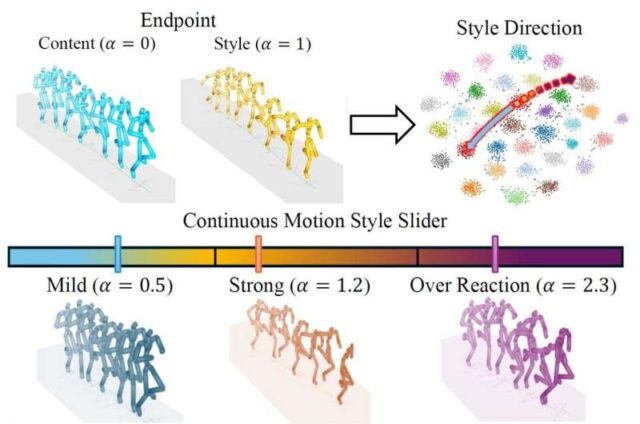
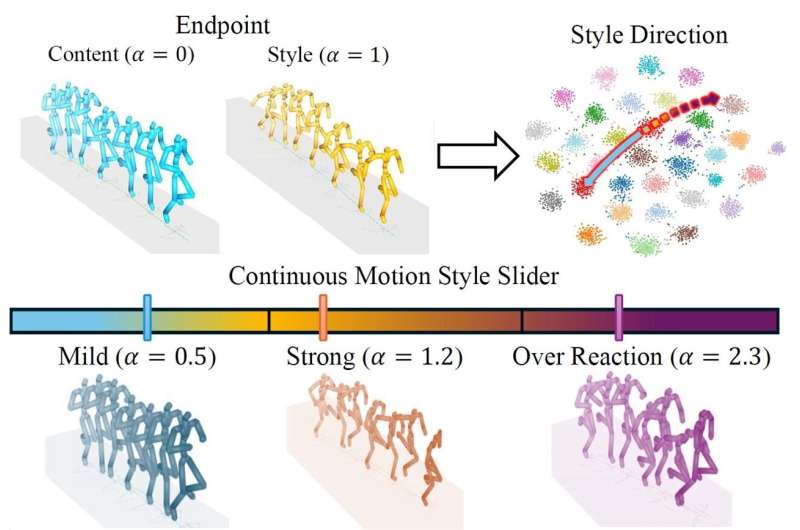
Overview of the Motion Style Slider. Using a neutral motion and a stylized motion as inputs, the system continuously controls the strength of the style by varying the slider value α. (Source: Institute of Science Tokyo).


Animators often need a character to look happier, more tired, or less expressive without changing the underlying action. A research framework called Motion Style Slider addresses that problem by giving users continuous control over the intensity of AI-generated human movement, Tech Xplore reports.

Researchers from the Institute of Science Tokyo and Cygames developed the approach to overcome the fixed expressions offered by many motion-generation tools. Training systems on numerous intermediate performances would require additional motion-capture sessions, increasing production time and cost.

Motion Style Slider instead learns from two endpoints: a neutral movement and a stylized version of the same action. A numerical control adjusts the performance between those examples and can extend beyond the style to produce stronger expression. For instance, a walking motion can become progressively more joyful as the control increases.

The framework uses a diffusion model and a learned representation of motion style. It identifies a direction of change between the neutral and stylized examples, then combines that direction with the underlying motion and the selected intensity. This information guides a pretrained motion generator, allowing expressive variation without requiring recordings for every intermediate setting.

The researchers evaluated the method using benchmark datasets and additional captured examples designed to test expressions beyond those encountered during training. Comparisons with existing techniques examined control consistency, transitions, stronger stylization, and motion quality. The team reported favorable results for adjusting intensity smoothly and extending expression beyond the original examples.

A study involving 11 university participants found that viewers could distinguish changes in expressive intensity while perceived naturalness remained comparable. That small study offers encouraging evidence, although it does not establish performance across every production scenario.

Presented at ECCV 2026, the work could help game developers and filmmakers refine character performances. Its contribution is an adjustable creative control that better matches directors’ requests.

Ascerta Raises $18M to Track Enterprise AI Costs and Returns

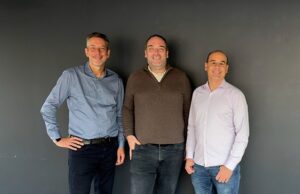
Ascerta founders: (L to R) Doron Holan, David Tepper and Erik Winters. (Image: Ascerta)
Ascerta founders: (L to R) Doron Holan, David Tepper and Erik Winters.
(Image: Ascerta)

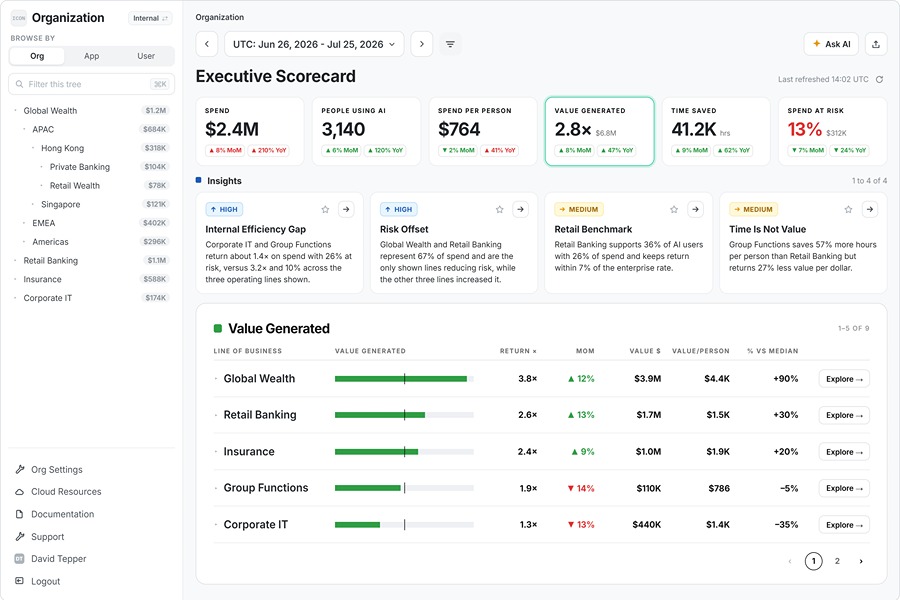
BELLEVUE, WA, Oct 1, 2026 – Ascerta has raised $18 million series A funding to expand software that measures AI costs, employee adoption and business results. The software connects spending on models and agents to the work they perform, helping companies assess which applications justify more funding.

Dell Technologies Capital led the series A, with participation from Hitachi Ventures, BGV, Wipro Ventures and earlier investors. The round brings Ascerta’s total funding to $22.9 million.

“The market is full of meaningless vanity metrics,” said David Tepper, CEO and co-founder of Ascerta. “Companies are counting tokens, lines of generated code, and agent runs, struggling to derive the impact AI has on their business. We built Ascerta to cut through the noise and give organizations the means to win in the AI-era. That means insights specific to their business, people, and use cases. That means purpose-built tools to prevent waste and aggressively optimize for value. Ascerta is a guide through one of the most pivotal eras of transformation in history.”

AI Usage and Cost Tracking

Ascerta connects to internal applications and existing enterprise AI tools. Integrations include Microsoft’s Copilot suite, Amazon Bedrock AgentCore, Salesforce Agentforce, GitHub Copilot, Claude Code and Codex.

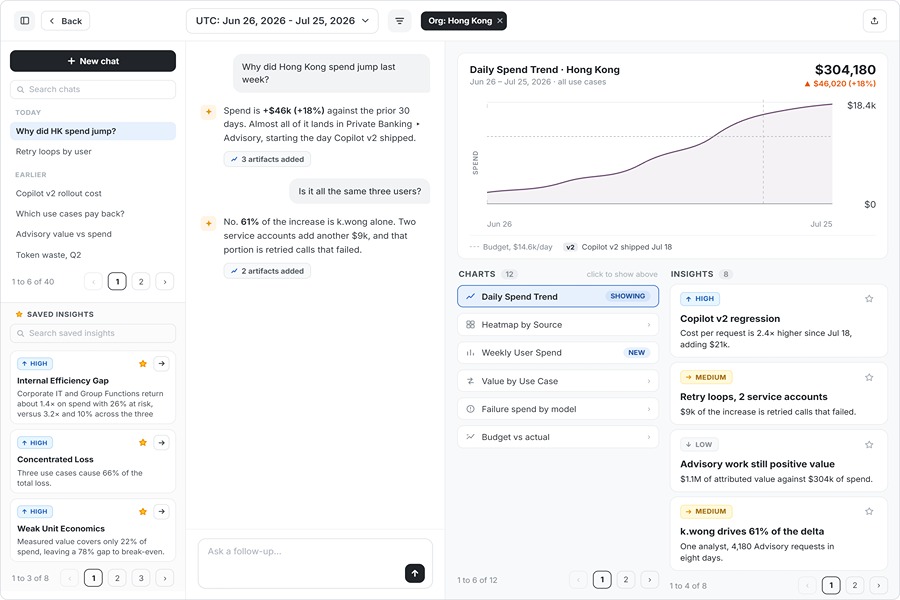
Ascerta tracks adoption by person, team and tool. Using Ascerta’s research, it links each use case to the business performance indicators it can affect. Cost tracking associates individual model calls with specific use cases and accounts for sub-token costs, hidden fees and enterprise discounts.

Image: Ascerta

Atlas measures AI value, adoption and return on investment across individual workflows and application portfolios. Forge tracks how engineering teams use coding agents. Convoy supports management of provisioned AI capacity, including workload consolidation and planning for additional applications.

Customers and Reported Results

Ascerta’s customers include Atos, Wipro and global insurance carriers. Its partners include Microsoft, AWS, IBM, Slalom and Trace3. The company reports a 47% improvement in ROI for AI initiatives, a 24% reduction in agent launch times and an 86% reduction in wasted AI spending across customers.

“At Atos, our Sovereign Agentic Studios operating model is built on moving agentic AI from pilot to production at global scale,” said Florin Rotar, group CTO and chief AI officer at Atos. “That requires measurable business value, not just technical capability. Ascerta has been instrumental in delivering on that promise, giving us the visibility and control we need to scale AI initiatives with confidence.”

Customers use Ascerta to assign financial values to AI features and identify spending associated with failed agent runs, duplicate projects and unauthorized AI use. Engineering leaders use adoption data to guide teams’ use of coding agents. Organizations managing their own capacity also use the software to assess whether new workloads can run without disrupting production.

Image: Ascerta

“Ascerta is building the system of record for AI value creation,” said Raman Khanna, managing director at Dell Technologies Capital. “Most enterprises are moving beyond broad AI experimentation and focusing their investments on what delivers measurable business value. David and the Ascerta team are giving leaders the visibility and rigor they need to understand what’s working, optimize spending and scale their most successful AI initiatives. We’re excited to partner with Ascerta as they define the Enterprise AI Management category.”

Ascerta plans to use the funding to expand its software and sales and marketing team. It also plans to extend integrations to every major enterprise AI tool and develop products from its research into AI value measurement and optimization.

Source: Ascerta

About Ascerta

Ascerta was founded by Microsoft veterans David Tepper, Doron Holan and Erik Winters in 2024 and based in Bellevue, WA. The company develops software for enterprise AI management. Its products track AI use, costs and results. Atlas measures returns by use case and business unit, while Convoy monitors reserved computing capacity and identifies workloads for consolidation. Forge tracks employees’ use of coding agents. The software connects with Microsoft Copilot, Amazon Bedrock AgentCore, Salesforce Agentforce, GitHub Copilot and Claude Code.

BIM Decision Logs Preserve Design Intent

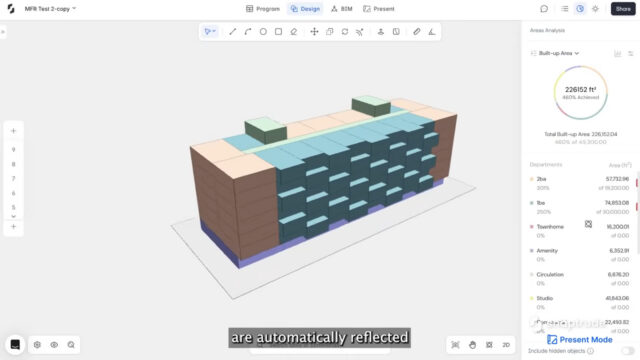
Snaptrude showing a residential BIM model with program data used to track and reconstruct design changes (source: Snaptrude).


A BIM model can preserve every edit without explaining why a design changed. Snaptrude argues that teams need a structured decision log connecting design intent, supporting evidence, approval, implementation, and validation to model states.

A record begins with the problem, assumptions, constraints, and alternatives. It then identifies the chosen approach, its rationale, the responsible owner, and the approver. Model references establish where the decision applies, while separate lists describe the required edits and the drawings, schedules, quantities, or interfaces needing review.

These distinctions prevent misunderstandings. An assumption is not an approved constraint, and approval does not mean implementation is complete. A finished edit still requires validation before it becomes an accepted part of the shared model.

The article recommends recording consequential choices rather than every adjustment. Changes affecting several disciplines, altering circulation or grids, departing from a brief, or relying on uncertain assumptions deserve attention. Reversible local decisions can use shorter records, while decisions with greater consequences need fuller evidence.

The proposed workflow moves from defining the question and comparing alternatives to approval, controlled implementation, impact checks, and closure. Significant changes should be tested in a branch, proposal, or controlled version. Records close only after acceptance checks pass. Later decisions should supersede ones without deleting their reasoning.

Traceability depends on links. Object identifiers, model versions, viewpoints, and schedule references let reviewers move from a decision to its effects and back again. Screenshots, comments, and meeting notes provide supporting evidence but cannot substitute for that structure.

The article highlights buildingSMART’s BIM Collaboration Format as a useful foundation for exchanging model-linked issues and context. Snaptrude’s comments, version history, collaboration, and branching offer additional building blocks.

However, software does not automatically create decision governance. Teams must define responsibilities, approval rules, and validation criteria so another reviewer can reconstruct the reasoning without arranging a meeting.

Sharon AI, VAST Data Plan Onshore Confidential AI Service

Image: Sharon AI
Image: Sharon AI

NEW YORK, NY, Oct 1, 2026 – Sharon AI will offer VAST DataEnclave through its AI Factory platform to run AI models onshore across Australia and Asia-Pacific. The integration is designed to protect customer data and proprietary model weights from infrastructure operators, including Sharon AI, during processing.

VAST DataEnclave, part of VAST DataEngine, provides a hardware-isolated runtime and cryptographic attestation service within the VAST AI Operating System. It verifies the runtime environment before decrypting sensitive assets and loading them into a secure enclave.

The service is intended for banks, government agencies and organizations that cannot use externally hosted AI services. Sharon AI expects the integration to expand their choice of models while retaining controls over cost, performance, policies and security.

“As a trusted AI infrastructure provider, Sharon AI exists to make secure, scalable and sovereign AI compute available to every organization that needs it,” said James Manning, co-founder and chief executive officer of Sharon AI.

“Our customers across Australia and Asia-Pacific need to run AI at full speed without compromising on data sovereignty, and increasingly they also want access to frontier models that were previously only available offshore. Building on our sovereign data foundation with VAST DataEnclave is expected to let us host those models onshore, inside attested environments where the model owner’s weights and the customer’s data are both protected from everyone, including us. That should give our customers the flexibility to operate on their own terms, backed by sovereignty they can demonstrate, not just declare.”

VAST DataEnclave provides a secure container runtime and attestation service within the VAST AI Operating System. Proprietary models execute inside virtual machines built on CPU-level trusted execution environments. NVIDIA GPUs operate in Confidential Compute mode, with encryption covering guest memory, GPU memory and interconnect traffic during processing.

Customers control their encryption keys through Bring Your Own KMS integrations. Customer data keys remain within the customer’s domain, while model keys remain within the model builder’s domain.

Connected deployments use the VAST DataEnclave attestation service, built on the CNCF Trustee stack. For air-gapped deployments, VAST and Fortanix provide on-premises attestation and key brokering without connections to external services. Both configurations keep models and customer data within customer-controlled infrastructure.

VAST DataEnclave records every attestation event, release and enclave lifecycle action in a searchable audit trail. VAST describes the log as tamper-proof and designed to document what ran, where and under which policy without exposing data or model weights.

“The next phase of sovereign AI requires infrastructure that both enterprises and model builders can trust without having to trust the infrastructure operator itself,” said Sunil Chavan, vice president, APJ at VAST Data. “Sharon AI is building exactly the kind of regional AI infrastructure where VAST DataEnclave may be able to change what’s possible, giving customers across Australia and Asia-Pacific access to leading AI models while allowing both sides to retain control of their most valuable intellectual property.”

The integration will operate alongside Sharon AI’s existing security, governance and compliance capabilities.

Source: Sharon AI

About Sharon AI

Sharon AI is a high-performance computing company founded in 2021 and headquartered in Sydney, Australia. The company provides cloud GPU services, AI computing infrastructure, and data storage systems for organizations that run compute-heavy workloads. Sharon AI offers virtual machines, GPU-as-a-service options, and cloud capacity designed for AI training, machine learning development, and high-performance computing tasks. The company supports customers that work with generative AI, large-language models, and scientific or engineering simulations. Sharon AI serves businesses, research institutions, and government agencies that require flexible access to GPU clusters and sovereign cloud environments. The company designs its systems to support resource-intensive projects and to handle datasets in production or research settings. Sharon AI operates its services through an Australian data center and maintains infrastructure to support high-bandwidth networking, distributed training, and data lifecycle management. The company also provides workload management tools that help users deploy applications, manage storage, and allocate GPU resources for specific tasks.

About Vast Data

VAST Data, founded in 2016 and headquartered in New York City, develops software for data storage and processing. Its VAST AI Operating System combines storage, database and computing services for artificial intelligence, analytics, cloud and high-performance computing workloads. Products include DataStore for file and object storage, DataBase and DataEngine, which runs functions across data centers and cloud regions. Customers include enterprises, cloud providers, government agencies and research organizations. The company serves life sciences, media, animation and visual effects, public sector and financial trading.

Corning Builds Beyond the AI Boom

Source: Aaron Kotowski for Forbes.

Corning’s optical fiber has become essential infrastructure for the AI boom, connecting servers and data centers that process volumes of information. Forbes profiles the company’s effort to turn that demand into growth while avoiding another collapse like the one it suffered after the telecommunications bubble burst.

Founded in 1851, Corning supplies glass technologies spanning communications, electronics, transportation, and energy. CEO Wendell Weeks sees expanding demand for fiber, but his strategy also depends on developing markets that can sustain the business if AI spending slows.

That caution comes from experience. Corning borrowed heavily for acquisitions during the telecom boom, then watched customer orders disappear. Its recovery relied on materials innovations, including glass for flat-panel displays and Gorilla Glass for smartphones. The article presents that history as a lesson in maintaining sources of growth.

Automotive glass offers one such opportunity. Gorilla Glass can make windshields lighter and more resistant to damage, extending technology familiar from mobile devices into vehicle design. The engineering value lies in combining durability with reduced weight, qualities that matter beyond any single technology investment cycle.

Solar manufacturing provides another avenue. Corning is applying its materials and production expertise to American-made polysilicon, wafers, and modules. Building this domestic capacity expands its role in energy infrastructure while drawing on capabilities in glass science, manufacturing, and materials processing.

Research remains central to that approach. Forbes describes work on tougher solar-panel glass, layers that could convert ultraviolet light into wavelengths solar cells use more effectively, and ceramic filtration adapted for industrial carbon capture.

Partnerships also guide development. Apple helped turn Gorilla Glass into a major business, while data-center customers are encouraging denser optical connections.

For engineers, Corning’s story illustrates the value of reusable expertise. Its ambition is to translate materials knowledge into applications, creating opportunities that remain useful after the boom fades.

Local AI Reshapes the BIM Workstation

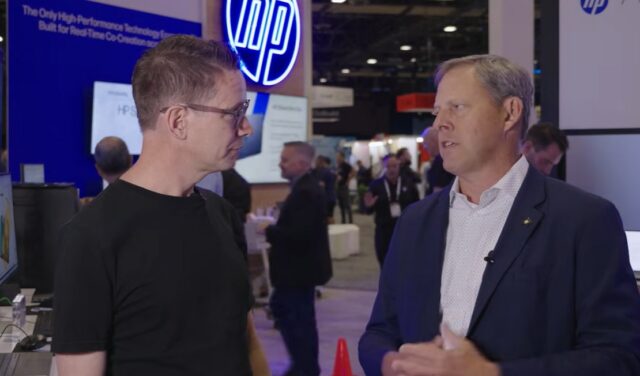
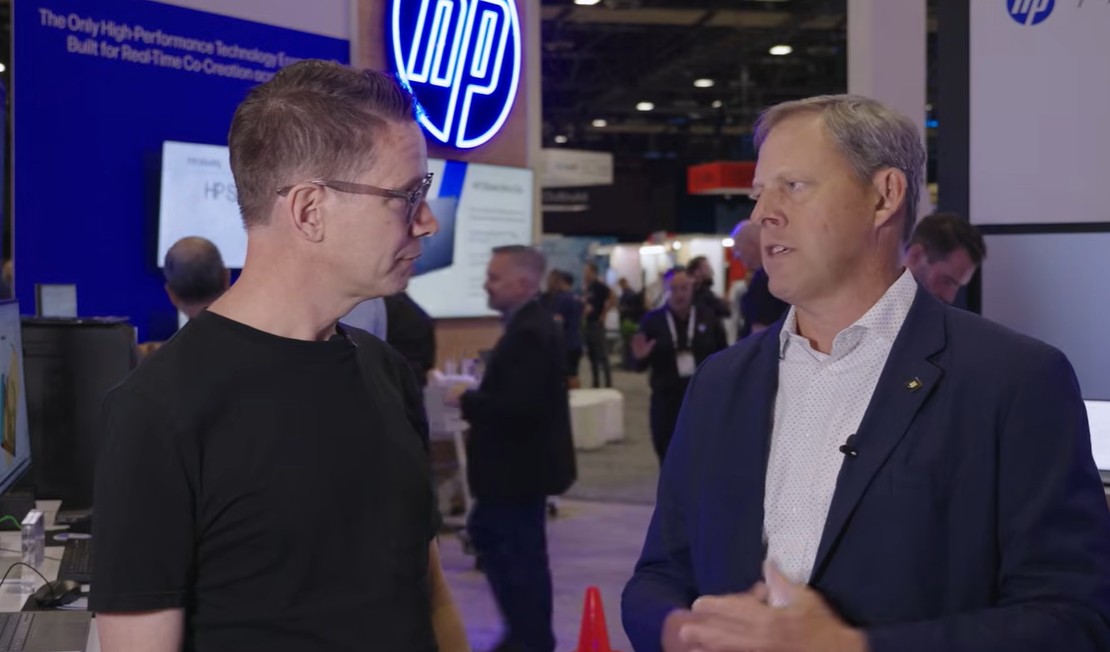
AEC Magazine’s Greg Corke talking to AMD’s David McAfee about the Ryzen AI Max Pro (source: AEC Magazine).


Running a large language model on a laptop could change how architecture and engineering firms plan their workstations. AEC Magazine’s Greg Corke explores that possibility with AMD’s David McAfee, focusing on hardware that must support AI alongside Revit, visualization software, and other design applications.

The discussion centers on HP’s ZBook Ultra G3a and its AMD Ryzen AI Max Pro processor. According to the article, the workstation supports up to 192 GB of unified memory, with as much as 160 GB available to the GPU. That capacity could bring models traditionally associated with data centers onto a portable computer, reducing dependence on cloud processing.

Memory capacity, however, is only part of the equation. A running model must share computing resources with design software. The interview examines what happens when AI, Revit, and visualization tasks compete on the same machine, making simultaneous performance an important consideration for workstation planning.

Usability also matters. HP and AMD are working toward more accessible controls for allocating memory, avoiding the need for users to change settings in the BIOS. Easier adjustment could help designers configure resources around different workloads.

Purchasing decisions become harder when requirements are changing. LPDDR memory offers power efficiency, but it cannot be upgraded later. Firms therefore face a tradeoff between present needs and the capacity future AI applications might require.

The conversation also covers Radeon professional graphics drivers and the software ecosystem. One question is whether AI-assisted coding could simplify moving applications from Nvidia’s CUDA platform to AMD’s ROCm environment. The article presents this as a topic for discussion, rather than an established solution.

AMD’s broader vision spans mobile workstations, the Threadripper Halo Station, and cloud resources. For AEC firms, the emerging question is where each workload belongs and how hardware choices can accommodate both design tasks and increasingly demanding AI tools.

China Takes AI Processing Into Orbit

Source: Meta.
Source: Meta.


China has launched an AI computing satellite designed to process Earth observations in orbit, potentially shortening the wait for information. Tom’s Hardware reports that Supercomputing-1, also called S-AIDC-1, was among nine satellites carried by CAS Space’s Kinetica 1 Y18 rocket on September 20, 2026.

Developed by computing infrastructure company S-AIDC, the spacecraft combines an optical imaging payload with an AI image-processing computer. Its objective is to reduce processing times from hours to minutes by analyzing observations locally instead of first transmitting them to terrestrial computing facilities. The article presents that improvement as an intended benefit, not a published performance benchmark.

Onboard processing addresses a limitation of Earth observation: collecting images and delivering useful information are different tasks. AI can filter imagery and identify features before transmission, reducing the volume sent to ground stations. The European Space Agency’s work on onboard AI illustrates this approach through cloud detection, image compression, vessel identification, and wildfire monitoring.

For engineers, this means moving part of the analysis closer to the sensor. Satellites can prioritize usable observations rather than consume communication capacity transmitting every image. Processing at the source can therefore improve bandwidth use and shorten the path between observation and information that people can act upon.

The Chinese launch also fits a broader effort to develop computing infrastructure in space. The report describes an approved Space Computing Industry Innovation Center intended to connect launch providers, satellite builders, chip manufacturers, and AI companies.

Interest in orbital computing reflects pressure from terrestrial data centers, including electricity demand, cooling requirements, land use, and community opposition. However, the article acknowledges economic and practical challenges for large computing installations in space.

Supercomputing-1 represents a narrower application: giving an observation satellite its analytical capability. Its significance lies in processing data where it originates, with potential benefits for monitoring and disaster response.

A Robotic Guide Dog for Greater Independence

Source: Tech Briefs.


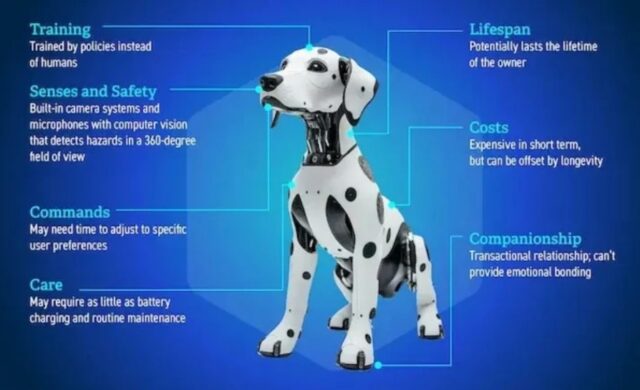
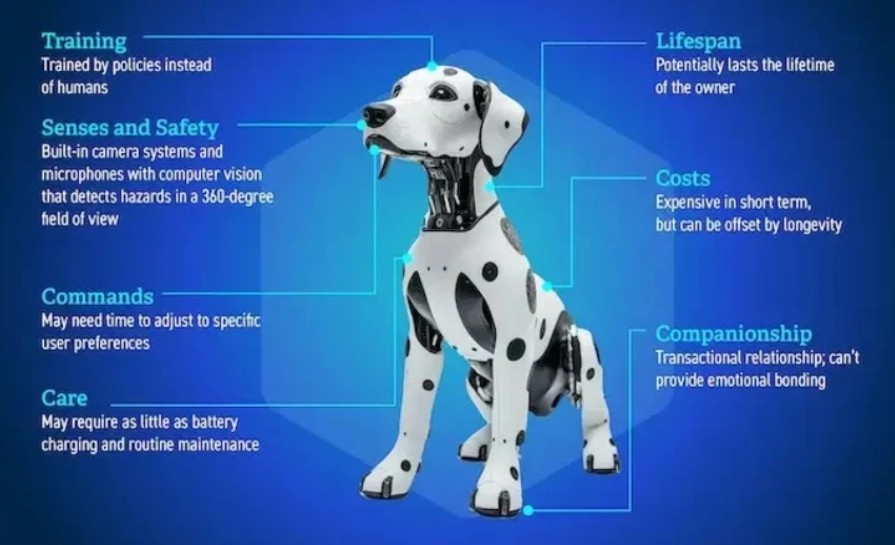
Georgia Tech researchers are developing a robotic guide dog to help blind and visually impaired people navigate independently. Led by Bruce Walker and Sehoon Ha, the project explores an alternative for people who cannot obtain or care for a service animal. Training costs and limited working lifespans constrain the availability of guide dogs, tells Tech Briefs.

The team is studying more than navigation technology. Its research considers what people want from a robotic companion, including its appearance, physical form, and behavior. Those choices affect whether prospective users feel comfortable adopting a machine intended to accompany them through public spaces and everyday activities.

Tech Briefs describes a system that works alongside its user through shared navigation. A person specifies a destination, and the robot plans a route, stays on sidewalks, and avoids obstacles such as signs, hydrants, and pedestrians. Requests can include intermediate stops rather than a single destination.

Communication through the harness is central to this partnership. When the robot changes direction to avoid an obstacle, the user feels the movement and adjusts accordingly. Feedback also travels in the opposite direction: pulling back asks the robot to slow down, while pushing can request a faster pace. The user contributes wayfinding skills throughout the journey.

Researchers envision safety capabilities, including cameras covering a full circle, computer vision for hazard detection, and voice recognition that could identify calls for help. These remain proposed features within an evolving research program, rather than confirmed functions of a commercial product.

The project is still in early development. Demonstrations, focus groups, and surveys are helping researchers assess acceptance and refine design decisions. Discussions with manufacturers, technology partners, designers, and disability organizations are also underway.

The article presents independence as the goal, with progress depending on both dependable robotics and communication that lets people remain active participants in their navigation.

From CAD Models to Working Robots

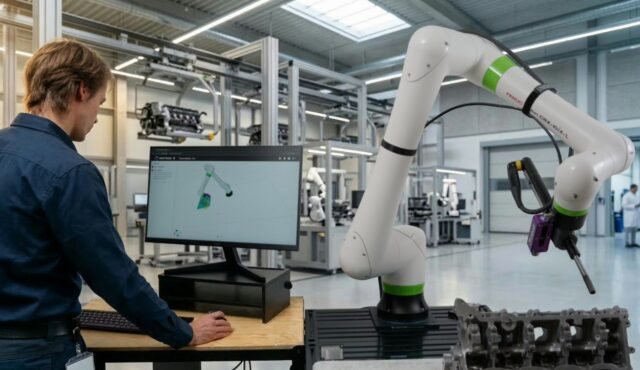
Inbolt combines CAD-based robot programming with real-time vision to help robots adapt to changing conditions on the factory floor (source: Machine Design).


Moving a robot from a CAD model to a working production cell involves two challenges: creating a program and making it perform reliably under factory conditions. Machine Design examines how Inbolt and RoboDK address these different stages, from virtual planning to motion adjustments during operation.

Inbolt targets the mismatch between simulation and reality. Small differences in robot placement or part position can force engineers to revise trajectories after virtual commissioning. Its Robot Programming capability starts with a part’s CAD model and automatically generates a path. Runtime vision then locates the physical part and adjusts motion to follow that intended trajectory despite production variations.

According to cofounder Albane Dersy, the Inbolt Vision Model learns a part’s geometry at the edge in approximately 30 seconds to 5 minutes. The company aims to reduce repeated manual trajectory corrections. At the time of the report, Robot Programming supported FANUC, Universal Robots, and Yaskawa systems, with additional brands planned.

RoboDK concentrates on preparing and validating robot programs before deployment. Its software imports CAD files, generates toolpaths and robot motions, checks for collisions, and exports programs for different robot brands. These capabilities let engineers examine an operation digitally before committing it to equipment.

RoboDK CAM brings machining preparation into that environment, allowing users to generate paths, simulate operations, and produce robot code without requiring a separate CAM package for that workflow. The company claims deployment time reductions of up to 40%. The reported saving is a vendor claim, rather than a guaranteed result for every application or production cell.

The comparison shows why programming and operational adaptation should be evaluated separately. RoboDK helps establish what a robot should do; Inbolt uses vision to adjust execution to what is physically present. For manufacturers, both stages matter when reducing commissioning effort and moving CAD-based automation into production.

0FansLike
0FollowersFollow
0SubscribersSubscribe
Google search engine

Recent Articles

Trending Now