Autodesk Plans NVIDIA Integration for NavPack

Image: Autodesk
Image: Autodesk

Autodesk plans to integrate NVIDIA PhysicsNeMo and NVIDIA Warp with NavPack to expand its supported AI model architectures and accelerate parts of its automotive design workflow on GPUs. The capabilities are intended for customers with compatible NVIDIA hardware.

NavPack uses predictive AI models trained on a customer’s existing simulation data to estimate how geometry changes could affect vehicle performance. Designers can evaluate aerodynamic implications while creating and refining vehicle shapes in Autodesk Alias. Full-fidelity simulation remains part of model training and final validation.

“Designers make better decisions when engineering insight comes in the ideation phase, not the final product state,” said Thomas Heermann, vice president, automotive design at Autodesk. “Aerodynamic prediction is just the beginning. With NavPack, we can transform Alias into an environment where critical engineering and manufacturing knowledge informs design from the very start. By bringing downstream insight upstream – while designers are still exploring and shaping ideas – we enable teams to make better-informed decisions faster, reduce iteration costs, and create designs increasingly optimized for real-world performance and production.”

Source: Autodesk

About Autodesk

Autodesk, founded in 1982, is a software corporation headquartered in San Francisco, CA, known primarily for its design and engineering software solutions. The company offers software products such as AutoCAD, Revit, Fusion 360, Maya, and Inventor, catering to diverse sectors, including architecture, engineering, construction, manufacturing, media, entertainment, and automotive industries. Autodesk employs approximately 15,300 people worldwide. Autodesk provides professionals with tools for designing, visualizing, simulating, and creating projects, including buildings, infrastructure, automotive components, and digital entertainment content. Serving millions of users globally across 180 countries, Autodesk supports industries like architecture, engineering, construction, manufacturing, media, and entertainment by utilizing cloud-based technology to enhance collaboration and simplify project management processes.

About NVIDIA

NVIDIA, founded in 1993 and headquartered in Santa Clara, CA, designs and manufactures graphics processing units, systems on chips, networking hardware, and AI intelligence software such as CUDA. Its products serve industries including gaming, data centers, autonomous vehicles, professional visualization, robotics, health care, and energy. The company introduced the GPU in 1999 and later expanded into accelerated computing and AI infrastructure. In gaming, its GPUs support high-performance rendering, while in AI and high-performance computing, its systems provide the infrastructure for training and deploying large-scale models. NVIDIA also develops tools for robotics and autonomous driving.

Lockheed Martin Canada Contracts Contextere for iMAPLE

Image: Lockheed Martin

OTTAWA, Ontario, Oct 27, 2026 – Lockheed Martin Canada has contracted Contextere to advance an AI system designed to match personnel competencies to maintenance tasks. The contract, worth 10M CAD, will fund the next development phase, beginning with a deployment supporting the Royal Canadian Air Force’s (RCAF) CC-130J Hercules fleet.

Announced at the Canadian Aerospace Summit in Ottawa, the project centers on iMAPLE, the Intelligent Maintenance, Asset, Personnel and Learning Environment. Based on Contextere’s MADISON platform, iMAPLE provides AI capabilities for competency management and workforce readiness.

The project combines Contextere’s technology with the air force’s operational experience and Lockheed Martin’s sustainment expertise. According to the announcement, iMAPLE intends to support sustainment decisions that could improve aircraft availability, maintenance efficiency and fleet readiness. The underlying technology is designed for complex equipment across land, air and sea.

“Today’s announcement demonstrates meaningful results for Canadians through Canada’s Industrial and Technological Benefits Policy. This partnership invests in a Canadian-developed artificial intelligence solution that supports the Royal Canadian Air Force’s CC-130J Hercules fleet. It is strengthening Canada’s defense capabilities, creating opportunities for Canadian workers, and helping grow a sovereign AI ecosystem with export potential. Canada’s government will continue to support Canadian innovation by building our domestic defense capabilities,” said the Honorable Stephen Fuhr, Secretary of State for Defense Procurement.

“Canada has the talent and technology to solve demanding defense challenges,” said Gabriel Batstone, CEO and co-founder of Contextere. “This agreement builds on our work with the Department of National Defence and the RCAF to help personnel access critical expertise and prepare for increasingly complex maintenance demands. It also creates an opportunity to grow Canadian-owned AI technology for defense applications at home and in allied markets.”

“This collaboration with the Royal Canadian Air Force and Contextere offers something truly special,” said Kristen Leroux, vice president & regional executive for Canada and Latin America, Lockheed Martin. “We’re proud to be a part of the development of iMAPLE and to work alongside Contextere in support of our air force and the CC-130J fleet, demonstrating how Canadian innovation can build a sovereign defense and dual-use ecosystem right here at home.”

Maintenance Information and Workforce Skills

iMAPLE is designed to:

  • Let personnel search maintenance, training and operational information using everyday language.
  • Build competency profiles for technicians to identify skills gaps and capability needs.
  • Map skills, qualifications, certifications and experience against operational requirements.
  • Capture and organize institutional knowledge as experienced personnel change roles or retire.

Source: Lockheed Martin

About Lockheed Martin

Lockheed Martin, based in Bethesda, MD, is an aerospace, defense, security, and technology company formed in 1995 through the merger of Lockheed Corp. and Martin Marietta. It serves the military and space sectors, including aeronautics, missiles and fire control, rotary and mission systems, and space programs such as the F-35 fighter jet, Patriot and THAAD defense systems, and the Orion spacecraft. The company employs about 120,000 people and operates worldwide.

About Contextere

Contextere develops AI software that provides information and decision support to industrial workers. Founded in 2015 by Gabe Batstone and Carl Byers, the company is headquartered in Ottawa, Canada, with an office in New York. Its Madison software gathers information from enterprise systems, sensors, technical manuals and training materials to guide workplace tasks. Applications include installation, repair, maintenance, equipment overhaul, production, quality, safety and workforce training. Customers include industrial companies, aerospace and defense organizations, and public sector agencies. It also serves energy, mining and manufacturing businesses.

Hexagon Presents Radan Sheet Metal Workflows at FABTECH

Image: Hexagon
Image: Hexagon

Hexagon is presenting Radan CAD/CAM developments at FABTECH (#C6048) that estimate production time during part import and preserve order information through nesting. The company is also showing “Designer Sheet Metal” capabilities and plans to demonstrate press brake programming and simulation workflows.

“Fabricators need to respond to changing orders without programming becoming a bottleneck or machines waiting for work,” said Rob McConnell, director of product management at Hexagon’s production software division. “Radan combines support for different machines and fabrication processes with the detail each job requires. When identical parts belong to different orders, that distinction needs to survive nesting. When a programme reaches the shop floor, the operator needs clear instructions. Our focus is on reducing the manual work involved in getting those details right.”

U.S. custom truck body and trailer manufacturer Stonewell Bodies automated part processing and nesting through an integration between DriveWorks and Radan. Chief engineer Robert Eckert reports savings of up to 30 minutes per part and a 15% reduction in material waste from the existing implementation.

Cycle-time Estimates and Order Traceability

Radan can calculate cycle times as parts are imported, using the active machine tool to estimate production time. For identical parts nested across several orders, fixed-part allocation assigns each nested part to a specific order line. This improves reporting accuracy and feedback to external systems.

Image: Hexagon

Enhanced marking supports a scannable data matrix or QR code alongside readable text, with separate content for each. Automatic placement selects a suitable location while avoiding other geometry. In order mode, marks that conflict with tooling features are withheld from cutting to help prevent incomplete codes and damage to adjacent parts.

Import and Unfolding in Designer

Designer supports direct drag-and-drop import and automatic recognition of imported hole geometry. Thickness matching supports unfolding when design and manufacturing thicknesses differ, including work exchanged between metric and imperial environments. These capabilities depend on the Designer products and modules licensed.

Press Brake Programming and Simulation

The press brake demonstrations cover bend sequence editing, collision feedback and tooling simulation. They will also show how part identification and setup information can support shop-floor operators.

Source: Hexagon

About Hexagon

Hexagon AB is a Swedish industrial technology company based in Stockholm, Sweden. The company traces its origins to Eken Industri och Handel AB, founded in Stockholm in 1975. Hexagon supplies measurement, positioning, sensing, and software products for industrial and public-sector users. Its products include sensors, coordinate measuring machines, laser scanners, positioning systems, CAD/CAM software, geospatial tools, asset lifecycle systems, and autonomous technologies. The company serves customers in manufacturing, construction, aerospace, agriculture, mining, public safety, infrastructure, and mobility. Engineers, surveyors, manufacturers, asset owners, governments, and industrial operators use its products. Hexagon reported about 16,000 employees in 50 countries.


Quartz Rebuilds CAD Around AI Agents

Three sessions with parallel design agents in Quartz. First, agents build a 3:1 spur gear reducer from scratch, picking catalog bearings along the way. Next, more agents add a motor adapter kit to that reducer, placing each part and checking it for clashes. Last, four agents design machined mounting hardware for an existing hydraulic actuator, each part a single body with fillets and chamfers, which the agent then mates onto the cylinder. (Source: Spectral Labs).


Spectral Labs argues that conventional CAD systems were built for individual engineers, not AI agents that may need to create, modify, test, and evaluate thousands of designs simultaneously. That limitation led the company to develop Quartz, a CAD environment designed from the ground up for machine intelligence while keeping engineers in control.

The problem emerged while Spectral Labs was training SGS, its generative CAD models. AI models learn through repeated execution, but desktop CAD could not provide the required scale. A SolidWorks session takes more than 10 seconds to start, according to Spectral Labs, and running many instances simultaneously produces failures. Open-source alternatives also proved inadequate because important engineering features, including fillets, shells, drafts, and sheet-metal operations, could fail or produce incorrect geometry.

Quartz addresses these problems with a commercial geometry kernel and an architecture designed for parallel machine execution. It starts in under 100 milliseconds, rebuilds parts in tens of milliseconds, and can operate thousands of sessions simultaneously. Spectral Labs says its data pipeline processes roughly 1,000 assemblies per minute across several thousand cloud containers.

That infrastructure now supports an interactive CAD product where multiple AI agents can work concurrently on different parts of an assembly. Engineers review proposed changes and decide which ones to accept. Quartz also includes sketching, assemblies and mates, drawings with GD&T, FEA and CFD studies, and a 3D viewer.

Interoperability is another major focus. Existing SolidWorks and Siemens NX models can move into Quartz while retaining parametric information, then return as editable native designs with their feature trees intact.

Spectral Labs sees this machine-first architecture as more than CAD automation. Its goal is to redesign engineering workflows around AI agents that can explore alternatives at high speed while engineers provide direction, judgment, and final approval.

Geom Brings AI Automation to Production-Scale Architecture

Inside the Geom viewer: an existing plan set read as structured information—rooms, walls, openings, and dimensions labeled and connected (source: Geom).


Production homebuilding involves far more than creating architectural concepts. Plans must be reviewed, annotated, adapted to different lots and elevations, checked against standards, and assembled into construction-document packages. Geom argues that much of this work remains manual, repetitive, and dependent on disconnected tools developed decades ago.

Geom is an AI platform designed to automate these production workflows while preserving builders’ existing CAD files, standards, tools, and approval processes. Rather than requiring companies to migrate years of architectural information into new BIM systems, the platform creates a semantic understanding of existing plans. It identifies elements such as walls, openings, rooms, and dimensions and understands relationships among information distributed across drawings, notes, and tables.

This structured understanding gives AI the context needed to perform architectural tasks reliably. Geom initially targets quality-control reviews, option solving, plan mirroring, elevation rendering, plot-plan development, and construction-document preparation.

The company reports significant productivity gains from early deployments. In one project, Geom reduced plan mirroring from weeks to minutes while cutting workflow costs by 73%. In another, it reorganized master sheet sets into construction-document packages for more than 300 plans in 20 minutes, compared with 2–3 days of manual work.

Geom is developing the platform with major production homebuilders, including Pulte, Century Communities, Meritage, and True Homes. Customer plans and standards remain under the builders’ control and are not used for cross-company model training.

The company does not position AI as a replacement for architects. Instead, its goal is to automate repetitive production work while preserving human responsibility for design, context, creativity, and judgment.

Geom’s broader vision extends beyond homebuilding. By teaching software to understand what architectural drawings represent and how their elements relate, the company sees its semantic foundation eventually supporting additional architecture, engineering, and construction workflows.

Denser Drone LiDAR Gives AI More Detail to Automate Linework

Source: Mach9.
Source: Mach9.


Drone LiDAR has made collecting survey data significantly faster, but point-cloud density can determine how much of that data can be converted automatically into engineering linework. Mach9 argues that conventional LiDAR density guidelines, which largely focus on creating terrain models, are inadequate for automated extraction of smaller features such as curbs, pavement edges, road markings, and overhead wires.

For Mach9’s automated linework workflow, the company recommends a minimum density of 100 points per square meter, with 400 or more preferred. Below 100, the platform can still process and classify point clouds, but automated linework quality declines rapidly. Particularly dense datasets, around 650 points per square meter or higher, can support extraction of additional details such as separate curb lines, crosshatching, and guardrails.

AI-powered automation plays an important role. Mach9’s software analyzes point-cloud geometry and imagery to generate engineering linework instead of requiring technicians to trace features manually. Dense data gives the system enough information to recognize small geometric changes. At 100 points per square meter, points are roughly 10 centimeters apart, leaving only one or two points across a typical curb. At 400 points, spacing falls to about 5 centimeters, providing more information for automated detection.

Mach9 stresses that density and accuracy are different. Accuracy depends primarily on positioning, calibration, GNSS and IMU performance, and RTK or PPK workflows. Density depends on factors such as altitude, flight speed, sensor pulse rate, and overlap.

For better automated extraction, operators should fly lower and slower, maintain adequate overlap, use cross-grid flight patterns, and plan around the smallest required feature. Orthophotos can further help software distinguish painted markings and pavement boundaries.

The broader lesson is that drone flight planning should account for downstream AI processing. Capturing denser data can shift office work from labor-intensive manual drafting toward reviewing and refining automatically generated engineering linework.

Large Physics Models Cut Multiphysics Analysis From Hours to Minutes

Static aeroelastic coupling with CFD. The CFD flow solve runs at every coupling iteration and sets the cost of the loop. (Source: Luminary).


Multiphysics analysis is essential when engineering behavior depends on interactions between physical domains. An aircraft wing, for example, deforms under aerodynamic forces, while that deformation changes the airflow and loads acting on it. Traditional coupled simulations repeatedly exchange information between CFD and structural solvers, creating significant computational and workflow overhead, tells Luminary.

Luminary proposes using large physics models, or LPMs, to reduce these barriers. Trained on solver-generated data, LPMs predict complete physical fields, such as surface pressure or structural displacement, directly from CAD geometry and operating conditions. Unlike surrogate models that predict only scalar quantities, full-field predictions allow LPMs to participate directly in multiphysics coupling loops.

The company demonstrated the approach using the static aerostructural response of a transonic swept wing. A conventional workflow combining CFD with structural analysis required about four hours to converge while running CFD on three Nvidia H100 GPUs. Luminary first replaced CFD with its SHIFT-Wing LPM while retaining the TACS finite-element structural solver. The resulting analysis converged in 8–11 minutes on a single Nvidia T4 GPU, making it more than 20 times faster. Predicted reductions in lift caused by wing washout differed from the CFD-based results by only 0.2 to 0.8 percentage points across three geometries.

Luminary then replaced the structural solver with SHIFT-Wingbox, another LPM trained on approximately 1,400 TACS solutions. With two LPMs exchanging full-field data, predicted lift reductions remained within 1 percentage point of the solver-based workflow, while wingtip twist differed by no more than 0.04 degrees.

The demonstration suggests that Physics AI could make coupled analysis practical much earlier in engineering design. By reducing solver costs, meshing requirements, toolchain complexity, and dependence on separate specialist teams, LPMs could enable engineers to evaluate multiphysics interactions more frequently without abandoning validated high-fidelity simulation data.

AI Compliance Tools Are Changing AEC Design Reviews

Source: AEC Magazine.


Compliance software is becoming a significant category in AEC technology. According to AEC Magazine, the market has expanded from a handful of products two years ago to at least 19 tools. AI is accelerating that growth by allowing software to read drawings, models, and written regulations directly instead of requiring regulations to be manually converted into machine-readable rules.

Compliance, however, extends beyond building regulations. Projects must satisfy statutory rules, contractual obligations such as Employer’s Requirements, client briefs, and internal practice standards. The article stresses an important distinction between prescriptive and performance requirements. AI can effectively check measurable criteria such as dimensions, U-values, specified products, naming conventions, and schedules. Performance requirements, including whether a building provides adequate means of escape, still require modeling, professional judgment, and competent human approval.

The technology could alter where checking occurs. Architects can use it before issuing information, while contractors can examine consultant packages, identify discrepancies, and raise RFIs. Clients could independently compare deliverables with briefs and regulations. Building Control organizations may eventually use similar systems. This makes internal checking increasingly valuable because errors could otherwise be discovered by external stakeholders.

AEC Magazine recommends combining automated first-pass checking with detailed human review. Software can identify straightforward problems across hundreds of drawings, allowing experienced professionals to concentrate on consequential issues. Maintaining an auditable record of findings, decisions, responsible individuals, and resolutions could become as important as detecting problems.

Selecting a compliance platform should therefore involve more than comparing features. Firms should examine jurisdictional coverage, update frequency, auditability, data storage, and vendor longevity. Testing software against a completed project with known problems can reveal what the system misses.

Automated checking is likely to become commonplace, but the article draws a firm boundary: software can strengthen compliance workflows, not assume professional responsibility.

From Analog Chip Design to the Consumer Stage

IEEE Member Preethi Ashwath is one of the few women who work in analog integrated circuit design, where about 11% are female (source: Katya Delgiado).


Preethi Ashwath works at the intersection of semiconductor engineering and consumer technology. An integrated circuit designer at Analog Devices, she develops analog circuitry for hearables and wearables, including earbuds, fitness trackers, and health-monitoring devices. She is also part of a field in which women account for only about 11% of the workforce, tells IEEE Spectrum.

Ashwath studied electronics and communications engineering at SJB Institute of Technology in Bengaluru before earning a master’s degree in electrical engineering from the University of California, Irvine. An internship at Intel exposed her to circuit and package design, along with reliability verification tools such as Ansys Totem. She later joined Intel as an analog design engineer before moving to Analog Devices.

Her current work focuses heavily on electrostatic discharge, or ESD, protection. She designs pad rings and mixed-signal building blocks that protect chips from electrical discharges capable of damaging circuits or causing failures later in a product’s life. The work requires knowledge of device physics, circuit design, simulation, layout, and interaction between analog and digital systems.

Ashwath has also moved beyond the design bench to explain semiconductor technology directly to consumers. At CES, she demonstrated earbuds that use vibrations in the ear canal to monitor heart and lung activity. Extracting these extremely small physiological signals from movement and environmental noise makes analog front-end design particularly important.

She has since demonstrated automotive audio and augmented reality technologies at other events. These experiences have helped her connect detailed circuit engineering with the products people ultimately use.

Ashwath also contributes to the broader engineering community through IEEE, reviewing conference papers, publishing technical work, and participating in technical discussions. Her career illustrates that semiconductor engineering increasingly demands more than specialized design expertise. Continuous learning, cross-disciplinary collaboration, and the ability to communicate complex technology can also shape an engineer’s impact.

AI Agents Learn When to Ask for Help

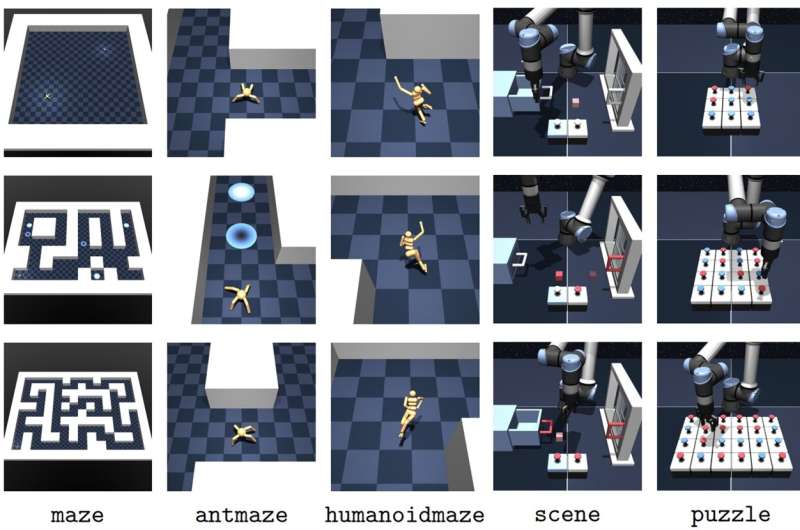
OGBench. Source: arXiv, 2026. DOI: 10.48550/arxiv.2610.07899.


Researchers at Sungkyunkwan University have developed two AI technologies designed to make autonomous systems more efficient and dependable during complex, long-horizon tasks. Led by Professor Minhae Kwon, the research addresses two persistent problems: the high computational cost of AI agents and the risk of learning unreliable behaviors from offline data, tells Tech Xplore.

The first technology, Self-improving Agent with Gated critique, or SAG, changes the way AI agents obtain feedback. Many agents repeatedly consult a more capable AI model while completing a task, increasing computing requirements and response times. SAG instead allows an agent to evaluate its uncertainty and request external feedback selectively, similar to a student seeking assistance only when necessary.

The agent also stores successful experiences and learns from them, gradually reducing its dependence on outside feedback. In complex virtual environments, SAG consumed about one-third of the computational resources required by conventional approaches. At the same time, its task success rate increased from 24.6% to 78.3%.

The second technology, VAN-Flow, addresses reliability in offline reinforcement learning. This is particularly important for robots and autonomous vehicles, where extensive real-world trial and error could create safety risks. Systems trained on historical data can mistakenly interpret an action that succeeded through chance as a reliable strategy.

VAN-Flow uses a mathematical approach that filters out behaviors whose success depends heavily on chance. Instead, it favors actions that perform consistently under changing conditions. The method achieved higher success rates than most existing advanced techniques across more than 40 challenging robotic-control simulation tasks.

Both studies were accepted for NeurIPS 2026. Together, they point toward autonomous AI that can use computing resources more selectively while making more dependable decisions, capabilities that could support practical deployment in robotics, autonomous driving, and industrial AI systems.

0FansLike
0FollowersFollow
0SubscribersSubscribe
Google search engine

Recent Articles

Trending Now