Connecting an outside AI agent to CATIA and 3DEXPERIENCE is not simply a matter of finding one API. According to Leo AI, the Dassault Systèmes environment offers two distinct access routes, each suited to different engineering tasks.
The first is CATIA’s automation layer, which operates through an active application session, typically on a Windows workstation. Using VBA, EKL, or a COM-compatible language, an agent can access the active document, specification tree, parameters, relations, sketches, and properties of loaded parts and products. It can also modify features and save changes. This makes it useful for repetitive jobs such as renaming parameters, checking required properties, or generating design variants.
However, session-based access has limits. The agent sees only loaded models and cannot determine the engineering reasoning behind design decisions. It also requires an available, licensed workstation. Because AI-generated changes directly affect models, Leo recommends logging modifications and maintaining human review.
The second route uses 3DEXPERIENCE web services. REST APIs provide server-side access to structured information, including product structures, item attributes, relationships, and lifecycle states. This approach is better suited to queries spanning many products because it does not require opening individual CATIA models. Authentication through 3DPassport and existing platform permissions determine exactly what an agent can access.
Neither route, however, provides the complete context behind engineering decisions. Information about previous design choices, standards, approvals, calculations, and lessons learned may reside in drawings, specifications, change records, ERP systems, or other repositories.
Leo therefore proposes a three-part architecture: CATIA automation for model-level work, 3DEXPERIENCE APIs for structured product information, and a separate knowledge layer for broader engineering context. The practical lesson is to identify where the information needed for each AI task actually resides before choosing an integration method.
Autodesk’s agentic AI strategy could change both AEC workflows and the economics of design software. AEC Magazine argues that if architects can supervise AI agents performing work previously handled by several Revit users, Autodesk’s traditional seat-based business model faces pressure. The company appears to be responding by building orchestration and consumption-based services above existing software subscriptions.
At Autodesk University 2026, Autodesk clarified its direction for Forma. Over time, design, analysis, coordination, and documentation are expected to move into Forma, with Revit becoming a connected client. Autodesk Assistant will operate across applications, while AI Orchestrator determines which models, services, and software capabilities are needed to complete a task.
Context is another important component. Autodesk wants project models, drawings, decisions, standards, and historical information to form a persistent intelligence layer for AI agents. While this could make agents more useful, AEC Magazine raises concerns about portability. Moving to another platform could eventually require transferring not only geometry but years of accumulated project knowledge.
The article pays particular attention to pricing. Autodesk says every automation machine requires a licensed named-user seat, although questions remain about where conventional scripting ends and separately licensed machine activity begins. Autodesk has also introduced mechanisms for charging machine-driven compute. Since October 6, 2026, AEC Data Model API exports beyond included allowances have cost one Flex token per 5 MB.
Even open standards such as Model Context Protocol may not eliminate these expenses. Companies could run their own AI models locally but still incur charges when agents access Autodesk applications, data, or cloud services.
The concern is therefore not whether Autodesk can build capable AI agents. It is whether customers could eventually pay simultaneously for human software access, machine access, data transfers, compute, and specialized AI operations. If that happens, AI may reduce engineering labor while increasing dependence on the software platform.
Autodesk Inventor provides a broad programming interface that can give AI agents significant access to engineering data, but that access comes with important boundaries. The Inventor API exposes parts, assemblies, drawings, features, sketches, parameters, constraints, bills of materials, and annotations. Through a live Inventor session, software can modify parameters, update models, retrieve calculated properties, inspect assembly structures, and even create drawing views and dimensions, tells Leo AI.
The key limitation is that the API operates through a running Inventor application on a machine with a valid license. An AI agent therefore typically needs a connector running on an engineer’s workstation or a dedicated machine. Automated sessions still consume licenses, making seat availability an important consideration when deploying agents across many files.
Not every AI task requires opening Inventor. Autodesk’s Apprentice component provides lighter, read-only access to information such as iProperties, assembly structures, and file references. This approach could support searches across thousands of engineering files, such as identifying assemblies containing a particular fastener or drawings referencing outdated revisions. However, metadata and feature names alone do not provide genuine geometric understanding. Shape-based searches require separate geometry-aware indexing.
Another complication is model state. An agent reading a saved file may receive different information from one connected to an active Inventor session containing unsaved changes, suppressed features, or different design views. Local templates, libraries, unresolved references, and interactive prompts can also affect automated workflows.
PDM and PLM systems introduce another boundary. They determine which revisions are authoritative and which users can access them. Leo positions its AI layer above systems such as Autodesk Vault, Windchill, Teamcenter, and SolidWorks PDM so engineers can query controlled engineering information without replacing existing systems.
For engineering teams, the article recommends defining data sources, licensing requirements, permissions, failure handling, and whether tasks require saved data, geometry intelligence, or live Inventor access before deploying an AI agent.
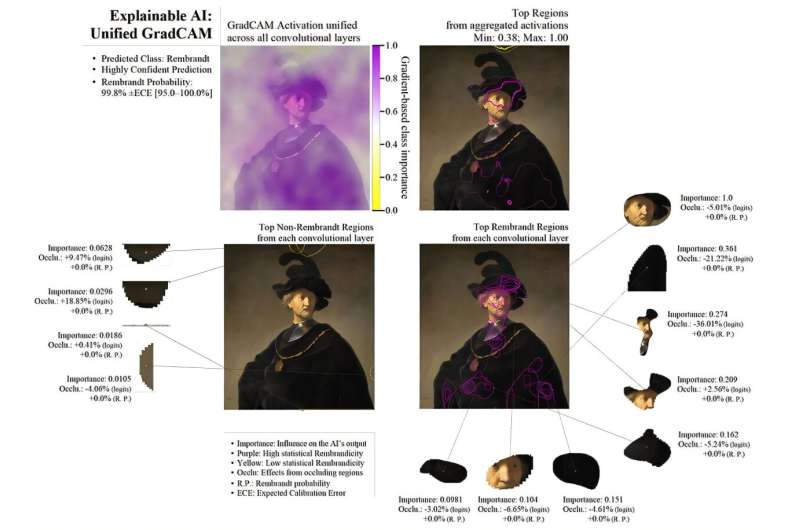
Unified GradCAM, the main AI explainability method proposed in the paper (source: Carnegie Mellon University).
Unified GradCAM, the main AI explainability method proposed in the paper (source: Carnegie Mellon University).
Researchers at Carnegie Mellon University have developed an artificial intelligence framework designed to help art experts investigate whether paintings were created by Rembrandt. Rather than replacing traditional authentication methods, the system provides another source of evidence that can be combined with historical research, material analysis, X-rays, infrared imaging, and expert judgment, tells Tech Xplore.
The interdisciplinary team included mechanical engineering professors Phil LeDuc and Jon Cagan, alumnus Andrés Arias-Rosales, and Rembrandt scholar Arthur Wheelock Jr. Before building the system, the researchers studied Rembrandt paintings at the National Gallery of Art and consulted Wheelock about the artist’s techniques, stylistic variations, and the complexities surrounding attribution.
The researchers assembled more than 1,300 high-resolution digital images, including 311 Rembrandt paintings. Their AI model analyzes statistical patterns involving edges, color, light distribution, and visible brushstrokes. When operating with high confidence, it classified paintings with 95.8% accuracy.
A central feature is explainability. Instead of simply labeling a painting as a Rembrandt or not, the framework provides probabilities, confidence scores, and visualizations showing which parts of an artwork most influenced its conclusion. Experts can then investigate suspicious areas. If the system repeatedly identifies hands as inconsistent with Rembrandt’s work, for example, researchers can exclude that region and reassess the painting. Such analysis could reveal contributions from students, assistants, or later restorers.
The researchers tested the technology on Portrait of a Girl, discovered in a Maine attic in 2024 and later sold for $1.41 million. The model returned an 84.7% confidence score for Rembrandt attribution. The researchers stress that this result is not authentication, but statistical evidence for experts to evaluate alongside other findings.
The team ultimately envisions an interactive tool for museums and curators that could be adapted to investigate works by other artists.
LiDAR processing is not a single task, and choosing software depends largely on the required deliverable. A Mach9 comparison of 13 LiDAR tools divides workflows into three areas: processing and classification, feature extraction, and viewing or light editing. The article argues that firms often need different tools for each stage, although newer platforms are beginning to combine them.
For automated point-cloud-to-CAD workflows, Mach9 identifies its own browser-based platform as the best overall option. The software automatically classifies mobile, drone, terrestrial, and handheld point clouds, then uses AI to extract more than 20 types of linework and over a dozen object categories. These include pavement edges, curbs, lane markings, guardrails, signs, poles, signals, hydrants, and utility assets. Engineers and surveyors can review and edit the results before exporting them to CAD or GIS formats.
Other tools address different requirements. Terrasolid’s TerraScan remains suited to large airborne and mobile classification projects, while LP360 focuses on drone and airborne quality control and classification. Global Mapper combines GIS and LiDAR capabilities at a comparatively accessible price. Trimble Business Center fits organizations using Trimble surveying hardware, and ArcGIS Pro is positioned for teams already working within Esri environments.
For feature extraction and drafting, TopoDOT remains closely tied to MicroStation workflows, while Carlson Point Cloud supports AutoCAD and IntelliCAD users. Virtual Surveyor targets drone-based topographic surveys and volume calculations. Free options also have important roles. CloudCompare supports point-cloud viewing, cleanup, alignment, and comparison, while LAStools is designed for batch processing. QGIS and PDAL provide free GIS and programmable processing pipelines.
The comparison suggests starting with the final deliverable rather than selecting software solely by sensor type. CAD-intensive projects benefit most from automated feature extraction, while classification-heavy projects may favor specialized processing platforms. Data source, existing CAD or GIS environment, project volume, and licensing costs should then guide the final choice.
Blueprints AI is applying artificial intelligence to one of architecture’s most labor-intensive tasks: producing detailed construction documents. Founded by architect Al Dram and data scientist Coco Cao, the Santa Monica startup says its software can turn a project description, 2D sketch, or PDF into code-compliant, permit-ready blueprints within minutes, tells TechCrunch.
The idea originated nearly two decades ago when Dram, then an architecture student, explored software that could automatically generate design documents for school buildings. Advances in generative AI eventually made the concept practical, leading him to develop Blueprints AI and formally incorporate the company in 2025. The startup trained its models using eight years of approved drawing sets from Dram’s architecture and construction business.
Its second-generation platform significantly expands the scope of automation. Starting from a description or sketch, users can generate coordinated drawings covering architecture, structural systems, mechanical systems, electrical systems, plumbing, and interior design. Designers can modify projects directly, with changes automatically propagated throughout the drawing set. The system also checks modifications against applicable local building codes.
This approach targets a persistent productivity problem in architecture. Dram estimates that architects spend roughly 80% of their time drafting and only 20% designing. Blueprints AI aims to reverse that balance by automating repetitive documentation so professionals can devote more attention to design decisions.
The company does not position AI as a replacement for architects or engineers. Licensed professionals must still review the generated documents, exercise professional judgment, and apply their seals before permit submission.
Blueprints AI is targeting architecture, engineering, and design firms as well as developers and property owners. Future versions are expected to extend automation into structural analysis and electrical panel design, potentially moving AI deeper into engineering workflows.
Despite decades of investment in 3D CAD and model-based definition, 2D engineering drawings remain deeply embedded in manufacturing. Hanomi argues that the real problem is not that drawings still exist, but that engineers spend substantial time creating, checking, and standardizing them.
The article cites industry research showing the persistence of 2D workflows. About 85% of manufacturers use 3D CAD, but only 41% treat the model as the primary authority, while 74% still rely on a 2D drawing. Only 26.8% release most designs as 3D models containing product manufacturing information.
Model-based definition, or MBD, promises to place dimensions, tolerances, and manufacturing information directly in the 3D model. Yet adoption becomes difficult when machinists, inspectors, suppliers, or contractual processes still depend on conventional drawings. Shop-floor personnel often want printed drawings that they can reference, annotate, and mark as machining progresses.
Drawings also contain engineering judgment that cannot simply be extracted from geometry. Decisions about functional tolerances, datum schemes, machining requirements, and component interfaces capture manufacturing knowledge that must be communicated clearly.
Hanomi therefore proposes automation rather than eliminating drawings. Its AI software generates production-ready 2D manufacturing drawings from 3D CAD models. The system learns a company’s existing drafting conventions from previous drawings, applies those standards to new documentation, and flags ambiguous information instead of inventing values. Engineers remain responsible for reviewing and approving the results.
This human-in-the-loop approach targets another hidden expense: checking. Inconsistent drawing styles can increase review time and trigger unnecessary redrawing even when designs are technically correct.
The article’s central argument is pragmatic. Manufacturing may eventually become more model-based, but 2D drawings remain the working interface between engineering intent and production for many organizations. AI could make that established workflow faster and more consistent without removing the human judgment required for production documentation.
Singapore, Oct 28, 2026 – PhysicsX and Fortescue have expanded their partnership to apply physics AI across Fortescue’s mining and metals operations, extending work on research and development. The agreement covers efforts to improve existing operations and develop products, processes and technologies supporting Fortescue’s zero-emissions ambitions.
The agreement builds on more than two years of collaboration and establishes PhysicsX as an AI technology and innovation partner to Fortescue.
The work centers on the PhysicsX platform, which combines Large Physics Models (LLMs), simulation capabilities and AI-powered engineering applications. Trained on simulation and experimental data, the models learn the behavior and predict performance and identify solutions faster than conventional simulation methods throughout the product lifecycle.
Jacomo Corbo, CEO and co-founder, PhysicsX, said: “Fortescue is tackling some of the hardest engineering challenges in industry. Solving problems of this magnitude demands fundamentally new approaches to engineering. Our ambition is to put frontier intelligence in the hands of Fortescue’s teams, enabling them to solve problems that would previously have been prohibitively expensive or time-consuming to tackle. We’re building a long-term technology partnership that goes beyond individual applications, embedding physics AI into the way industrial innovation happens. The progress we’ve made together gives us enormous confidence in what we can achieve next.”
Ellie Coates, director AI and IT, Fortescue, said: “Fortescue has a strong track record of deploying new technologies at scale, from autonomy to AI. In 2020, we completed one of the largest autonomous haulage fleet conversions in the industry, showing what can be achieved when new technology is deployed at scale in a live mining operation.”
“We are bringing that same ambition to AI, which is critical to Fortescue’s future. We see significant potential in applying physics AI to high-value industrial problems across our business.”
“This partnership is focused on solving real-world challenges, from improving production and operations to accelerating research and development. By combining PhysicsX’s capabilities with our operational experience and data, we can test solutions faster and focus on applications with the potential to deliver practical value and strong returns.”
Source: PhysicsX
About PhysicsX
PhysicsX is a UK-based software company that develops AI-driven engineering and simulation tools for industrial applications. Founded in 2019, it is headquartered in London, with offices in London and New York. The company builds software platforms that combine AI and multiphysics simulation to support design, modeling, and optimization across the engineering lifecycle. Its tools help engineers analyze complex systems and improve performance during development and operations. PhysicsX serves industries including aerospace and defense, automotive, semiconductors, materials, energy, and renewables. It works with companies that design and manufacture advanced systems and addresses complex engineering challenges. The company operates a B-to-B model and partners with engineering and manufacturing firms on technical projects. Its software supports system design, testing, and process optimization.
About Fortescue
Fortescue operates mining, energy and industrial technology businesses from Perth, Australia. Andrew Forrest founded the company in 2003. It mines, processes and exports iron ore to steelmakers in Asia and other markets. Its Pilbara operations connect mines with rail infrastructure and port facilities at Port Hedland. The Iron Bridge operation produces magnetite concentrate. Through Fortescue Zero, the company develops batteries, electric drivetrains, charging equipment and battery management software for industrial applications. It also provides engineering and emissions-reduction consulting and develops renewable electricity infrastructure and lower-emissions ironmaking processes.
SAN DIEGO, CA, Oct 28, 2026 – Anduril and Qualcomm have introduced BlueChip, a computing hardware product line intended to expand U.S. computer manufacturing. Anduril has developed functional prototypes of its first laptop, designed and assembled in the United States.
BlueChip is proposed for government, defense, first responders, public safety and other critical industries. Qualcomm will supply Snapdragon X series processors for general-purpose computing, graphics and on-device AI.
Components from U.S. and allied-country suppliers account for more than 90% of the prototypes’ component procurement cost, according to the announcement. Anduril is expanding domestic sourcing and production capabilities, with a fully domestic supply chain as its long-term goal.
Designing for U.S. Production
Anduril has developed functional prototypes of the first BlueChip laptop and plans to begin taking orders in 2027. Engineering work includes designing the enclosure for U.S. machining, developing battery and power management systems around American battery technology, and selecting metals that U.S. industry can produce. Anduril is also developing a bonding process for U.S.-made display glass.
The laptops will be manufactured in the United States, with circuit board assembly planned for Anduril’s Arsenal-1 facility in Ohio. The company is qualifying suppliers and developing domestic production capabilities for enclosures, and battery components.
BlueChip’s phased approach begins with expanding domestic sourcing and manufacturing, followed by efforts to eliminate dependency on foreign suppliers. The first laptop’s designs, supplier relationships and production processes are intended to support additional BlueChip products.
Source: Qualcomm
About Qualcomm
Qualcomm Technologies, Inc., a subsidiary of Qualcomm Inc., is an American semiconductor and wireless technology company headquartered in San Diego, CA. Established in 1985, the company specializes in designing and supplying integrated circuits and system software for wireless telecommunications. Its product portfolio includes Snapdragon processors, modems, and platforms utilized in smartphones, automotive systems, Internet of Things (IoT) devices, and industrial equipment. Qualcomm operates primarily through two segments: Qualcomm CDMA Technologies (QCT), which focuses on semiconductor products, and Qualcomm Technology Licensing (QTL), which manages its patent portfolio. The company serves a global clientele across various industries, including mobile, automotive, computing, and industrial sectors, leveraging its expertise in 5G, AI and low-power computing to drive innovation and connectivity worldwide.
About Anduril
Anduril develops defense hardware and software for military, government and public safety customers. Founded in 2017, it is headquartered in Costa Mesa, CA. Products include autonomous aircraft, underwater vehicles, surveillance systems, rocket motors and electronic warfare equipment. Its Lattice software combines sensor and vehicle data to help operators monitor activity, identify objects and direct connected equipment. Applications include border monitoring, port security, infrastructure inspection and coordination of autonomous systems. Customers include U.S. defense agencies and military organizations in Australia and the United Kingdom. Anduril funds its own research and development and sells finished defense products. Anduril has about 6,000 employees worldwide.
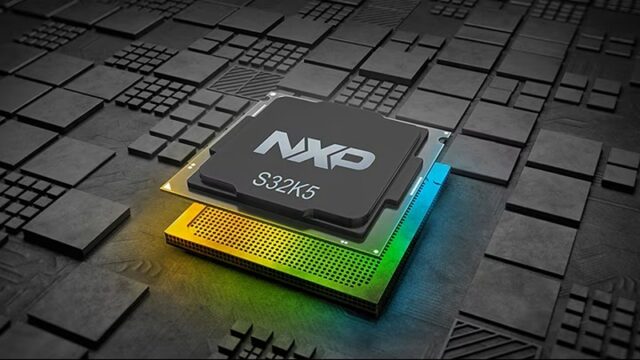
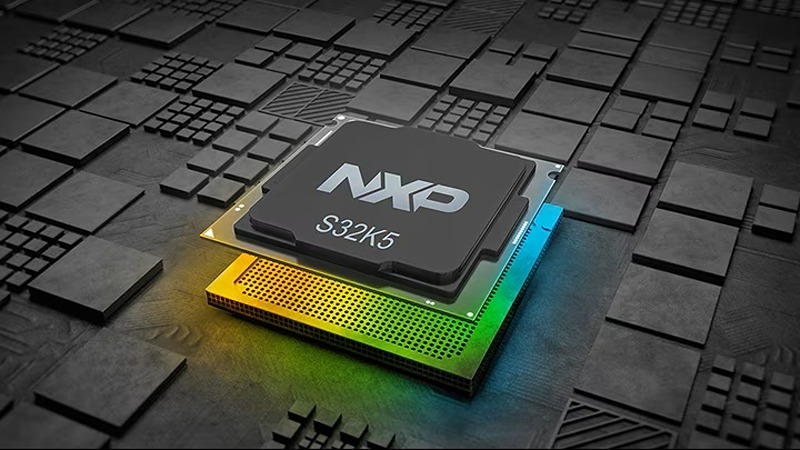
WOLFSBURG, Germany, Oct 28, 2026 – Volkswagen Group plans to use NXP Semiconductors’ S32K5 microcontrollers (MCUs) as core processors in zonal controllers across all its brands and vehicle segments. The companies have agreed on a partnership supporting Volkswagen’s future software-defined vehicle (SDV) architecture, with the first vehicle using the architecture planned for 2027.
Announced ahead of the International Suppliers Fair in Wolfsburg, the partnership concerns chips intended as a common building block for the zonal architecture developed by Rivian and Volkswagen Group Technologies (RV Tech). The Volkswagen-Rivian joint venture is developing the architecture for both companies’ vehicles, with support for brand-specific features.
The S32K5 MCUs connect sensors and actuators and collect and process data from specific areas of a vehicle. They manage functions including lighting, body, comfort, chassis and safety systems.
Their role differs from that of the high-performance processors providing central computing. Those processors handle complex decisions for AI-enabled functions such as automated driving and infotainment, supported by the zonal controllers’ data processing and control functions.
According to the announcement, S32K5 MCUs allow functions that previously required separate chips and electronic control units to be consolidated within zonal controllers, reducing hardware complexity.
The agreement forms part of Volkswagen Group’s semiconductor strategy of direct, long-term partnerships to strengthen supply resilience and jointly develop technologies for future vehicles. The approach supports its Group Target Picture 2030 and aims to harmonize key technologies across brands and regions.
Karsten Schnake, member of the extended executive committee and member of the Volkswagen brand board of management responsible for procurement said: “Semiconductors are strategic technology for the automotive industry. Over the past years, we have systematically expanded our technology ecosystem and built partnerships with leading companies across the value chain. Our partnership with NXP is another step in this journey, showing how Volkswagen Group is taking a more active role in the semiconductor value chain: defining our technology needs early, leveraging our scale across brands and creating greater long-term planning certainty for both sides.”
Werner Tietz, member of the extended Volkswagen group executive committee responsible for group research and development added: “Our future zonal architecture, developed by RV Tech and supported by strategic technology partners such as NXP, creates a scalable technology foundation for multiple Group brands and vehicle segments. By harmonizing key technologies across the Group, we reduce complexity, leverage scale and accelerate innovation while enabling advanced digital capabilities. This allows us to bring digital innovations to our customers faster and continuously enhance our vehicles throughout their lifecycle.”
Rafael Sotomayor, president and CEO, NXP Semiconductors commented: “Intelligent, software-defined vehicles must operate safely, securely and reliably. Together with Volkswagen Group and RV Tech, NXP is bringing scalable real-time compute, trusted edge intelligence and continuous software innovation together to create a scalable foundation for the next generation of intelligent vehicles.”
Lars Reger, executive vice president and CTO, NXP Semiconductors said: “Software-defined differentiation is the new auto benchmark, and NXP is excited that the S32K5 family of MCUs has been adopted into RV Tech’s innovative new zonal architecture, one of the most sophisticated approaches to streamlined development and differentiating features in the automotive industry today. As a core processor for the vehicle’s zonal controllers, S32K5 is built for safe real-time compute, fast and secure OTA updates and the consolidation of functions that together create a basis for a flexible, continuously updateable vehicle.”
Source: NXP Semiconductors
About NXP Semiconductors
NXP Semiconductors, established in 2006 as a spin-off from Philips, is headquartered in Eindhoven, Netherlands. The company specializes in high-performance mixed-signal and standard product solutions, including microcontrollers, application processors, communication processors, connectivity chipsets, analog and interface devices, RF power amplifiers, security controllers, and sensors. The products serve various industries such as automotive, industrial, Internet of Things (IoT), mobile, and communication infrastructure. With a global presence in over 30 countries, the company employs around 34,000 individuals. NXP is recognized for its innovations in near-field communication (NFC) technology and its significant contributions to automotive electronics, including microcontrollers and analog chips used in vehicle systems.
About Volkswagen Group
Volkswagen Group, headquartered in Wolfsburg, Germany, is a multinational automotive manufacturer established in 1937. It operates globally, with 115 production facilities in 17 European countries and 10 countries in the Americas, Asia and Africa. The company offers a diverse range of vehicles, including passenger cars, trucks, buses, and motorcycles, through its various brands such as Volkswagen, Audi, Porsche, ŠKODA, SEAT, and Bentley. Serving industries like automotive manufacturing, transportation, and mobility solutions, Volkswagen has expanded its operations to include electric vehicles and autonomous driving technologies. The group employed approx. 680,000 individuals worldwide. Volkswagen delivered 9.5 million vehicles globally. The Group’s vehicles are sold in over 150 countries.