SAN JOSE, CA, Jan 23, 2025 – Cadence has announced that MediaTek has adopted the AI-driven Cadence Virtuoso Studio and Spectre X Simulator on the NVIDIA accelerated computing platform for its 2nm development. As design size and complexity continue to escalate, advanced-node technology development has become increasingly challenging for SoC providers. To meet the aggressive performance and turnaround time (TAT) requirements for its 2nm high-speed analog IP, MediaTek is leveraging Cadence’s proven custom/analog design solutions, enhanced by AI, to achieve a 30% productivity gain.
“As MediaTek continues to push technology boundaries for 2nm development, we need a trusted design solution with strong AI-powered tools to achieve our goals,” said Ching San Wu, corporate vice president at MediaTek. “Closely collaborating with Cadence, we have adopted the Cadence Virtuoso Studio and Spectre X Simulator, which deliver the performance and accuracy necessary to achieve our tight design turnaround time requirements. Cadence’s comprehensive automation features enhance our throughput and efficiency, enabling our designers to be 30% more productive.”
MediaTek has used the Virtuoso ADE Suite to add its AI-based optimization algorithm to streamline future product development. This has helped its designers work more efficiently on circuit designs. Cadence’s Spectre X running on NVIDIA H100 GPUs delivers the same accuracy as Spectre X running on CPUs while delivering up to a 6X performance improvement for post-layout simulations of large, advanced-node designs.
“Improved performance and efficiency are key to advancing today’s complex chip design processes,” said Dion Harris, director of accelerated computing at NVIDIA. “With Cadence’s Spectre X running on NVIDIA Hopper GPUs, companies like MediaTek can accelerate the verification of their complex post-layout designs, maximize analog circuit simulation performance and reduce time to market.”
MediaTek’s analog layout team now uses the Virtuoso Layout Suite device-level router for custom digital blocks in 2nm technology, improving layout efficiency. Additionally, MediaTek is leveraging AI and Virtuoso’s open platform to create a prototyping placement and low-power prediction process. This approach improves design productivity by 30%.
“MediaTek’s validation of our latest Virtuoso Studio release and Spectre X Simulator on NVIDIA’s accelerated computing platform demonstrates that Cadence’s continued investment in enhancing our industry-leading custom design solutions and AI tools is a game changer for our customers’ most challenging 2nm designs,” said Vinod Kariat, corporate vice president and general manager of the Custom Products Group at Cadence. “Bringing the power of AI and GPUs to Spectre X enables MediaTek to solve its large-scale verification simulation challenges even more quickly, without sacrificing accuracy.”
BRIGHTON, UK, Jan 22, 2025 – Planon, the leader in smart sustainable building management software, has announced that Peter Gross Bau Holding GmbH and its subsidiary company Peter Gross Facility Management GmbH & Co. KG, has selected Planon’s innovative Facility Services Business Solution (FSBS), part of the open and IoT-enabled Planon Platform, to optimize and enhance its facility management services across its nationwide operations.
Image Source: Planon
Peter Gross Bau is renowned for its expertise in managing the full life cycle of properties, from initial planning to operational optimization. The company provides facility management services that span technical, infrastructure, and commercial areas, ensuring long-term relationship with clients.
“We are pleased that Peter Gross Facility Management has selected Planon Field Services’ advanced and scalable SaaS solutions, to meet the evolving demands of its clients,” said Peter Ankerstjerne, CEO of Planon. “The company’s dedication to innovation, sustainability, and excellence resonates with our values, and together we aim to set a new benchmark for facility management services within the construction industry.”
Rainer Vollmer, managing director of Peter Gross Facility Management GmbH & Co. KG and vice president of the gefma board (German facility management association), emphasized the significance of the collaboration. “At Peter Gross Facility Management, our goal is to provide best-in-class facility management services that prioritize efficiency, sustainability, and long-term value creation. Partnering with Planon allows us to leverage cutting-edge digital solutions, enabling us to optimize operations and offer even greater transparency and service quality to our clients. This strategic partnership represents a pivotal step in our digitalization journey, further strengthening our position as a leader in integrated facility management.”
Planon FSBS will help Peter Gross Facility Management give clients easy access to property data, promote sustainable building practices, and meet changing regulations and market needs. Together, Peter Gross Facility Management and Planon aim to make facility management a key part of sustainable and advanced property management.
MIDVALE, UT, Jan 22, 2025 – GoEngineer has announced the acquisition of CAD MicroSolutions, a Canadian reseller of SOLIDWORKS, 3D printing technologies, and engineering services. This move expands GoEngineer’s reach in North America and improves its ability to provide top-quality design and manufacturing solutions to more customers.
“We are excited to welcome CAD Micro into the GoEngineer family,” said Ken Coburn, president and CEO of GoEngineer. “Their dedication to customer success and technical expertise aligns perfectly with our mission to empower innovators. Together, we will continue to deliver industry-leading solutions and unparalleled support to engineers and designers across North America.”
CAD MicroSolutions is known for its customer service and innovative solutions across multiple industries. With a focus on Dassault Systèmes products, including SOLIDWORKS, 3DEXPERIENCE, DraftSight, and Cadence, CAD MicroSolutions has earned trust in the Canadian market.
“Joining forces with GoEngineer marks an exciting chapter for CAD Micro,” said Darren Gornall, president of CAD MicroSolutions. “Our shared values and commitment to customer success ensure a seamless transition and a stronger future for our customers and employees. We are confident that this will unlock new opportunities for growth and innovation across Canada and beyond.”
The acquisition merges expertise and a mutual dedication to enhancing engineering practices. Customers will enjoy an expanded product selection, improved support services, and increased access to resources, fostering innovation possibilities.
LAS VEGAS, NV, Jan 22, 2025 – Denvix, a consumer electronics brand, made its debut at CES, showcasing its solutions for diverse use cases, including automotive, outdoor, and everyday mobility. Denvix has gained positive feedback from consumers and industry professionals through innovative products backed by performance.
Image Source: Denvix
The Denvix PowerX, a power bank with 250W fast-charging capabilities and wireless charging functionality, impressed attendees with its advanced design and performance. PowerX lead its category as the most innovative power bank and has achieved sales figures beyond the target at CES.
Image Source: Denvix
Another product was Denvix’s upgraded portable tire inflator, Denvix MotorX. It had its official launch at CES on the event’s opening day. This device integrates powerful large-tire-inflator-level inflation speed, power-bank-level fast charging function, and multifunctional lightings into one compact tool. During live demos, the inflator proved more efficient and stable, surpassing traditional bulky models and receiving positive feedback.
Denvix secured preliminary agreements with global retailers, increasing the reach of its products to consumers worldwide. Distributors from regions like the U.S., Canada, Europe, Japan, and the Middle East showed interest in forming long-term partnerships. With the principle “Technology Leads Life, Innovation Defines Mobility,” Denvix remains focused on creating innovative products and delivering exceptional experiences to customers everywhere.
TRIESTE, Italy, Jan 22, 2025 – The new VOLTA and modeFRONTIER 2025R1 release is available as of date. VOLTA redesigned Data Manager for a cleaner and intuitive user experience, with new features that simplify data interaction. modeFRONTIER introduces a multi-fidelity modeling tool that integrates metamodels of varying complexity.
New Multi-fidelity RSM tool in modeFRONTIER: Bridge the Gap Between Rapid Computation and High Accuracy
The multi-fidelity response surface models (RSM) tool combines data from various sources, sizes, and accuracy levels into a single metamodel. It improves precision by merging knowledge extracted from high-fidelity simulations with low-fidelity data, which is quicker to produce but less accurate. This method reduces computational costs by avoiding sole dependence on high-fidelity simulations while still benefiting from their precision.
Redesigned Data Manager in VOLTA
The VOLTA Data Manager comes with an intuitive and user-friendly interface. These enhancements improve the user experience and create a strong base for a faster, more efficient, and scalable platform for the future.
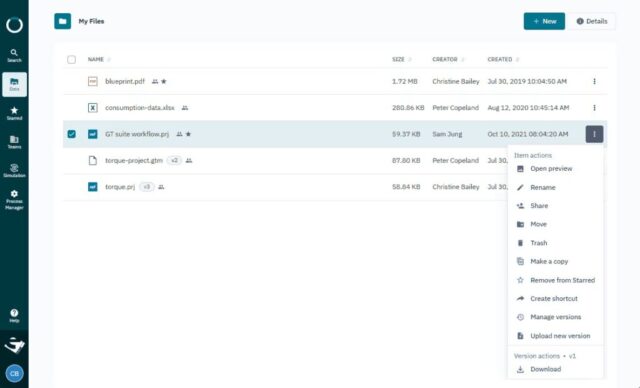
One can use keyboard shortcuts to select multiple items, making file management faster. Drag-and-drop functionality help upload files or move them between folders with ease. The right-click function opens the item actions menu, improving both navigation and efficiency. In addition, the new shortcuts open frequently used items without needing to make duplicates.
VOLTA Modeler: Import BPMN files from Third-party Software
VOLTA now offers the capability to import business process model and notation (BPMN) workflows, that have been modeled using third-party software, directly into the VOLTA Modeler environment. This feature boosts efficiency by removing the need to rebuild models manually and simplifies workflow, saving time.
SHENZHEN, China, Jan 22, 2025 – Elegoo has announced the launch of the Saturn 4 Ultra 16K, the latest addition to its line of advanced resin 3D printers. This new model builds on the success of the original Saturn 4 Ultra, Elegoo’s best-selling resin printer of 2024, with even higher levels of precision and user-friendly features.
Equipped with a 10-inch 16K Mono LCD screen, the Saturn 4 Ultra 16K offers a 14 x 19 μm XY resolution and 0.02 mm Z-axis accuracy, making it the choice for industries such as gaming, dentistry, and other sectors where fine detail is crucial.
The Saturn 4 Ultra 16K also combines excellent performance with user-friendly features, including a quick-release, non-slip design and a smart tank heating system that keeps resin at 30°C for consistent print quality, even in low temperatures. These upgrades, based on user feedback, offer both ease of use and professional-grade capabilities.
“This model represents the culmination of our latest innovations,” says Chris Hong, founder and CEO of Elegoo. “As a leader in resin 3D printing, our goal is to enhance the user experience and continue advancing our mission of making 3D printing technology accessible and beneficial for everyone.”
Faster, Smarter Printing with Optimized Performance
The Saturn 4 Ultra 16K offers a printing speed of up to 150 mm/h and a build volume of 211.68 mm x 118.37 mm x 220 mm, ideal for both small and larger prints with remarkable accuracy. Like the original Saturn 4 Ultra, the Saturn 4 Ultra 16K incorporates Elegoo’s Tilt Release Technology. Tilting the resin tank allows the model to separate quickly from the release film, which improves printing speed.
For the first time, the Saturn 4 Ultra 16K features a smart tank heating system that keeps the resin at a precise 30°C. This ensures smooth movement and better layer adhesion, reducing defects like bubbles and separation. The system improves print quality and increases success rates, especially in low-temperature settings.
The Saturn 4 Ultra 16K features smart sensors that identify leftover material and notify users about resin shortages or leveling problems. This reduces waste and ensures smoother printing. Its built-in AI camera offers live monitoring and detects errors in real-time. Wi-Fi cluster printing allows users to manage multiple printers easily, improving efficiency for large-scale projects.
Enhanced Slicing Experience with SatelLite
The Saturn 4 Ultra 16K is fully compatible with SatelLite, Elegoo’s first slicing solution offering seamless resin printing with universal compatibility, supporting both Elegoo and other brands. With advanced EVO Support, SatelLite achieves over 90% success for support structures, operates twice as fast as other slicers, and provides free pro features like model repair and Boolean operations without ads or paywalls.
SatelLite is currently available for Windows, offering efficient, professional slicing for all users. Mac support will be added soon. For more options, the Saturn 4 Ultra 16K also works with ChituBox, letting users pick their preferred slicing software.
Price and Availability
The Saturn 4 Ultra 16K is available on the Elegoo’s official store, priced at $519.99 USD in the US. For pricing information in the UK, EU, Canada, Australia, and Japan, please visit regional stores.
This post was initially published on Blake Courter. It is reprinted here by permission.
The crew of the Enterprise collaborates with The Computer to reconstruct a medical table in the Holodeck. Although this episode of TNG jumped the shark, this scene influenced me greatly.
By Blake Courter, founder of Gradient Control Laboratories, with input from Luke Church of GCL and Brad Rothenberg of nTop. It includes significant contributions and feedback from: Mark Burhop of Sciath aiM; Jacomo Corbo of PhysicsX; Kiegan Lenihan of xNilio; Peter Harman of Infinitive; Saigopal Nelaturi of C-Infinity; Hugo Nordell of Encube; Alex Huckstepp of Uptool; Neel Goldy Kumar of Intact Solutions; Blake Reeves of Pasteur Labs; Andy Fine of Fine Physics; Kyle Bernhardt of Collectiv and Claude 3.5 Sonnet.
The future of AI in engineering won’t arrive as a single super intelligent design system. Instead, 2025 will see the rise of specialized AI agents that work alongside engineers throughout the product lifecycle — simulating assemblies, automating documentation, optimizing components and configuring supply chains. These agents, operating both within existing tools and through new platforms, represent a fundamental shift in how we develop products, one that promises to accelerate and enhance the engineering process dramatically. Success will require solving key technical challenges around security and agent coordination
Vision
The engineering industry’s vision for AI-powered design tools seems to mirror science fiction, from Star Trek’s Holodeck to Tony Stark’s workshop. The narrative follows three steps:
An engineer declares intent, describing a design objective, its constraints and performance goals;
The computer synthesizes a complete design proposal, from geometry to materials to manufacturing;
Through rapid iteration and feedback, the engineer and AI converge on an optimal solution.
The vision of computing from Star Trek parallels what we’re seeing with AI art tools like Midjourney and Stable Diffusion: creative systems driven by geometric suggestions, natural language prompts and iterative refinement. Could engineering tools evolve similarly, adding physics, manufacturing constraints and performance optimization to the mix?
The path to these future builds on three generations of generative engineering software:
Procedural Generation: While early automation such as AutoLISP and Pro/ENGINEER elevated geometry languages from low-level modeling instructions to occasionally capturing true design intent, such business logic requires extensive programming or additional product layers like expert systems or configurators.
Topology Optimization: These tools synthesize geometry directly from engineering requirements and boundary conditions. While powerful for specific use cases like lightweighting parts, current systems require significant human effort to produce manufacture-ready designs.
Machine Learning: Emerging ML approaches have shown promise in architectural applications like space planning and restoration. However, they’ve yet to achieve comparable success in mechanical engineering, where physical constraints and manufacturing requirements pose greater challenges.
Each of these approaches will evolve into more sophisticated agents that proactively participate in the design process as well as interfaces supporting such agents. But to understand how this transformation will actually unfold, we need to look beyond the Hollywood vision to the day-to-day realities of engineering work.
Reality
I entered this industry inspired by the sci-fi generative vision but quickly discovered a different reality: engineering isn’t primarily about raw ideation. The mechanical industry is dominated by reuse, the architecture and construction industries by codes, standards and communities of practice. Synthesis seems seductive, but must conform to existing designs and established practices. Although the engineering industry has achieved significant standardization, for standards bodies and regulatory frameworks, AI may run afoul of copyright and licensing constraints.
The data challenge runs deeper than just access. High-quality engineering data remains locked in proprietary PLM and BIM systems and even when available, frequently fails to capture actual design intent. While the abundant public images that feed Midjourney and Stable Diffusion are relatively self-contained, engineering datasets remain siloed in a Babel of proprietary, binary file streams. More fundamentally, while evaluating an AI-generated image is nearly instantaneous, validating an engineering design can be more expensive than creating it correct by construction in the first place. This explains why engineering embraces standards not just because of tradition but as a practical necessity for managing complexity and cost.
Yet at GCL, we’re seeing an encouraging trend: a constellation of startups are finding ways to extract value from this real-world data, becoming useful collaborators in the product development process. While these AI tools currently run independently from engineering databases, 2025 will mark a turning point as they begin operating autonomously within CAD and PLM systems.
The major wave of AI in engineering won’t come from a single massive system that realizes the sci-fi vision. Instead, it will emerge through many specialized agents, each adding value to and perhaps transforming, existing systems and workflows.
Applications
If engineering’s AI future lies in specialized agents rather than monolithic systems, how will this transformation unfold? Let’s examine the emerging applications in order of technology readiness, starting with one of the oldest tools in engineering: surrogate modeling.
Surrogate Modeling
At its core, surrogate modeling resembles sophisticated curve fitting: something as common as interpolating thermodynamics tables or a floating-point trig computation. But modern surrogate models do more than just fit complex mathematical functions to high-dimensional data. In fields like astrophysics, surrogate models aim to reproduce the underlying physical processes themselves, not just their outputs. This contrasts with most AI training, which typically focuses on replicating outcomes without modeling the generative process. When today’s AI experts talk about “training a model,” they’re often building outcome-focused approximations at unprecedented scale.
Surrogate modeling supplants slow or iterative processes with instantaneous answers. Companies like PhysicsX, Pasteur Labs and Neural Concept are applying this approach to accelerate physics simulations and predict experimental outcomes, while multi-disciplinary optimization tools like Noesis Optimus, Siemens PLM HEEDS, ANSYS ModelCenter and Esteco ModeFrontier integrate surrogate models into broader system optimization workflows. As the surrogate models become increasingly comprehensive, complex workflows can be led with models.
For example, the aircraft design process I learned in school starts with payload, speed and range requirements that drive initial wing sizing calculations. Airfoil choice leads to drag and reaction forces, which inform iterative cycles of aerodynamic and structural analysis, progressively refining the design while balancing performance metrics against practical constraints until reaching an optimal solution. We were taught techniques for shortening the inevitable iteration loops.
PhysicsX’s ai.rplane demonstrator obviates such iteration. The model subjects a set of plane-like geometries to virtual wind tunnel tests and captures performance as well as sizing metrics, plotting the results on some flattened latent space. Perhaps, in the near future of systems engineering, identifying iteration loops becomes a Kaizen event for surrogates?
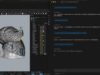
In this screenshot from ai.rplane, I’ve sampled some points in what appears to be a 3D projection of latent aircraft space, with a bird of prey selected. The red region shows airframes too small for my payload’s volume. I overlaid three thumbnails above the samples at the top to show how the latent space appears to interpolate the shape space, with the slenderest too cramped for the desired payload.
The evolution to agents takes this further: surrogate models become active participants in the engineering process. While these predictions still require validation for critical decisions, they enable continuous exploration of complex design spaces that would be impractical to simulate directly. The same approach applies to supply chain optimization, where surrogates can model the interactions between cost, availability and performance across thousands of components.
Quoting, Costing and Time Estimation
Over the past dozen years, I’ve had a close look at about a dozen cost and time estimators for CAM, 3D printing and production processes. Manufacturing marketplaces like Xometry, Protolabs, Meviy and Fictiv compete on some Pareto curve of price, turnaround and time-to-quote; they all have accumulated valuable training data from millions of parts.
Neural-net based estimators aren’t new: they’ve shipped on manufacturing hardware for at least two decades, with 3D printer vendors using them to predict print times and material consumption. MES systems have extended this approach to more complex manufacturing operations, learning from actual production data. Keep an eye on startups like Encube and Uptool to deepen AI and ML’s role in manufacturing unit economics and arbitrage.
AI agents can “left-shift” cost estimation: moving it earlier in the design process, directly into CAD and PLM systems. Users could receive continuous cost updates as they design, similar to how simulation feedback appears at the end of their feature tree. While some CAD add-ins already provide real-time quoting, these capabilities remain rare differentiators. Standardized protocols for cost estimation agents would make such services ubiquitous, benefiting both customers and vendors.
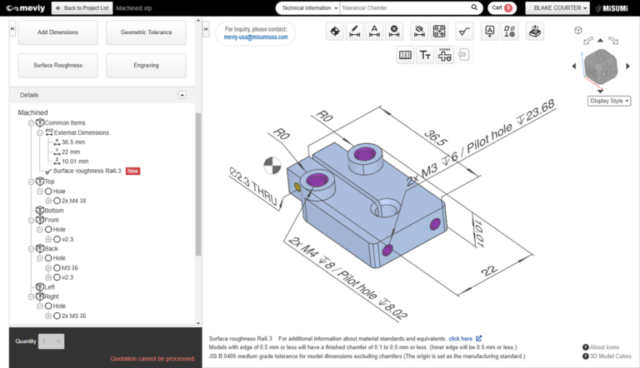
Misumi Meviy’s CNC quoting tool automatically recognizes manufacturing features and shows you the manufacturing plan. I expect they will be able to handle this slitting feature someday, as well as the hole before it.
What about more specialized machine shops? Uptool is building automation to interpret quotes, including nuances like tight tolerances that are not handled by the commodity vendors, all while keeping experts in the loop.
A reasonable machinist might also recommend a design change. The manufacturing industry has long lamented designers’ apathy of design-for-manufacturing. Like a good machinist, Encube suggests small design changes that lower manufacturing costs. Could an approach like Encube’s finally left-shift DFM into CAD?
Drafting
Sometimes, a CAD part isn’t enough to produce a quote, but a drawing usually is. I’ve recently been helping engineer a family of fancy brackets for some friends’ design project that called for interlocking tapered pockets, a geometry case that broke the quoting tools I mentioned above. The local CNC shop was happy to take the work, but needed drawings. I tried to get away with only detailing the most complicated one and hoped they could take it from there. But no, they needed a drawing for every one. Then, after sending all the drawings, they asked me for tolerances, which meant I had to mostly redo the first, most complicated drawing because most of my dimensions had disappeared. Deducing the tolerances became a gut-wrenching process not so much for the math anxiety, but because I feared their sarcasm for a tenth of a thousandth of an inch on those tapers. Somebody with human intelligence probably saw that coming and sent me a follow-up not to bother with the tolerances after all.
This story illustrates three universal truths about engineering drawings: everybody wants them to be complete, accurate and up to date; nobody wants to make them; and they often contain low-confidence information dressed up as precise specifications.
Apparently, a human-drawn drawing, via Spencer Wright et al.’s excellent newsletter, Scope of Work. IMO, it could use some whitespace.
Enter generative AI drawings. Companies like Hanomi, Drafter and Swapp are showing impressive results that go beyond automated dimensioning; they’re building foundation models for geometric dimensioning and tolerancing (GD&T), by necessity solving sophisticated generative problems to deliver drawing synthesis. These systems will likely expand to generate geometry, especially basic parts like plates, brackets and other common components.
Packaged as agents, these capabilities will integrate directly into our CAD workflows: finished drawings appear automatically at the bottom of our feature trees, complete with appropriate GD&T back-propagated to the 3D model. The agents could even suggest part variants optimized for different manufacturing processes, each with associated quotes and lead times.
Mark Burhop anticipates that similar downstream agents will left-shift much more, expanding from manufacturing agents that create interchangeable parts across manufacturing processes or vendors to predictive serviceability, repair, wear, sustainability and circularity.
Supplier Ggents
In PLM and BIM, most designs are assembled from standard components, such as linear rails, aluminum extrusions and motors in machine design and studs, windows and curtain wall systems in AEC. For commodity items like fasteners and materials, CAD systems may provide integrated databases of so-called smart components, suggesting possible interaction paradigms. However, this approach misses nuance in more competitive technical components, which is why suppliers often attribute their success to high-acumen sales engineers.
Some of the highest-growth engineering software startups, like Vention and Higharc, recognize this reality: they’ve built custom CAD systems where the software becomes part of the overall product experience. Instead of requiring their suppliers to purchase and learn software up-front, the future end-users of the actual machines or homeowners can immediately start configuring solutions.
For mainstream engineers, designing a machine or building remains an odyssey through drawings, CAD files and sales literature. LLMs and generative 3D technology promise to transform this experience by transforming disparate product data into agentic actors in CAD, PLM and BIM systems.
Consider designing a custom manufacturing device that needs an XY table, common in 3D printers and CNC machines. You want to optimize between rigidity and speed across different rail configurations and drive systems. Companies like Misumi offer sophisticated configurators, but you still need to make detailed decisions about pre-loading and seal wear just to get a STEP file that requires manual assembly. And that’s just the first rail.
Imagine instead: you draw a box in your CAD assembly, specify your end effector load and let supplier agents compete for your business. You might see variations from Misumi, THK and HIWIN, along with unexpected proposals from vendors you hadn’t considered. LLMs handle your questions like experienced sales engineers, reconfiguring designs on-the-fly, complete with lead times and volume pricing.
These systems, funded by suppliers’ sales and marketing teams, raise interesting security questions: How do we enable agents to make decisions based on CAD data without risking intellectual property? Could suppliers optimize production by analyzing where their components appear in designs? Will trusted third parties be needed?
Meshtastic Designer, an IoT design tool powered by Infinitive, a configurator platform that generates designs from engineering requirements while also informing e-commerce and ERP.
Infinitive appears to be pioneering this approach in discrete manufacturing, while several startups explore AI-powered AEC marketplaces. This model of embedding design software into revenue streams is gaining traction among engineering software startups.
Simulation
When SpaceClaim started to take off with simulation users, I had the opportunity to problem-solve with all sorts of engineers on a daily basis. Given that all models are wrong, I’d ask questions like “how do you know that your results are accurate” and “how do you build confidence that you’ve handled all the cases,” to which I’d hear answers like “my results aren’t accurate, but my derivatives have the right sign” and “there’s no way we have enough time to handle all the cases we can think of.” And some everyday engineering validation requirements like drop testing and assembly-level resonance testing seem like simulation fantasy.
We already discussed surrogate models, which can build confidence when connecting simulation results to empirical data. Using various forms of neural networks and similar approaches, companies like PhysicsX, Pasteur Labs and Neural Concept may accelerate results by two to six orders of magnitude. These vendors are developing and releasing increasingly advanced and differentiated models, much like how OpenAI and Claude.ai are competing on LLMs.
The next step is embedding this capability directly in the design process. Prominently in AEC, Autodesk has implemented surrogate models to deliver near-real time CFD visualization in their Forma product. Simulation agents will continuously analyze CAD assemblies, working from the PLM context to evaluate everything in sight. Interfaces and kinematics will emerge automatically from geometric placement; quick modal studies will detect gaps and interferences like a real-time spell-checker. Combined with increased cloud and GPU resources, we can finally start to cover all the simulation edge cases. Perhaps we can even measure the completeness of our simulated test coverage similarly to how the software industry measures code coverage in QA.
These agents will provide feedback similar to how modern programming environments guide developers: immediate, context-aware and actionable. xNilio (in stealth mode; material used with permission) demonstrates this with their product-level agent system, while companies like Intact Solutions and CoreForm show how meshless simulation can directly use adjacent parts in assemblies as boundary conditions. The SimSolid technology at Altair already excels at these assembly-level problems.
xNilio identifies patterns and simulates product-level problems, functioning as a continuous, offline design review.
Large OEMs often process enormous volumes of product revisions per year, creating an overwhelming flow of changes that must be verified for each product and configuration. Each change has the potential to disrupt assembly instructions, impact fitment, or require revalidation for multiple product options. Engineers face the difficult task of testing every configuration, which is extremely slow without automation. C-infinity and Dirac are producing approaches to navigate and validate the configuration space of complex product assembly.
The challenge isn’t just technical but interactional: how do we present all this intelligence without overwhelming engineers? Simple notifications, as I learned from the early overuse of Slack integrations, can quickly become noise rather than signal. Similarly, in software development environments, it took about two decades for static analysis to evolve into useful autocomplete. The future might lie in more subtle interfaces: annotations in digital mockups, contextual reports, or selective alerts based on risk levels. But we’ll need to carefully balance comprehensive analysis against the practical limits of human attention.
Is Generative CAD Ready for Agents?
But when will CAD systems draw, or at least autocomplete, our parts for us? We’ve seen success in architectural applications like automated office layout and topology optimization has given us countless lightweight brackets. These victories hint at broader possibilities, but the path to true AI-driven design may run through some familiar territory.
Parametric Generative
Before PLM, we called the mechanical CAD industry mechanical design automation. Starting with Pro/Engineer, parametric, history-based CAD tools could produce infinite variations of a design using a parametric recipe. These parametric generative systems encompass computational design, expert systems and anything knowledge-based, procedural, or declarative, including programming languages. Field-driven systems like nTop achieve superior reliability through implicit modeling, while workflow-focused platforms like Synera excel at integrating disparate systems.
Knowledge-based Engineering
Outside of mass customization and families of simple components like fasteners and bearings, knowledge-based engineering first appeared in tooling design like molds, dies, jigs and fixtures. Sophisticated experts are needed to program the CAD systems or author reusable “templates,” and such investments make economic sense in high-end applications.
In the architectural and design world, the computational design paradigm celebrated dataflow models starting with Generative Components, Dynamo and Grasshopper. Most modern architecture and industrial design with thematic, varying patterns result from artists exploring these tools. The “dataflow” environments navigated by computational designers descended from tools used by electronic musicians, such as Max/MSP and foster subjective, experimental workflows.
Max/MSP: navigating the void between DJ and computational designer since 1985.
Closed Loop Optimization
Coupled with simulation, it’s a common practice to run experiments with myriad samples to chart Pareto fronts (optimal sets) for how various parameters affect product fitnesses, or perform a gradient descent to find local optimality, as introduced with PTC’s behavioral modeling. Leap71’s pure code approach exemplifies the power of this methodology.
Topology optimization offers another optimization path using heuristics to produce optimal parts with simple solvers. nTop adds spatially varying control to parametric modeling through their trademark “field-driven design,” broadening the practice to more geometries and fitness functions. Machine learning appears poised to revolutionize these optimization technologies, particularly through neural implicits and a better understanding of design context. For example, TOffeeX is applying this technique to multiphysics systems, in some cases replacing what was done with surrogates just a few years ago. InfinitForm is improving compatibility with CAD representations.
Geometric optimization continues to expand beyond individual parts to entire processes. Companies like Atomic Industries are taking a vertical approach, building optimization knowledge in layers to complete manufacturing pipelines for optimal control over quality and throughput.
Leap71’s aerospike engine appears to use parametric optimization and inverse engineering as part of its intelligence model.
Diffusion-based Industrial Design
Recently, the term generative has gone mainstream in art and graphics design. Why can’t we just diffuse mechanical designs from prompts and sketches?
The answer lies in engineering’s sensitivity to small changes: slight geometric modifications can dramatically affect performance, especially when they alter topology. While art models can smooth over such discontinuities, engineering cannot. However, industrial design, the most artistic side of engineering, offers promising territory for diffusion models.
Tools like Vizcom already demonstrate the potential of diffusion for industrial design sketching. While 3D applications remain unexplored, the future seems clear: we’ll soon send the internal components of consumer products and simple machines to AI industrial designers who will generate complete enclosures, including attachment points, fasteners, latches and hinges. Mold shop agents will then generate the necessary tooling. Why not have designer agents in your CAD system, wrapping your chassis with different design suggestions.
The Agentic Engineering Ecosystem
Is a CAD agent just a CAD add-in on steroids, or are new approaches needed to support agentic product development processes? While agents will certainly need access to CAD and PLM APIs, if we treat them as simple services, like file translators, we may miss their transformative potential. The integration of AI agents into engineering workflows raises fundamental questions about architecture, security and process.
Data Ethics
Consider privileges and autonomy: for example, should an interference-checking agent have the authority to automatically edit parts and schedule design reviews? Could it initiate engineering change orders? Software development already embraces automated quality checks that can reject submissions and automatically recommend some categories of minor changes, suggesting a model where agents operate within supervised workflows. The challenge lies in balancing autonomy with control.
Access and Security
Security presents another critical dimension. As agents process proprietary design data to deliver insights, they must do so without exposing intellectual property. AI systems engineering requires careful consideration of security boundaries and data access patterns.
Even if the data is available, is it presented in a useful form? How will we analyze and prepare it for training, such as via tokenization? Companies such as KeyWard help create automated pipelines for moving data into modern data science techniques.
Scalability
The potential for AI agency extends beyond immediate process automation. Just as agents can optimize individual designs, they might learn broader patterns from PLM datasets: predicting delivery times, forecasting costs and identifying process improvements based on how engineering data evolves over time.
These questions highlight a broader transformation in engineering practice. As agents handle routine validation, surface relevant data and automate tedious tasks, engineers can explore more design alternatives, validate more scenarios and respond more quickly to manufacturing and supply chain feedback. The result isn’t just improved efficiency; it’s a deeper engagement with the entire value chain from concept to delivery.
Looking ahead, we expect existing CAD add-ins to evolve into agent frameworks, becoming specialized agents with well-defined interactions. This transition will make the tacit knowledge encoded in these tools more accessible to automated systems, creating a richer ecosystem where human expertise can be systematically applied at scale.
Summary
The emergence of AI-powered engineering agents represents a fundamental shift in how we approach product development. Rather than waiting for a single unified AI system to revolutionize engineering, we’re seeing a more organic evolution where specialized agents integrate into existing workflows, each addressing specific aspects of the engineering process, gradually transforming engineering from a purely human endeavor into a collaborative process between engineers and AI systems.
What makes this transition particularly noteworthy is how it preserves and enhances existing engineering workflows rather than replacing them. These agents work within our CAD, PLM and BIM systems, augmenting rather than disrupting established processes. They’re bringing AI capabilities to engineering in a way that respects the complexity and precision requirements of the field while addressing practical challenges around proprietary data, security and integration.
As we look toward 2025 and beyond, the key challenge isn’t just developing more sophisticated AI capabilities, it’s creating the infrastructure and protocols that allow these agents to work together effectively. We need frameworks for agent privileges, security boundaries and supervision that can scale across organizations and industries. The potential impact is significant: faster design cycles, more optimal solutions, reduced errors and ultimately, better products. But realizing this potential requires careful attention to both the technical and organizational challenges of integrating AI agents into engineering workflows.
About GCL
At Gradient Control Laboratories (GCL), we have the privilege of seeing patterns emerging among the most innovative engineering software startups. Last year, we tracked the rise of differentiable engineering as the first differentiable CAD and CAE APIs appeared. Now, as we wire AI agents into PLM and BIM architectures, we’re ready to share our expectations for 2025 and beyond.
GCL is starting to make systems that host agents to analyze and generate PLM data. The company is aware that many others are working on AI that could present as or host agents. GCL is contemplating a focused, technical workshop in the spring to hammer out solutions to some of the challenges above. If you’d like to participate, please respond here.
Accenture Chair and CEO Julie Sweet (left) interviewed by Julia Boorstin, Senior Media & Tech Correspondent at CNBC at CES 2025
Accenture Chair and CEO Julie Sweet (left) interviewed by Julia Boorstin, Senior Media & Tech Correspondent at CNBC at CES 2025
At CES 2025, held in Las Vegas, Accenture Chair and CEO Julie Sweet delivered a keynote address that set the tone for the future of technology and innovation. Speaking to a packed audience at the Venetian’s Palazzo Ballroom, Sweet presented a vision of how AI, data and technological integration can tackle some of the world’s most pressing challenges. Her address showcased not only the capabilities of AI but also its potential to transform industries, empower individuals and drive meaningful change.
AI: A Force for Transformation
Sweet began her address by positioning AI as more than just a technological advancement. She described it as a revolutionary force capable of driving change across diverse sectors of the economy, from healthcare and finance to sustainability and education. Sweet underscored that AI is a key enabler for innovation, not merely a tool for streamlining operations.
Citing examples from Accenture’s recent projects, Sweet illustrated how AI has been deployed to improve medical diagnoses, optimize supply chains and reduce carbon footprints. In one example, she detailed how a healthcare client used AI-driven analytics to enhance patient outcomes by identifying treatment inefficiencies. In another, she described how AI-powered predictive modeling helped a global retailer achieve unprecedented supply chain resilience during a time of market volatility.
Her message was clear: AI is not just about what businesses can accomplish—it’s about what they should accomplish to build a better world.
The Power of Data
Sweet emphasized the pivotal role of data in this transformation. She noted that data, when harnessed effectively, can unlock actionable insights that drive smarter decisions and more personalized customer experiences. However, she cautioned that merely collecting data is not enough; the real value lies in the ability to analyze, interpret and act upon it.
“Data is the currency of the digital economy,” Sweet declared. “But like any currency, its value depends on how it is used. Companies that learn to turn data into decisions will lead the next wave of innovation.”
Accenture, she explained, has invested heavily in developing tools and AI frameworks, their AI Refinery, to help organizations maximize the potential of their data. Sweet highlighted several case studies where businesses used Accenture’s AI Refinery “agents” to anticipate customer needs, reduce operational waste and achieve measurable sustainability goals.
Redefining Work in the Digital Era
As the world continues to navigate post-pandemic realities, Sweet stressed the need for companies to reimagine how they work. Hybrid and remote work models, which gained prominence during the COVID-19 pandemic, are no longer temporary measures but permanent shifts in workplace culture. Sweet spoke passionately about the opportunity these shifts present for innovation, inclusivity and employee well-being.
“Work has become an experience, not just a place,” Sweet said. “Technology has given us the tools to rethink how we collaborate, how we learn and how we lead.”
She detailed how Accenture has embraced this change, investing in virtual collaboration tools, fostering a culture of lifelong learning and prioritizing employee wellness. She also touched on the importance of reskilling the workforce to prepare for jobs that don’t yet exist, driven by advancements in AI and automation.
Sustainability: Innovation with Purpose
A key theme of Sweet’s keynote was the intersection of technology and sustainability. She described how Accenture has committed to integrating sustainability into every facet of its operations and client solutions.
For instance, Sweet shared the story of a partnership with a global logistics company to use AI and machine learning to optimize delivery routes. The initiative not only reduced fuel consumption but also cut emissions, demonstrating how technology can achieve both business and environmental goals.
Sweet’s discussion extended to the circular economy, where businesses can leverage AI to reduce waste and reuse materials, creating systems that are both economically viable and environmentally responsible. “Sustainability isn’t a challenge—it’s an opportunity for innovation,” Sweet remarked..
Ethics in AI
While championing the benefits of AI, Sweet did not shy away from discussing the ethical dilemmas it presents. She stressed the importance of creating a governance framework to ensure AI is developed and deployed responsibly. Sweet identified several key areas for focus, including:
Bias Mitigation: Ensuring AI systems are designed to eliminate bias in decision-making processes.
Transparency: Building AI solutions that are explainable and understandable to both users and regulators.
Privacy Protection: Safeguarding sensitive data from misuse while maintaining trust with consumers.
“Trust is the foundation of innovation,” Sweet declared. “Without it, technology cannot achieve its full potential.”
She urged industry leaders to collaborate on creating global standards for ethical AI development, ensuring that the technology benefits everyone, not just a select few.
Accenture’s Innovation Playbook
Throughout the keynote, Sweet provided a behind-the-scenes look at Accenture’s approach to innovation. She outlined three core principles that guide the company’s work:
Client-Centric Solutions: Partnering closely with businesses to understand their unique challenges and design tailored solutions.
Continuous Learning: Investing in research and development to stay ahead of emerging trends and technologies.
Scaling Impact: Ensuring that innovations are not only effective but scalable, so they can drive widespread transformation.
Sweet also shared an update on Accenture’s AI Innovation Lab, a hub for experimenting with next-generation AI technologies. She highlighted how the lab is fostering partnerships with startups, universities and industry leaders to accelerate breakthroughs.
A Vision for the Future
Closing her keynote, Sweet left the audience with a powerful call to action. She challenged business leaders to embrace technology not as a means to an end but as a tool to create a more inclusive, sustainable and prosperous future.
“The choices we make today will define the world we live in tomorrow,” Sweet concluded. “Let’s make those choices count.”
The Big Picture
Julie Sweet’s keynote at CES 2025 was more than just a presentation; it was a roadmap for how AI will transform the future. By framing AI technology not just for corporate use but also as a force for good in general, Sweet offered a vision that extends beyond profit margins and market share. Her emphasis on a human-centric approach was a welcome break from talks of automation and robots. Sweet explained that technological progress need not come at the expense of societal well-being.
For attendees and viewers worldwide, Sweet’s message was clear: AI is here and the future belongs to those who are bold enough to reimagine what’s possible with it. At a time when the world faces unprecedented challenges, her keynote was a timely reminder of the power of human ingenuity and technological innovation to create a brighter tomorrow.
Julie Sweet
Julie Sweet is the Chair and CEO of Accenture, a global professional services company specializing in consulting, technology, and outsourcing. Known for her visionary leadership, Sweet has been a driving force behind Accenture’s efforts to integrate cutting-edge technology, such as artificial intelligence and data analytics, into business strategies. Under her guidance, Accenture has prioritized innovation, sustainability, and ethical technology deployment, making it a leader in driving digital transformation across industries. Sweet’s commitment to fostering an inclusive workplace and advancing corporate responsibility has earned her recognition as one of the world’s most influential business leaders.
ed
Accenture is a global professional services company that provides consulting, technology, and outsourcing solutions to help organizations optimize their performance and navigate complex challenges. With operations in more than 120 countries, Accenture serves clients across industries, from finance and healthcare to energy and retail. The company is renowned for its expertise in emerging technologies like AI, cloud computing, and
Steve Robinson has joined iconsys to drive forward the company’s presence in clean energy and decarbonization.
With nearly £22bn ring-fenced by the UK Government for projects to capture and store carbon emissions from energy, industry and hydrogen, the strategic sales expert believes now is the perfect opportunity for the firm’s solution-driven approach and ‘technology independence’ to support all sectors in their decarbonization journey. This includes heavy industry such as metals, pulp & paper, marine & ports, automotive, transport infrastructure, consumer goods, and construction materials.
“What really appealed about the iconsys role is our agility and ability to move quickly on projects, working with clients to identify the optimal solution and technology – without being tied to delivering a particular product,” explained Steve, whose career includes senior roles with Schneider Electric and Emerson Automation.
Steve said, “We already have significant experience in the energy transition sector, including offshore wind, hydropower, power conversion, hydrogen production facilities and microgrids.”
“There is a lot of investment being ploughed into a dedicated energy team here and the recent appointment of Joe Howe as our energy transition specialist, and myself, underlines our commitment.”
“The plan is to be commercially engaged with our targeted customers in 2025, focusing on all aspects of energy transition, such as carbon and hydrogen capture/storage/transportation, solutions using alternative energy sources, fuel switching, and sustainable aviation fuels, which is an exciting space.”
“Making the ‘clean energy’ change can be a positive on the bottom line if carried out effectively.”
Steve holds more than 30 years global experience in sales leadership, with a proven track record in identifying and penetrating new and emerging markets. This has featured high-profile projects in Europe & the Middle East, playing a critical role in delivering the world’s largest LNG trains at the time and deployment of some of the territory’s first wireless applications.
In recent years, he has been working with major waste and water utility companies on their digital transformation journeys and recently obtained his ‘Galileo’ master’s certificate in global energy transition, hydrogen energy, and renewable energy solutions.
Andrew Rushton, group sales director at iconsys, said, “Steve is a major coup for our business and will head-up our activity in energy transition as we tap into the UK’s desire to become a clean energy solutions superpower.” “His international experience and knowledge of the sector are second to none, and, working closely with our industry expert, Joe Howe, will give us a powerful leadership team to further cement our brand salience and presence in this space.” “He is also an accomplished coach and mentor of junior talent, which will be very important as we look to heavily recruit for the next generation of staff.”
Steve concluded: “There’s a plethora of exciting spinouts, start-ups and innovators in the Energy Transition market. iconsys recognizes the importance of collaboration with these specialist energy transition companies, in order to meet the new, unique and evolving challenges in this sector.” “Our experienced engineering team really come into their own here. We can provide that expertise, as well as a comprehensive suite of controls, power conversion and automation systems that can enhance their solution ever further.”
STOCKHOLM, Sweden, Jan 21, 2025 – Hexagon’s Asset Lifecycle Intelligence (ALI) division has announced the acquisition of CAD Service. CAD Service is a developer of advanced visualization tools used to integrate CAD drawings, BIM models, and reality capture data into HxGN EAM, Hexagon’s asset management solution designed to extend asset lifecycles.
CAD Service has maintained a longstanding relationship with Hexagon, having signed a partnership agreement in 2013. The flagship solution, OpenCAD, is already an essential tool for around half of Hexagon’s EAM Software-as-a-Service (SaaS) customers. The acquisition allows Hexagon to integrate CAD Service’s visualization tools and speed up its development plans. By leveraging CAD Service’s expertise in-house, the ALI division will be able to offer comprehensive EAM solutions, addressing the needs of industries like manufacturing, energy, and transportation as they visualize and manage their assets in 3D environment.
“Acquiring CAD Service marks an important stepping stone for Hexagon’s Asset Lifecycle Intelligence division,” said Hexagon interim president and CEO Norbert Hanke. “Its expertise and advanced visualization tools will allow us to further enhance our EAM offerings, directly providing customers with more integrated and efficient tools for managing their assets. Becoming part of Hexagon is a natural progression for CAD Service since its tools have been an integral part of Hexagon’s EAM solutions for years.”
CAD Service, headquartered in Parma, will be fully consolidated and operate within Hexagon’s Asset Lifecycle Intelligence division.