Nemetschek Introduces AI Software for AEC Domain
Image: Nemetschek Group

MUNICH, Germany, Nov 2, 2026 – Nemetschek Group has introduced three AI-based software offerings for AEC domain: Archicad Max for architecture, Allplan Max 2027 for engineering and Bluebeam Max for construction. Built on the Nemetschek Intelligence Platform, the products add AI-assisted design, model analysis, drawing review and workflow automation to the company’s software applications.

The offerings cover architectural modeling, structural engineering, drawing coordination and construction documentation. They support data exchange between software applications, while professionals retain responsibility for reviewing AI-generated results and making final decisions.

“AI in our industry only creates real value when it understands the project, works where professionals work and connects with everything else on the job,” says Julian Geiger, chief AI officer of the Nemetschek Group. “With Archicad Max, Allplan Max and Bluebeam Max, we are scaling one AI strategy across design, engineering and construction, built on a shared intelligence platform rather than isolated features. And we are doing it the Nemetschek way: open. Our AI connects to open standards like IFC and to the AI tools our customers choose, through open protocols such as the Model Context Protocol. Customers keep ownership of their data, their choice of tools and their professional judgment. That is how AI becomes a trusted part of everyday work, not just another platform to be locked into.”

AI Capabilities Across Three Software Products

Archicad Max: Graphisoft‘s premium Archicad subscription includes an AI Assistant, currently in beta, that performs multistep tasks within architectural models. AI Assistant Spaces uses a firm’s standards and project information to answer questions, while an updated AI Visualizer incorporates image models. The subscription also includes access to Nemetschek Creator, a browser-based platform for early-stage design. Full access is planned when its commercial version is released in 2027.

Allplan Max 2027: Launched alongside Allplan 2027, the engineering offering extends AI capabilities across Allplan, SCIA, FRILO, RISA and SDS2. Its tools include Feature Builder, AI BIM Modeler, AI Visualizer, AI Formula Writer, AI BIM Analyst, AI Structural Analyst, AI Drafter and AI Coach. These support modeling, analysis, drafting and fabrication workflows. According to Nemetschek, early beta users completed selected tasks up to 36% faster. Engineers remain responsible for design decisions, reviews, approvals and final results.

Bluebeam Max: The construction offering extends Bluebeam Revu with tools for reviewing drawings, identifying changes and automating documentation tasks. Smart Review checks for design discrepancies, scope gaps and missing information. Smart Overlay identifies changes between drawing sets, while Magic Markups automates repetitive markups and quantity take-offs. A stitching function combines drawing sheets into a navigable view for infrastructure projects. More than 2,000 early adopters reported productivity improvements in preconstruction, design coordination and construction management.

Software Connectivity and Data Exchange

The offerings use the Model Context Protocol (MCP) to connect AI applications with design and construction software. Nemetschek’s AI Assistant uses MCP to interact with software applications, while the protocol also provides access for third-party AI tools.

Archicad Max includes a public Archicad MCP server, currently in beta, that connects third-party desktop AI applications to Archicad models. Bluebeam Max supports MCP connections with Anthropic Claude, GitHub Copilot CLI and AnythingLLM, allowing users to generate markups and obtain project information through natural-language commands.

Connected Studio Sessions links Bluebeam markups to corresponding locations in Revit drawings and model views, connecting PDF-based review with building information modeling workflows across different software environments.

Nemetschek also uses open building information modeling standards, including Industry Foundation Classes (IFC), to support data exchange between disciplines and project partners.

The Nemetschek Intelligence Platform provides a shared AI and data foundation for the three products. It builds on the company’s AI Layer, announced in 2024, and the Nemetschek AI Assistant, introduced across its software brands beginning in 2025.

Availability

Bluebeam Max and Allplan Max 2027 are available globally. Archicad Max is available with Archicad 30 and is rolling out by region.

Bluebeam Max has also been available free to eligible students and educators worldwide since September 2026. Features, beta status, subscription packages and pricing vary by product, plan and region.

Source: The Nemetschek Group

About the Nemetschek Group

Nemetschek Group, founded in 1963 and based in Munich, Germany, is a global provider of software solutions for the architecture, engineering, construction, and operations (AEC/O) industries, as well as the media and entertainment sector. The company operates through four business segments: Planning & Design, Build & Construct, Manage & Operate, and Media & Entertainment. Its portfolio includes brands such as Allplan, Graphisoft, Vectorworks, Bluebeam, and Maxon, offering solutions for building information modeling (BIM), structural design, project collaboration, and 3D visualization.  The company employs around 4,000 people and supports over 7 million users globally. Nemetschek Group continues to expand its presence in international markets, including in Saudi Arabia.


Nemetschek Creator Combines Agentic AI with Decades of BIM Engineering

IGNITE 2026 Media Q&A session. Architosh editor Anthony Frausto asks the executive panel a question about Nemetschek Creator. (Source: Architosh).


Nemetschek Creator represents Graphisoft’s move beyond conventional cloud-based BIM toward an architecture built specifically for agentic AI. Introduced at Graphisoft IGNITE 2026, the platform combines generative AI with established BIM technologies to support early-stage architectural design and analysis, tells Architosh.

Creator introduces what Graphisoft calls Intent-Based Interactive Design. Architects specify program requirements, site constraints, performance targets, and spatial criteria, and AI agents generate design alternatives that respond to those requirements. The cloud platform can evaluate concepts for daylight, carbon footprint, building-code compliance, and terrain conditions. Designs will eventually synchronize bidirectionally with Archicad.

The underlying software architecture is central to the strategy. Large and small language models do not perform precise geometry calculations themselves. Instead, they act as reasoning layers that call specialized microservices through technologies such as Model Context Protocol. An AI agent evaluating a floor plan, for example, can request deterministic results from dedicated daylight or egress services. Existing C++ B-Rep technology handles precise geometric calculations.

This division addresses a major weakness of generative AI: probabilistic answers can be inappropriate when architects require mathematically reliable results. AI can interpret intent and propose alternatives, while specialized software supplies verifiable engineering and geometric information.

Microservices also allow computational workloads to be distributed. Hundreds of design alternatives could be processed using scalable cloud resources, while smaller models could run locally for private tasks such as building-code checks.

Graphisoft has an advantage because it does not need to rebuild its BIM technology from scratch. Archicad contains decades of C++ geometric mathematics, B-Rep algorithms, and parametric solvers. Its modular architecture allows Graphisoft to refactor these established capabilities into containerized cloud services. Nemetschek Creator therefore combines newer agentic AI with mature BIM computation, creating an architecture in which AI orchestrates design tasks while deterministic software handles calculations requiring precision.

HGS Selects Rackspace for Private Cloud AI Infrastructure

SAN ANTONIO, TX, Nov 2, 2026 – Rackspace Technology will provide AMD-powered private cloud and AI compute infrastructure to Hinduja Global Solutions (HGS) under a three-year deployment beginning in Dec’2026. The infrastructure will support HGS’ AI-based services for enterprise customers in the United States and United Kingdom, giving HGS control over computing costs, security and performance.

The deal is the first announced GSI customer deployment under Rackspace’s multiyear compute agreement with AMD. The agreement covers an initial 30 MW footprint of AMD computing infrastructure across Rackspace’s global data centers from late 2026 through 2028.

HGS, part of the Hinduja Group, plans to combine Rackspace’s private cloud, data center and AI computing infrastructure with its technology and managed services. The deployment will support applications that use real-time customer information during frontline interactions and across digital channels to provide personalized services.

“AI is forcing a fundamental reset of the business services industry,” said Phil Fersht, CEO and chief analyst, HFS Research. “Competitive advantage will increasingly come from providers that can combine deep process expertise with the AI infrastructure, compute and operational capabilities needed to deliver at scale. The HGS and Rackspace relationship is a strong example of how services firms can bring together domain expertise and technology execution to build the foundation for the next generation of AI-enabled services.”

“As HGS expands its AI capabilities, we recognize that production AI requires us to think differently about the infrastructure beneath our applications,” said Venkatesh Korla, global chief executive officer of HGS. “Working with Rackspace gives us control over the cost, security and performance of our AI infrastructure, and adds private and sovereign-ready cloud capabilities that broaden what we can deliver to customers.”

The infrastructure will also support HGS’ services for enterprises seeking more control over their data, AI environments and regulatory requirements. Rackspace will combine computing resources, private cloud infrastructure and managed operations to support production AI workloads alongside public cloud services.

“AI is pushing enterprises to reconsider where critical workloads run and how much control they retain over their infrastructure, data and economics,” said Gajen Kandiah, chief executive officer of Rackspace Technology. “HGS shows what production AI requires: dedicated compute, private cloud and managed operations working alongside public cloud. We built our governed enterprise AI stack for exactly this, and the AMD agreement gives customers a clear path from capacity to production.”

Source: Rackspace Technology

About HGS

Hinduja Global Solutions (HGS) is an Indian technology and business services company founded in 1973 and headquartered in Bengaluru, India. Part of the Hinduja Group, it provides customer support, contact center management, back-office processing and human resources services. Its technology operations include artificial intelligence, cloud computing, automation, data analytics, cybersecurity and software development. HGS serves customers in health care, banking, financial services, retail, telecommunications, technology, consumer goods and the public sector. The company also provides customer communication services through telephone, chat, social media and digital platforms. Through NXTDIGITAL, HGS operates satellite television, digital cable and broadband services in India. Its operations span 10 countries, with approximately 18,000 employees across 30 delivery centers worldwide. The company reports serving 1,070 business services clients.

About Rackspace Technology

Rackspace Technology is a U.S.-based cloud computing and information technology services company founded in 1998 and headquartered in San Antonio, TX. The company provides managed cloud services, including public, private and hybrid cloud infrastructure, hosting and data center operations. It also offers application management, cybersecurity, data management, artificial intelligence infrastructure and IT consulting. Rackspace works with Amazon Web Services, Microsoft Azure and Google Cloud to manage customers’ computing systems and applications. Its services include infrastructure maintenance, technical support and management of business applications. The company serves organizations in health care, financial services, retail, manufacturing, technology and government. Rackspace served more than 75,000 customers across 120 countries. Rackspace has more than 5,800 employees worldwide and 39 data centers.

Build-A-Chip-Bench Tests AI Agents From Chip Specification to GDS

Source: ChipAgents.
Source: ChipAgents.


ChipAgents has added its Build-A-Chip-Bench semiconductor benchmark to Fireworks AI’s Specialized Intelligence Index, an initiative designed to evaluate AI models on professional, domain-specific tasks. The benchmark addresses a key limitation of conventional AI evaluations: generating plausible RTL does not demonstrate that an AI can successfully design an implementable chip.

Developed by ChipAgents with contributions from Nvidia, Build-A-Chip-Bench evaluates AI agents across the digital chip design process, from workload specification to GDS layout. Each task provides a fixed interface, open-source tools, and an open-source process design kit. Agents can query a separate verification service but cannot access its hidden tests or verification IP. An independent grader evaluates the final submission.

The benchmark uses two critical gates. First, a design must pass functional verification against hidden verification IP. Second, it must successfully complete physical implementation with routing finished, no hold-time violations, and clean design-rule checks. Only designs passing both stages receive a score based on power, performance, and area. Failure at either stage results in zero.

Initial results illustrate the difficulty. Using the same OpenCode agent harness, the leading model achieved an overall score of just 16.6%. The evaluation separately reported a 65% functional pass rate and a 75% GDS pass rate, showing that completing individual stages does not necessarily translate into a successful, optimized end-to-end design.

Build-A-Chip-Bench goes beyond benchmarks focused on isolated tasks such as RTL generation or verification. An agent must develop architecture and microarchitecture, generate RTL, verify functionality, and navigate synthesis, floorplanning, placement, clock-tree synthesis, and routing. It must also interpret physical feedback and decide whether problems require changes to RTL or implementation settings.

By joining the Specialized Intelligence Index, ChipAgents aims to make full-flow AI progress measurable and provide chip designers and AI developers with a common way to evaluate whether increasingly autonomous agents can turn design intent into physically viable silicon.

OPmobility, Maruti Suzuki Open Fuel Tank Plant in Kharkhoda, India

Image: OPmobility
Image: OPmobility

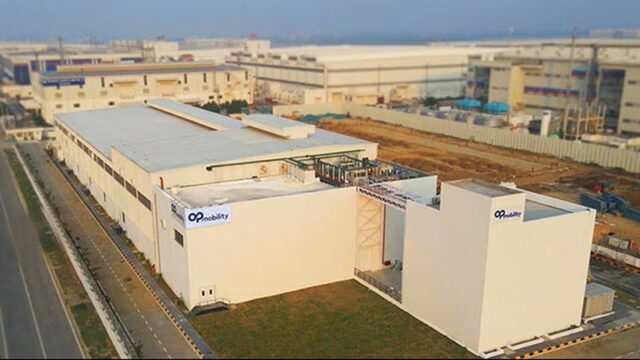
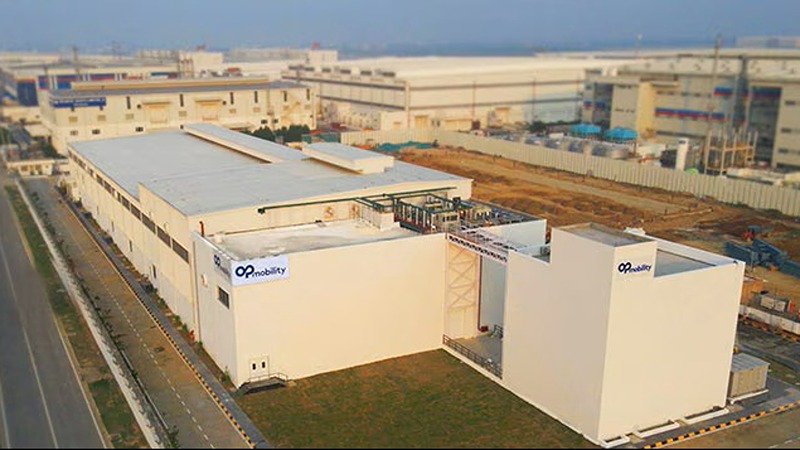
OPmobility, Maruti Suzuki, its joint-venture partner in India, and Suzuki Motor Corporation, have inaugurated a new energy storage systems manufacturing plant in Kharkhoda, Haryana, India. The facility is the second operated by the joint venture OPmobility-Maruti Suzuki / Suzuki Motor Corporation in northern India. It is expected to reach an annual production capacity of 1 million fuel tanks by 2031. It will support Maruti Suzuki’s growth in the region.

The facility expands OPmobility’s manufacturing operations in India, where the company has operated since 2007. OPmobility has six plants and four R&D centers in the country.

According to OPmobility, its products are installed in more than one-third of vehicles in India. The company ranks first in fuel tanks and third in bumpers in the Indian market. The expansion also supports OPmobility’s goal of doubling its revenue in India by 2030.

Félicie Burelle, chief executive officer of OPmobility, said: “The opening of our new Kharkhoda plant is a major milestone in our long-standing partnership with Maruti Suzuki and a further step in OPmobility’s development in India. With strong economic growth, an expanding automotive market and significant potential for increased vehicle ownership, India offers considerable opportunities. Building on our partnerships with Indian and international automakers, we aim to double our revenue in the country by 2030. India is central to OPmobility’s diversification strategy, contributing to a broader geographic footprint and a more diversified customer base.”

Source: OPmobility

About OPmobility

OPmobility is a French industrial group founded in 1946 by Pierre Burelle. Headquartered in Levallois-Perret, France, the company specializes in sustainable mobility solutions, offering products such as exterior and lighting systems, complex modules, energy storage systems, and electrification solutions for both battery and hydrogen-powered vehicles. Serving a global clientele of car and truck manufacturers, OPmobility operates 150 production plants and 40 R&D centers across 28 countries, employing approx. 40,300 people.

Allplan Max 2027 Brings Purpose-Built AI Across Engineering Workflows

Source: AEC Magazine.


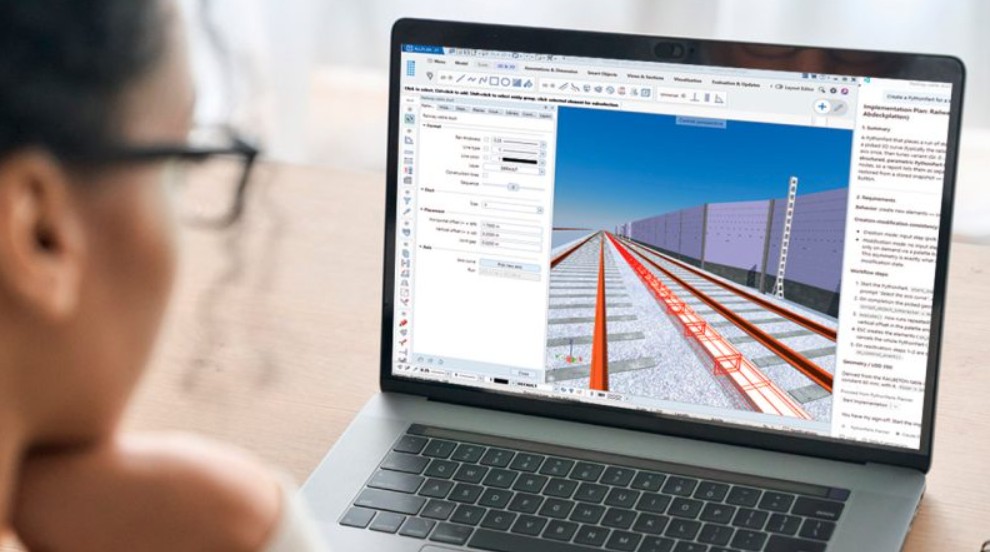
Nemetschek brand Allplan has introduced Allplan Max 2027, a new generation of engineering-focused AI designed to automate repetitive tasks and provide contextual assistance across design, analysis, detailing, and fabrication workflows. Rather than positioning AI as a replacement for engineers, Allplan emphasizes that users remain responsible for design intent, review, approval, and final engineering decisions, says AEC Magazine.

Allplan Max extends AI across the company’s engineering portfolio, including Allplan, Allplan Civil, Frilo, SCIA, and SDS2. The tools target routine activities such as searching for information, checking models, preparing reports, generating formulas, cleaning drawings, and performing repetitive operations.

Within Allplan, Feature Builder allows engineers to describe desired functionality in natural language, with AI and Python used to create customized features. Workflow Builder takes automation further by connecting Allplan with large language models and AI-agent platforms through an MCP Server. Firms can use plain-language instructions to retrieve project information, connect Allplan with other systems, and develop agentic workflows. Other capabilities include AI Formula Writer, AI BIM Analyst, and AI Drafter.

AI also reaches structural engineering. SCIA and Frilo provide AI-assisted analysis and decision support. AI Structural Analyst interprets internal forces, reactions, and deformations to help engineers assess structural results more efficiently. AI Coach provides contextual guidance intended to help junior engineers and occasional software users become productive more quickly.

For steel detailing and fabrication, SDS2 introduces additional AI capabilities. AI BIM Analyst lets users query model information with natural-language prompts, select objects, and generate detailed reports. AI Drafter automatically positions labels on erection drawings while avoiding overlaps.

Allplan Max arrives alongside Allplan 2027, which adds improvements in reinforcement detailing, BIM information workflows, and AI-based customization. Together, the releases show Allplan applying specialized AI across connected engineering tasks rather than limiting it to a standalone assistant.

Apple Finally Brings Touch to the MacBook Pro

Source: Jobanny Cabrera; Getty Images.


Apple has reversed one of its longest-standing Mac design positions by introducing a touchscreen MacBook Pro. For years, Apple executives argued that touch interfaces were unsuitable for Macs because reaching across a keyboard was uncomfortable and macOS required the precision of a mouse or trackpad. The 2026 MacBook Pro signals that Apple believes technology has finally overcome those objections, tells Wired.com (full article available to subscribers).

The new 14- and 16-inch MacBook Pro models combine M5 Pro or M5 Max processors with a tandem OLED display. Apple CEO John Ternus says touch was added only after the company could implement it without making the computer heavier or thicker. The OLED panel eliminates the need for conventional backlighting and contributes to a lighter machine.

Apple also addressed several engineering challenges associated with touchscreen laptops. The thermal system was redesigned to prevent the display from becoming uncomfortable during direct interaction. A redesigned hinge reduces screen movement when users tap or swipe, while an anti-reflective coating addresses concerns about fingerprints and cleaning.

Rather than redesigning macOS around touch, Apple has made existing interface elements respond intelligently. Menu items and small controls enlarge when touched, helping users make precise selections while preserving traditional mouse and trackpad operation. Apple demonstrated touch for professional applications such as color grading in DaVinci Resolve and audio editing in Logic Pro.

Changing user behavior also influenced the decision. Apple executives say engineers, scientists, developers, media professionals, and younger creators increasingly expect direct screen interaction because they already use iPhones and iPads.

The touchscreen remains a premium feature. The 14-inch MacBook Pro starts at $2,899, while the 16-inch model starts at $3,399. Apple has not indicated whether touch will eventually reach lower-priced MacBook Air or desktop models. For now, the company is positioning touch as an additional professional input method rather than a replacement for the keyboard and trackpad.

AI-Powered Mosquito Trap Targets Faster Dengue Surveillance

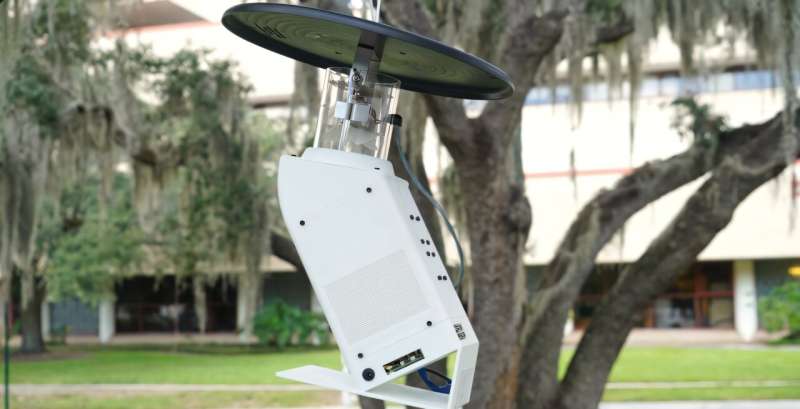
The mosquito trap uses built-in cameras and artificial intelligence to identify mosquito species and support real-time surveillance efforts (source: University of South Florida).


Researchers at the University of South Florida have developed an AI-powered mosquito trap designed to accelerate surveillance of mosquitoes that spread dengue and other diseases. Created by USF startup Digitomy, the system has achieved more than 98% accuracy in identifying mosquito species during laboratory testing, tells Tech Xplore.

The technology, developed by researchers Ryan Carney and Sriram Chellappan, uses artificial intelligence to identify a mosquito’s species and sex and determine whether it has taken a blood meal. Combined with cloud computing and a mapping dashboard, the information could help public health agencies monitor dangerous mosquito populations and target control measures more precisely.

The trap can be placed on the ground or hung from a low tree branch. Light or bait attracts mosquitoes, and a fan pulls them inside onto a sticky pad. Two built-in cameras photograph the captured insects. AI then compares the images against a large mosquito-image database to determine their species.

This approach could significantly reduce identification time. Traditional surveillance may require specialists to spend two or three days examining mosquitoes under microscopes. Digitomy is intended to provide results the same day while keeping humans involved in the surveillance process.

The researchers have also integrated trap data into a private layer of the Global Mosquito Observations Dashboard, which incorporates more than half a million citizen-science reports. Combining these datasets could reveal where disease-carrying species are concentrated and help authorities respond faster to outbreaks.

Digitomy is also developing a cloud-based educational platform that lets professionals and the public practice mosquito identification and receive AI-generated feedback. Meanwhile, the team is preparing for additional field validation and working with USF Technology Transfer to license the technology to established mosquito-trap manufacturers. The broader goal is to turn slow, labor-intensive mosquito monitoring into a faster, data-driven surveillance system that can support more timely disease-control decisions.

AECBench Tests Whether AI Can Handle Real Architectural Work

Source: Snaptrude.
Source: Snaptrude.


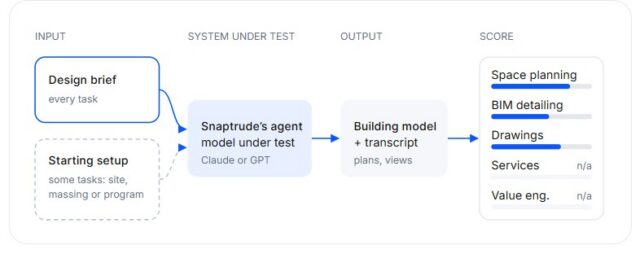
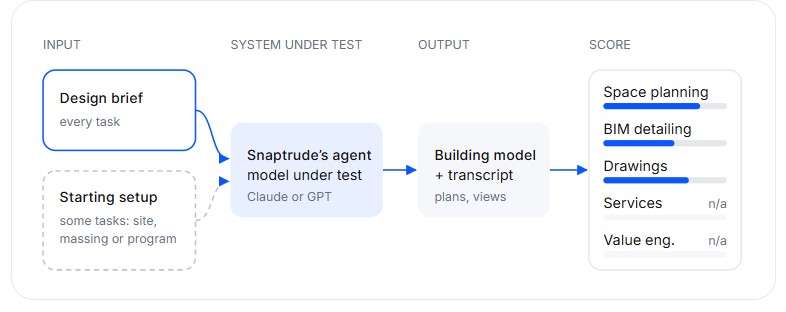
Snaptrude has developed AECBench, a benchmark designed to measure whether AI models can perform realistic architecture, engineering, and construction tasks. Unlike conventional AI benchmarks focused on reasoning, coding, or question answering, AECBench gives an AI a design brief, asks it to work through an architectural problem, and evaluates the resulting building model.

The benchmark addresses a basic problem facing AEC firms: there is no common way to determine whether an AI system can perform professional design work. Architectural problems rarely have a single correct answer, making traditional pass-or-fail testing inadequate. AECBench therefore divides evaluation into objective core requirements and qualitative design assessments.

Every task checks five fundamentals, including whether spaces overlap, stories stack correctly, all spaces are accessible, numerical requirements in the brief are satisfied, and building elements are parametric components. Additional evaluations cover space planning, BIM detailing, drawings, building services, and value engineering. Deterministic software graders measure objective requirements directly from the model. Design quality is evaluated by an LLM developed from reviews by practicing architects.

Snaptrude also tested its AI agent against Claude Code and Codex. Snaptrude’s agent works directly within a parametric building model, while the coding agents generated Three.js scenes. Snaptrude reported stronger results in areas including adjacency and zoning and BIM detailing, although Claude Code scored higher on site response and value engineering.

The distinction between visual output and usable BIM is central to the comparison. Snaptrude’s agent creates editable rooms, walls, openings, and other building components while maintaining a changelog of design decisions. It can also reason about circulation, privacy, acoustics, and relationships between spaces.

AECBench remains an internal benchmark, so its results should be viewed in that context. Snaptrude plans to open-source the tasks and provide a way for AI labs to run their models through the same evaluation framework.

Early Electric Cars Found a Market with Women Drivers

When automobiles were still a novelty, electric cars vied with those powered by steam and internal combustion (source: miSci—Museum of Innovation and Science).


Electric vehicles were competing with steam and gasoline automobiles more than a century before today’s EV boom. IEEE Spectrum explores this early period through Fannie Goodnow, a Boston-area woman who owned a 1908 Bailey Victoria Phaeton and charged it using a General Electric mercury-arc rectifier.

At the beginning of the 20th century, no automotive technology had clearly emerged as the winner. Steam vehicles posed heat and fire concerns, while gasoline cars were noisy, produced exhaust, and required hand cranking before the electric starter arrived in 1911. Electric cars were comparatively quiet, clean, and easy to start. Manufacturers used these characteristics to market EVs specifically to women, while General Electric advertisements showed fashionable women operating charging equipment.

Goodnow’s charging system illustrates the sophistication and limitations of early EV infrastructure. The mercury-arc rectifier converted AC electricity from the grid into DC for battery charging. A depleted battery took about 12 hours to recharge. Charging connectors were not standardized, forcing some early motorists to carry adapters and cables, an issue that echoes modern EV charging compatibility concerns.

The Bailey Victoria Phaeton also reflects rapid changes in battery technology. Its original Edison alkaline battery suffered from leakage and poor charge retention, prompting Bailey to adopt lead-acid batteries from Gould Storage Battery. Goodnow’s 30-cell battery provided a range of roughly 64–80 kilometers. The car cost $2,000, equivalent to about $73,000 today.

Thomas Edison eventually improved his battery, and Bailey demonstrated its capabilities through a roughly 1,600-kilometer promotional journey. Yet the technology arrived as Henry Ford’s Model T was helping gasoline vehicles dominate the market. Unable to compete, Bailey sold its factory in 1915 after producing only about 500–600 EVs. Goodnow’s surviving charger now serves as a reminder that many challenges associated with modern electric mobility, including range, charging infrastructure, connector standards, and battery performance, have roots stretching back more than a century.

0FansLike
0FollowersFollow
0SubscribersSubscribe
Google search engine

Recent Articles

Trending Now