BIM Managers Turn Firm Standards Into Repeatable Project Practices
Source: Pirros.
Source: Pirros.


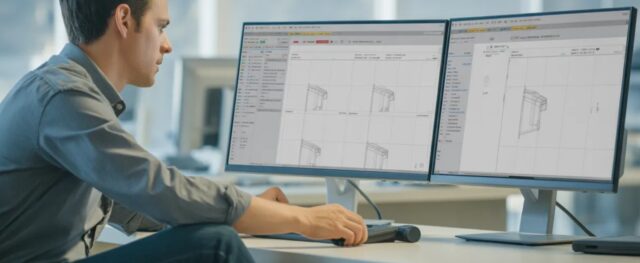
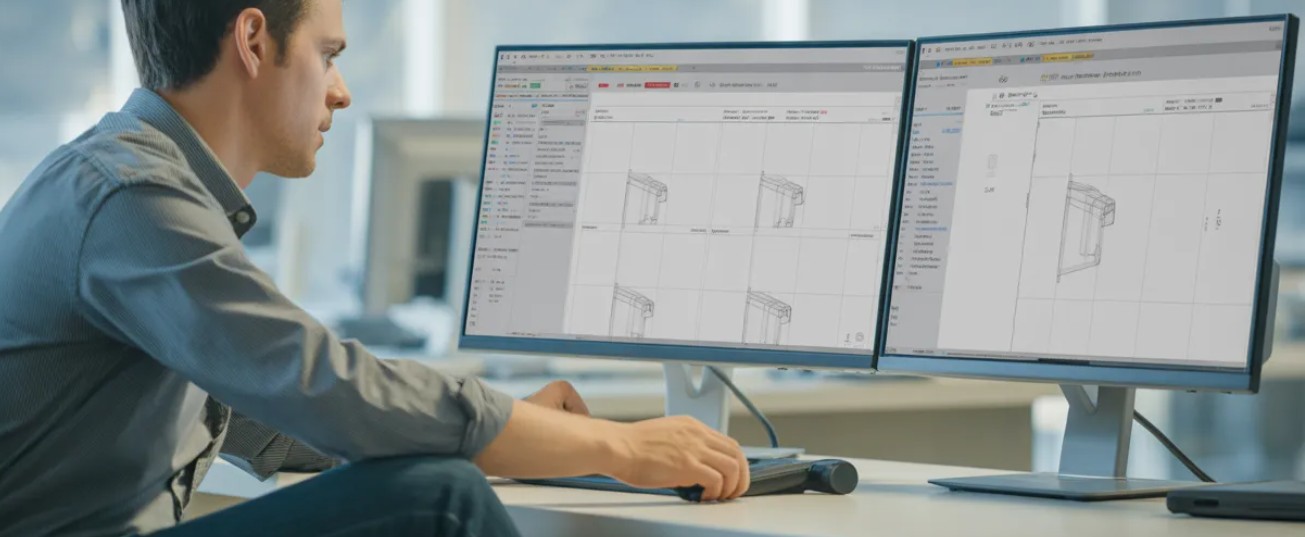
BIM management at architecture and engineering firms involves two closely connected responsibilities: maintaining firmwide standards and managing BIM processes on individual projects. A BIM manager typically oversees Revit templates, families, typical details, drawing standards, training, software upgrades, and technical support. At the project level, the role expands to BIM execution plans, model setup, consultant coordination, clash detection, model health, and final deliverables.

Pirros argues that this broad responsibility creates a persistent problem. BIM managers often become the central help desk for standards-related issues. Project teams may reuse old projects instead of current templates, create duplicate families and styles, redraw existing details, or continue using outdated standards. Valuable knowledge can also disappear when experienced employees leave. These problems consume time that BIM managers could spend improving firmwide processes.

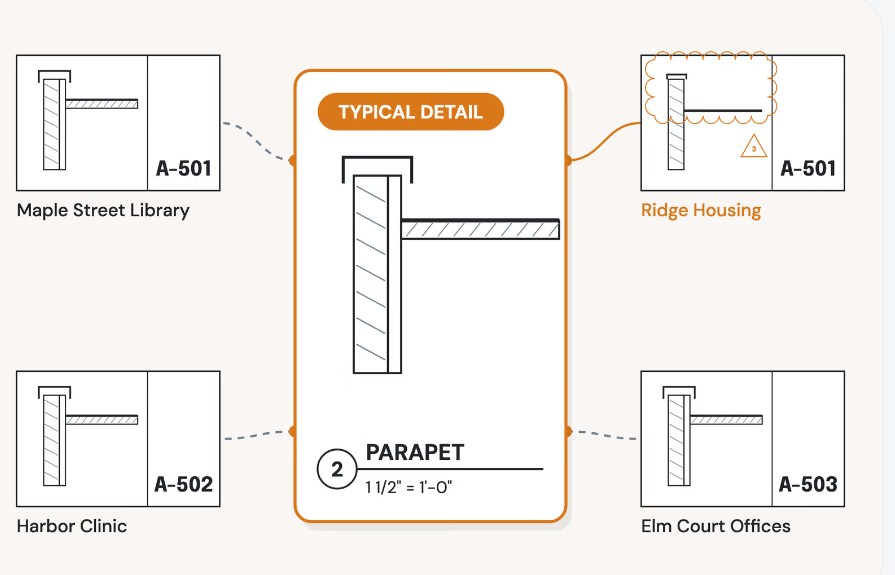
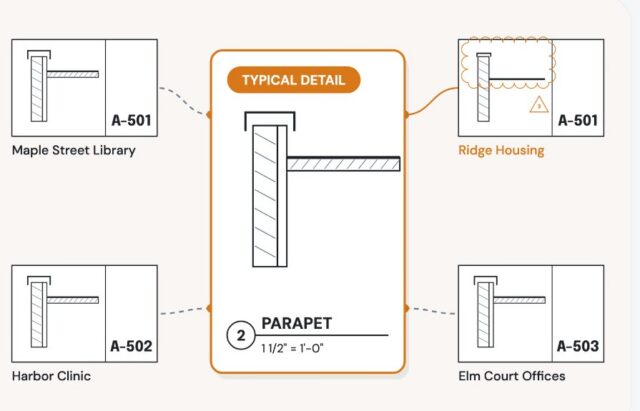
The article recommends treating BIM standards as a continuous loop rather than a static library controlled by one person. Firms should distinguish approved typical details from project-specific details, allow good project work to become new standards, maintain one approved version of each family, communicate revisions to active projects, and conduct regular model checks. Standards should also be easy to find within designers’ everyday workflows.

Pirros positions its platform as a way to support this approach. It makes Revit details and families searchable, prioritizes approved content, tracks usage, and lets designers propose project content for standardization. The company says David Baker Architects expanded its standards library by 700 percent using this workflow.

AI also plays a practical role. Pirros’ Mira AI agent works inside Revit to perform repetitive standards tasks, such as identifying duplicate line or dimension styles and renaming drafting views. Importantly, Mira requests user approval before making changes. The goal is to reduce routine cleanup so BIM managers can concentrate on standards, quality, and firmwide consistency.
AI Agents Can Reach Deep Into Siemens NX, but Teamcenter Holds the Bigger Picture

Source: Leo AI.
Source: Leo AI.


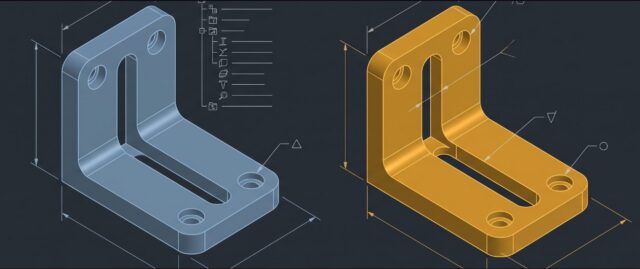
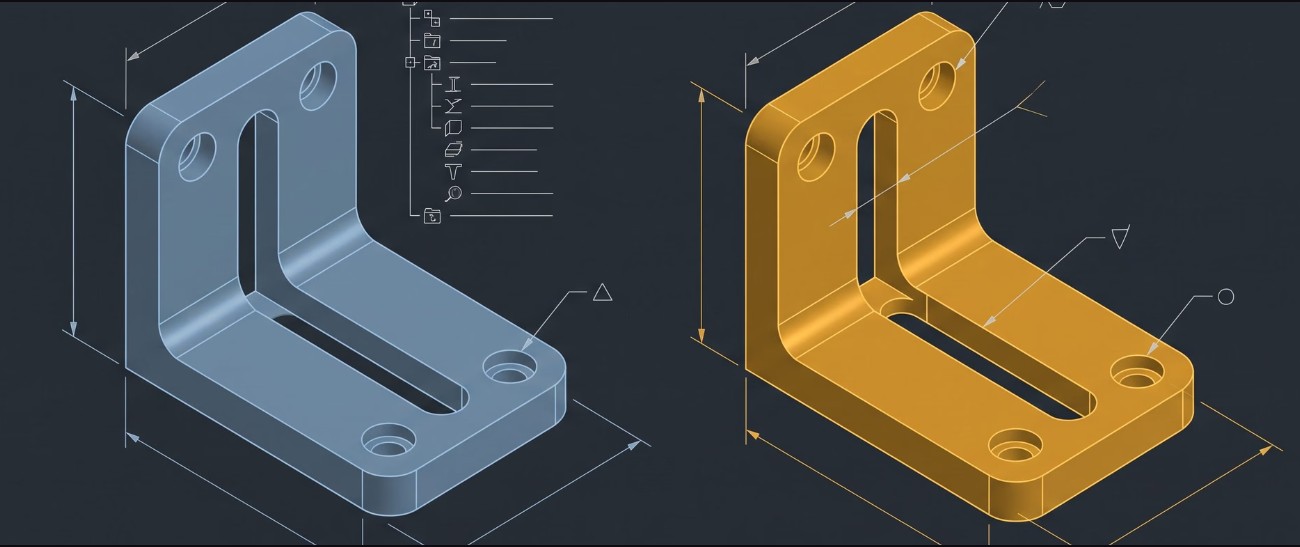
AI agents can access substantial engineering information in Siemens NX, but the usefulness of that access depends on where the required data resides. NX Open, Siemens NX’s programming interface, allows software to interact with parts, features, expressions, assemblies, components, drawings, and annotations. This creates opportunities for AI agents to retrieve design information, check models against engineering rules, and potentially modify designs, tells Leo AI.

The article recommends starting with lower-risk, read-only tasks. An agent might extract expressions from a part, list assembly components, collect attributes, or check dimensions against predefined rules. Editing expressions, adding features, or regenerating drawings carries greater risk because an incorrect AI response could directly alter the engineering model.

Access also comes with an important constraint. Applications using NX Open generally require a licensed NX session or a batch process that consumes an appropriate license. AI automation therefore does not eliminate the need for NX seats. Journals and Siemens Knowledge Fusion can provide additional design-intent information, but their usefulness depends on whether engineers created and maintained those records.

NX Open also has boundaries. A live NX session can contain unsaved changes, suppressed features, active reference sets, and display states that are absent from the saved file. API access to features and dimensions does not automatically give an AI agent geometric understanding, such as recognizing similar parts. Geometry-aware search requires a separate indexing approach.

For teams using Teamcenter, PLM data adds another layer. Release status, where-used relationships, change history, access permissions, and bills of materials reside in Teamcenter rather than individual NX files. The article therefore recommends separating AI projects into saved-model queries, live-session tasks, PLM questions, and geometry-based searches. Each AI-generated answer should identify its source so engineers can verify whether it came from a live session, saved model, or released revision.

3D Systems Donates NextDent 300 3D Printer to RAM

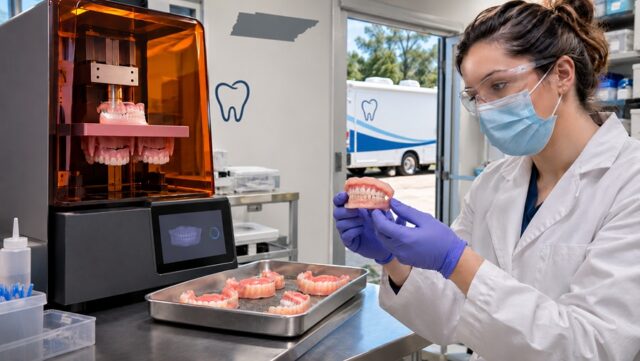
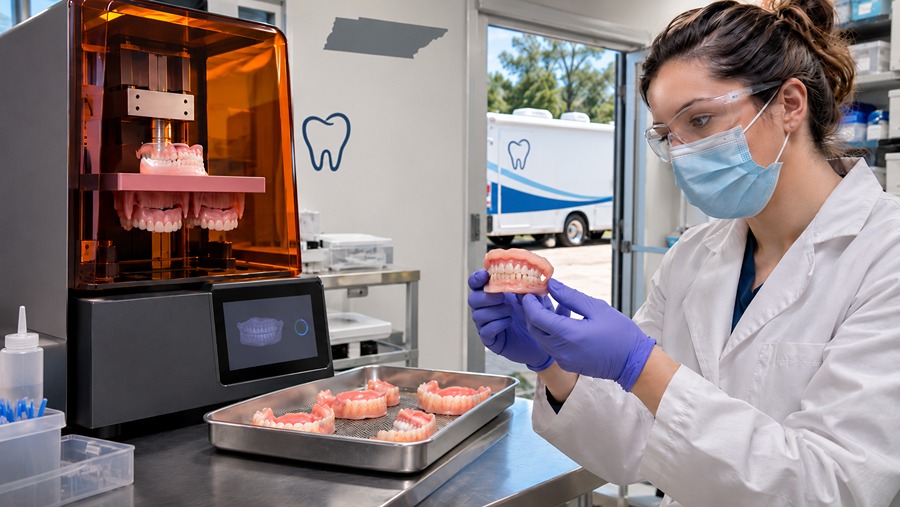
ROCK HILL, SC, Nov 2, 2026 – 3D Systems has donated a NextDent 300 MultiJet 3D printer to Remote Area Medical (RAM), a nonprofit organization that provides free dental, vision and medical care to underserved and uninsured patients across the United States. The printer is installed at RAM’s facility in Knoxville, Tennessee, where it is being used to produce dentures.

The NextDent 300 uses 3D Systems’ multiJet 3D printing technology to manufacture monolithic dentures, printing the teeth and gums together as a single piece. According to 3D Systems, the technology reduces production time compared with traditional denture manufacturing processes while producing durable, natural-looking dentures with a precise fit.

RAM uses 3D Systems’ NextDent 5100 platform to manufacture dentures for underserved patients. The addition of the NextDent 300 expands its digital denture production capabilities, while the mobile installation will bring manufacturing to underserved communities.

“Remote Area Medical has an extraordinary record of bringing essential healthcare to people who need it most,” said Jeff Graves, CEO of 3D Systems. “We are proud to support that work with the NextDent 300, which enables the production of high-quality monolithic dentures more efficiently. The ability to eat comfortably, speak clearly, and smile with confidence can have a profound impact on a person’s quality of life. We hope this donation helps RAM extend that impact to even more patients.”

“A Mirror Moment lasts only a few seconds, but its impact lasts a lifetime. It’s the first time in years someone smiles without covering their mouth, with the confidence to apply for a job, share a meal with family, or simply laugh out loud. Remote Area Medical’s partnership with 3D Systems lets us give patients high-quality dentures, and with them, a moment many thought they’d never have again. Together, we’re proving what’s possible when innovation and compassion share the same goal, one Mirror Moment at a time,” said Connor Gibson, Dental Technology Manager, Remote Area Medical.

Source: 3D Systems

About 3D Systems

3D Systems was founded in 1986 by Charles “Chuck” Hull, the inventor of stereolithography (SLA) and the first commercial 3D printer, the SLA-1. Based in Rock Hill, SC, the company has played a central role in the development of additive manufacturing technologies. Today, 3D Systems provides a range of 3D printing solutions that include hardware, software, and materials. Its offerings support a wide variety of industries – such as aerospace, automotive, healthcare, dental, and consumer goods – enabling workflows that range from early-stage prototyping to full-scale production. Its infrastructure spans offices, manufacturing facilities, and Customer Innovation Centers designed to support integration of 3D printing into industrial and commercial operations. Over the decades, 3D Systems has evolved from a technology originator into a solutions provider, focusing on application-specific capabilities across sectors including medical and dental, aerospace and defense, transportation, AI infrastructure, and industrial goods. Its engineering teams focus on improving manufacturing outcomes using additive technologies.

About Remote Area Medical

Remote Area Medical (RAM) is a nonprofit health care organization founded in 1985 by Stan Brock and headquartered in Rockford, TN. It provides free dental, vision and medical services through mobile clinics across the country. Dental services include examinations, cleanings, fillings, extractions and X-rays. Vision services cover eye examinations, glaucoma screenings, prescriptions and eyeglasses. Medical services include general consultations, physical examinations, diabetes screenings and preventive care. RAM serves uninsured, underinsured and underserved populations, including residents of rural communities. Its temporary clinics provide care without charging patients or requiring health insurance. The organization also operates mobile telehealth clinics that connect patients with physicians through video consultations. Volunteer health care professionals, local organizations and donors support its operations. RAM reports serving more than 1 million patients since its founding. In 2025, the organization served 32,770 patients and provided more than $16.6 million in free health care with support from more than 17,000 volunteers.

Siemens Expands Sinamics G Drive Portfolio

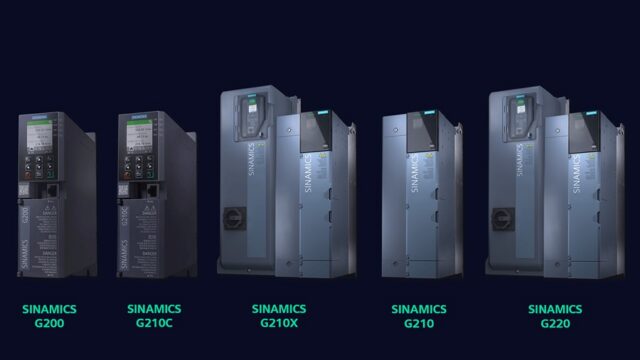
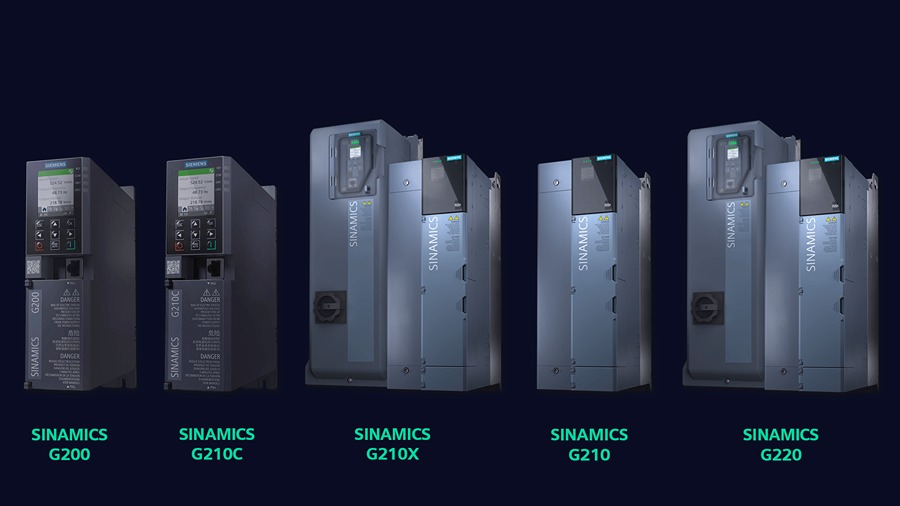
The new Sinamics G series creates a seamless platform for continuous-motion applications. (Image: Siemens)

ERLANGEN, Germany, Nov 2, 2026 – Siemens has expanded Sinamics G drive portfolio with four models for continuous-motion applications in industrial environment and plant operations. The Sinamics G200, G210C, G210 and G210X join the Sinamics G220, that incorporates cybersecurity, functional safety and digital engineering capabilities.

The portfolio covers general-purpose industrial drives, compact machinery, motion control and infrastructure applications. The models address different operating requirements while sharing a common approach to engineering, commissioning, diagnostics and maintenance.

The four new drives serve distinct applications:

  • Sinamics G200: A general-purpose drive for industrial applications.
  • Sinamics G210C: Designed for compact machines requiring high power density and overload capability.
  • Sinamics G210: Supports moving, positioning and processing applications.
  • Sinamics G210X: Includes dedicated functions for pumps, fans, compressors and other infrastructure equipment.

Cybersecurity, Safety and Engineering Integration

All drives in the new generation will be made EU Cyber Resilience Act (CRA)-ready and will provide cybersecurity capabilities up to Security Level Capability 2 (SL-C 2), as defined in IEC 62443-4-2.

The new generation also incorporates functional safety capabilities up to Safety Integrity Level 3 (SIL 3) for protecting personnel, machinery and plant operations.

The platform integrates with Siemens’ Totally Integrated Automation (TIA) Portal and includes a web server. A common engineering and operating interface support drive selection, engineering, commissioning, diagnostics and service across the portfolio.

The drives also use the ethernet-based Open Platform Communications Unified Architecture (OPC UA) standard to exchange drive and operational data for asset and energy management, condition monitoring and predictive maintenance applications.

Source: Siemens

Siemens AG

Siemens AG is a technology company founded in 1847 and headquartered in Munich and Berlin, Germany. The company develops products and services in industrial automation, electrification, digital systems, and mobility. Its offerings include automation systems, industrial software, building technologies, rail transport systems, and power distribution solutions. Siemens also provides financial services and supports infrastructure projects. It serves industries such as manufacturing, energy, transportation, construction, and healthcare. The company works with enterprises, utilities, governments, and infrastructure operators worldwide. Siemens operates in more than 190 countries. It applies digital tools and AI to industrial and infrastructure use cases. Siemens holds a majority stake in Siemens Healthineers, a publicly listed healthcare technology company. Siemens has about 318,000 employees globally.

Siemens Launch Microgrid Integrated Switchboard for Energy Management

Image: Siemens
Image: Siemens

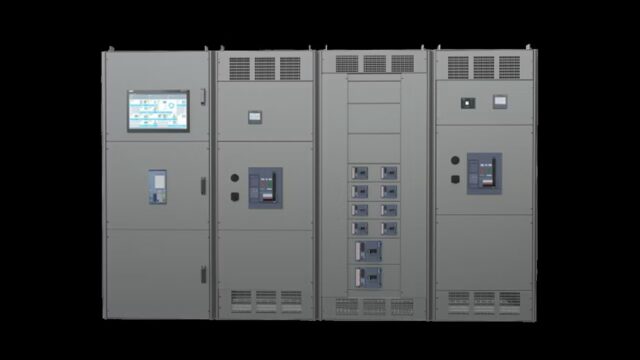
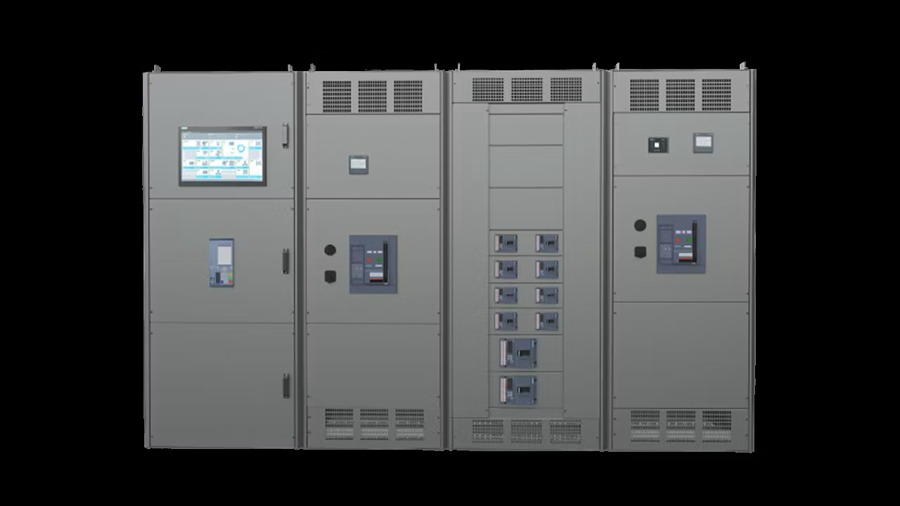
WENDELL, NC, Nov 2, 2026 – Siemens has introduced the Microgrid Integrated Switchboard (MIS), a pre-engineered system that combines power distribution, protection, automation and microgrid control in a single platform. Designed for U.S. organizations deploying distributed energy resources (DERs), the MIS system supports transitions between grid-connected and islanded operation to maintain critical operations during grid disturbances.

The MIS uses Siemens’ SICAM A8000 microgrid control technology to monitor, control and optimize utility connections, generators, battery energy storage systems and solar photovoltaic installations. Its vendor-agnostic architecture supports equipment from multiple suppliers, allowing facilities to integrate different energy resources within a common control system.

The packaged system combines preconfigured controls with pre-engineered, factory-tested power distribution equipment. This approach is intended to reduce on-site integration work, project risk and implementation timelines. Cybersecurity features include role-based access control, encryption and network security capabilities.

“Energy resilience has become a business imperative, yet customers need to navigate growing energy complexity without adding operational burdens,” said Jonathan Hill, President of Electrification and Automation at Siemens Smart Infrastructure USA. “The Microgrid Integrated Switchboard brings together Siemens’ expertise in power distribution and microgrid automation, combining the intelligence of a microgrid controller with the reliability of Siemens power distribution equipment in one standardized, scalable solution. This gives customers a simpler path to deploy microgrids faster, reduce complexity, and operate with greater confidence.”

The MIS is designed for commercial facilities, manufacturing sites, healthcare campuses, data centers, government and municipal facilities, and higher education institutions.

Source: Siemens

About Siemens

Siemens Corporation, the U.S. subsidiary of Siemens AG, operates across industry, infrastructure, transportation, and healthcare sectors. Founded in 1847, Siemens AG has more than 175 years of history and is headquartered in Munich, Germany. Its U.S. operations are based in Washington, D.C. The company maintains 24 manufacturing sites in the United States and employs over 50,000 people, serving customers in all 50 states and Puerto Rico. Siemens focuses on integrating digital and physical technologies to support customer needs in efficiency, urban development, and sustainable transportation. The company applies industrial AI – including generative AI – to use cases across sectors.

About Siemens Smart Infrastructure

Siemens Smart Infrastructure, a division of Siemens AG, is headquartered in Zug, Switzerland. The division integrates energy systems, buildings and industrial processes to improve efficiency and support modern infrastructure needs. It provides HVAC controls, fire safety systems, security technologies, energy-performance services, grid-resilience tools and electric-vehicle charging equipment. Its offerings serve sectors such as data centers, energy and manufacturing. The division develops systems that span the energy value chain, from power generation to end use, and focuses on addressing challenges related to urbanization and climate change. It also places emphasis on cybersecurity to support secure and reliable operation in increasingly digital environments. Siemens Smart Infrastructure employed about 80,000 people.

Siemens, P&G Expand Quality Inspection Across Global Manufacturing

Image: Siemens
Image: Siemens

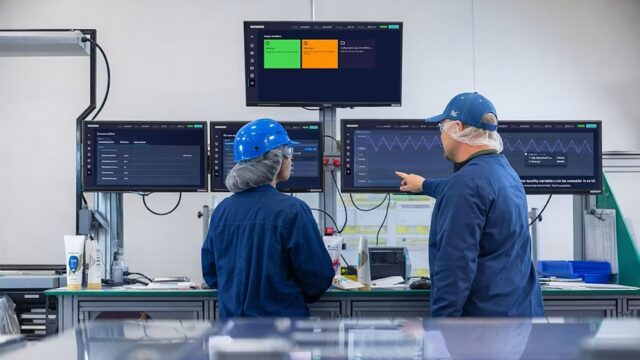
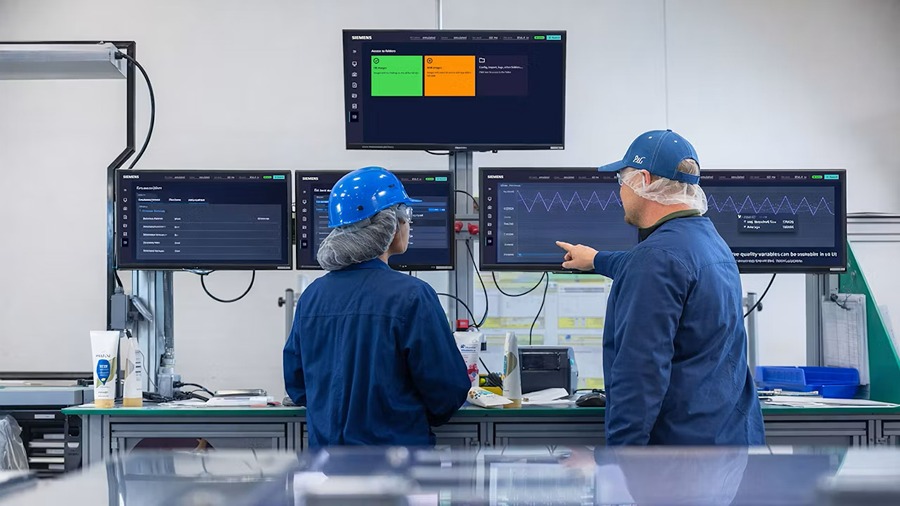
BANGKOK, Thailand, Nov 2, 2026 – Siemens and Procter & Gamble (P&G) are expanding deployment of their AI-based Visual Inspection Cockpit (VIC) across P&G’s manufacturing operations worldwide. The VIC inspects products to identify defects and support automated quality control. According to the companies, scrap rates have fallen by 10 to 20%, while new deployments can be commissioned five to 10 times faster than traditional custom-built vision systems.

Developed jointly by Siemens and P&G, VIC combines P&G’s deep learning models with Siemens’ Industrial Edge computing platform, industrial PCs powered by NVIDIA graphics processing units (GPUs), and AI hardware and software. Inspection data is processed close to production equipment, allowing the system to generate alerts or automatically trigger the removal of defective products from the production line.

VIC is designed for consumer goods manufacturing, where textured materials can shift, stretch or wrinkle during production. Traditional vision systems often require reconfiguration when materials, packaging designs or production conditions change. VIC uses industrial AI to accommodate these variations and maintain inspection performance across a range of products.

“Our Industrial AI and Industrial Edge capabilities deliver what high-speed production demands: full inspection accuracy for thousands of products per minute, scalable from a single line to a global footprint. This collaboration demonstrates what we mean when we say we’re making industrial AI real,” said Rainer Brehm, COO for automation and CTO at Siemens Digital Industries.

“We engineered this solution to solve a myriad of industry challenges traditional vision systems couldn’t touch: accurate characterization of overlapping components, the subtlety of low contrast defects, the complexity of highly decorated products and packaging, tight time coordination, real-time PLC integration with single product reject at high production rates with continuous inspection,” said Paul Thomas, director of Machine Vision and Applied AI at Procter & Gamble.

Siemens provides the industrial computing infrastructure and software scaling capabilities to support VIC deployment across production sites. It also collects data for analysis over time, helping production teams identify trends and support improvement.

Source: Siemens

About Siemens

Siemens Corporation, the U.S. subsidiary of Siemens AG, operates across industry, infrastructure, transportation, and healthcare sectors. Founded in 1847, Siemens AG has more than 175 years of history and is headquartered in Munich, Germany. Its U.S. operations are based in Washington, D.C. The company maintains 24 manufacturing sites in the United States and employs over 50,000 people, serving customers in all 50 states and Puerto Rico. Siemens focuses on integrating digital and physical technologies to support customer needs in efficiency, urban development, and sustainable transportation. The company applies industrial AI – including generative AI – to use cases across sectors.

Nemetschek Launches Allplan Max 2027 AI Tools

Image: Nemetschek Group

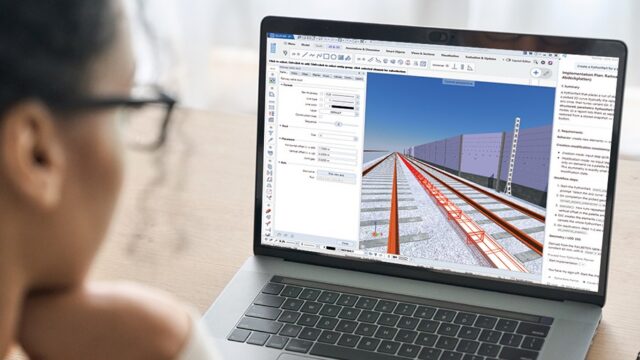
MUNICH, Germany, Oct 30, 2026 – The Nemetschek Group and its brand Allplan have launched Allplan Max 2027, a shared set of AI capabilities for modeling, structural analysis, detailing and fabrication. The release is part of the Nemetschek Intelligence Platform.

“Allplan Max is the next step in Allplan’s engineering-first strategy. We are bringing AI into the workflows engineers already rely on, with a clear purpose: create more capacity, make critical information easier to access and help teams move faster without giving up engineering control”, said Sunil Pandita, CEO of Allplan and chief division officer, planning & design at the Nemetschek Group.

Allplan Max supports tasks including searching project information, checking models, preparing reports, creating formulas, cleaning drawings and automating routine processes.

Capabilities across the engineering portfolio include:

  • Allplan: Feature Builder, Workflow Builder, AI Formula Writer, AI BIM Analyst and AI Drafter support BIM, detailing and workflow customization.
  • SCIA and FRILO: AI Structural Analyst and AI Coach support structural analysis and engineering decisions.
  • SDS2: BIM analysis and drawing automation support fabrication workflows.

Additional capabilities include AI Visualizer and AI Steel Take Off. Allplan Max provides a common AI layer across the products’ modeling, analysis and fabrication workflows.

“Allplan Max is transforming Nemetschek engineering software into an AI engine; embedding intelligence directly into the workflows engineers already use. We’re helping firms capture expertise, automate routine work and unlock new levels of productivity, while preserving the rigor, traceability and human judgment engineering demands. Most importantly, we’re safeguarding our customers’ investment for an AI-driven future”, adds Rahul J. Chillar, chief product officer of the planning & design division at Nemetschek Group.

Users reported up to 36% faster completion of selected tasks, depending on workflow. Results may vary by role, project complexity, data quality and adoption.

Allplan Max launches alongside Allplan 2027, which includes updates to reinforcement detailing, BIM information workflows and AI-powered customization.

Source: Nemetschek Group

About the Nemetschek Group

Nemetschek Group, founded in 1963 and based in Munich, Germany, is a global provider of software solutions for the architecture, engineering, construction, and operations (AEC/O) industries, as well as the media and entertainment sector. The company operates through four business segments: Planning & Design, Build & Construct, Manage & Operate, and Media & Entertainment. Its portfolio includes brands such as Allplan, Graphisoft, Vectorworks, Bluebeam, and Maxon, offering solutions for building information modeling (BIM), structural design, project collaboration, and 3D visualization.  The company employs around 4,000 people and supports over 7 million users globally. Nemetschek Group continues to expand its presence in international markets, including in Saudi Arabia.

Altera Introduces Agilex 2X FPGAs for AI and Edge Systems

Image: LinkedIn
Image: LinkedIn

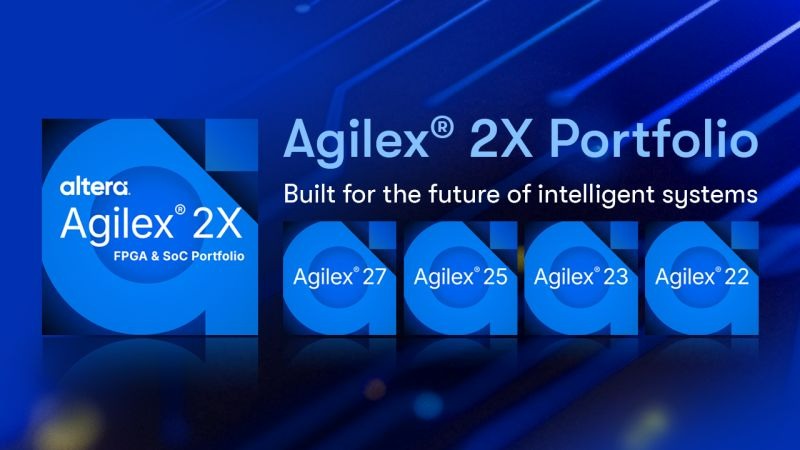
SAN JOSE, CA, Oct 30, 2026 – Altera has introduced Agilex 2X, a four-family FPGA portfolio spanning Digital AI infrastructure and edge systems. Its first family, Agilex 27, targets processing- and bandwidth-intensive applications, with samples expected in the second half of 2027.

“Digital AI and Physical AI are expanding the opportunity for programmable logic uses, as developers build systems that must adapt to rapidly evolving workloads, technologies, and standards,” said Raghib Hussain, president and CEO of Altera. “Agilex 2X is designed to give customers one platform that delivers the performance and density the most complex Digital AI and aerospace and defense systems demand, and scales down to the low power and small footprint the intelligent edge requires. With QuartusIQ support, that scalable foundation protects their engineering investments and aims to get new designs to market faster.”

Four Device Families

The portfolio spans high-performance, midrange, and power- and cost-optimized devices. It includes AI tensor DSP blocks for signal processing, Arm cores for embedded processing, and connectivity supporting current and next-generation standards.

Its four families address different processing, power and I/O requirements:

  • Agilex 27: High-performance fabric, high capacity, high memory bandwidth and next-generation connectivity for datapath processing, beamforming and RF processing.
  • Agilex 25: High-performance fabric and embedded computing, with optimized I/O, transceivers and peripherals for 4K/8K video processing, drones and low-latency sensors.
  • Agilex 23: Embedded computing, real-time processing and functional safety for robotics, industrial automation and automotive systems.
  • Agilex 22: High I/O density for board and rack control, motor control, root-of-trust and interface-bridging applications.

All four families will use Quartus Prime design workflows and reusable IP, with the QuartusIQ AI expert companion supporting an agentic design flow. Shared security and embedded software foundations include Arm-based hard processors, Nios V soft processors, post-quantum-cryptography-ready secure boot and functional-safety practices.

Agilex 27 Architecture and Connectivity

Agilex 27 applications include AI infrastructure, terabit networking, 6G and satellite networks, and aerospace and defense systems.

The family uses third-generation HyperFlex fabric. Altera reports a 1.8-fold generation-over-generation improvement in performance per watt compared with Agilex 7. HyperFlex embeds registers throughout the routing fabric, allowing Quartus Prime to retime and pipeline designs without consuming logic resources. New adaptive logic module (ALM) modes also improve logic packing and performance.

Altera’s new HyperFlow data network provides multiterabit-per-second data movement throughout the FPGA without consuming soft logic resources or introducing routing congestion.

Agilex 27 connectivity includes:

  • Configurable transceivers supporting speeds up to 256 Gbps.
  • Hardened IP for 800GbE and 1.6TbE Ethernet, and PCIe 6.0 and 7.0.
  • DDR5, LPDDR5X and LPDDR6 memory interfaces.
  • MIPI, C-PHY 2.1 and D-PHY 3.0 support.
  • UCIe connectivity intended for future chiplets, such as data converters.

Altera’s Secure Device Manager provides a hardware root of trust with secure boot, identity, attestation, protected key management and physical anti-tamper protection. Built-in cryptographic agility supports post-quantum cryptography as requirements evolve.

Altera also reports line-rate datapath encryption across every major interface, including Ethernet MACsec, PCIe Integrity and Data Encryption (IDE), and Inline Memory Encryption (IME).

Source: Altera

About Altera

Altera is a semiconductor company founded in 1983 and based in San Jose, CA. The company designs programmable logic devices, including field-programmable gate arrays and complex programmable logic devices, along with related software tools. Engineers use these products to build configurable hardware for communications, computing, industrial, automotive and aerospace systems. Altera serves system designers, equipment manufacturers and technology companies that integrate programmable logic into network infrastructure, data centers and embedded applications. The company became part of Intel’s solutions business and later reestablished operations with majority investment from Silver Lake, while Intel retained a minority stake. Altera serves about 14,000 customers worldwide and employs approx. 3,000 people across North America, Europe and Asia. The company supplies chips and development tools that support flexible hardware design in electronic systems.

Intel, Oracle Plan to Expand Xeon Cloud Capacity

Image: Intel
Image: Intel

LAS VEGAS, NV, Oct 30, 2026 – Intel and Oracle plan a multiyear collaboration to expand Intel Xeon-based computing on Oracle Cloud Infrastructure (OCI). The collaboration is expected to span current and future Xeon platforms, including planned OCI X14 offerings based on Intel’s next-generation server processor, codenamed Diamond Rapids.

The companies intend to coordinate product roadmaps and processor capacity planning to support OCI’s expansion. The partnership is meant to support enterprise applications, AI agents and inference while retaining customers’ existing software environments and operational tools.

“As AI agents scale, they need processors that can run software, move and secure data, and accelerate inference. Xeon brings together performance and hardware-based confidential computing, giving organizations a trusted, cost-effective foundation for AI at scale,” said Kevork Kechichian, executive vice president and general manager, Intel data center group. “Our expanded collaboration with Oracle is intended to combine Intel’s multigenerational roadmap with Oracle Cloud Infrastructure’s technology to help customers put AI to work faster and more cost-effectively.”

The X14 offerings are expected to include:

The companies expect these capabilities to support embedding generation, reranking and smaller-model inference alongside the application services and tools used by AI agents.

“Enterprise AI depends on the applications, data, and tools that let an agent complete useful work,” said Pradeep Vincent, executive vice president, compute and AI infrastructure, Oracle cloud infrastructure, Oracle. “Our expanded collaboration with Intel is intended to help us grow the compute capacity behind those workloads and support plans to bring enhanced Xeon capabilities to Oracle Cloud Infrastructure through X14. Customers are expected to gain a path to build and scale AI using the enterprise software environments they already rely on.”

OCI’s current Xeon-based offerings pair Intel compute with built-in AI acceleration, flexible CPU and memory configurations, and Oracle Acceleron networking. Customers can configure application services, data processing and agent execution to their needs. These workloads can scale independently of the accelerators used to run AI models.

Source: Intel

About Intel

Intel Corporation, founded in 1968 and headquartered in Santa Clara, CA, is a semiconductor manufacturer specializing in processors, chipsets, graphics, and networking components. Its products support computing, data center infrastructure, AI, networking, embedded systems, industrial automation, and automotive applications. Intel designs and manufactures CPUs, GPUs, FPGAs, and silicon technologies used in personal computers, servers, and connected devices. The company operates fabrication facilities in the United States, Ireland, and Israel, along with global assembly and testing operations. With over 110,000 employees, Intel develops computing architectures and supports industries needing scalable processing and connectivity solutions.

About Oracle

Oracle Corp. develops database software, cloud computing services and enterprise applications for business operations. The company offers products such as Oracle Database, Oracle Cloud Infrastructure and enterprise applications for finance, human resources, supply chain and customer management. Organizations use Oracle software to store data, run enterprise systems and manage digital operations. Oracle serves industries including finance, telecommunications, manufacturing, retail, healthcare, government and technology. The company was founded in 1977 by Larry Ellison, Bob Miner and Ed Oates. Oracle Corp. is headquartered in Austin, TX. The company operates globally and provides cloud services, enterprise software and consulting services. Oracle employs about 162,000 people worldwide. The company reports more than 430,000 customers across over 175 countries.

Seven PDM Platforms Compared for Mechanical Engineering Teams

Source: Leo AI.
Source: Leo AI.


Product data management software remains essential for mechanical engineering teams that need to control CAD files, revisions, bills of materials, permissions, approvals, and engineering change workflows. Leo AI compares seven PDM and PLM platforms for 2026, focusing on CAD integration, search quality, collaboration, deployment options, and readiness for AI.

SolidWorks PDM Professional is positioned as a natural choice for SolidWorks-focused teams because of its tight CAD integration. Autodesk Vault serves a similar role for organizations using Inventor, AutoCAD, and other Autodesk applications, while providing stronger multi-CAD management. Both, however, rely heavily on filenames and metadata for search.

For large enterprises, PTC Windchill and Siemens Teamcenter offer deeper capabilities. Windchill provides extensive process management and native Creo integration, but implementation can be lengthy and expensive. Teamcenter adds manufacturing process management and digital twin capabilities, making it suitable for complex automotive and aerospace organizations.

Arena PLM targets cloud-based product development, particularly in regulated industries, with strong change-management and compliance capabilities. Onshape takes a different approach by incorporating PDM directly into its cloud-native CAD platform, eliminating traditional file check-in and check-out. OpenBOM provides a lighter, faster-to-deploy option centered on BOM management, although it is not intended to replace full PDM systems for complex revision control.

The article distinguishes PDM from PLM: PDM primarily manages engineering data, while PLM connects information across the broader product lifecycle. Its central argument, however, is that neither approach completely solves engineering search. Engineers may know that a useful component exists but struggle to locate it without the correct filename, part number, or metadata.

Leo positions AI as an additional intelligence layer rather than a PDM replacement. Its natural-language and geometric search capabilities connect with systems including SolidWorks PDM, Vault, Windchill, Teamcenter, and Arena, helping engineers locate existing CAD files, specifications, documentation, and previous design decisions for reuse.

0FansLike
0FollowersFollow
0SubscribersSubscribe
Google search engine

Recent Articles

Trending Now