Eagle Point Software Acquires Global eTraining

Image: Eagle Point Software

DUBUQUE, IA, Nov 3, 2026 – Eagle Point Software has acquired Global eTraining, a Canada-based provider of online learning solutions, expanding its training offerings for professionals in architecture, engineering, construction, operations (AECO), design, and manufacturing. The acquisition would support expanded learning offerings and investment in technologies for workforce development and software adoption.

“We have a great deal of respect for what Global eTraining has built and accomplished,” said John Biver, CEO of Eagle Point Software. “What makes this opportunity exciting is how well our organizations complement one another. We share a commitment to our customers and a belief in the importance of helping people get the most out of their technology. By bringing our teams together, we can build on that foundation and create new opportunities for our customers, employees, and partners.”

Eagle Point Software also plans to develop additional approaches to technical training as organizations adapt to changing workflows and advances in artificial intelligence (AI).

“We’ve spent years building Global eTraining around our customers, and finding an organization that shares that commitment was essential as we considered our future,” said Susan Brattberg, co-founder and chief customer officer of Global eTraining. “Eagle Point shares our values and vision for helping people learn faster, retain more, save time and apply skills to real-world projects. Joining forces allows us to build on what we’ve accomplished, expand our capabilities and continue delivering the service our customers expect. We’re deeply grateful to the teams, customers and partners who have shaped both companies’ journeys. Together, we’re just GeTting started!”

Sampford Advisors served as financial advisor to Global eTraining, while Bryan & Company LLP provided legal counsel. Ascentage Advisors advised Eagle Point Software, continuing its advisory relationship with the company. Pierce Atwood LLP served as Eagle Point Software’s legal counsel.

Source: Eagle Point Software

About Eagle Point Software

Eagle Point Software, founded in 1983 and based in Dubuque, IA, provides learning management tools for the architecture, engineering, construction, and manufacturing sectors. Its core product, Pinnacle Series, delivers structured, on-demand content, workflow-based learning paths, and internal knowledge-sharing features aimed at improving technical proficiency and software utilization. The platform supports adoption of popular software, including Autodesk, Microsoft, and Bluebeam, and is used by over 500,000 professionals globally. Additional offerings include Pinnacle Lite, designed for small teams, and KnowledgeSmart, which enables skills assessment and gap analysis. The company’s focus is on helping firms standardize training and support resources to reduce rework and improve productivity. Eagle Point employs around 80 people.

About Global eTraining

Global eTraining is a Canadian company that provides online technical training and workplace learning software. Founded in 2009, it is headquartered in Alberta, Canada. The company serves architecture, engineering, construction, design and manufacturing organizations, including contractors, engineering firms, educational institutions and government agencies. Its training courses cover engineering software, building information modeling and workplace procedures. The company’s platform supports employee onboarding, skills assessments, customized training and progress tracking. Organizations can develop training materials based on internal processes and project requirements. The software also includes artificial intelligence tools for course development and skills assessment.
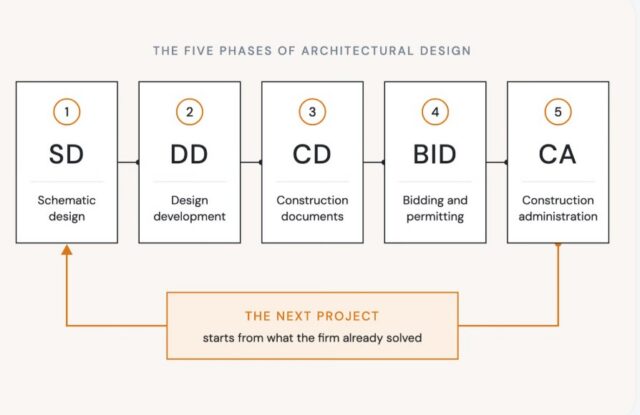
Five Architectural Design Phases Turn Project Knowledge Into a Reusable Resource

Source: Pirros.
Source: Pirros.


Architectural projects in the United States typically move through five design phases defined by the American Institute of Architects: schematic design, design development, construction documents, bidding or negotiation, and construction administration. Pirros argues that managing the information created across these stages can help architecture and engineering firms avoid repeatedly solving the same problems.

Schematic design establishes the project’s fundamental concept, scope, spatial relationships, and initial cost estimate. Architects evaluate factors such as zoning and code requirements while defining structural and envelope strategies. Design development then turns the approved concept into a coordinated design, establishing materials, assemblies, dimensions, and structural, mechanical, electrical, and plumbing systems.

Construction documents translate these decisions into detailed instructions that contractors can price and build. Plans, elevations, sections, schedules, and construction details must remain coordinated, making quality checks particularly important. During bidding and permitting, contractor questions, substitutions, and plan-review comments can trigger further revisions. Construction administration follows during the build, when architects answer RFIs, review submittals and shop drawings, assess change orders, conduct site visits, and document lessons from construction.

A recurring problem across these phases is lost institutional knowledge. Teams may redraw existing details, allow design-development decisions to drift during documentation, manually implement late changes, or fail to incorporate lessons from construction into future standards. Pirros recommends reusing proven details, defining deliverables clearly, conducting quality reviews at intermediate milestones, and feeding construction feedback into firmwide standards.

AI plays a practical role in Pirros’ proposed workflow. Its platform makes details and Revit families from previous projects searchable, while Quality Management checks documentation against codes, project specifications, and company standards. Mira, Pirros’ AI agent for Revit, can automate repetitive tasks such as renumbering details, replacing text across drawings, and auditing views against standards while requiring user approval before changes are made.

ELEGOO Introduces M1 Ultra Handheld 3D Scanner

Image: ELEGOO
Image: ELEGOO

ELEGOO has introduced the M1 Ultra, a handheld 3D scanner that combines wireless data capture with software-based processing for design, modeling and manufacturing applications.

The M1 Ultra features a 3-inch HD touchscreen for on-device operation and Wi-Fi 6 connectivity for wireless scanning. Its 4,800 mAh battery supports up to 1.5 hours of wireless scanning. The lightweight handheld design is meant to use across different working environments, including component scanning, physical object documentation and digital data collection.

“3D scanning opens up new possibilities for capturing and working with physical objects. With the M1 Ultra, we aim to combine precision, versatility and workflow efficiency in one integrated solution, making advanced 3D scanning more accessible across a wide range of applications. Its launch also marks an important step in expanding ELEGOO’s 3D creation ecosystem and connecting the physical and digital worlds,” said Kevin Wang, co-founder and vice president of ELEGOO.

The M1 Ultra works with ELEGOO SCAN software to process captured data into 3D models. The software provides setup, tracking assistance and multi-scan alignment to support the scanning process.

Automated one-click processing handles mesh wrapping, mesh optimization and color mapping. ELEGOO SCAN exports scan data in STL, OBJ, PLY and ASC formats for use with compatible third-party software in design, modeling and manufacturing workflows.

Source: ELEGOO

About ELEGOO

Founded in 2015 and headquartered in Shenzhen, China, Elegoo designs and manufactures consumer-focused 3D printers, laser engravers, and electronics kits for educational and prototyping use. Its product range includes the Mars and Saturn series of resin printers, Neptune series FDM printers, and Arduino-compatible STEM kits. The company serves individual makers, educators, and small-scale manufacturers. Elegoo distributes its products to over 90 countries and operates a 30,000-square-meter facility for production and R&D. The company has received recognition for product design and business performance, including a Gold Stevie Award and a European Product Design Award. Elegoo emphasizes user-friendly design and affordability, aiming to expand access to digital fabrication technologies in both learning and professional environments. Its tools are commonly used for functional prototyping, hobbyist projects, and STEM education worldwide.

Intel’s Manufacturing Gains Challenge the Market’s Post-Earnings Pessimism

Intel Manufacturing Turnaround What Investors Should Watch (source: Getty Images).


Intel’s nearly 30% post-earnings stock decline may have overshadowed meaningful improvements in its semiconductor manufacturing operations, according to Forbes contributor Sasirekha Subramanian. Investors reacted sharply after Intel’s fourth-quarter revenue guidance fell $1.5 billion below analysts’ expectations at the midpoint and management indicated that heavy investment in 2027 would delay positive free cash flow.

Behind the disappointing outlook, Intel is making progress on manufacturing. Yields for Intel 3 and Intel 18A improved, with 18A yields advancing at a double-digit rate. Better yields have reduced 18A production costs by roughly 40% since the first quarter. Intel 18A-P remains scheduled for a year-end launch, initially supporting Intel products such as the upcoming Nova Lake desktop processors.

Intel is also advancing its 14A process. The company released its 0.9 process design kit to selected customers in October and reported discussions with several prospective clients. Its EMIB and EMIB-T advanced packaging technologies are gaining traction, prompting additional capacity in New Mexico and Malaysia. Intel is simultaneously expanding 18A production in Oregon and Arizona while progressing with manufacturing investments in Ireland and Ohio.

AI could provide another growth opportunity. Intel expects agentic workloads to significantly expand demand for server CPUs, where energy efficiency may become increasingly important. Granite Rapids is ramping rapidly, Clearwater Forest is generating revenue, and Diamond Rapids is sampling ahead of a planned 2027 ramp. Intel is also developing its D-Series inference GPU, which uses LPDDR5X memory instead of more expensive high-bandwidth memory.

The article argues that a modest valuation rerating could produce approximately 20% upside. However, that case depends heavily on Intel securing major external foundry customers. Improved yields demonstrate technical progress, but rebuilding customer confidence after years of manufacturing delays remains the decisive test of Intel’s turnaround.

Workhorse, RHAELM Sign $10M TerraPod Manufacturing Agreement

Image: Workhorse Group

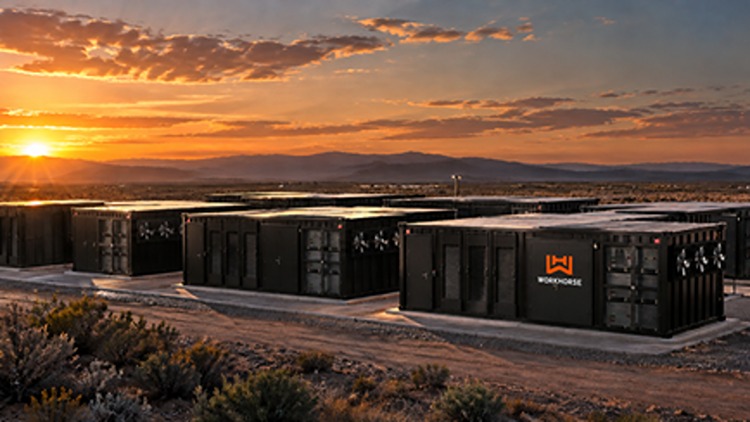
WIXOM, MI, and LONDON, UK, Nov 3, 2026 – Workhorse Group and Rhaelm Holdings have signed a $10 million agreement to build a full-scale manufacturing spec unit for TerraPod, Workhorse’s modular data center platform. A separate nonbinding letter of intent outlines a proposed supply agreement involving an initial order of 150 systems, subject to further agreements and approvals.

Under the Manufacturing Spec Unit Purchase Agreement, RHAELM will pay Workhorse to build the reference unit at its Union City, Indiana, facility. The partnership combines Workhorse’s U.S. engineering and manufacturing capabilities with RHAELM’s global energy partnerships and artificial intelligence (AI) customer relationships.

TerraPod is designed for factory production, and are intended for installation on deployment-ready foundations. RHAELM is working with partners to establish reference design requirements for modular computing infrastructure, which will guide TerraPod’s development.

The initial unit will serve as a physical reference for equipment fitment, service access and assembly sequence. RHAELM, its commercial partners, equipment suppliers and prospective customers will be able to examine and refine the design before committing capital to final prototypes and production.

“As industry leaders in AI compute and infrastructure continue to develop standardized requirements, we believe the modular data center industry is approaching its ‘Model-T’ moment,” said Scott Griffith, chief executive officer of Workhorse. “Our partnership announcement with RHAELM goes beyond acting as a launchpad for our TerraPod product; we believe it’s the beginning of an era of mass production of the systems that will enable rapid deployment of cost-effective, secure and highly distributed AI compute capabilities.”

Proposed Supply Agreement and Production Plans

Workhorse and RHAELM aim to execute a supply agreement by Dec. 31, 2026. The agreement would establish a framework for joint engineering, milestone-based prepayments toward an initial order and a U.S. right of first refusal giving Workhorse the opportunity to supply modular data center units for all future RHAELM projects in the United States. Under the arrangement, RHAELM would place an initial order for 150 TerraPods. TerraPod production could begin in late 2027 or early 2028.

“This ‘walk-before-you-run approach’ is designed to streamline and accelerate time to full production, while also providing a structure that puts our teams together on initial work right now,” said Griffith. “Just as important, this structure gives us a seat at the table with RHAELM and a highly complementary set of partners as the industry standardizes modular designs. We believe the Supply Agreement we are targeting by year-end will chart the course to full scale production and give us a clear pathway to significant future commercial volume for TerraPod.”

“AI’s limiting factor today isn’t ambition, it’s power and compute,” said Bradd Lewis, CEO, RHAELM. “We partner with generators that already hold committed capacity, and as standardization continues, turning that power into compute moves from the field to the factory. In Workhorse, we have the manufacturing partner to make that happen. Together, we believe we can deliver AI compute at scale, years ahead of the conventional timeline.”

Source: Workhorse Group

About RHAELM

RHAELM is a cloud computing infrastructure company with a registered office in London, United Kingdom. Previously known as Sovereign AI, it adopted the RHAELM name in September 2026. The company develops computing infrastructure for artificial intelligence applications, including servers, networking equipment and data storage systems. Its services include dedicated servers, application management and AI computing resources. Customers can select processor configurations and data security controls based on operational requirements. RHAELM serves government agencies, defense organizations, health care providers, financial institutions and other regulated industries. Its infrastructure plans cover Europe and the Asia-Pacific region, including proposed data center development in Japan. The company has announced plans with JERA and Dell Technologies for AI infrastructure projects in Japan.

About Workhorse Group

Workhorse Group Inc., headquartered in Sharonville, OH, is an American technology company specializing in the design, manufacture, and sale of zero-emission commercial vehicles. Founded in 2007 as AMP Electric Vehicles, the company rebranded to Workhorse Group in 2015 after acquiring Workhorse Custom Chassis. Workhorse focuses on electric delivery vehicles tailored for last-mile logistics, offering models like the W4 CC, W750, and W56. As of December 31, 2024, Workhorse employed approximately 150 people. The company operates manufacturing and engineering facilities in Union City, IN, and Wixom, MI, supporting its mission to advance sustainable transportation solutions in the commercial vehicle sector.​

Ansys Brings Scattered HPC Resources Into One Simulation Workspace

Source: Ansys.
Source: Ansys.


Engineering simulation is moving beyond individual design-validation runs toward parametric optimization, automated workflows, custom applications, and AI-driven workloads. At the same time, computing resources are becoming more distributed across local workstations, HPC clusters, public and private clouds, CPUs, GPUs, and containerized services. Ansys, part of Synopsys, is addressing this complexity with Ansys HPC Platform Services.

The platform provides a common environment for submitting and managing simulation jobs across different applications and computing resources. It acts as a coordination layer for workflows, files, projects, and remote job monitoring. Ansys desktop and web applications, as well as custom Python applications, can connect to workstations, HPC clusters, and cloud resources through the same framework.

For engineers, this means HPC can function as an extension of familiar simulation workflows. Users can submit jobs, monitor progress, inspect logs and files, and retrieve results without manually managing each computing environment. The platform supports workloads ranging from smaller local simulations to MPI jobs running across thousands of CPU cores or GPUs. It can also manage parametric studies, design points, job dependencies, and linked analyses.

IT teams can connect existing infrastructure using schedulers including Slurm, PBS Professional, Altair Grid Engine, IBM LSF, and Kubernetes. Rather than replacing these systems, HPC Platform Services adds centralized visibility into jobs, available resources, and system health, helping organizations manage combinations of on-premises and cloud computing.

The platform also targets developers through documented Python and C++ APIs that separate applications from the underlying computing infrastructure. This abstraction has implications for AI-driven engineering. Ansys says the APIs can provide a foundation for agentic AI workflows, allowing AI agents to submit, monitor, and orchestrate simulation jobs.

The broader goal is to make increasingly diverse computing infrastructure less visible to engineers while allowing simulation workloads to scale according to their computational requirements.

AI and Robotics Bring New Precision to Perovskite Solar Cell Manufacturing

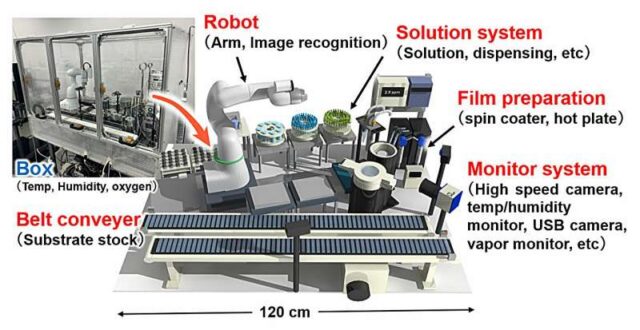
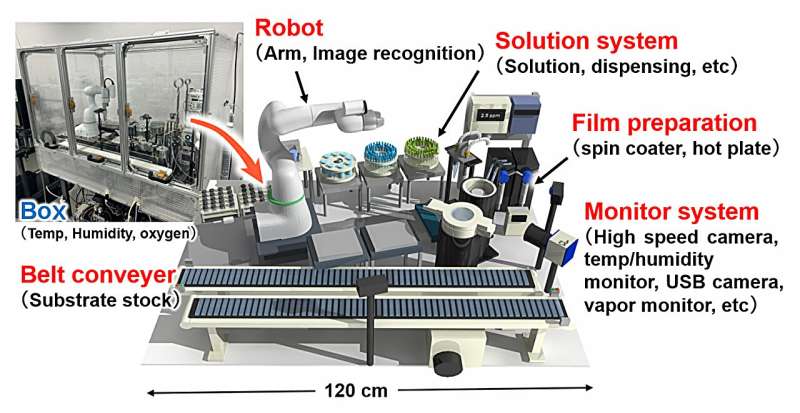
Schematic of an automated film fabrication system (source: Akinori Saeki, The University of Osaka).


Researchers at the University of Osaka have developed an automated platform that combines robotics, high-speed optical measurements, environmental monitoring, and machine learning to improve the fabrication of perovskite solar cells. The approach could reduce the trial-and-error experimentation that has complicated efforts to produce consistent, high-performance perovskite films, tells Tech Xplore.

Perovskite solar cells rely on a thin light-absorbing layer created when a liquid solution dries and crystallizes into a solid film. Small variations in temperature, humidity, coating conditions, and other factors can alter this process, affecting the structure of the film and ultimately the cell’s efficiency. The researchers designed their automated system to observe these changes while the film is forming rather than evaluating only the finished material.

The platform coordinates automated film deposition with rapid optical imaging and environmental measurements. It can detect film color changes in less than a second and track the movement and impact of antisolvent droplets within milliseconds. These droplets play an important role in controlling crystallization during perovskite fabrication.

Machine learning is central to interpreting the large amount of experimental data collected by the system. By analyzing multiple processing variables together, the researchers can identify relationships between events occurring during film formation and the quality of the resulting material. This provides a data-driven way to determine which manufacturing parameters have the greatest effect on performance.

The researchers used these findings to optimize the antisolvent coating process. Their analysis identified a preferred range of droplet behavior, which was then applied to produce a lead-based perovskite solar cell. Under optimized conditions, the device achieved a power conversion efficiency of 24.4%.

The research demonstrates a broader role for AI and automated experimentation in materials engineering. Combining robotics, real-time measurements, and machine learning could help researchers understand complex manufacturing processes faster while improving the reproducibility and performance of emerging photovoltaic technologies.

Samsung’s Giant Chip Hub Gears Up for the AI Memory Boom

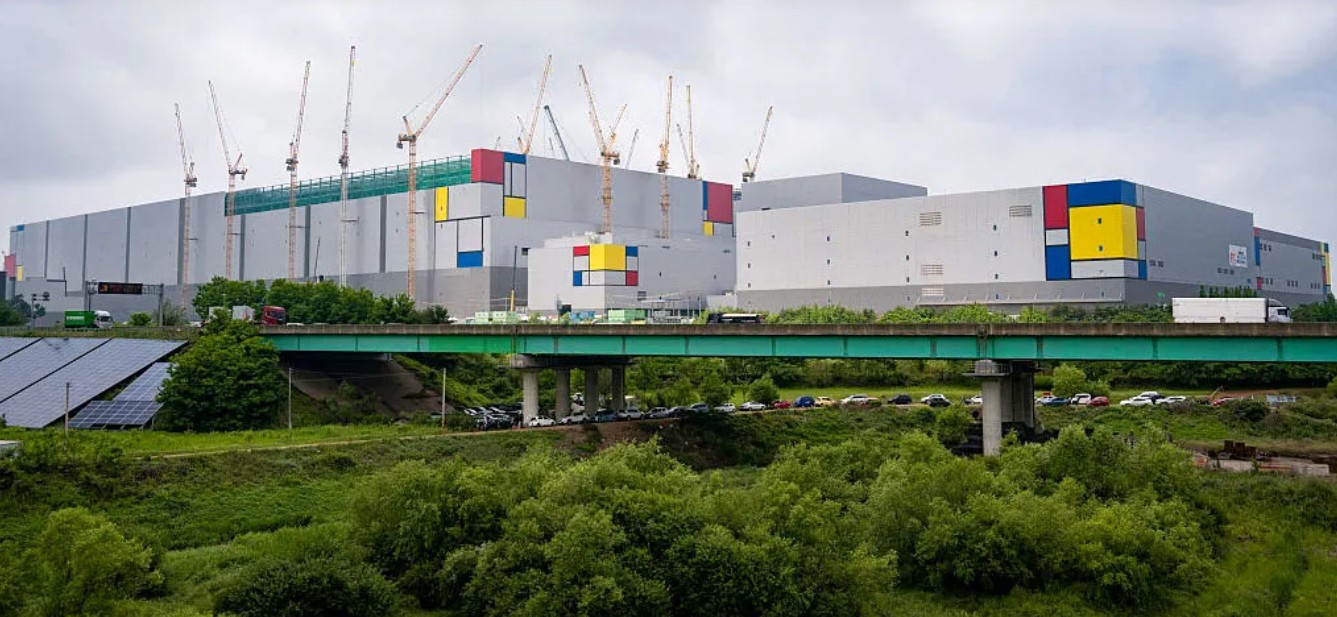
Samsung’s new fabs are clad in Mondrian-style panels of red, yellow, and blue (source: Getty Images).


Samsung is rapidly expanding its enormous semiconductor manufacturing complex in Pyeongtaek, South Korea, as generative AI drives demand for advanced memory chips. The site, roughly the size of New York City’s Central Park, already has three fabrication plants operating around the clock. A fourth is coming online, while construction of a fifth has resumed after being halted during the memory-market downturn of 2024, tells MIT Technology review.

The expansion reflects a fundamental hardware requirement behind the AI boom. GPUs used to train and run generative AI models depend on specialized memory stacked close to the processor. In particular, high-bandwidth memory, or HBM, has become critical to AI accelerators because it can rapidly supply the large amounts of data required for intensive computation. Samsung expects memory demand to continue rising through 2028.

The project also represents an important competitive push for Samsung. Rival South Korean chipmaker SK Hynix has gained ground in HBM, including memory used with Nvidia’s AI accelerators. Meanwhile, TSMC remains dominant in the foundry market, manufacturing chips designed by other companies. Samsung’s Pyeongtaek investment is intended to strengthen its position as demand for AI-related memory accelerates.

The article also examines the human and physical scale behind semiconductor expansion. Thousands of construction workers move through the sprawling campus, supported by shuttle buses, restaurants, temporary housing, and nearby real estate businesses. Safety receives considerable attention amid cranes, excavators, chemicals, crowded work zones, and demanding construction schedules.

One worker profiled is 35-year-old safety officer Choi Hye-rin, who oversees crews building cable ducts and earns 140,000 won, about $97, per day. Her experience illustrates the employment opportunities being created around the semiconductor expansion.

Samsung’s Pyeongtaek build-out ultimately makes the physical scale of AI infrastructure visible. Behind increasingly powerful AI models lies an equally significant race to manufacture the memory needed to keep their GPUs running.

Hexagon Completes Waygate Technologies Acquisition

Image: Hexagon
Image: Hexagon

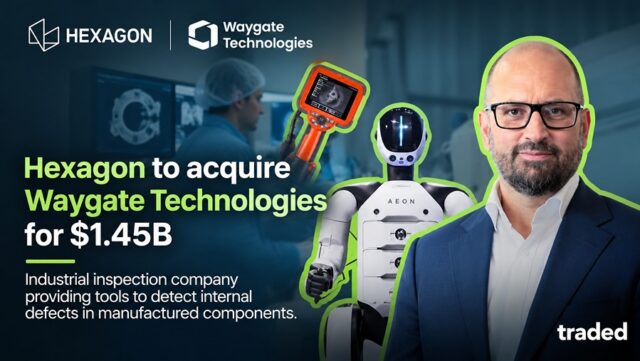
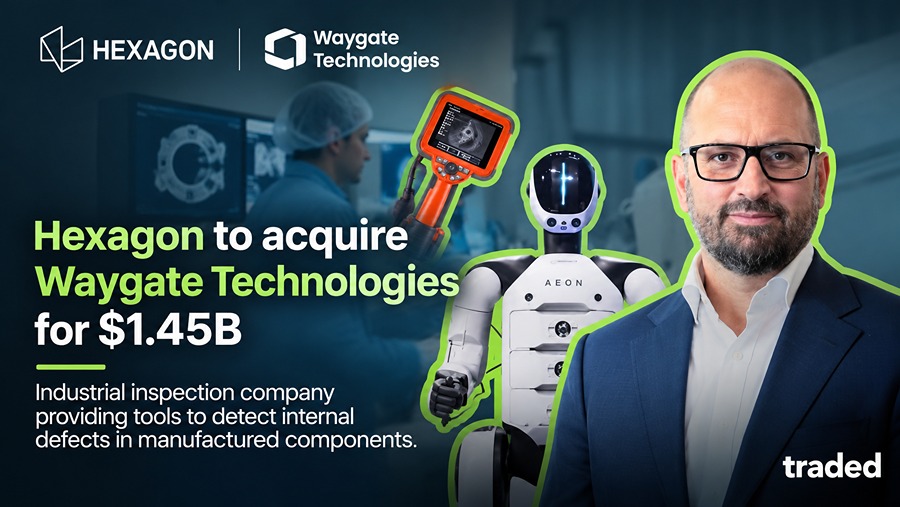
STOCKHOLM, Sweden, Nov 2, 2026 – Hexagon has completed its previously announced acquisition of Waygate Technologies from Baker Hughes, expanding its Manufacturing Intelligence business into nondestructive testing and the maintenance, repair and operations (MRO) market. The acquisition adds Waygate’s industrial inspection technologies to Hexagon’s metrology and software portfolio.

Waygate provides industrial radiography, computed tomography (CT), remote visual inspection (RVI), ultrasonic testing and imaging solutions. The business has approximately 1,500 employees across 25 locations and generated revenue of about $630 million in fiscal 2025. Its inspection expertise spans more than 130 years.

The acquisition combines Waygate’s CT systems with Hexagon’s Volume Graphics software and metrology portfolio, bringing together technologies for inspection and quality control across the product lifecycle.

“Completing this acquisition marks the start of an exciting new chapter for Hexagon Manufacturing Intelligence Business Area,” said Anders Svensson, president and CEO of Hexagon. “Waygate Technologies brings world-class inspection technology and loyal customer relationships. We are delighted to welcome the Waygate team to Hexagon and look forward to working together to serve our customers and improve performance over the medium term.”

“Our customers have always told us that quality depends on understanding a part from the external geometry right through to the internal characteristics,” said Michael Bellamy, CEO of Waygate Technologies. “Together with Hexagon, we can offer a holistic suite of measurement and inspection solutions that drive greater value for customers. Our customers can continue to rely on their familiar products, services and contacts. Ongoing projects, services agreements and orders continue without interruption.”

“Waygate Technologies’ expertise in non-destructive testing extends our precision measurement portfolio from the surface to the interior of a component,” said Andreas Renulf, president of Manufacturing Intelligence at Hexagon. “We are proud to welcome our new colleagues. Together, we will help customers in aerospace, automotive, electronics and many other industries achieve higher quality and greater confidence across the product lifecycle.”

Hexagon consolidated Waygate Technologies into its operations as of Nov. 1, 2026. The business will operate within Hexagon’s Manufacturing Intelligence business area.

Source: Hexagon

About Hexagon

Hexagon AB is a Swedish industrial technology company based in Stockholm, Sweden. The company traces its origins to Eken Industri och Handel AB, founded in Stockholm in 1975. Hexagon supplies measurement, positioning, sensing, and software products for industrial and public-sector users. Its products include sensors, coordinate measuring machines, laser scanners, positioning systems, CAD/CAM software, geospatial tools, asset lifecycle systems, and autonomous technologies. The company serves customers in manufacturing, construction, aerospace, agriculture, mining, public safety, infrastructure, and mobility. Engineers, surveyors, manufacturers, asset owners, governments, and industrial operators use its products. Hexagon reported about 16,000 employees in 50 countries.

About Waygate Technologies

Waygate Technologies is an industrial inspection equipment company headquartered in Hürth, Germany. The company develops nondestructive testing equipment, including industrial X-ray systems, computed tomography scanners, ultrasonic testing devices and inspection cameras. It also provides imaging software, technical support and equipment maintenance services. Waygate serves customers in aerospace, automotive, electronics, energy, manufacturing, medical technology and transportation. Manufacturers use its systems to detect internal defects, inspect welds and measure components. Maintenance teams use the equipment to examine machinery, pipelines, aircraft engines and industrial structures. The business employs approximately 1,500 people across 25 locations worldwide.

Graphisoft Builds Agentic AI Into Archicad and Its New AEC Cloud Platform

Graphisoft CEO Daniel Csillag opened Graphisoft IGNITE 2026 with enthusiasm, which was understandable given the sheer number of new products and technologies being introduced (source: Graphisoft).


Graphisoft used IGNITE 2026 to outline an AEC technology strategy centered on design intelligence, agentic AI, and connected cloud data. Rather than replacing desktop BIM, the company plans to combine Archicad with new cloud services that support architects from early design through later project stages, tells Architosh.

Nemetschek Creator addresses early-stage design by bringing cost, carbon, energy, and microclimate analysis into conceptual workflows. Designers can evaluate alternatives without repeatedly exporting models to separate analysis applications. Creator supports DWG, DXF, and OBJ data, with Rhino integration planned. It entered early access for Archicad Max and Collaborate subscribers on October 28.

The broader Nemetschek Open Collaboration Platform, or OCP, is designed as an intelligence layer connecting data, applications, and project teams. Instead of relying solely on file exchanges, OCP streams information at the individual-element level. Its Model Context Protocol server allows AI to query models, drawings, and documents using natural language. Users can retrieve quantities, object counts, and volumes while working across tools including Archicad, Revit, and Solibri.

Graphisoft is also bringing agentic capabilities directly into Archicad 30. The new Archicad Max subscription includes a beta MCP server, an upgraded AI Assistant, and AI Spaces. Through natural-language commands, the AI Assistant can query model elements, apply filters, and modify information such as renovation status. Action previews give users an opportunity to review proposed changes before execution.

AI Spaces extends this approach by letting firms index project briefs, building codes, and internal standards. The assistant can compare this information with an active BIM model and identify potential compliance problems. Graphisoft is also keeping its MCP architecture open, allowing external AI systems such as Claude and ChatGPT to interact with Archicad data.

Together, Creator, OCP, and Archicad Max show Graphisoft moving toward AI that can reason over BIM data and take controlled actions, rather than functioning primarily as a conversational assistant.

0FansLike
0FollowersFollow
0SubscribersSubscribe
Google search engine

Recent Articles

Trending Now