Faster Design Needs a Digital Bridge to Manufacturing
Source: Machine Design.


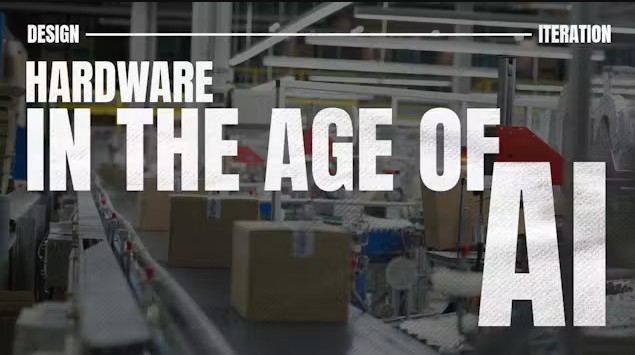
AI is accelerating product design, but faster engineering does not automatically translate into faster manufacturing. In an interview with Machine Design at IMTS 2026, Dave Evans, president and CEO of MISUMI Americas, explains that manufacturers must connect design, component sourcing, production, and delivery if they want to capitalize on faster iteration and increased product customization.

Software can be modified quickly, but physical products face constraints involving tooling, component availability, validation, suppliers, and production processes. A CAD revision may affect adjacent components, interfaces, assembly sequences, and manufacturing requirements. As AI enables engineers to explore more alternatives and make changes more frequently, managing these dependencies becomes increasingly important.

Evans argues that the entire development process needs to become digitally connected. Engineering teams still relying on spreadsheets, email, and disconnected file-sharing systems risk creating delays when designs change. Instead, design revisions, sourcing decisions, manufacturing requirements, and delivery information should remain synchronized throughout product development.

MISUMI Americas is addressing this challenge by combining its catalog of standard and configurable mechanical components with the custom manufacturing capabilities of Fictiv, which Evans founded. Engineers can therefore source components such as bearings, springs, screws, and linear shafts alongside custom CNC-machined, injection-molded, sheet-metal, and 3D-printed parts through a more connected workflow.

The approach also supports supply chain resilience. Engineers may need to substitute components, qualify alternative suppliers, or redesign products when tariffs, geopolitical disruptions, or natural disasters affect availability. Standardized components can increase flexibility, while custom parts remain necessary for specialized performance requirements.

Evans sees the central challenge as closing the gap between rapidly evolving design technologies and slower physical production systems. For manufacturers, AI-driven design speed will matter only if sourcing, validation, supplier networks, and manufacturing processes can accommodate engineering changes at a comparable pace.
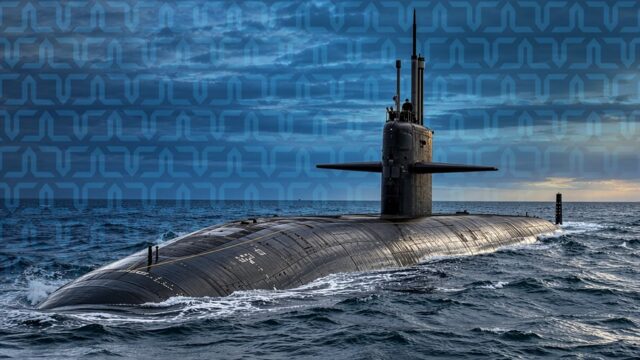
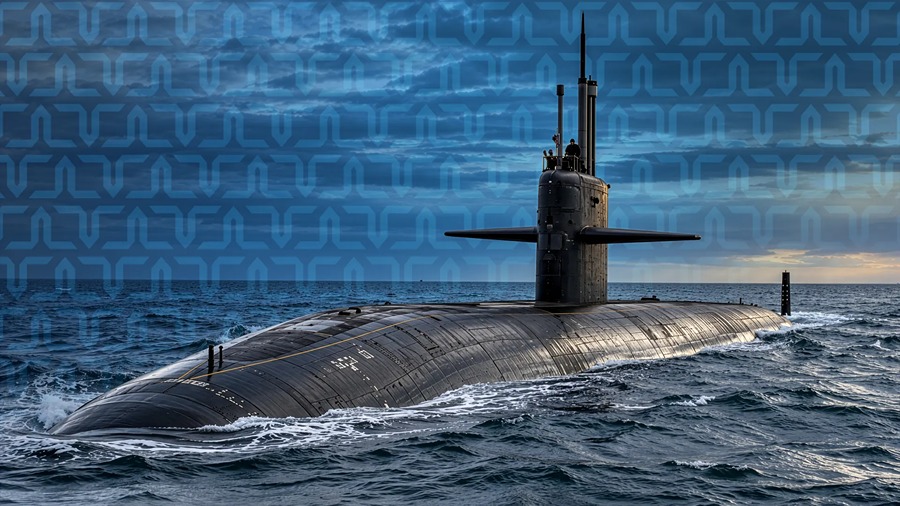
Titomic USA Wins Submarine Materials Research Contract

Image: Titomic USA
Image: Titomic USA

HUNTSVILLE, AL, Oct 30, 2026 – Titomic USA has won a contract from Bechtel Plant Machinery Inc. (BPMI) to evaluate and develop material solutions for the submarine industrial base. The collaboration will begin with an initial order worth $250,000 (AU$361,000). Titomic and BPMI will explore manufacturing processes to support future U.S. Navy initiatives.

Titomic is also working to introduce its TKF cold spray additive manufacturing process into additional defense applications involving production, component restoration and material development.

TKF deposits metal powders in a solid state without melting them, producing coatings, repairs and near-net-shape components. The process minimizes heat-affected zones and preserves material properties. Titomic identifies defense, aerospace, maritime and industrial applications for the technology.

“The future belongs to organizations willing to challenge traditional manufacturing methods and work together to develop entirely new capabilities”, said Jim Simpson, CEO & managing director of Titomic.

Titomic’s strategy is to partner with government agencies, prime contractors and industrial organizations to commercialize manufacturing technologies for producing and repairing critical components.

Source: Titomic

About Titomic

Titomic Limited, founded in 2014 and headquartered in Mount Waverley, Victoria, is an Australian publicly listed company specializing in industrial-scale metal additive manufacturing. The company’s proprietary Titomic Kinetic Fusion (TKF) technology uses cold spray techniques to build or repair metal parts without melting, enabling efficient production of wear-resistant coatings, structural repairs, and high-performance components. Titomic serves a range of sectors including aerospace, defense, shipbuilding, oil and gas, mining, and automotive. Its offerings include large-scale additive manufacturing systems, coating and repair services, and custom manufacturing solutions. With regional operations in the U.S. and Europe, the company provides global support for its technologies, including R&D, technical services, and system integration. Titomic continues to invest in its platform to address industry needs and expand its role in additive manufacturing.

Fast Feature Field Gives Event Cameras a Common Language for Robot Vision

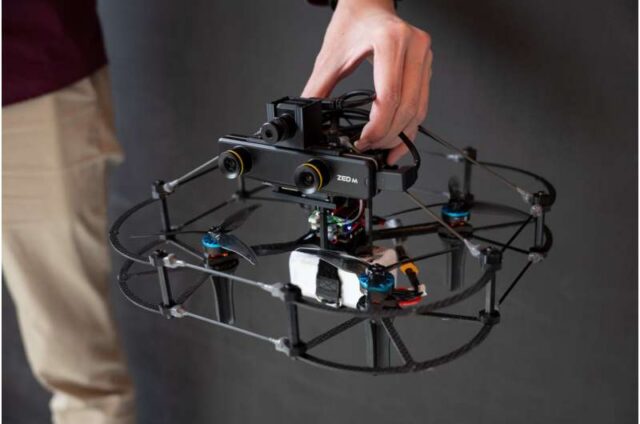
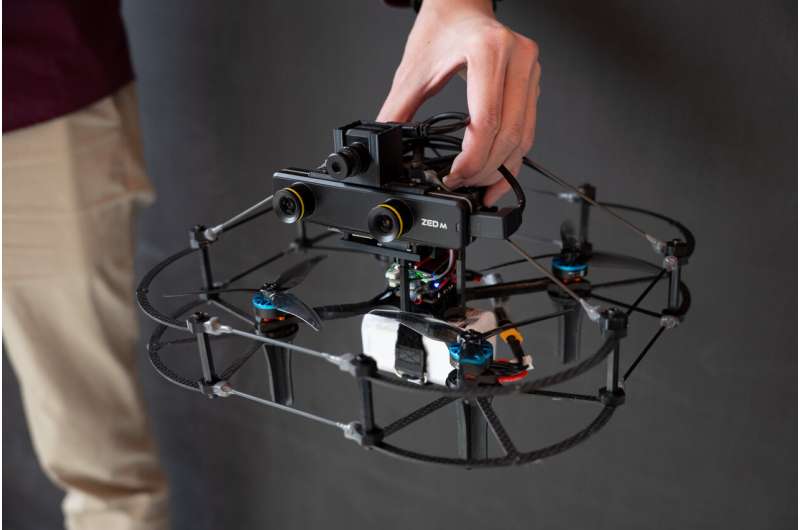
A drone equipped with an event camera, which allows it to see in a manner similar to biological eyes (source: Sylvia Zhang, Penn Engineering).


Engineers at the University of Pennsylvania have developed Fast Feature Field, or F³, a computational framework designed to make event cameras more practical for robots, tells Tech Xplore. Event cameras mimic aspects of biological vision by detecting changes in light continuously instead of capturing complete images at fixed intervals. This enables rapid responses to motion and difficult lighting, but their streams of millions of individual events have traditionally required specialized processing for each application.

F³ addresses this limitation by creating a general-purpose representation of event-camera data. The researchers initially explored mathematical signal-processing techniques but found them unable to efficiently capture both scene structure and motion. They instead trained a neural network to predict future events from previous ones. To make accurate predictions, the AI learns representations that encode what is present in a scene and how it is moving.

Efficiency presented another challenge. Although event cameras can generate tens of millions of signals per second, about 95% of possible data positions contain no events at a given moment. F³ exploits this sparsity by performing calculations only where events occur rather than processing empty space.

Researchers tested F³ on object recognition, distance estimation, and motion tracking using data from cars, quadruped robots, and drones operating in conditions ranging from nighttime streets to crowded interiors. F³-based approaches achieved state-of-the-art results on several perception tasks while running approximately two to five times faster than previous methods. The system processed high-definition event-camera data at 120 times per second and lower-resolution VGA data at 440 times per second.

The technology could provide a bridge between event cameras and existing computer-vision software, reducing the need to develop task-specific processing systems. Researchers are already incorporating F³ into autonomous drones for navigation through cluttered, poorly lit environments. Eventually, they envision integrating the technology directly into event-camera hardware, potentially making these sensors easier to deploy in drones, autonomous vehicles, and other fast-moving robotic systems.

Origami-Inspired Construction Turns Flat Metal Into Load-Bearing Structures

MIT researchers developed a new type of origami-based construction method that could be used to build complex structures that are cheaper and easier to assemble, and use less material than those built with some conventional techniques. The foldable metal sculpture, Lexicon, was recently hung at the Boston Public Library. (Source: Vikram Valluri).


MIT researchers have developed an origami-inspired construction technique for creating lightweight, rigid structures at architectural scale. The modular approach turns flat sheets into folded building blocks that connect to form load-bearing shells without interior support columns. Potential applications range from rapidly deployable disaster shelters to aerospace components, building facades, acoustic panels, and modular robots.

The system draws inspiration from folded tessellations developed by artist and scientist Ron Resch in the 1960s. Instead of folding an entire structure from a single sheet, the MIT team creates individual polygonal units. Two tripod-shaped cells are combined into a building block with zero degrees of freedom, making it rigid once folded. These modules connect into networks of interwoven beams that provide high stiffness while minimizing material use.

Designing hundreds of different cells manually would be impractical, so the researchers developed an automated computational solver. It divides a desired structure into smaller design problems and determines manufacturable, foldable cells for each section. The resulting digital files can be sent to CNC milling machines, which cut the components from flat materials such as aluminum.

Assembly is intentionally straightforward. Workers fold the pieces and connect them using hand tools, eliminating the need for large-scale welding equipment. Each cell is designed to naturally settle into its correct configuration. Simulations showed that structures produced with the method can be about 3.5 times stiffer than those created using some other structural-origami techniques while consuming roughly two-thirds as much material.

To demonstrate scalability, the team constructed Lexicon, a 23-foot folded-aluminum sculpture installed at the Boston Public Library. A team without professional construction experience assembled it within days. The researchers now plan to test larger architectural structures, investigate more complex cell geometries, and develop a user-friendly design interface, potentially bringing digitally designed structural origami from laboratory prototypes to construction sites.

The Engineering Physics Behind a Perfect Football Spiral

Source: Design News.


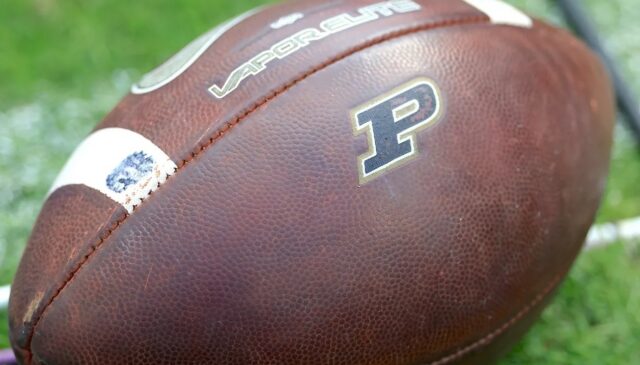
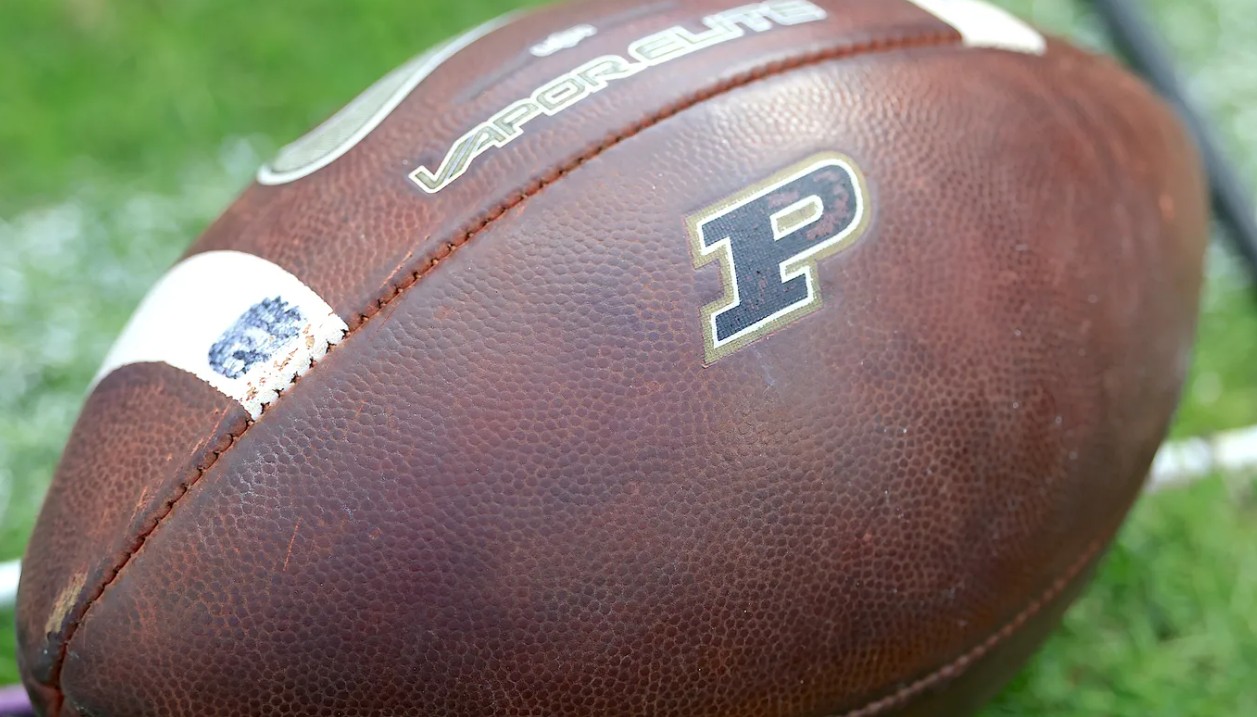
A well-thrown football spiral is an example of aerodynamics and rotational mechanics working together. Design News explores the physics with John Eric Goff, a Purdue University professor of sports engineering, who explains why a football’s distinctive shape and spin allow it to travel efficiently and predictably through the air.

Unlike spherical balls used in basketball, baseball, or soccer, a football has an elongated shape known mathematically as a prolate ellipsoid. Its aerodynamic behavior therefore changes dramatically with orientation. During a tight spiral, the ball presents a relatively small frontal area to the airflow, reducing drag. A tumbling or wobbling football exposes a larger and constantly changing area, increasing drag and making its trajectory less predictable.

Spin provides the stability needed to maintain the favorable orientation. Goff notes that a professional quarterback can impart roughly 600 rpm, or about 10 revolutions per second. This rotation creates gyroscopic stability. As gravity bends the ball’s trajectory downward, aerodynamic forces produce torque that causes gyroscopic motion, allowing the football’s nose to progressively follow its flight path rather than remain pointed in its original direction.

The football’s textured surface also contributes to its performance. Laces, seams, and small surface bumps help players grip the ball and generate spin, but they also influence airflow. Similar to stitches on a baseball or dimples on a golf ball, surface roughness can reduce aerodynamic drag compared with a completely smooth surface.

The same principles explain differences between passing and kicking. Quarterbacks seek stable spirals, while kickoffs and field goals typically rotate end over end, continuously changing the area exposed to airflow. Punters can use spiral kicks to improve stability and reduce drag, potentially increasing hang time. The article shows that successful football flight depends not simply on throwing harder, but on carefully controlling shape, orientation, spin, and airflow.

PixelDiT2 Gives AI Image Generation Pixel-Level Precision

Source: University of Rochester.


Researchers at the University of Rochester and Nvidia have developed an AI image-generation model that gives users more precise control over individual parts of an image. Called PixelDiT2, the model addresses a familiar problem with generative AI: requesting a small correction can unexpectedly alter other parts of an otherwise acceptable image.

Most advanced image generators rely on diffusion models operating in latent space. Instead of directly manipulating pixels, these systems compress visual information into lower-dimensional representations. This approach reduces computational requirements and enables fast image generation, but it can make localized editing difficult. Changing one feature may affect elements that users wanted to preserve.

Researchers led by University of Rochester professor Jiebo Luo are exploring a different approach. Their earlier PixelDiT model performs diffusion directly in pixel space, allowing users to target specific image regions. For example, the system could modify the pixels representing a person’s glasses or change a car’s color while leaving surrounding content intact. PixelDiT was presented at the 2026 IEEE/CVF Conference on Computer Vision and Pattern Recognition, where it was named a best paper finalist.

The team has now developed PixelDiT2, an improved model that makes pixel-space diffusion more efficient. According to the researchers, it achieves performance close to leading latent-space models while maintaining direct control over individual pixels. The PixelDiT2 research is scheduled for presentation at the NeurIPS conference in December 2026.

The approach could make generative AI more useful for designers, artists, engineers, and other professionals who require controlled revisions rather than complete image regeneration. The researchers are now extending their work to AI-generated video, where pixel-level control could help maintain consistency between frames while allowing precise modifications.

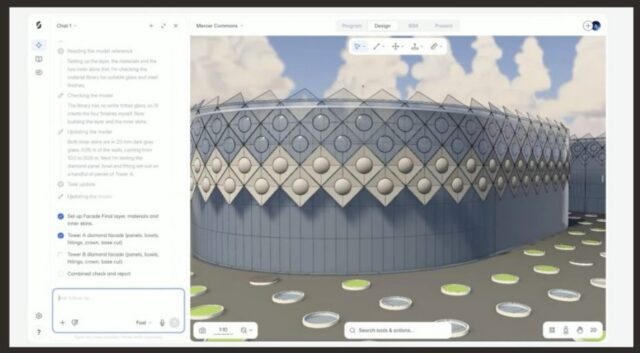
Snaptrude Agent Brings AI Automation Across BIM Workflows

Source: AEC Magazine.


Snaptrude has introduced Snaptrude Agent, an AI agent designed to automate architectural and BIM workflows from early concept development through construction documentation. Rather than limiting AI to individual commands, the system can plan and execute multistep design tasks while keeping architects and engineers involved in reviewing and approving its proposed actions, tells AEC Magazine.

Users begin by giving the Agent a prompt or design problem. It proposes a plan that can be approved or modified before execution. During concept design, the Agent can analyze a site and generate anything from a few massing alternatives to hundreds, giving teams a faster way to explore potential configurations.

The automation extends into detailed BIM authoring. According to Snaptrude, massing models can be developed into construction-ready LoD 400 BIM models within minutes. The Agent supports parametric structural and mechanical, electrical, and plumbing systems. When required components are missing from existing libraries, designers can provide vendor specification sheets, which the Agent can use to model the necessary systems.

Construction documentation is another key capability. Snaptrude Agent can produce drawing sets based on a firm’s standards and transfer models to Revit while retaining existing Revit families. Designers can review the generated work, identify problems, and instruct the Agent to revise its output rather than manually rebuilding elements.

The Agent is not restricted to new projects. Teams can begin with an empty site or import existing models from Revit, Rhino, or SketchUp. Potential workflows include continuing partially completed Revit projects and developing MEP systems from architectural BIM models. Firms can also configure workflows around internal standards and company knowledge bases.

For AEC firms, Snaptrude Agent represents a broader move toward AI systems that perform substantial BIM work rather than simply assist with isolated modelling tasks. The emphasis remains on human oversight, with professionals reviewing plans and directing revisions throughout the process.

SHIFT-NVH Uses Physics AI to Accelerate Automotive Vibration Analysis

Source: Luminary.
Source: Luminary.


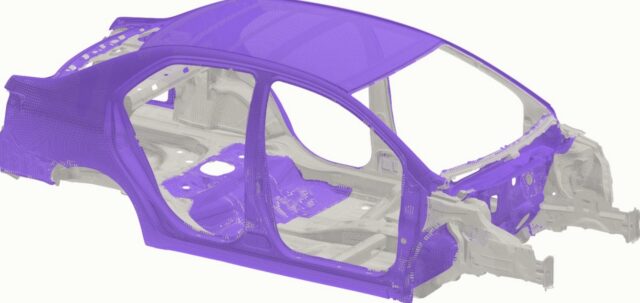
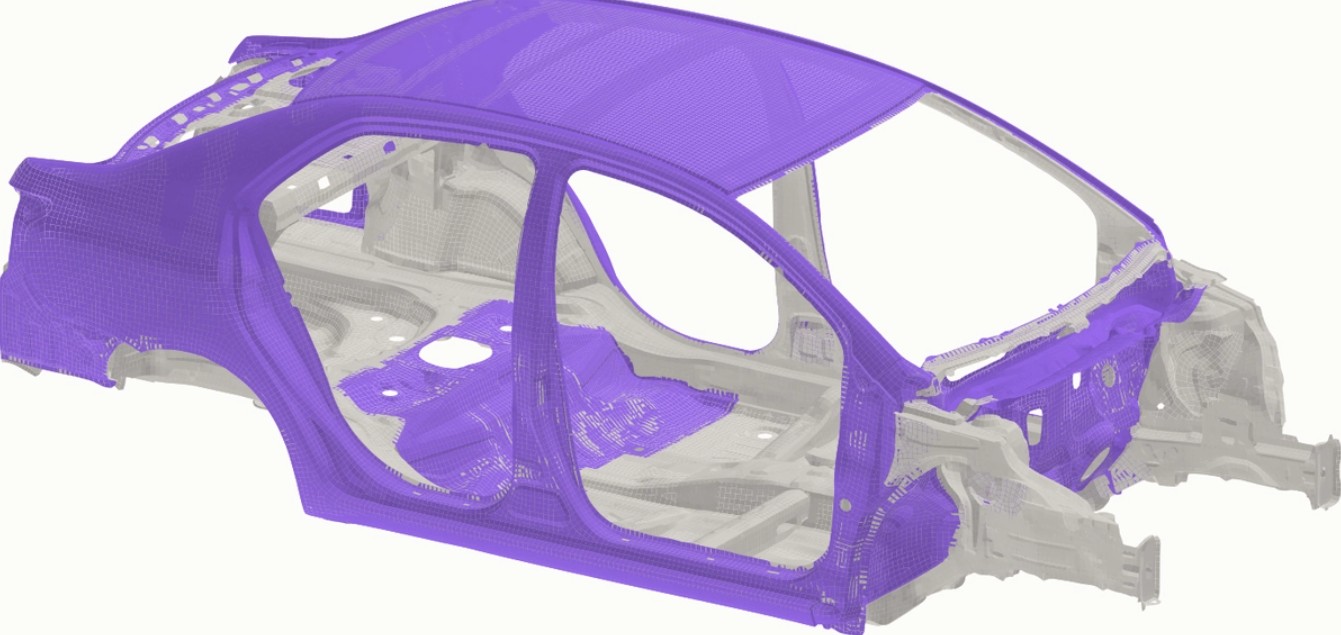
Luminary has introduced SHIFT-NVH, a Large Physics Model designed to speed up noise, vibration, and harshness analysis for automotive body design. The model addresses a late-stage engineering challenge: once vehicle body geometry is fixed, engineers primarily adjust sheet-metal gauge and material to control vibration and reduce weight. Testing every combination traditionally requires repeated finite element simulations.

SHIFT-NVH uses a neural network trained on FE simulation results to predict the complete vibration field for new design configurations without rerunning the solver. Luminary trained the model using a 2010 Toyota Yaris body-in-white containing 213 parts and 130,713 nodes. Fifteen parts, including the roof, side panels, firewall tray, and rear floor, were allowed to vary by up to 30% from their nominal gauge. The study included steel, aluminum, and magnesium designs evaluated at 30, 50, 80, and 110 km/h.

The model accepts 19 inputs, including 15 part gauges, material properties, and vehicle speed. It predicts RMS acceleration in three directions at every surface node. Across 192 test cases based on previously unseen designs, SHIFT-NVH achieved a median relative field error of 1.1% and a median part-level RMS error of 0.47%. It also correctly identified the direction of vibration changes for parts showing changes of at least 5% in 99.5% of cases.

For engineers, the main benefit is rapid design screening. SHIFT-NVH can help compare lightweighting options, identify vibration-sensitive components, and evaluate supplier-proposed gauge or material changes without sharing the complete body FE model.

The current model is limited to one fixed body geometry and a defined design range. Luminary therefore positions it as a screening tool rather than a replacement for detailed FE analysis and physical testing, which remain necessary for final engineering decisions.

Quantum Systems to Open Office in Tokyo

TOKYO, Japan, Oct 30, 2026 – Quantum Systems is opening a permanent presence in Japan with a subsidiary, Quantum Systems Japan G.K., and an office in Tokyo. The company plans to work with Japanese customers and industrial partners to adapt its capabilities to local requirements.

Quantum Systems announced the move during Chancellor Friedrich Merz’s visit to Japan. The expansion builds on relationships with Mitsubishi Chemical and Panasonic through a memorandum of understanding (MoU) intended to develop industrial cooperation in Japan. The cooperation will combine Japanese manufacturing expertise with Quantum Systems’ experience in developing and producing unmanned systems.

Sven Kruck, co-CEO of Quantum Systems, said: “Japan has understood where defense is heading: unmanned systems, rapid innovation and the industrial capacity to deliver at scale. Ukraine has shown why this matters. When personnel are scarce and threats evolve fast, technological advantage is decisive. Japan’s manufacturing strength and our operational experience are a powerful combination. We are proud to put down roots in Japan and honored to help strengthen its defense industrial base.”

Quantum Systems aims to support Japan’s requirements for unmanned capabilities, drawing on its experience across air, land and sea. Its MOSAIC UXS software platform coordinates unmanned systems across operational domains.

“Japan’s defense requirements are evolving, particularly as unmanned systems become an integral part of its future self-defense force structure. The challenge is no longer simply acquiring individual platforms but ensuring that different capabilities can operate together across all domains. Our focus is on understanding where these operational gaps exist and working with Japanese partners to address them through integrated, mission-ready capabilities,” said Martin Karkour, chief revenue officer of Quantum Systems.

Source: Quantum Systems

About Quantum Systems

Quantum Systems is a technology company that develops unmanned aerial systems and related software. The company was founded in 2015 and is headquartered in Gilching, Germany. Quantum Systems designs and manufactures electric vertical takeoff and landing (eVTOL) unmanned aircraft vehicles (UAV). Its portfolio includes reconnaissance drones, aerial mapping platforms and mission planning software. The company also develops command and control software such as MOSAIC UXS for managing unmanned systems. These products support aerial data collection, surveillance, inspection and mapping tasks. Quantum Systems serves defense organizations, government agencies and commercial customers. Commercial users include agriculture, infrastructure inspection, surveying and industrial operations. The company operates with offices in Europe, the United States and Australia. Quantum Systems employs about 1,000 people worldwide.

Siemens, Charter of Trust Hold Cybersecurity Dialogue

Image: Siemens
Image: Siemens

WASHINGTON, DC, Oct 30, 2026 – Siemens and the Charter of Trust convened government, industry and cybersecurity policy representatives to discuss protecting critical infrastructure from emerging cyber threats. The dialogue examined how government agencies and companies could coordinate defenses, build resilience and deter attacks.

“Protecting critical infrastructure is a shared responsibility between government agencies – state, local, and federal – and private companies, large and small. Capabilities and resources vary greatly from one to another, and every organization has a responsibility for the resilience and hardening of our supply chain and infrastructure,” said Shawn Griffin, head of cybersecurity, Siemens Digital Industries Software. “To effectively protect our critical infrastructure in today’s heightened threat landscape, it will require coordination of unique, targeted defense plans supported by collective resources.”

Siemens is a founding member of the Charter of Trust and provides security solutions for information technology and operational technology systems. Siemens has more than 1,300 cybersecurity experts worldwide supporting product resilience and works with a network of manufacturers, distributors, integrators and end users.

Dr. Sumit Chanda, COO of Atos group security and co-chair of the Charter of Trust said: “The Charter of Trust brings together diverse perspectives from government, industry and the wider cybersecurity community across sectors and borders. Our strength lies in turning this exchange into shared priorities and concrete initiatives that drive lasting progress in cybersecurity and digital trust.”

The Charter of Trust was established at the 2018 Munich Security Conference.

Source: Siemens

About Siemens

Siemens Corporation, the U.S. subsidiary of Siemens AG, operates across industry, infrastructure, transportation, and healthcare sectors. Founded in 1847, Siemens AG has more than 175 years of history and is headquartered in Munich, Germany. Its U.S. operations are based in Washington, D.C. The company maintains 24 manufacturing sites in the United States and employs over 50,000 people, serving customers in all 50 states and Puerto Rico. Siemens focuses on integrating digital and physical technologies to support customer needs in efficiency, urban development, and sustainable transportation. The company applies industrial AI – including generative AI – to use cases across sectors.

About the Charter of Trust

Charter of Trust is a nonprofit cybersecurity alliance initiated by Siemens in 2018 at the Munich Security Conference. It publishes guidance, organizes discussions and coordinates work between businesses, governments and research organizations. Its activities cover supply chain security, product development, education, artificial intelligence, encryption and cyberattack deterrence. Ten principles address security responsibilities, supplier requirements, transparency and regulation. Their combined workforce exceeded 1.8 million employees. The alliance identifies participating organizations as partners rather than commercial customers.

0FansLike
0FollowersFollow
0SubscribersSubscribe
Google search engine

Recent Articles

Trending Now