Thermal Analysis Moves to the Forefront of Semiconductor Design
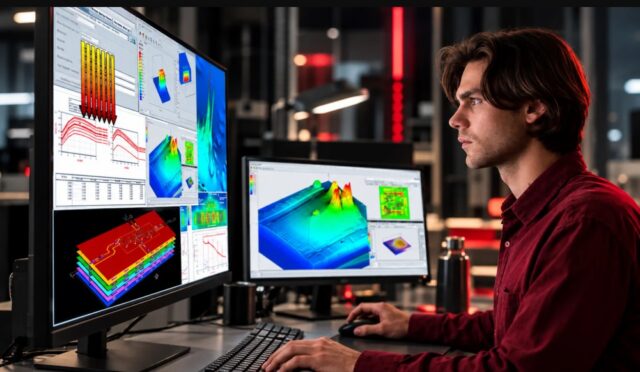
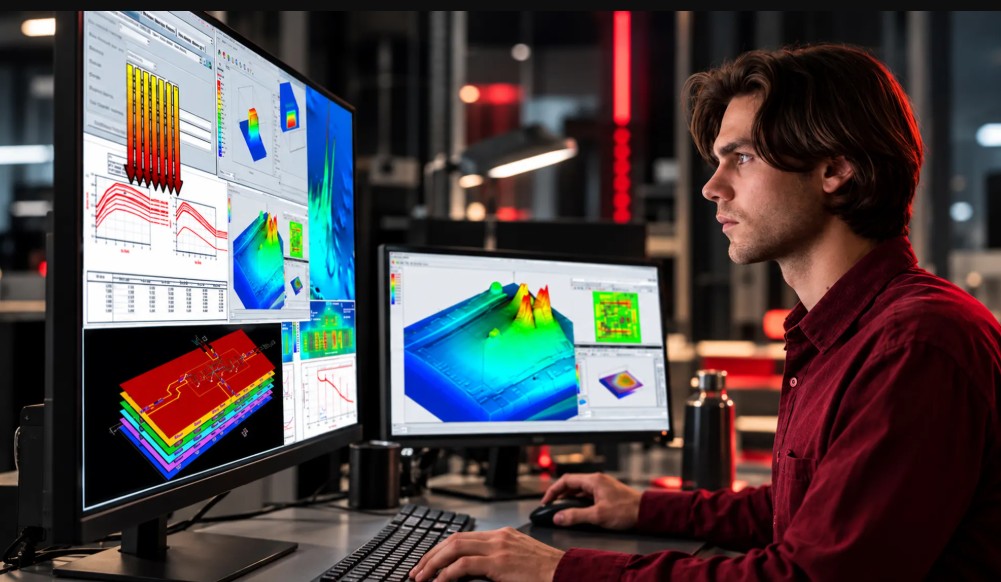
Rising power densities in artificial intelligence (AI), high-performance computing, and advanced semiconductor packaging are making thermal management a critical consideration in electronic design. According to Keysight Technologies, engineers can no longer treat heat dissipation as a final verification task. Instead, thermal behavior must influence architectural decisions from the earliest stages of development.
Traditionally, engineers evaluated electrical performance, thermal characteristics, and mechanical stress separately. However, increasingly complex semiconductor architectures have made these physical effects interconnected. Higher power consumption generates heat, temperature changes affect electrical performance, and thermal expansion introduces mechanical stress that can compromise reliability.
These challenges are particularly significant in chiplets, three-dimensional integrated circuits (3D-ICs), and advanced packaging, where multiple dies, interconnects, substrates, and cooling systems interact. Engineers must understand thermal behavior across individual components and complete electronic assemblies.
Keysight emphasizes that effective multiphysics analysis requires appropriate simulation accuracy at different design stages. Detailed simulations help identify localized hotspots, while package engineers and system architects need broader performance assessments. Techniques such as reduced-order modeling and superposition allow engineers to evaluate complex systems without excessive computational demands.
Integrating thermal analysis into architectural exploration and floor planning also helps identify potential problems before expensive redesigns become necessary. Engineers can evaluate trade-offs involving performance, package dimensions, temperature, and reliability while design changes remain practical.
AI and agentic engineering workflows could further improve this process. Through technologies such as Model Context Protocol (MCP), AI agents can coordinate simulation tools, engineering models, and design data. However, Keysight stresses that AI-generated recommendations still require trustworthy physics-based validation and transparent engineering processes.
The broader message is that electrical, thermal, and mechanical engineering must operate as interconnected disciplines. By introducing multiphysics analysis earlier, engineering teams can reduce costly design iterations, improve reliability, and make informed decisions before committing to physical hardware.