Sandvik to Acquire ThoroughTec Simulation

Image: ThoroughTec Head Office

STOCKHOLM, Sweden, Nov 4, 2026 – Sandvik has signed an agreement to acquire ThoroughTec Simulation (ThoroughTec). The acquisition would combine ThoroughTec’s training simulators with Sandvik’s digital solutions to support data-driven, customized operator training programs based on real machine performance insights.

ThoroughTec develops OEM-agnostic simulators and provides a training management system for mining operations. These solutions are designed to improve operator safety and productivity while reducing equipment maintenance costs.

Following the acquisition, ThoroughTec will be reported within Parts and Services, a division of Sandvik’s Mining business area. The addition will expand Sandvik’s aftermarket offering for mining customers.

“ThoroughTec is a great addition to Sandvik. Their solutions will strengthen our aftermarket offering and help customers enhance both productivity and safety in their operations through advanced training technologies,” says Stefan Widing, president and CEO of Sandvik.

Source: Sandvik Group

About Sandvik Group

Sandvik Group, established in 1862 and headquartered in Stockholm, Sweden, is an engineering company specializing in solutions that improve productivity, profitability, and sustainability across the manufacturing, mining, and infrastructure industries. The company operates through three main business areas, Sandvik Mining and Rock Solutions, Sandvik Rock Processing Solutions, and Sandvik Manufacturing and Machining Solutions. Their offerings include equipment and tools for metal cutting, mining, and rock excavation, as well as advanced stainless steel and special alloys.

About ThoroughTec Simulation

ThoroughTec Simulation is a South African company that develops and manufactures equipment training simulators. Founded in the mid-1990s, it is headquartered in Durban, South Africa. The company serves the mining, construction, defense, aviation and emergency response industries. Its products include simulators for surface and underground mining equipment, construction machinery, military vehicles, airport firefighting equipment and mobile cranes. Customers include mining companies, equipment manufacturers, defense organizations, airports and technical training institutions. Its CYBERMINE simulation systems support operator training for mining machinery under different operating conditions. ThoroughTec also provides training management software, customized simulation systems, operator instruction and technical support. The company reports deploying more than 820 simulators across 36 countries.

Siemens Introduces Extra-Low-Voltage Drives for Mobile Robots

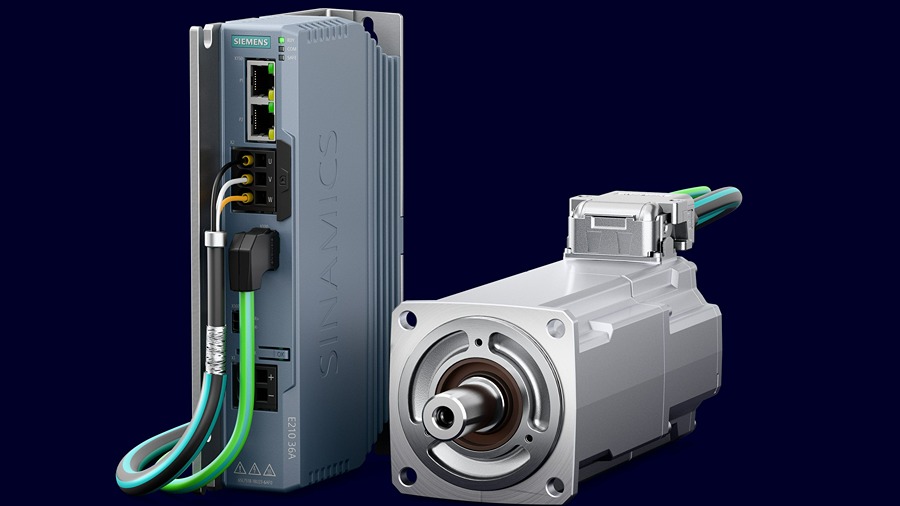
Sinamics E210 and Simotics E-1EE1 form a new ELV drive solution for mobile applications. (Image: Siemens)

ERLANGEN, Germany, Nov 4, 2026 – Siemens has introduced the Sinamics E210 converter and Simotics E-1EE1 servomotors as an integrated extra-low-voltage (ELV) drive solution for battery-powered mobile systems. Designed for 24 V and 48 V applications, the components support automated guided vehicles (AGVs), autonomous mobile robots (AMRs) and driverless transport systems.

The Sinamics E210 is a regenerative converter that provides precise control of traction and wheel drives, steering, lifting and auxiliary motion axes. It connects to ELV battery systems, streamlining system architecture and improve energy efficiency.

The Sinamics E210 includes safety functions, PROFIsafe support and PROFINET IRT communication. Integration with TIA Portal and Simove modular system supports its incorporation into higher-level automation and vehicle designs. The Sinamics E210 also features high overload capability and flexible installation options.

The Simotics E-1EE1 servomotors extend Siemens’ ELV motor portfolio into higher power and torque ranges, with shaft heights from 40 to 63. Designed for 24 V and 48 V operation, the motors are matched to the Sinamics E210 for dynamic mobile applications.

A 14-bit BiSS-C safety encoder and dual-channel design support safety-related applications up to Safety Integrity Level (SIL) 2. An electronic nameplate allows the converter to read relevant motor data, simplifying parameterization and commissioning. The motors also offer optional holding brakes, multiple gearbox options and connection technology.

Siemens developed the drive solution to help manufacturers and system integrators reduce development effort and simplify the implementation of safety concepts. The integration of drive components, safety functions and automation tools is meant to reduce integration risks and support a system architecture for future automation, safety and cybersecurity requirements.

Source: Siemens

About Siemens AG

Siemens AG is a technology company founded in 1847 and headquartered in Munich and Berlin, Germany. The company develops products and services in industrial automation, electrification, digital systems, and mobility. Its offerings include automation systems, industrial software, building technologies, rail transport systems, and power distribution solutions. Siemens also provides financial services and supports infrastructure projects. It serves industries such as manufacturing, energy, transportation, construction, and healthcare. The company works with enterprises, utilities, governments, and infrastructure operators worldwide. Siemens operates in more than 190 countries. It applies digital tools and AI to industrial and infrastructure use cases. Siemens holds a majority stake in Siemens Healthineers, a publicly listed healthcare technology company. Siemens has about 318,000 employees globally.

About Siemens Digital Industries

Siemens Digital Industries (DI), a division of Siemens AG, focuses on industrial automation and digitalization. Based in Nuremberg, Germany, the division provides software, automation systems, and digital services that support the full product and production lifecycle—from design and engineering to manufacturing and maintenance. With a history extending over six decades, Siemens DI serves key sectors including automotive, aerospace, pharmaceuticals, energy, and electronics. Its technologies, such as the Xcelerator platform and SIMATIC automation systems, are designed to integrate physical and digital processes, enabling data-driven manufacturing and operational efficiency. The division reports annual revenues exceeding €18 billion and employs approximately 70,000 people globally. Its portfolio supports manufacturers in implementing Industry 4.0 strategies by linking simulation, automation, and real-time data in scalable systems.

Schneider Electric Launches Energy Tech Accelerator Program

Image: LinkedIn
Image: LinkedIn

RUEIL-MALMAISON, France, Nov 4, 2026 – Schneider Electric has launched Energy Tech Accelerator, a 12-month program to recruit 50 early-career engineers for work involving artificial intelligence (AI) and sustainable energy. The inaugural cohort will work across five global hubs: Boston; Paris and Grenoble; Dubai; Bangalore; and Shanghai.

The program combines practical experience addressing business and customer challenges with learning, mentoring and customer engagement. Participants will also have opportunities to build professional connections across the program.

“At Schneider, our goal is to Advance Energy Tech to the next level to deliver greater business outcomes for our customers. By leveraging Data & AI, we connect the physical and digital worlds to deliver Energy & Industrial Intelligence to our Customers,” said Olivier Blum, chief executive officer of Schneider Electric. “Turning that intelligence into solutions that help our customers operate more efficiently and sustainably requires people who can combine deep knowledge of energy and industrial processes with AI. That is why we are launching Energy Tech Accelerator: to attract and develop people who understand AI, are passionate about the energy transition and want to make a tangible contribution to a more sustainable future.”

“Advancing energy technology is ultimately about people,” said Charise Le, chief human resources officer of Schneider Electric. “Early-career talent should not have to wait years to make a meaningful contribution. Through Energy Tech Accelerator, participants will learn across the business, take on real challenges and build the capabilities and confidence to help shape a more sustainable energy future.”

Candidates interested in AI, digital technology and sustainable transformation can find program information and apply at Energy Tech Accelerator Graduate Program.

Source: Schneider Electric

About Schneider Electric

Schneider Electric, founded in 1836, is a leader in energy management and automation. Headquartered in Rueil-Malmaison, France, the company delivers digital solutions that integrate energy technologies, real-time automation, software, and services across multiple sectors. Schneider Electric serves many industries, including buildings, data centers, infrastructure, and manufacturing, helping businesses improve efficiency, safety, and sustainability. Its offerings span electrical distribution, industrial automation, and smart grid and digital building technologies. Schneider Electric operates in over 100 countries and has approximately 168,000 employees. Its ecosystem includes over a million partners, making it a key player in delivering scalable, innovative solutions for an electric and digital world.

Illumion Raises £1.7M for Battery Imaging With ZEISS Backing

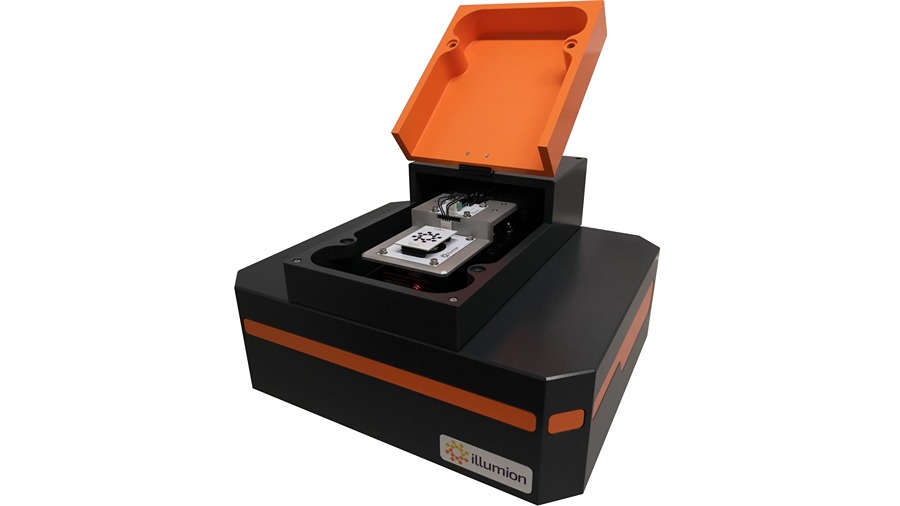
illumionONE is a charge photometry system that provides real-time insights into battery materials at single-particle resolution. (Image: ZEISS)

OBERKOCHEN, Germany, Nov 4, 2026 – ZEISS Ventures has participated in a £1.7 million funding round for Illumion, a University of Cambridge spinout developing optical imaging technology. Its proprietary charge photometry technology allows researchers to observe individual battery particles during charging and discharging, revealing previously inaccessible processes inside working batteries. The technology provides insights for battery development and manufacturing.

The funding round also included Foresight Group, Cambridge Enterprise Ventures, Parkwalk, Cambridge Angels and YourVC.

The funding will support commercialization of Illumion’s technology, development of its product roadmap and collaboration with researchers, battery developers and industrial partners. This includes development of illumionONE for particle-level battery analysis and illumionX, a platform to address industrial use cases.

“Illumion combines scientific excellence with innovative imaging technology for battery research. By helping to visualize dynamic processes within batteries at the particle level, the company aims to deepen researchers’ understanding of battery materials and their behavior. We are pleased to support the team as it further develops its optical analytics platform,” says Dr. Boris Hofmann, head of ZEISS Ventures.

“This funding marks an important next step for Illumion as we translate world-class research into practical tools for battery development. We are excited to continue advancing our technology with the support of ZEISS Ventures, Foresight, and our existing investors,” comments Christoph Schnedermann, co-founder and CEO of Illumion.

Source: Illumion

About Illumion

Illumion develops optical imaging technology that allows researchers to observe individual battery particles during charging and discharging. Founded in 2022, Illumion is headquartered in Cambridge, United Kingdom. The company uses charge photometry technology to examine changes in battery materials during operation. Its illumionONE platform combines optical imaging, electrochemical measurements and analysis software to study battery materials. Researchers use the system to investigate electrode performance, material degradation and charging behavior. The technology supports research into lithium-ion, sodium-ion and other battery chemistries. Illumion serves battery manufacturers, materials developers, research laboratories and academic institutions. The company is also developing illumionX, a platform intended for selected industrial applications. It works with international distributors to supply equipment across different markets.

Athena Raises $2.5M for AI-Powered Real Estate Legal Services

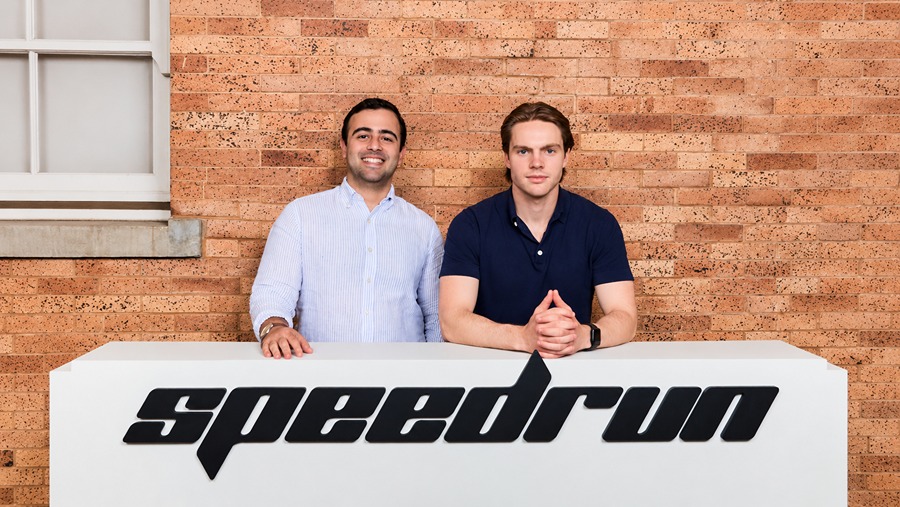
Athena Founders Cem Ucan and Kieran John Keenan. (Image: Athena)

SAN FRANCISCO, CA, Nov 4, 2026 – Athena has raised $2.5M in a pre-seed funding round led by a16z Speedrun. The company uses AI agents alongside attorneys at its law firm to handle legal work for commercial real estate transactions. Its system reviews agreements, prepares revisions and drafts client communications, while attorneys retain responsibility for legal decisions and final approval.

The law firm advises clients on commercial real estate acquisitions, sales and financing, including purchase agreements, due diligence, loan documents and closings. It charges a fixed fee per transaction, about 30% to 50% less than clients paid on recent deals, according to Athena.

When a new agreement arrives, Athena’s AI agents compare it against the transaction terms, identify inconsistencies and prepare redlines. The system also draws on previous transactions to account for individual clients’ negotiating preferences. Attorneys review the generated work, handle legal decisions and negotiations, and approve documents before they reach clients.

“Most legal AI companies sell tools to traditional law firms. We took a different approach,” said Cem Ucan, co-founder and CEO of Athena. “Our AI works hand-in-hand with a law firm designed around it from day one, with experienced attorneys focused on the judgment and negotiation that actually move deals forward.”

“A lot of firms in our industry have an AI task force in name only,” said L. Miguel Arce, CEO at Mox, a Texas-based real estate investment, property management, and development company. “What stood out about Athena is that the system learns from every deal, from what the attorneys change to what we prefer. Speed only matters if it’s quality work, and the Athena platform gets us both.”

Athena uses attorney corrections and client preferences to refine its system for subsequent transactions. It reduced attorney review time by more than 70% in its first six weeks.

Kieran John Keenan, co-founder and CTO of Athena, said: “I measure our progress by how quickly an attorney can review an AI agent’s work and confidently stand behind it. A draft produced in minutes can still leave a lawyer with hours of work. Making that review more efficient is how our platform helps us deliver faster legal services with the quality clients expect from Big Law.”

Troy Kirwin, partner at a16z Speedrun, said: “As AI becomes more capable, clients will still want experienced professionals who take responsibility for the work. Athena is building around that need, with a system that can improve through real legal work and a team obsessed with scaling fast.”

“We want legal work to be measured in seconds and minutes rather than weeks and months,” said Ucan. “Our ambition is to free a 21st-century economy from a 19th-century legal delivery model.”

Source: Athena

About Athena

Athena is a legal technology company headquartered in San Francisco, CA. The company develops AI software for preparing and reviewing legal documents in commercial real estate transactions. Its affiliated law firm handles property acquisitions, sales, financing, purchase agreements, due diligence, loan documents and closings. Athena’s software reviews agreements against transaction terms, identifies inconsistencies, prepares revisions and drafts client communications. It also analyzes previous transactions to account for clients’ negotiating preferences. Attorneys review the documents, handle negotiations and approve legal work before delivery. The affiliated firm charges fixed fees per transaction rather than relying on hourly billing. Athena serves commercial real estate investors, property developers and property management companies.

AI Helps Architects Streamline the RIBA Design and Construction Stages

Source: Pirros.
Source: Pirros.


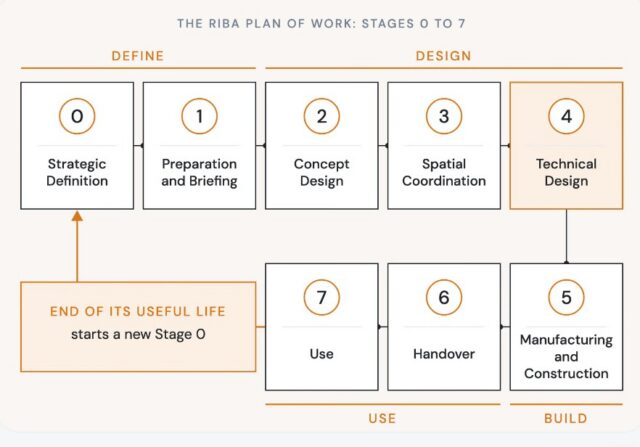
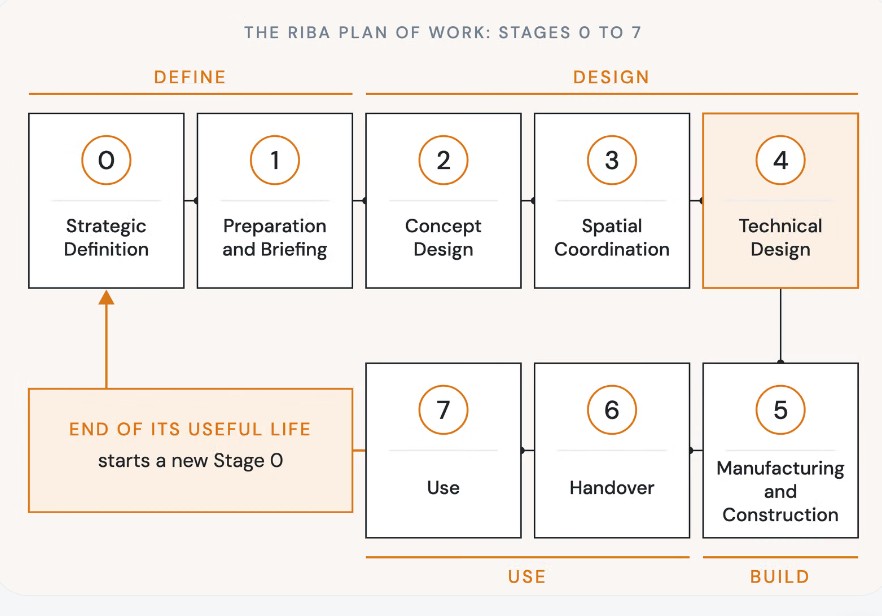
The Royal Institute of British Architects (RIBA) Plan of Work provides a structured framework for managing building projects from initial planning through construction and occupancy. Divided into eight stages, numbered 0 through 7, it defines responsibilities, deliverables, and approval requirements throughout the building lifecycle, says Pirros.

Stages 0 and 1 establish project objectives, feasibility, budgets, and responsibilities. Stage 2 develops the architectural concept, while Stage 3 coordinates architectural, structural, and building services designs. Planning applications are generally submitted after Stage 3.

Stage 4, Technical Design, is particularly demanding because architects must produce detailed construction drawings, specifications, schedules, and regulatory documentation. Stage 5 covers manufacturing and construction, followed by handover in Stage 6 and post-occupancy evaluation in Stage 7.

A recurring challenge during technical design is the unnecessary recreation of architectural details. Firms frequently redraw standard components, including window connections, roof junctions, and wall assemblies, because previously approved details are difficult to locate. Design decisions made during earlier stages may also become inconsistent with construction documentation.

Pirros addresses these inefficiencies through AI-powered detail management and quality control tools. Its platform searches existing architectural details, including Revit content, enabling teams to reuse established solutions instead of recreating them. Frequently used details can become standardized resources across projects.

Pirros Quality Management reviews drawings against organizational standards and identifies potential inconsistencies before documentation is issued.

The company’s Mira AI agent further automates repetitive Revit tasks, including replacing annotations, renumbering drawing details, and checking formatting consistency. Importantly, Mira presents proposed changes for user approval before modifying models.

The article emphasizes that effective project management requires consistent information across every stage. Feedback from construction and building operation should also inform future design standards.

By combining structured workflows with AI-assisted documentation, architecture firms can reduce repetitive work, improve quality control, and preserve valuable engineering knowledge across projects.

Seven AI-Powered Tools Streamline Real Estate Feasibility Studies

Source: Snaptrude.
Source: Snaptrude.


Real estate feasibility studies help developers determine whether a proposed project is financially viable and technically achievable. However, traditional assessments involving zoning regulations, building massing, parking requirements, and construction costs can take weeks and cost thousands of dollars. AI-powered software is accelerating these processes while improving early-stage decision-making.

This Snaptrude article compares seven feasibility study platforms: Snaptrude, TestFit, Deepblocks, ArchiWise AI, Digital Blue Foam, Higharc, and Northspyre. Each addresses different aspects of real estate development, from site selection and design optimization to financial planning.

Snaptrude combines AI-assisted zoning analysis, three-dimensional massing, and building information modeling (BIM). Its Universal Agent interprets setbacks, height restrictions, and floor area ratios to generate preliminary building envelopes. Developers can track floor areas, unit counts, and parking requirements as designs evolve. The resulting model can continue into architectural development.

TestFit specializes in generative site planning, parking layouts, and development yield optimization. Deepblocks analyzes zoning regulations, market conditions, and financial projections across hundreds of U.S. cities, helping developers identify promising properties.

ArchiWise AI supports early site screening by combining parcel information, zoning requirements, and financial feasibility assessments. Digital Blue Foam integrates environmental considerations, including carbon emissions, energy performance, wind, and solar exposure, into building massing studies.

Higharc focuses on residential development, connecting home design with construction estimates, code checks, and permit documentation. Northspyre addresses financial management through budgeting, cost forecasting, and project tracking.

Despite these capabilities, AI-generated feasibility assessments require professional verification. Zoning interpretations, development assumptions, and financial projections must remain transparent, editable, and traceable.

The article emphasizes that software selection should reflect project requirements rather than feature counts. Developers evaluating multiple properties may prioritize automated screening, while architects need tools that connect feasibility studies with detailed design.

Ultimately, AI can accelerate feasibility analysis, but professional judgment remains essential for evaluating development risks and ensuring projects are practical and financially sound.

Indian Student Teams Advance Hyperloop Design Through Engineering Simulation

Source: Ansys.
Source: Ansys.

Three Indian student engineering teams are demonstrating the importance of simulation-driven design in developing hyperloop transportation systems. Avishkar Hyperloop from IIT Madras, Team Levitate from VIT Vellore, and loopMIT from Manipal Institute of Technology are using Ansys simulation software to address complex challenges involving aerodynamics, propulsion, structural stability, thermal management, and manufacturing, tells Ansys.

Avishkar Hyperloop focuses on developing scalable transportation technology while addressing safety, reliability, and vacuum compatibility. The team uses Ansys Mechanical for structural finite element analysis (FEA) and Ansys Fluent for computational fluid dynamics (CFD). These tools help evaluate chassis components, emergency braking systems, and aerodynamic performance. Transient thermal simulations support battery cooling, electromagnetic suspension, and heat exchanger design, while topology optimization helps reduce vehicle weight.

Team Levitate, established in 2024, emphasizes multidisciplinary engineering and technology commercialization. Using Ansys Electronics Desktop and Ansys Workbench, students simulate electromagnetic propulsion, structural performance, and thermal behavior. The team has developed a linear induction motor, battery technology, and lightweight crumple zones. At the 2026 Global Hyperloop Competition, it demonstrated its propulsion and battery systems.

Meanwhile, loopMIT uses Ansys Maxwell 3D, Twin Builder, Fluent, and Mechanical to improve propulsion efficiency, structural stability, and vehicle safety. Electromagnetic simulations help optimize motor performance, while structural analyses address vibration and mechanical loads. According to the team, simulation reduced design iterations and helped produce a chassis approximately 30% stronger than previous versions.

Across all three projects, virtual testing enables students to identify design weaknesses before manufacturing, reducing costs and development time. It also helps teams work within limited budgets and demanding competition schedules.

Beyond advancing hyperloop technology, these initiatives provide practical experience in systems engineering, simulation, manufacturing, and collaborative problem-solving. The projects demonstrate the growing importance of simulation in engineering education and preparing students for complex transportation challenges.

AI Helps Cities Predict Infrastructure Problems Before They Escalate

Dublin has emerged as one of Ireland’s leading technology centers in the past 20 years, serving as a proving ground for how AI, digital twins, and open data can work together in the real world.
Dublin has emerged as one of Ireland’s leading technology centers in the past 20 years, serving as a proving ground for how AI, digital twins, and open data can work together in the real world (source: Bentley).


Artificial intelligence is transforming urban infrastructure management by helping municipalities identify problems, prioritize maintenance, and make better use of limited resources. At a recent AI CityXchange workshop in Dublin, approximately 80 government technology leaders from Ireland and the United Kingdom explored practical applications of AI in city management, tells Bentley.

One example comes from Dún Laoghaire-Rathdown, near Dublin, where nine engineers oversee approximately 500 miles of roads, 850 miles of footpaths, and 60 miles of trails. Traditional inspections required months of manual assessment. AI-powered computer vision now analyzes images captured by vehicle-mounted cameras to identify road defects, damaged footpaths, and other infrastructure problems. This approach enables engineers to prioritize repairs and move toward predictive maintenance.

AI is also supporting environmental management. Engineering consultancy Mott MacDonald used stereo cameras and machine learning to catalog more than 13,000 ash trees for Glasgow City Council. The technology helps identify diseased trees, assess potential hazards, and estimate timber availability.

In Tipperary, Ireland, AI and geospatial technology are helping authorities address vacant commercial properties. The Vacant Business Reopen Grant platform combines property locations, planning information, and nearby amenities to identify redevelopment opportunities. Generative AI assists with reports and business proposals. More than 320 properties have been mapped.

A common element across these applications is geolocation, which connects infrastructure assets with relevant datasets. Emerging technologies such as Model Context Protocol (MCP) and Agent2Agent (A2A) could further simplify information sharing between AI systems and municipal applications.

Bentley Systems also highlights its Blyncsy platform, which uses AI to analyze anonymized dashboard-camera imagery for road monitoring.

However, increasing AI adoption raises questions about accountability, privacy, and governance. Municipalities must establish clear responsibilities as AI agents become more involved in operational decisions.

Ultimately, AI offers cities a practical way to improve infrastructure management, anticipate problems, and allocate resources more effectively.

AI Tools for CATIA: Bridging the Gap Between Design, Simulation, and Engineering Knowledge

Source: Leo AI.
Source: Leo AI.


Artificial intelligence is expanding CATIA’s capabilities, but engineers face an important distinction between CATIA V5 and Dassault Systèmes’ 3DEXPERIENCE platform. While 3DEXPERIENCE offers native AI features, CATIA V5 users must rely on third-party solutions for intelligent search, simulation, and design optimization, says Leo AI.

One significant challenge is retrieving engineering knowledge from extensive CAD libraries and product data management (PDM) systems. Engineers frequently spend hours locating existing components, reviewing design revisions, or recreating parts that already exist.

Leo AI addresses this problem through its Large Mechanical Model (LMM), which analyzes CAD geometry rather than relying exclusively on filenames or metadata. Engineers can search CATIA and ENOVIA repositories using natural language to locate components, drawings, and engineering change records. The company claims searches take less than 10 seconds and can save engineers 8.3 hours weekly.

Dassault Systèmes provides several AI capabilities within 3DEXPERIENCE CATIA. Command Intelligence recommends relevant modeling commands, while Mechanical Interface Prediction helps establish assembly connections. Aura Virtual Companion offers contextual assistance, and generative design tools support topology optimization and structural improvements through SIMULIA integration.

For simulation-intensive workflows, Ansys provides finite element analysis, computational fluid dynamics, and AI-assisted optimization. Its AI capabilities include surrogate modeling, accelerated meshing, and boundary condition suggestions. Meanwhile, nTopology supports advanced lattice structures and topology optimization, particularly for aerospace and medical applications.

However, compatibility remains a consideration. Native Dassault AI capabilities require 3DEXPERIENCE, while Leo AI, Ansys, and nTopology can support CATIA V5 workflows without requiring complete platform migration.

The article emphasizes selecting AI tools according to specific engineering requirements rather than marketing claims. Organizations should evaluate whether their greatest challenges involve retrieving existing designs, improving simulation efficiency, or optimizing complex geometries before investing in additional technology.

0FansLike
0FollowersFollow
0SubscribersSubscribe
Google search engine

Recent Articles

Trending Now