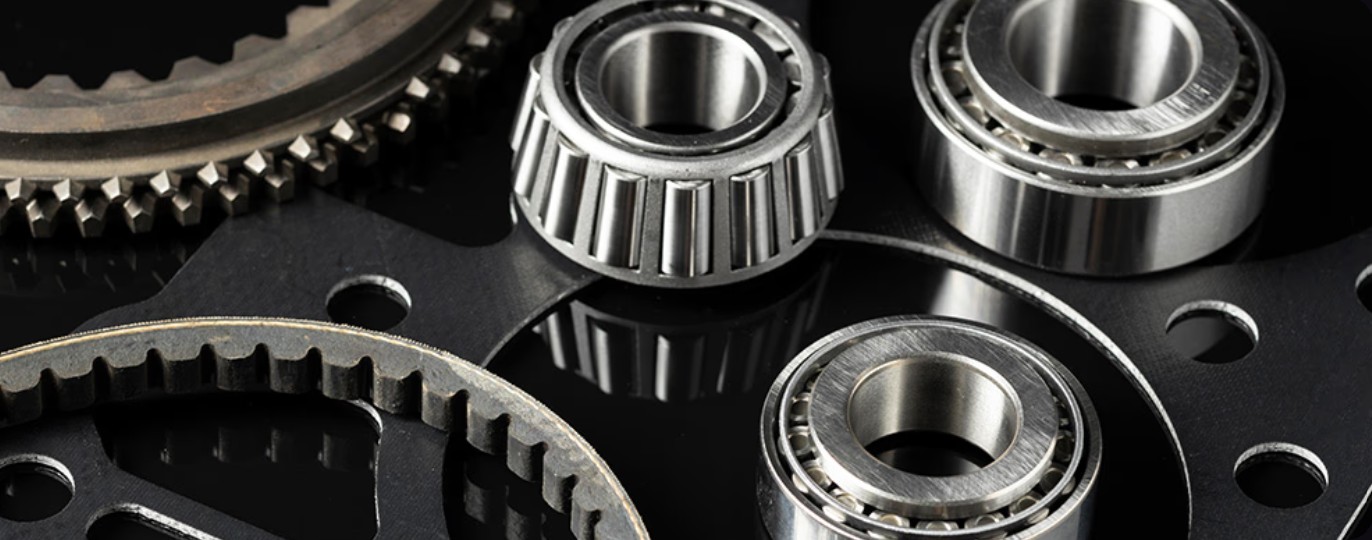
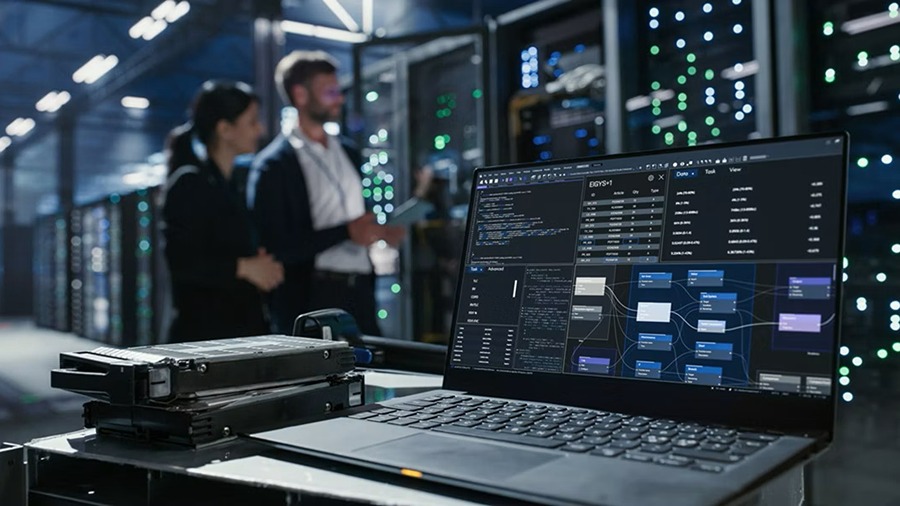
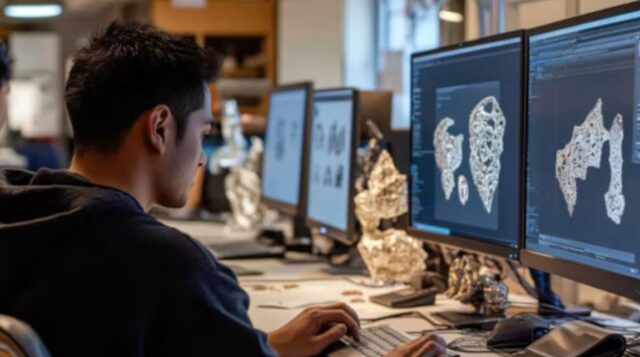
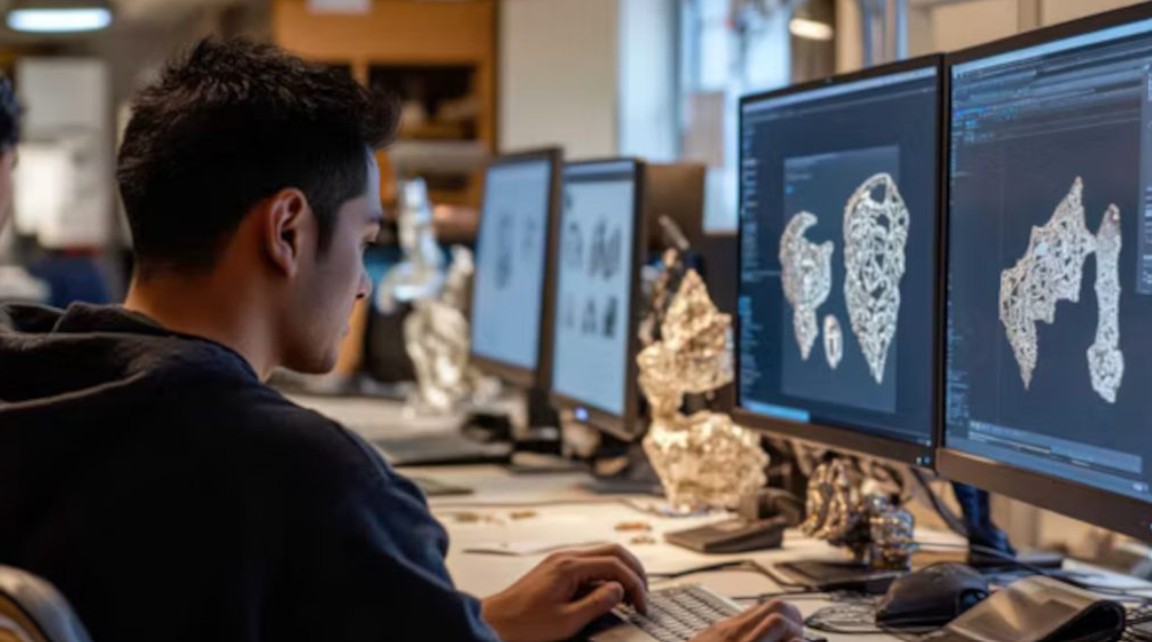
Reverse engineering often begins with a challenge: identifying an unknown mechanical or electronic component without access to its original specifications. Engineers restoring machinery, repairing vehicles, or maintaining legacy equipment traditionally rely on catalogs, manual measurements, and expert knowledge. Artificial intelligence is making this process faster by identifying components from images, sketches, or written descriptions, tells Leo AI.
AI-powered reverse engineering uses computer vision and natural language processing (NLP) to recognize components and retrieve relevant engineering information. Computer vision models, including convolutional neural networks and transformer-based architectures, analyze geometric features and compare them with existing component databases or CAD models. These systems can identify potential matches, alternative components, and compatible replacements.
For example, an engineer can upload a photograph of a bracket or valve, allowing AI to suggest possible part numbers and manufacturers. When photographs are unavailable, NLP enables engineers to describe a component’s shape, dimensions, material, or function in everyday language. The system interprets these descriptions and searches engineering libraries for suitable matches.
Leo AI combines these capabilities in an engineering assistant designed to simplify component identification. Users can upload images or describe unfamiliar parts to retrieve specifications, replacement options, CAD models, and supplier information. The platform draws on engineering datasets covering mechanical fasteners, automotive sensors, printed circuit board components, and other industrial parts.
Geometric similarity search further improves the process by matching uploaded images or CAD files against existing designs. According to Leo AI, this approach can reduce identification time from hours to seconds while providing sourcing options and estimated costs.
The technology has applications across manufacturing, automotive maintenance, equipment restoration, and supply chain management. It can also help engineers reuse existing components instead of designing replacements unnecessarily.
By connecting visual recognition, language understanding, and engineering databases, AI makes reverse engineering more accessible and efficient, although engineers must still verify component compatibility and technical specifications.
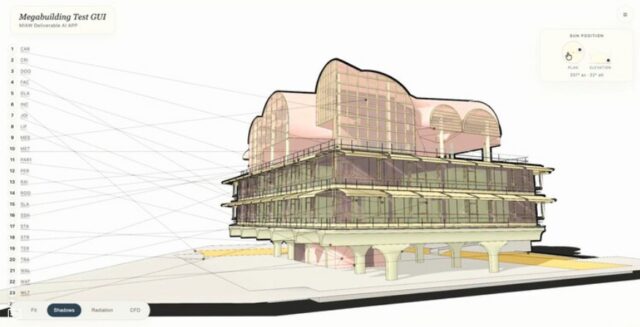
Courtesy of Mindhub for Intelligent Artificial Worlds (MIAWS), ETSAM, Universidad Politécnica de Madrid.
Courtesy of Mindhub for Intelligent Artificial Worlds (MIAWS), ETSAM, Universidad Politécnica de Madrid.
Artificial intelligence is changing architecture by introducing spatial intelligence, enabling architects to understand and simulate how physical environments behave. Rather than relying solely on conventional design methods, architects can use AI to evaluate environmental conditions, anticipate building performance, and make informed decisions throughout the design process, tells Arch Daily.
The article highlights the transition from large language models (LLMs) to world models. While LLMs generate responses based on patterns in text, world models attempt to understand physical laws, spatial relationships, and environmental dynamics. This distinction is particularly important for architecture, where buildings must respond to real-world conditions.
Spatial AI allows architects to simulate factors such as gravity, wind, sunlight, thermal diffusion, moisture absorption, pollutant dispersion, and human movement. By incorporating these simulations into design workflows, professionals can evaluate potential outcomes before construction begins. This approach encourages designs that respond to environmental complexity rather than simply imposing predetermined architectural forms.
The article also examines technology’s influence on human development. As AI accelerates technological change, architects must develop new skills that combine design expertise with computational engineering, materials science, and simulation technologies. The emphasis shifts from creating architectural forms to developing knowledge-driven systems capable of predicting design consequences.
However, AI cannot replace professional judgment. Simulations provide valuable information, but architects remain responsible for interpreting results, evaluating trade-offs, and making decisions that consider human needs and environmental consequences.
The Mindhub for Intelligent Artificial Worlds (MIAWS), based at the Universidad Politécnica de Madrid’s School of Architecture, supports this transition through research, collaboration, and education. Its online Foundations program introduces AI modeling, simulation, data visualization, and integration across 10 modules.
Ultimately, spatial AI presents an opportunity to strengthen architectural practice by connecting computational intelligence with physical reality. Its greatest value lies not in automating creativity but in helping architects understand complex environments and design buildings that respond intelligently to them.
BOSTON, MA, Nov 3, 2026 – LinearB has launched Agentic Studio, which provides engineering teams and AI coding agents with development data and operational context from across the software delivery lifecycle. The system supports engineering decisions, workflow analysis and automated coding tasks. Agentic Studio is available to all LinearB customers, while its agent skills are in early access.
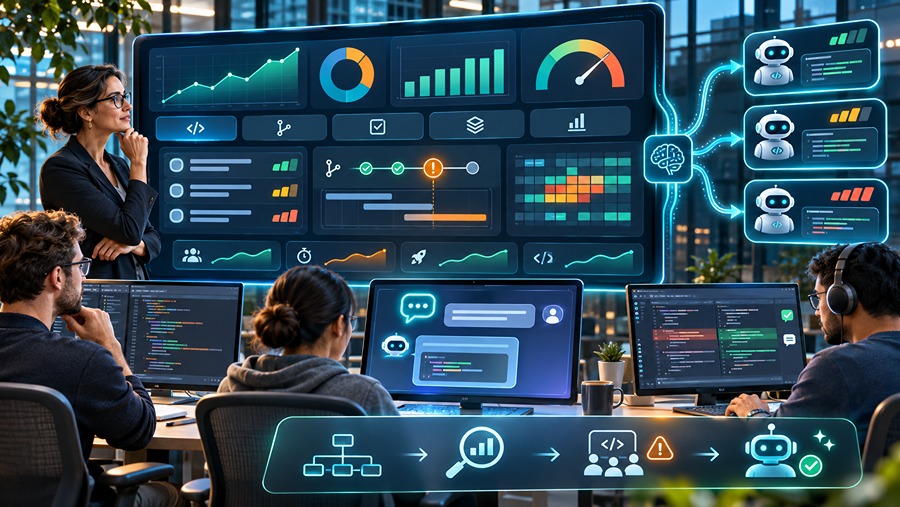
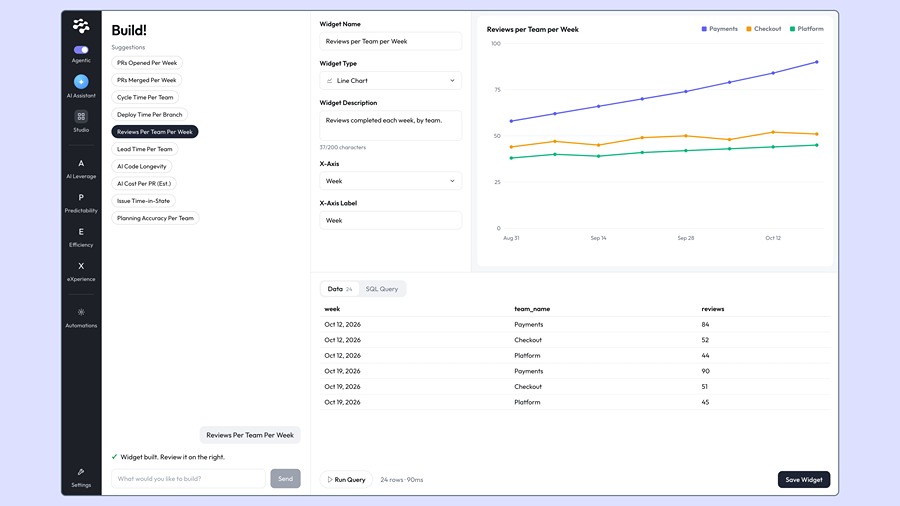
The platform consolidates data from Git repositories and project management systems, matches developer identities across tools and tracks code changes from tickets through releases. It also incorporates AI attribution and industry benchmarks to help engineering leaders assess development performance.
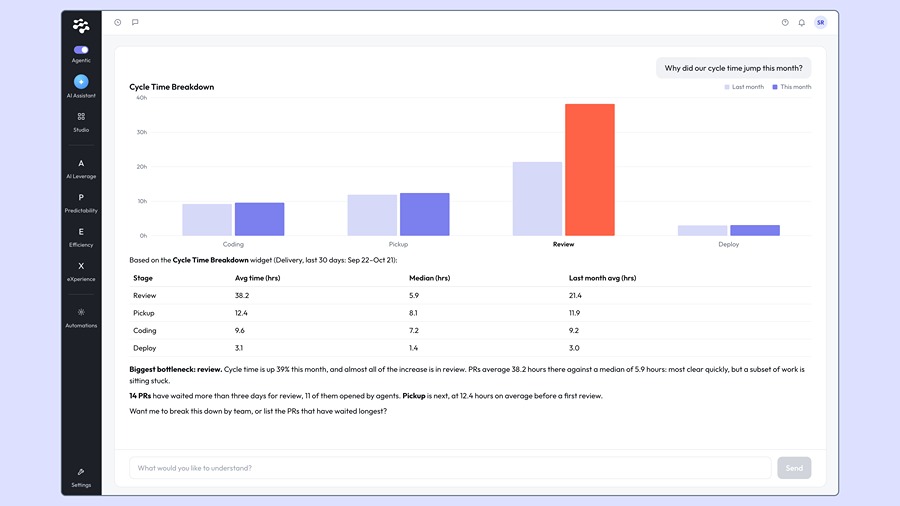
Through a conversational AI assistant, engineering leaders can ask questions about delivery delays, team performance and AI adoption. The system provides answers and recommended next steps, while users can create metrics, reports and dashboards. Model Context Protocol (MCP) connectivity allows external AI tools, including Claude, to access the same engineering context.
Agent Skills and Development Workflows
LinearB’s first agent skill, called effort, is available in early access. It adjusts the effort assigned to coding agents according to a task’s business relevance, complexity and risk.
The skill evaluates factors including code quality and rework rates, recent service incidents and code ownership history. It assigns less effort and fewer tokens to low-risk changes, while directing more effort toward high-priority tasks that require more careful edits and testing.
Image: LinearB
LinearB said the skill works with any coding agent. Engineering leaders can monitor how frequently tasks receive low, medium or high effort assignments. The company plans additional skills focused on downstream development activities, including code review and merging.
Ori Keren, co-founder, CEO (Image: LinearB)
“Context is the new king,” said Ori Keren, CEO and co-founder of LinearB. “We realized we hold a knowledge graph that nobody else has of everything happening across the software delivery lifecycle, and that’s exactly what agents and teams need to deliver high quality software, faster. So we rebuilt LinearB around it.”
Kraken used LinearB’s MCP server with AI to investigate delays in its code review process. The analysis identified time zone differences and reviewer availability as the main causes. Kraken reduced review time at the 90th percentile by more than half over four months.
“That’s the structural shift,” said Nik Sudan, engineering operations lead at Kraken. “It moves leaders from anecdote-driven to evidence-driven.”
Software Engineering Benchmarks
LinearB’s 2026 AI benchmarks analyzed 2.7 million pull requests from 83,000 developers across 253 engineering organizations between February and May 2026.
The findings showed that the developer using AI on at least 75% of coding days merged 96% more pull requests per week than a year earlier. The developer who did not use AI merged 3.6% fewer pull requests over the same period.
The company’s 2026 Software Engineering Benchmarks Report also found that AI-assisted pull requests were 2.6 times larger than unassisted requests at the 75th percentile. Pull requests created by agents waited more than five times longer for review.
Other findings from the AI benchmarks included:
AI adoption: Among organizations classified as elite, AI assisted 54% of pull requests.
Autonomous agents: At the 90th percentile, autonomous agents opened 4.7% of pull requests. At elite organizations, 79% of agent-generated requests merged within 30 days, compared with 92% of human-only requests. The agent merge rate fell to 37% at organizations classified as fair.
AI code review: Pull requests receiving AI reviews had the highest merge rate among the types examined, with improvements of up to five percentage points.
AI expenditure: Token spending at the 90th percentile reached $35.20 per developer per coding day, an increase of nearly 75% over three months. Median spending changed little.
LinearB AI assistant and MCP access features have recorded higher user retention than any of its previous releases. In 2026, Gartner named the company a leader in its inaugural Magic Quadrant for Developer Productivity Insight Platforms, evaluating its ability to execute and completeness of vision.
Image: LinearB
“These are exciting times to rethink our role in the software ecosystem,” said Ori Keren. “Everyone else is focused on writing code. We realized we hold a knowledge graph of everything happening across the software delivery lifecycle, and that’s exactly what developers and agents need. So we rebuilt LinearB around it. We don’t build the software factory. We instrument it, so leaders know what to do next and agents make smarter decisions on every change.”
Dan Lines co-founder, COO. (Image: LinearB)
“For years, engineering leaders told us the same thing. Metrics are useful, but they don’t tell you what to do,” added Dan Lines, co-founder and COO of LinearB. “A dashboard says your cycle time is two days. So what? Now a leader can ask what to improve in their engineering organization and get a clear answer. And when that same context goes to coding agents, the platform isn’t just reporting anymore. It’s acting.”
At Emburse, the company’s chief technology officer uses LinearB data to report on AI investments to its board.
“I use LinearB data and charts directly in my board decks, because my board is specifically asking questions about our use of AI and what our ROI is,” said Ken Ringdahl, CTO of Emburse.
LinearB plans to expand its agent skills library with capabilities focused on reviewing, merging and governing AI-generated code, alongside efforts to reduce AI-related engineering costs.
Source: LinearB
About LinearB
LinearB is a U.S. software company that develops tools for managing software engineering operations. Founded in 2018 by Ori Keren and Dan Lines, it is headquartered in Los Angeles, CA. The company serves software developers, engineering managers, technology departments and enterprise development teams. Its platform tracks development activity, project progress, code changes, review times and software delivery performance. It also provides workflow automation, AI-assisted code reviews and engineering performance reports. The software integrates with code repositories, project management platforms and other development applications. Engineering managers use these tools to monitor productivity, identify delays and assess resource allocation. LinearB also analyzes how AI coding tools affect development processes and code quality. The company reports that its platform serves more than 1 million software engineers worldwide.
NEW YORK, NY and NOIDA, India, Nov 3, 2026 – HCLTech has launched its AI-Powered Operations, an offering that combines AI-enabled automation, observability and operational intelligence for enterprise mainframe environments. Specialized mainframe skill agents and conversational AI assistants support system administration, optimization and operational workflows under human oversight.
According to HCLTech, the capabilities are designed to improve efficiency, accelerate issue resolution and support insight-driven system management. HCLTech’s Mainframe Center of Excellence supports the offering with technical expertise and mainframe operating practices.
“Enterprises running mission-critical workloads on mainframes are under increasing pressure to modernize operations and drive greater efficiency, without compromising reliability or control. Our AI-Powered Operations offering directly addresses this business need, combining HCLTech’s deep mainframe expertise with AI-driven capabilities to help clients simplify operations, reduce risk and unlock greater value from their mainframe investments as they advance their broader transformation agendas,” said Rampal Singh, senior vice president and global business head of hybrid cloud at HCLTech.
“AI is fundamentally changing how enterprises manage and extract value from their most strategic technology platforms. Through our dedicated Mainframe Center of Excellence and AI innovation capabilities, we are embedding intelligent agents and operational intelligence directly into mainframe environments, enabling organizations to shift from reactive management to proactive, insight-driven operations, while preserving the security, resilience and governance these platforms demand,” said Raghu Kidambi, corporate vice president and head of AI ecosystems at HCLTech.
Source: HCLTech
About HCLTech
HCLTech is a global information-technology services company that provides software development, IT and business services, engineering support, and digital transformation work. The company serves clients in financial services, manufacturing, life sciences and healthcare, high tech, semiconductors, telecommunications, retail, consumer products, mobility, and public services. HCLTech was founded in 1991 following the separation of its software division from its parent company. The firm is headquartered in Uttar Pradesh, India, and operates across about 60 countries. HCLTech employs roughly 226,600 people worldwide. The company delivers cloud computing, AI, engineering, and digital infrastructure services for enterprise applications, including cloud migration, enterprise software development, R&D outsourcing, and managed operations.
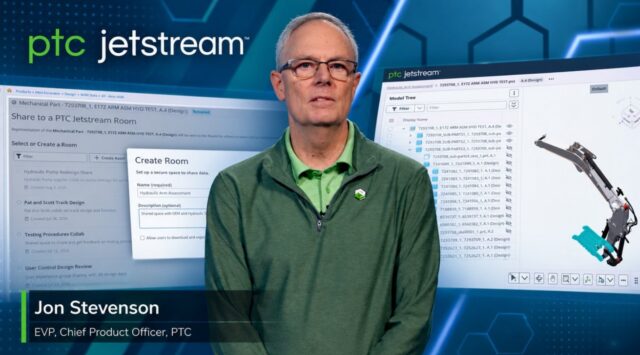
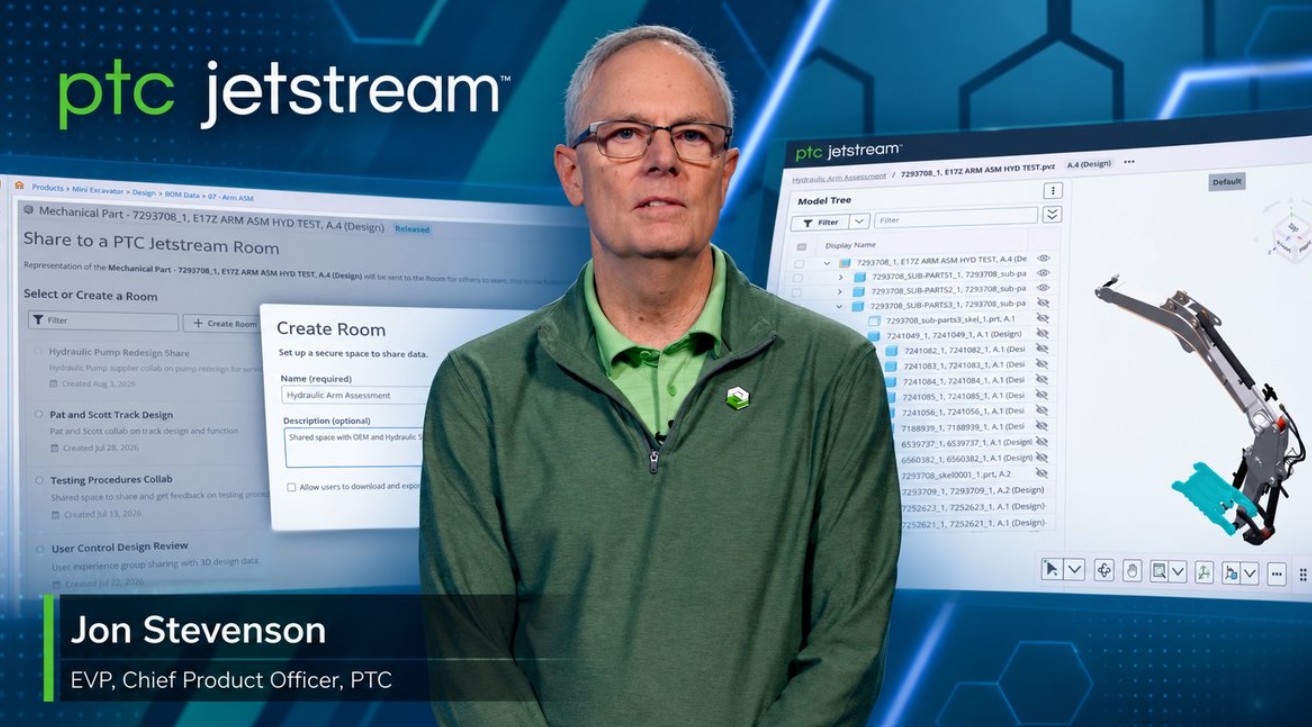
PTC’s launch of Jetstream introduces a cloud-based collaboration environment designed to capture engineering discussions alongside the product information being reviewed. Beyond PLM’s Oleg Shilovitsky sees the platform as a potential step toward Product Memory, where organizations preserve not only what a product became but also the reasoning behind engineering decisions.
Jetstream allows teams to create access-controlled Rooms where employees, suppliers, and other participants can review 2D and 3D content through a browser. Comments remain connected to the relevant product version, participant, time, and view, while AI-generated summaries help users understand discussions and next actions. Windchill remains the system of record, although Jetstream can also work with directly uploaded files.
This approach addresses a persistent PLM problem. Design reviews often involve manufacturing specialists, suppliers, quality experts, and others whose knowledge affects engineering decisions. The final product definition may record the resulting change, but the assumptions, alternatives, constraints, and conversations behind that decision can disappear. Jetstream provides a way to capture more of this context as collaboration occurs.
Shilovitsky argues that retaining information is only the first step. Useful Product Memory should connect decisions with their assumptions, evidence, scope, approvals, and later outcomes. If circumstances change, engineers should be able to retrieve the original reasoning and determine whether a previous decision still applies.
Jetstream can export Room activity as a PDF for storage in Windchill, and AI could extract information from those records. However, the article questions whether future applications and AI agents will reliably understand decision status, revisions, permissions, and superseded information.
The larger test will be interoperability. If Jetstream can preserve authoritative product context across OEMs, suppliers, and independently managed engineering systems, it could evolve beyond design review into an important contextual layer for intelligent product lifecycle management.
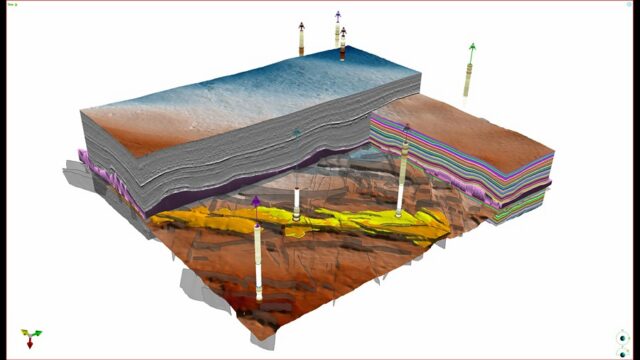
3D view from PaleoScan showcasing recent advancements in seismic interpretation workflows that support prospect evaluation and exploration decision-making (Image: Seequent)
3D view from PaleoScan showcasing recent advancements in seismic interpretation workflows that support prospect evaluation and exploration decision-making (Image: Seequent)
EXTON, PA, Nov 3, 2026 – Bentley Systems announced that its subsurface software business, Seequent, has acquired Eliis, a French seismic interpretation software developer. The acquisition adds Eliis’ PaleoScan platform and AI-assisted interpretation tools to Seequent’s subsurface software portfolio.
Eliis develops software that processes and analyzes seismic imaging data to build models of the subsurface. PaleoScan uses Relative Geological Time technology and AI-assisted interpretation capabilities to analyze seismic data. PaleoModel is a co-innovation project projected to support downstream reservoir simulation.
Eliis’ seismic interpretation capabilities complement Seequent’s existing subsurface software, including Leapfrog, an implicit geological modeling tool.
3D seismic interpretation in PaleoScan using RGT to enhance subsurface understanding and stratigraphic analysis (Image: Seequent)
Graham Grant, CEO, Seequent, said, “I am delighted to welcome Eliis to Seequent. Global challenges – notably energy security, the energy transition, and the demand for critical resources – are increasing the need for deeper subsurface insight. Lower cost seismic data acquisition and AI are expanding the adoption of seismic methods beyond oil and gas. We see huge opportunity in energy, mining, as well as groundwater management, the recovery of minerals from brines, and carbon storage. For example, seismic interpretation helps mining companies reduce geological uncertainty and discover deeper mineral deposits compared to traditional methods. Eliis will strengthen Seequent’s ability to help our users understand the underground, reduce uncertainty and risk, and make better, faster, and more confident decisions.”
3D PaleoScan model of the Groningen Field illustrating attic oil accumulations and key geological structures. (Image: Seequent)
Benoît Matha, CEO, Eliis, said, “Seequent’s acquisition of Eliis provides us with a secure, long-term home in a company that deeply understands and values our expertise and software. The combination of Eliis’ seismic expertise with complementary geoscience and reservoir technologies will accelerate our ambition to become a leading subsurface technology platform beyond the energy industry – extending our reach across the subsurface workflow and unlocking new growth opportunities. We are excited to join Seequent and by the opportunities ahead.”
Bentley Systems, founded in 1984, develops software for infrastructure engineering with a focus on supporting the design, construction, and operation of critical assets across transportation, water, energy, urban, and utility sectors. Its solutions are used globally by engineers, architects, constructors, and asset owners across various disciplines and project phases. The company provides integrated tools for modeling, simulation, project delivery, and asset performance management. A key area of focus is enabling digital twins to improve data integration and decision-making throughout the infrastructure lifecycle. Bentley’s software supports workflows across multiple engineering domains, helping users manage complexity and improve the reliability and resilience of infrastructure systems. Headquartered in Exton, PA, Bentley Systems operates in 40 countries with a workforce of around 5,500 employees. It serves approximately 41,000 customers in 190 countries.
About Seequent
Seequent is a New Zealand software company that develops geological modeling and subsurface analysis tools. Founded in 2003, it is headquartered in Christchurch, New Zealand. The company serves mining, civil engineering, environmental management, geothermal energy and infrastructure industries. Its customers include mining companies, engineering consultancies, environmental specialists, energy developers and research institutions. Its products include Leapfrog Geo, Leapfrog Works, GeoStudio, PLAXIS, Oasis montaj and OpenGround. These applications support geological modeling, geotechnical analysis, groundwater assessment and subsurface data management. Engineers and geoscientists use the software to interpret geological data and assess underground conditions. Seequent also provides technical training, software support and project data management tools. Bentley Systems acquired the company in 2021. Seequent operates across North America, South America, Europe, Africa and the Asia-Pacific region. The company reports more than 7,400 customers in over 145 countries.
About Ellis
Eliis is a French software company that develops tools for geological analysis and seismic interpretation. Founded in 2007, it is headquartered in Montpellier, France. The company serves energy companies, geological consultants, research institutions and academic organizations. Its main product, PaleoScan, processes seismic data to generate 2D and 3D geological models. Geoscientists use the software to analyze underground structures and assess potential energy resources. Applications include oil and gas exploration, geothermal energy development and underground carbon dioxide storage. Eliis also provides geological consulting, technical support, software training and seismic interpretation services. Its specialists assist customers with geological modeling and underground reservoir assessments. The company operates internationally, including in the United States, Brazil, Australia, Malaysia and China.
Generative AI is changing the way product startups approach design agencies, but not necessarily for the better. Nathan Partington of product design consultancy npd Studio argues that many prospective clients now arrive with concepts they believe have already been designed using AI. They expect professional designers and engineers simply to turn those concepts into manufacturable products, tells Develop 3D.
This shift can reduce early costs for startups, but it also brings design specialists into projects too late. Partington argues that effective design for manufacture depends on making sound decisions from the beginning. AI-generated pricing compounds the problem by creating unrealistic expectations about development costs. Investing in specialist expertise early can prevent more expensive tooling changes, redesigns, and delays later.
Data collected by npd Studio illustrates the issue. AI-generated briefs produced an estimated average project value of about £15,000, far below the consultancy’s £50,000 target. Its rejection rate climbed to 89%, largely because proposed products were poorly validated, unsuitable, or based on weak ideas. AI can make almost any concept look convincing, but visualization does not prove that customers need the product or that it can succeed commercially.
Experienced companies appear more cautious. Partington says established clients continue to rely on conventional design processes, while some senior design managers report restrictions on AI because of intellectual property and cybersecurity concerns. npd Studio still uses tools such as Onshape and KeyShot for design and visualization while applying automation mainly to administrative work, including planning, note-taking, analysis, and reporting.
The article does not reject AI outright. Instead, it argues for keeping AI in a supporting role. Product development still depends on human understanding of ergonomics, user experience, manufacturability, emotional response, and market relevance. AI can accelerate parts of the workflow, but designers and engineers must remain responsible for deciding whether an idea deserves to become a product.
AI adoption in engineering has accelerated sharply, but most organizations are struggling to move beyond experimentation. According to a 2026 SimScale survey of 350 senior engineering leaders, 100% now prioritize AI integration, while 80% are running AI pilots, nearly double the 42% reported in 2025. Yet only 9% have mature AI programs operating at scale, tells Machine Design.
Agentic AI is also entering engineering workflows. Simulation and CAE lead adoption, with 19% of respondents experimenting with autonomous agents, followed by CAD and design at 11% and requirements engineering at 10%. Overall, 36% of design and simulation projects during the previous 12 months incorporated AI or agentic approaches.
Early results suggest practical benefits. AI-enabled workflows are delivering three-times-faster RFQ turnaround on average. In simulation, workflows that previously required up to 17 hours can be completed in six. AI is also enabling teams to run simulations multiple times per day and evaluate more than 200 design variants instead of as few as one to five.
The problem is scaling. Eighty percent of companies remain in limited deployments, while 83% report only limited use of agentic AI. Moving from pilot to mature deployment takes eight months on average. Data preparation is cited as a barrier by 74% of respondents, while governance and control remain concerns for autonomous systems.
Author David Heiny, cofounder and CEO of SimScale, recommends several steps for escaping this pilot stage. Companies should avoid waiting for perfect data, invest in cloud-based infrastructure, introduce agentic AI first within a focused workflow such as simulation, establish measurable adoption and performance targets, and train engineers in systems thinking and AI-agent governance.
The article suggests that engineering’s AI challenge is shifting. Interest is no longer the main obstacle. The competitive divide will increasingly depend on whether companies can turn isolated experiments into repeatable, governed workflows that deliver measurable engineering and business value.
ROCK HILL, SC, Nov 3, 2026 – 3D Systems has expanded its European distribution partnership with BioSummer Dental, which has added the NextDent 300 MultiJet 3D printer to its portfolio and is preparing its first customer deliveries. The expansion follows EU certification of two denture-printing materials.
The NextDent Jet Base and Teeth materials received certification under the EU Medical Device Regulation (EU MDR 2017/745) in April 2026. The certification supports the European rollout of the NextDent Jetted Denture Solution for digital denture production.
The NextDent Jetted Denture Solution uses a digital workflow to produce durable, patient-specific monolithic dentures. According to 3D Systems, the process reduces labor-intensive manual steps and helps dental laboratories increase production efficiency and output.
“Expanding our presence in Europe is a key priority for our dental business, and strong distribution partners like BioSummer Dental are essential to that growth,” said Jeff Graves, president and CEO of 3D Systems. “BioSummer Dental’s decision to add the NextDent 300 to its portfolio demonstrates their confidence in our technology and the opportunity ahead for digital denture production. We are pleased to strengthen this partnership as we work together to bring the benefits of the NextDent Jetted Denture Solution to more laboratories, and ultimately, more patients across Europe.”
BioSummer Dental will support laboratories adopting digital denture manufacturing workflows. The companies aim to expand access to the technology in France and other European markets.
“We are excited to expand our partnership with 3D Systems and add the NextDent 300 to our distribution portfolio,” said Olivier Bellaton, CEO, BioSummer Dental. “Digital denture production represents a significant opportunity for dental laboratories across Europe. We believe the NextDent Jetted Denture Solution offers an exceptional combination of quality, productivity, and ease of use, and we look forward to helping our customers take advantage of this technology.”
Source: 3D Systems
About 3D Systems
3D Systems was founded in 1986 by Charles “Chuck” Hull, the inventor of stereolithography (SLA) and the first commercial 3D printer, the SLA-1. Based in Rock Hill, SC, the company has played a central role in the development of additive manufacturing technologies. Today, 3D Systems provides a range of 3D printing solutions that include hardware, software, and materials. Its offerings support a wide variety of industries – such as aerospace, automotive, healthcare, dental, and consumer goods – enabling workflows that range from early-stage prototyping to full-scale production. Its infrastructure spans offices, manufacturing facilities, and Customer Innovation Centers designed to support integration of 3D printing into industrial and commercial operations. Over the decades, 3D Systems has evolved from a technology originator into a solutions provider, focusing on application-specific capabilities across sectors including medical and dental, aerospace and defense, transportation, AI infrastructure, and industrial goods. Its engineering teams focus on improving manufacturing outcomes using additive technologies.
About BioSummer Dental
BioSummer Dental is a French distributor of dental equipment, supplies and digital dentistry technologies. Founded in 2016, the company is headquartered in Petit-Couronne, France. It serves dental practices, laboratories, prosthetic technicians and other dental professionals. Its portfolio includes dental chairs, artificial teeth, laboratory equipment, furnaces and imaging systems. The company also distributes 3D printers, scanners and computer-aided dental manufacturing equipment. BioSummer Dental provides equipment installation, maintenance, repairs and technical support. Its services include dental practice design, laboratory planning, equipment upgrades and software training. The company operates showrooms in Rouen and Rennes for equipment demonstrations. It also supplies materials and consumables for dental practices and laboratories. BioSummer Dental received ISO 13485 certification in 2019. Its portfolio includes the NextDent 300 MultiJet 3D printer from 3D Systems.
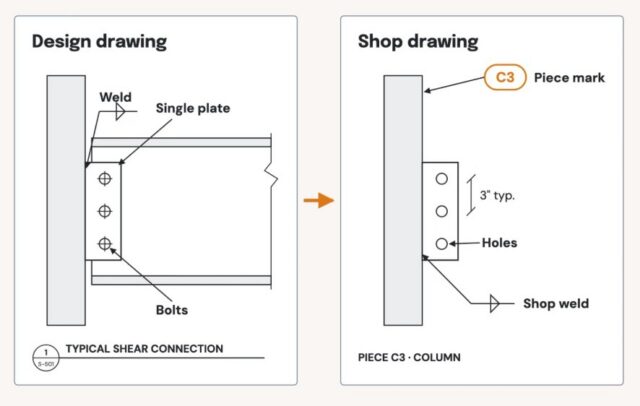
Steel detailing transforms a structural engineer’s design into the information fabricators and erection crews need to manufacture and assemble a steel frame. Pirros explains the process from the engineer of record’s perspective, focusing on responsibilities, connection requirements, approval documents, and ways to reduce errors during the handoff to fabrication.
Detailers typically create a 3D fabrication model using software such as Tekla Structures, SDS2, or Autodesk Advance Steel. From this model come shop drawings showing individual pieces, erection drawings defining their field locations and connections, embedment drawings, bills of material, and other fabrication information. The engineer of record reviews these documents before fabrication begins.
A key decision involves steel connections. Under ANSI/AISC 303-22, engineers must designate one of three approaches for each connection. They can provide the complete design, allow an experienced detailer to select or complete it using supplied criteria, or delegate the design to a licensed engineer working for the fabricator. Even when connection design is delegated, the engineer of record remains responsible for providing necessary design criteria and approving the result.
Accurate design documents are therefore critical. Member sizes, material grades, geometry, elevations, lateral systems, connection requirements, and reinforcement should be clearly specified. Missing dimensions or conflicting notes can generate RFIs and potentially costly changes after steel has been ordered.
Pirros also highlights inefficiencies caused by repeatedly recreating common connections and reusing outdated details. Its detail-management platform lets engineering firms search previous work and maintain approved standard details.
AI adds another layer of automation. Pirros’ Mira agent works inside Revit to perform repetitive documentation tasks, including renumbering details, updating superseded specifications across drawings, and rebuilding old CAD details as Revit details. Importantly, Mira previews proposed changes and waits for engineer approval before modifying the model.
The article’s central message is practical: clear design information, disciplined detail management, and controlled automation can make the transition from structural design to steel fabrication more consistent and efficient.