Pickering Interfaces Launches Remote PXI Control Software
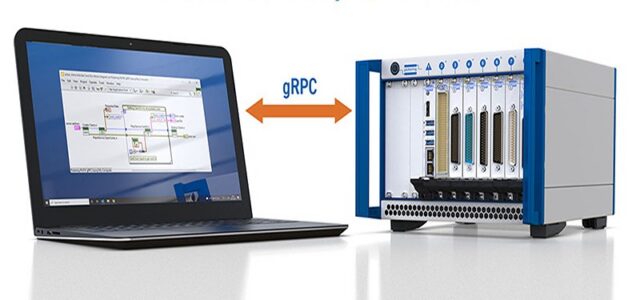
Image: Pickering Interfaces

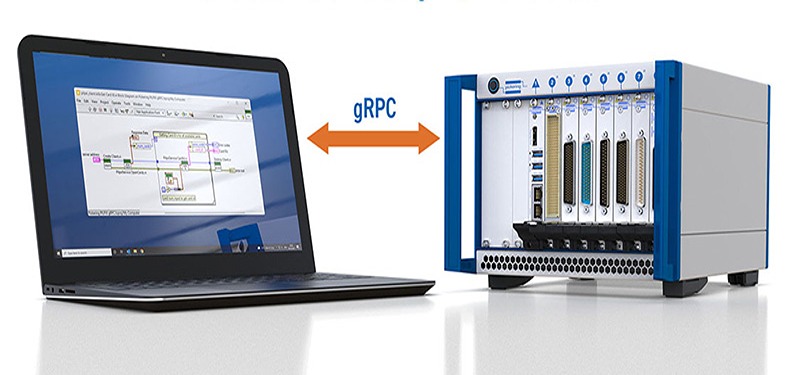
CLACTON-ON-SEA, UK, Oct 30, 2026 – Pickering Interfaces has introduced Pickering Remote Gateway, a software that lets engineers control its PXI/PXIe products from applications running on network-connected computers. The gRPC-based interface supports multiple operating systems and programming languages.

Test hardware can remain near the device or in a central laboratory rack while applications run on remote workstations. It supports automated validation, production test and distributed development, helping teams access shared hardware without running every application to run on the controller connected to the chassis.

“Test teams increasingly work across different locations, operating systems and programming languages, but they still need access to the same physical hardware,” said Alexander Jaiboy, software manager at Pickering Interfaces. “Pickering Remote Gateway gives engineers more freedom to work with their existing PXI systems, keeping hardware where it is needed while allowing test applications to run remotely.”

A gRPC device server runs on the host PC or embedded controller and exposes Pickering driver APIs to remote applications. It passes incoming requests to the local drivers. Only the host requires Pickering drivers; client computers do not need the full Pickering driver stack.

Pickering provides server software for Windows and Linux, along with Protocol Buffers (.proto) files defining the remote interface. Engineers can generate client code from these files for environments supporting gRPC and Protocol Buffers, including Python, C#, Go and Java.

The Pickering Remote Gateway uses the open-source gRPC framework and HTTP/2 transport. Test routines, user interfaces, analytics and orchestration can run separately from the instrument-control host. The interface also supports integration with cloud-hosted applications and automated development pipelines.

The gateway supports all products covered by the Pickering PXI driver. Engineers can also use it to access Pickering modules installed in mixed-vendor chassis.

Source: Pickering Interfaces

About Pickering Interfaces

Pickering Interfaces, founded in 1988 and based in Clacton-on-Sea, UK, designs and manufactures modular signal switching, sensor simulation and cabling products for electronic test and verification. Its portfolio supports PXI, LXI, PCI and USB platforms and includes cable and connector assemblies, diagnostic test tools and software developed in-house. The company serves customers in automotive, aerospace and defense, energy, industrial equipment, communications, medical technology and semiconductors. Pickering’s products are used in test systems deployed worldwide. The company maintains operations in the United States, UK, Germany, Sweden, France, the Czech Republic, Malaysia and China, with additional representation across the Americas, Europe and Asia. It employs about 200 people globally.
Belden, Radiflow Partner on Automated OT Access Control

Image: Radiflow
Image: Radiflow

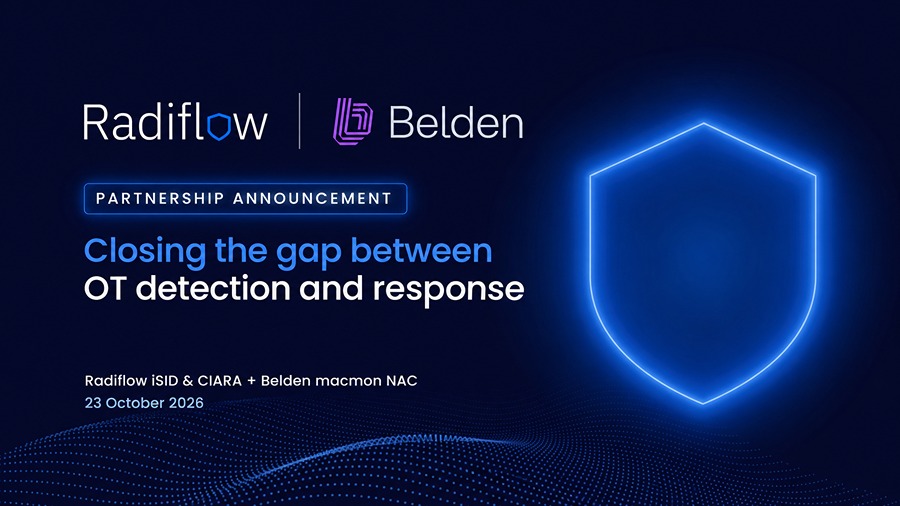
ST. LOUIS, MO, Oct 30, 2026 – Belden and Radiflow have partnered to launch a security solution that uses industrial network events and risk assessments to adjust network access rights automatically. The partnership connects Radiflow’s operational technology (OT) security software with BeldenNAC, Belden’s network access control system. It removes the manual handoff between identifying an exposure and restricting access.

Radiflow’s CIARA (Cyber Intelligence and Risk Assessment) maps OT network topology and applies AI-driven threat intelligence to identify critical exposures. It supplies BeldenNAC with current risk scores for individual assets and network zones. Radiflow’s iSID (Industrial Secure Intrusion Detection) provides real-time OT event context.

BeldenNAC uses those inputs to trigger automatic access-right adjustments as risk conditions change. Radiflow also provides asset discovery and continuous anomaly detection, while Belden supplies network infrastructure and access control.

“This partnership reflects exactly where Belden is heading: delivering security solutions that are comprehensive and immediately actionable in the field,” said Alexandre Peixoto, VP security at Belden.

“With Radiflow’s CIARA & iSID platform providing continuous, data-driven risk intelligence and exposure detection, combined with Belden enforcing it at the network level, joint customers across manufacturing, energy and critical infrastructure get both the insight and the response – from day one.”

“Belden’s network infrastructure expertise is a natural complement to Radiflow’s risk intelligence capabilities,” said Ilan Barda, CEO, Radiflow. “Together, we give industrial operators what they’ve been missing: a direct, automated path from identifying a threat to enforcing the right response at machine speed, without putting operations at risk.”

The partnership covers manufacturing, energy, transportation and infrastructure markets, with joint customers across the Americas and EMEA.

Source: Belden

About Belden

Belden is a U.S.-based company that designs and manufactures networking, connectivity and signal transmission products. Founded in 1902, it produces cables, connectors and networking systems used to transmit data, audio and video signals. Its products support industrial automation, enterprise networks, smart buildings, transportation and broadband infrastructure. Belden sells to distributors, original equipment manufacturers, system integrators and end users across multiple industries. The company operates manufacturing and engineering facilities in North America, Europe, Africa and Asia. Belden is headquartered in St. Louis, MO. Belden reports about 8,000 global employees. Its products support data transmission and connectivity across industrial and enterprise environments.

About Radiflow

Radiflow develops cybersecurity software for industrial equipment and control networks. Founded in 2009, it is headquartered in Tel Aviv, Israel. Customers include manufacturers, utilities and operators of energy, water, maritime and transportation infrastructure. Its iSID software identifies connected equipment and detects network threats. CIARA assesses security risks and helps organizations prioritize protective measures. Other products provide central management, network scanning and data collection. The software supports internal security teams and managed security providers, exchanging equipment, vulnerability and threat information with other systems. Radiflow reports deployments at 20,000 sites worldwide, a figure that counts locations.

HCLTech, Rapidus Partner on India Engineering Centers

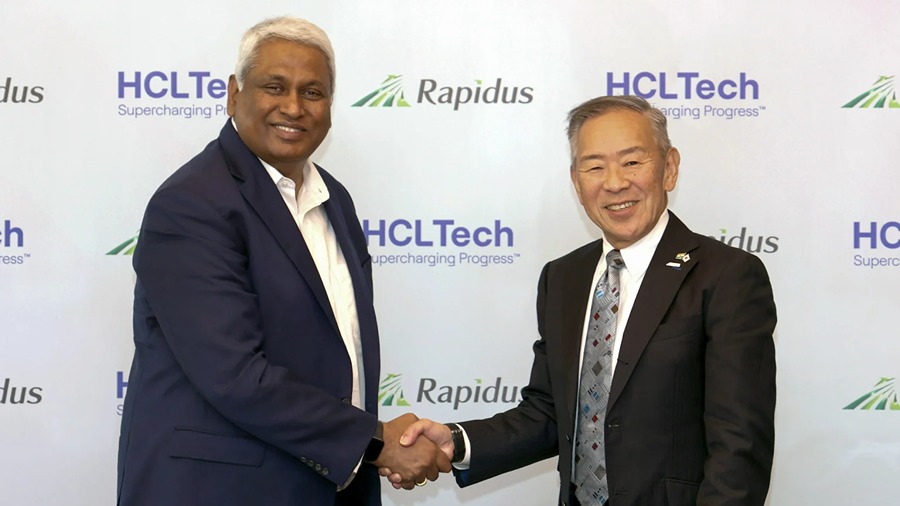
A ceremony was held on Oct. 26 at HCLTech’s global headquarters in Noida, India to mark the partnership between Rapidus Corporation and HCLTech and the opening of the development centers. C Vijayakumar, CEO and Managing Director, HCLTech (left) and Dr. Atsuyoshi Koike, Representative Director and CEO, Rapidus Corporation, shake hands at the ceremony. (Image: Rapidus)

TOKYO, Japan and NOIDA, India, Oct 29, 2026 – HCLTech and Rapidus Corporation have opened two HCLTech development centers in Bengaluru and Hubli, India, dedicated to supporting Rapidus’ semiconductor engineering requirements. HCLTech will also work with Rapidus to build a pipeline of Indian engineering talent for Rapidus’ evolving needs in Japan.

The centers will provide mask design, design infrastructure, process design kit development, design technology co-optimization and layout design.

“Building a strong engineering ecosystem is essential as Rapidus advances our mission to establish next-generation semiconductor manufacturing capabilities in Japan,” said Dr. Atsuyoshi Koike, representative director and CEO, Rapidus Corporation. “Through this collaboration with HCLTech, we expect to access India’s growing pool of semiconductor engineering talent and establish dedicated development capabilities that complement our operations in Japan. We look forward to working together to develop the technical expertise and resources needed to support our long-term objectives.”

“Advanced semiconductors will define the technologies of the next decade,” said C Vijayakumar, CEO and managing director, HCLTech. “This partnership reflects the growing strategic collaboration between Japan and India, bringing together Rapidus’ next-generation semiconductor ambitions with HCLTech’s engineering expertise to accelerate chip adoption, compress time-to-market and lay the foundations for the next era of semiconductor innovation.”

Source: HCLTech

About HCLTech

HCLTech is a global information-technology services company that provides software development, IT and business services, engineering support, and digital transformation work. The company serves clients in financial services, manufacturing, life sciences and healthcare, high tech, semiconductors, telecommunications, retail, consumer products, mobility, and public services. HCLTech was founded in 1991 following the separation of its software division from its parent company. The firm is headquartered in Uttar Pradesh, India, and operates across about 60 countries. HCLTech employs roughly 226,600 people worldwide. The company delivers cloud computing, AI, engineering, and digital infrastructure services for enterprise applications, including cloud migration, enterprise software development, R&D outsourcing, and managed operations.

About Rapidus Corporation

Rapidus Corp. is a semiconductor foundry based in Tokyo, Japan. Founded in August 2022, the company develops and manufactures logic semiconductors and integrated circuits. Its model combines chip design and manufacturing work with AI-based tools intended to shorten development cycles. Rapidus is backed by Japanese companies including Toyota, Sony and NEC, as well as government funding. The company has said it plans pilot production of 2-nanometer gate-all-around transistors, with mass production scheduled for 2027. Its chips are intended for use in AI, data centers, industrial systems, automotive systems and autonomous platforms.

Sensirion Introduces SFM3304-D Respiratory Flow Sensor

Image: Sensirion
Image: Sensirion

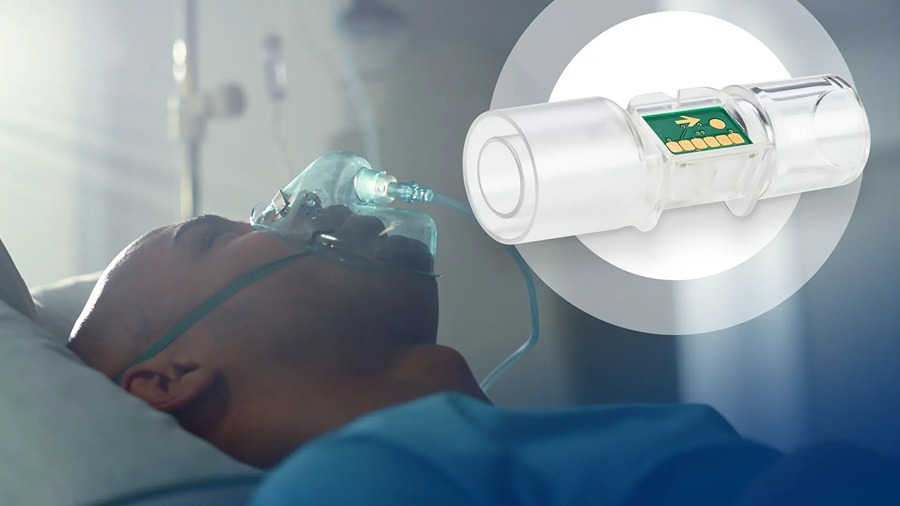
Sensirion’s SFM3304-D single-use gas flow sensor monitors inspiratory and expiratory flow up to ±250slm for use near patients. Applications include mechanical ventilation, smart resuscitation and medication nebulization.

The sensor has a re-engineered flow path and a new-generation sensor chip. Improvements include reduced noise, less sensitivity to inlet conditions, faster I2C communication and readout, and diagnostics. Developers can also adjust response time and averaging. An integrated heater is designed to prevent condensation in humid conditions. Medical cone connectors attach the sensor to respiratory breathing tubes.

“The SFM3304-D looks like its predecessor, the SFM3300-D, but our innovation lies in the new generation sensor chip and a re-engineered flow path design. The proven concept of the single-use proximal sensor remains the same: we have a single-use, robust sensor, easy to connect and disconnect even in emergency situations, equipped with a heater to prevent condensation. At the same time, we offer a real upgrade with the SFM3304-D: the new flow path improves the sensor’s noise specifications, its independence to inlet conditions and even its pressure drop. And the new chip offers a faster I2C and readout frequency, better diagnostics and status, with the possibility to tune the sensor’s response time and averaging.” says Pauline Simonet, product manager for gas flow sensors.

Source: Sensirion

About Sensirion

Sensirion AG is a sensor technology company founded in 1998. It designs and manufactures sensors for humidity, temperature, gas, and flow measurement. Its products include humidity sensors, gas sensors, differential pressure sensors, and mass flow controllers. These components are used in heating, ventilation, air conditioning, medical devices, automotive systems, and consumer electronics. Sensirion serves automotive, industrial, healthcare, and consumer markets worldwide. It supplies products to OEMs and system integrators. The company also supports integration of sensor hardware with embedded and cloud systems. Sensirion operates production, research, and sales activities in multiple regions. It employs about 1,200 people globally. The company headquarters is in Stäfa, Switzerland.
Safran.AI Plans First International Subsidiary in Singapore

Image: Safran Group
Image: Safran Group

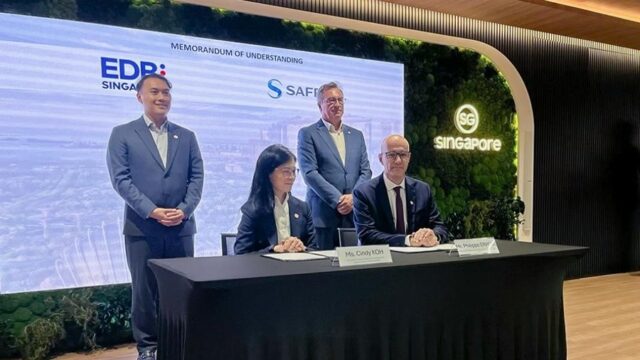
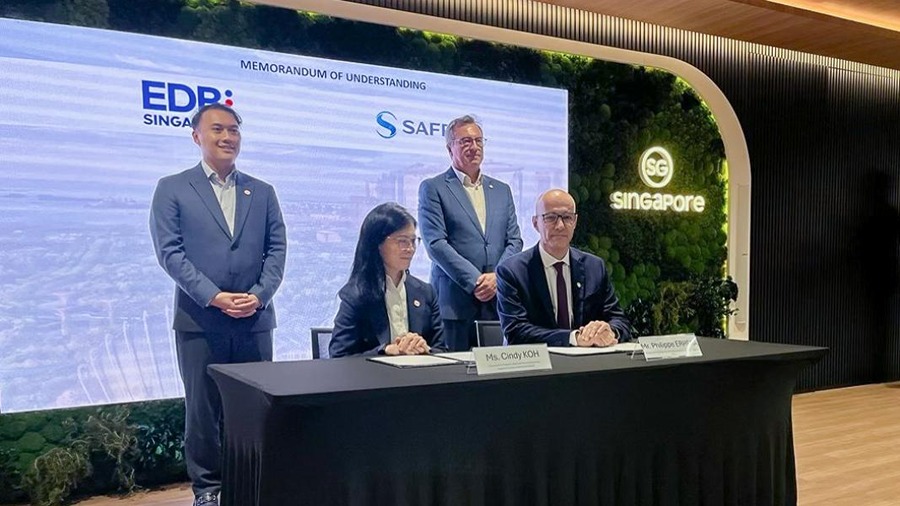
Singapore, Oct 29, 2026 – Safran.AI plans to establish its first international subsidiary in Singapore to develop industrial AI, focusing on automated digital inspection. Hiring will begin in Q1, 2027, with roles including data scientists and AI engineers.

Safran.AI expects the subsidiary Safran to employ around 50 people over the next five years. The subsidiary is the first initiative under a memorandum of understanding (MoU) between Safran and the Singapore Economic Development Board (EDB). The agreement supports long-term cooperation and Singapore’s role in Safran’s Southeast Asian operations.

A center of excellence will develop industrial AI solutions for Safran, its partners and customers, supporting Singapore’s maintenance, repair and overhaul (MRO) 4.0 ambitions. The subsidiary will also draw on Singapore’s talent pool and academic ecosystem for research and innovation while serving Safran.AI customers across ASEAN.

“Safran.AI Singapore marks a new step in our strategy, drawing on exceptional talent and a world-class aviation maintenance ecosystem. I warmly thank EDB for its trust and support. We look forward to building a team of engineers and data scientists that will contribute to our growth across Southeast Asia,” said Sébastien Fabre, CEO of Safran.AI.

“Singapore has created a particularly attractive environment for the development of Safran’s activities, combining a dynamic business ecosystem, academic excellence and strong support from the authorities. We look forward to continuing to build on this successful partnership and strengthening Safran’s presence in the region,” said Philippe Errera, EVP, International Development and Government Affairs.

“Safran’s decision to establish its first international AI subsidiary in Singapore underscores our position as a leading hub for advanced I4.0 technologies and AI innovation. This is supported by strong research capabilities, skilled engineering talent, and a vibrant ecosystem of partners. We look forward to deepening this partnership with Safran to drive aerospace innovation and in advanced manufacturing across the region and create exciting opportunities for our local workforce” said Cindy Koh, executive vice president, Singapore Economic Development Board.

Safran has operated in Singapore for more than 45 years and employs around 900 people across five production, engineering and maintenance sites. Its activities include MRO, customer support and innovation. The company expanded the industrial capabilities of its Safran Landing Systems MRO site.

Source: Safran Electronics & Defense

About Safran Electronics & Defense

Safran Electronics & Defense is a Safran subsidiary serving aerospace, defense and space markets. Founded in 2005 as Sagem Défense Sécurité, the company is headquartered in Boulogne-Billancourt, France. It develops optronics, avionics, inertial navigation, timing, flight control and critical software systems. It also provides data processing, mission preparation, telemetry, radiofrequency, geolocation and cyber protection systems. Its products include inertial measurement units, actuators, sensors and image processing systems. The company also makes telescope and satellite mirrors, telemetry antennas, cockpit systems, parachute systems, homing heads, sights and navigation equipment. Safran Electronics & Defense serves civilian and military customers across air, land, sea and space sectors. Its equipment supports aircraft, helicopters, vehicles, ships, satellites, launchers, drones and ground systems. The company also provides support services for avionics and defense equipment. Safran reports more than 19,000 employees at Safran Electronics & Defense.

Phillips, 2oneLab Extend Partnership to U.S. Markets

Image: Phillips Corporation

HANOVER, MD, Oct 29, 2026 – Phillips Corporation has expanded a new partnership with 2oneLab into U.S. commercial and federal markets. The agreement gives Phillips’ U.S. commercial and federal divisions exclusive rights to sell and service 2oneLab equipment outside the dental market.

The agreement builds on the companies’ existing partnership in Asia. It brings compact laser powder bed fusion (LPBF) systems into Phillips’ U.S. additive manufacturing portfolio for applications in medical manufacturing, education, research and development, and industrial manufacturing.

John Harrison, president of global additive, Phillips Corporation said: “We are excited to expand our partnership with 2oneLab Inc. in the U.S. market. Our discussions with their leadership team revealed a strong alignment with Phillips’ commitment to delivering an exceptional customer experience across all the products and services we provide. 2onelab’s innovative, small-format laser powder bed fusion solutions will allow us to better serve customers across the medical, education, research, industrial manufacturing, and federal markets. Their technology complements our existing EOS metal additive manufacturing solutions, further strengthening our portfolio and expanding our ability to deliver the right solutions for a diverse range of customer applications.”

2oneLab develops industrial metal additive manufacturing systems and workflow solutions, including compact powder bed fusion platforms. The company expanded its North American presence in 2026 by establishing 2oneLab Inc. in Atlanta, Georgia.

Scott Crane, CEO, 2oneLab Inc. added: “Phillips is an icon in the industry, and it’s an honor to partner with a team so respected by the manufacturers it serves. Together, we’re bringing 2onelab’s metal additive manufacturing technology to more customers across the U.S. commercial and federal markets, backed by the expertise and support Phillips is known for.”

Phillips will provide technology selection, applications support, training, service and long-term lifecycle support for customers integrating the equipment into manufacturing operations.

Source: 2oneLab Inc.

About 2oneLab Inc.

2oneLab Inc., established in 2026, supplies metal 3D printing equipment and provides support across North America. It operates as the North American business of Germany’s 2oneLab GmbH. The company identifies Atlanta, GA as its headquarters. The group’s products include 2Create, 2Create Plus and 2Create Desktop printers, alongside powder recovery, sieving, heating and polishing equipment. Its 2Build software prepares printing jobs, while 2Connect monitors printers online. Customers include dental laboratories, medical manufacturers, industrial companies, educational institutions and research organizations. The U.S. business provides technical support, training, parts and consumables.

About Phillips Corporation

Phillips Corp., established in 1961 and headquartered in Hanover, MD, is a privately held company specializing in manufacturing solutions. The company offers a range of services, including CNC machine tools, additive manufacturing, machine tool service, manufacturing applications engineering, robotics, training, and education. With a global presence, Phillips Corporation serves various industries such as aerospace, defense, energy, and education. It operates through multiple divisions, including the Commercial Division in the United States and Phillips Machine Tools in India. The company employs approximately 400 individuals worldwide. Phillips Corporation has maintained a partnership with Haas Automation, serving as a Haas Factory Outlet for over 30 years. The company’s commitment to innovation is evident in its collaborations with technology leaders and its involvement in public-private partnerships, including initiatives with the U.S. Department of Defense to advance additive manufacturing capabilities.


Intel to Acquire Classiq for Quantum Computing Software

Image: Intel
Image: Intel

SANTA CLARA, CA and TEL AVIV, Israel, Oct 29, 2026 – Intel has agreed to acquire Classiq to combine its silicon spin-qubit hardware and quantum software with Classiq’s automated quantum algorithm synthesis platform. The proposed acquisition would bring hardware, manufacturing and software development capabilities into a full-stack quantum computing business.

Intel has invested in quantum computing since 2015. It can produce qubit chips and cryogenic control electronics using equipment and processes common to silicon semiconductor manufacturing.

Classiq’s platform automates quantum algorithm synthesis, helping developers, researchers and enterprises build applications without any expertise in quantum circuit design. Intel said the acquisition would support adding quantum processing units to its computing portfolio alongside Central Processing Units (CPUs), Graphical Processing Units (GPUs) and application-specific integrated circuit (ASICs).

“I am delighted to have Nir, Yehuda, Amir and the entire Classiq team join Intel,” said Lip-Bu Tan, chief executive officer, Intel. “For more than a decade, Intel has made remarkable progress in quantum computing by applying its semiconductor innovation, advanced manufacturing prowess and systems engineering expertise to the development of scalable silicon spin-qubit technology. Joining forces with Classiq transforms Intel’s Quantum Computing Group into a full-stack quantum computing business.”
“Since our founding, Classiq has focused on making quantum computing practical and accessible by enabling developers, researchers and enterprises to create scalable quantum applications without requiring deep expertise in quantum circuit design,” said Nir Minerbi, co-founder and chief executive officer, Classiq. “Together, Intel and Classiq can help unlock the benefits of quantum computing and accelerate its adoption sooner.”

After closing, Intel intends to maintain Classiq’s existing multi-platform integrations and keep its software independent of specific quantum hardware and qubit modalities.

The transaction is expected to close in the first half of 2027. Intel and Classiq will operate as independent companies until closing.

Source: Intel

About Intel

Intel Corporation, founded in 1968 and headquartered in Santa Clara, CA, is a semiconductor manufacturer specializing in processors, chipsets, graphics, and networking components. Its products support computing, data center infrastructure, AI, networking, embedded systems, industrial automation, and automotive applications. Intel designs and manufactures CPUs, GPUs, FPGAs, and silicon technologies used in personal computers, servers, and connected devices. The company operates fabrication facilities in the United States, Ireland, and Israel, along with global assembly and testing operations. With over 110,000 employees, Intel develops computing architectures and supports industries needing scalable processing and connectivity solutions.

About Classiq

Classiq develops software for designing, testing and running quantum computing applications. Founded in 2020 by Nir Minerbi, Amir Naveh and Yehuda Naveh, the company is headquartered in Tel Aviv, Israel. Its software converts descriptions of calculations into quantum circuits for supported computers and simulators. Products include the Qmod programming language, development tools and an algorithm library. Classiq also provides technical guidance and training. It serves businesses, universities and national quantum research programs across finance, automotive, aerospace, chemicals and other industries.

Purdue University, GlobalFoundries Partner on Chip Research

Image: GlobalFoundries

WEST LAFAYETTE, IN, Oct 29, 2026 – Purdue University has announced a research agreement with GlobalFoundries (GF) that establishes a framework for joint semiconductor research projects. The agreement builds on a partnership announced in November 2022 and is meant to simplify the launch of additional research initiatives.

“The MRA between Purdue and GF represents a significant milestone in strengthening collaboration between these two distinguished institutions. It establishes a streamlined framework for researchers and experts from both organizations to collaborate on topics of shared interest and advance high-impact research and innovation,” said Mark Lundstrom, the John A. Edwardson Dean of the College of Engineering. “In the past year, Purdue and GF have started collaborating on multiple projects in the fields of semiconductor technologies, AI hardware, silicon photonics and chip security.”

Semiconductor research forms part of Purdue Computes, a university initiative covering computing departments, physical AI, quantum science and semiconductor innovation. Purdue also offers undergraduate and graduate degrees and credentials through its Semiconductor Degrees Program.

“Collaboration between industry and academia is essential to advancing semiconductor innovation and developing the skilled workforce that will power the next generation of technology,” said Gregg Bartlett, chief technology officer at GlobalFoundries. “This agreement builds on our strong relationship with Purdue and creates new opportunities for students, faculty and GF researchers to work together on real-world challenges that can help shape the future of our industry.”

Since 2023, GlobalFoundries has hosted students from Purdue’s Summer Training, Awareness, and Readiness for Semiconductors (STARS) program at its U.S. headquarters and fabrication facility. During Purdue at GlobalFoundries Day, students have observed how their coursework in manufacturing and packaging applies to semiconductor production.

Source: GlobalFoundries

About GlobalFoundries

GlobalFoundries is a semiconductor foundry that provides advanced manufacturing services for integrated circuits. It offers a range of technologies, including CMOS, RF, embedded memory, silicon photonics, and FinFET, catering to automotive, communications, defense, data center, industrial, and consumer electronics applications. Founded in 2009 after being spun off from AMD, GlobalFoundries has over a decade of experience delivering tailored semiconductor solutions. The company supports fabless chipmakers with design enablement, IP services, and process technologies to accelerate innovation and meet global demand. Headquartered in Malta, New York, it operates manufacturing sites in the U.S., Germany, and Singapore. The company develops technologies for emerging markets, supporting digital applications that demand energy efficiency and reliable performance.

About Purdue University

Purdue University, founded in 1869, is a public research institution based in West Lafayette, Indiana, United States. It offers undergraduate and graduate degrees, professional training and online education. Academic fields include engineering, agriculture, computing, business, science and health. The university serves students, working professionals, businesses and government agencies. Its industry collaborations support research, semiconductor development and workforce training. Research areas include artificial intelligence, quantum science, agriculture and medicine. Purdue reports more than 102,000 students across its global network.

AI Agents Can Read Parasolid Geometry, but Not Design Intent

Source: Leo AI.
Source: Leo AI.


Parasolid files can give AI agents detailed information about a component’s geometry, but they do not contain the full engineering intelligence behind the design. Leo AI explains the distinction between what an agent can extract from a Parasolid file and what remains in the CAD, PDM, or PLM system.

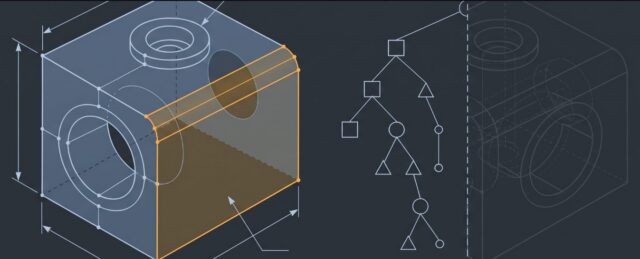
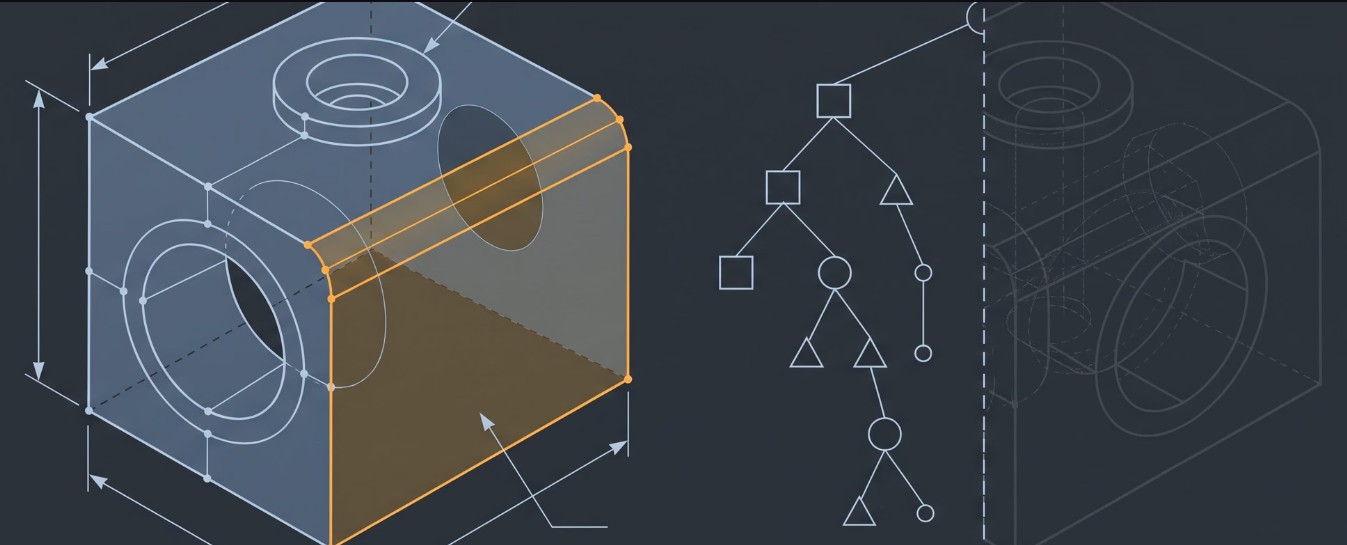
Parasolid, the geometric modeling kernel used by many CAD systems, stores models using boundary representation, or B-rep. Its .x_t text and .x_b binary files describe bodies through faces, edges, vertices, loops, shells, surfaces, and curves. An AI agent can therefore determine face types, dimensions, connectivity, hole sizes, fillet radii, wall thicknesses, and whether geometry represents a closed solid, open sheet, or wire.

This geometric information enables practical AI applications. Agents can identify through-holes, locate small fillets, detect unclosed bodies, calculate bounding boxes, and create geometric signatures for finding similar or duplicate components. Leo recommends performing numerical geometry calculations with deterministic code rather than asking a language model to interpret raw numeric records.

Parasolid files can also carry attributes such as names, colors, layers, material tags, and identifiers. However, these attributes depend on what the originating CAD application exports, so agents cannot assume that specific metadata will always be available.

The major limitation is design intent. Parasolid stores the resulting shape, not the process that created it. Feature trees, sketches, constraints, equations, configurations, and parameters remain within the native CAD application. Manufacturing tolerances and datum information may also be absent, while revision status, approvals, permissions, and where-used information typically reside in PDM or PLM systems.

For engineering AI, the article recommends combining Parasolid geometry with drawings and PDM or PLM records. This allows an agent to move beyond recognizing shape and answer broader questions involving released parts, revisions, tolerances, and product usage.

Enterprise BIM Security Becomes a Software Selection Priority

Source: Snaptrude.
Source: Snaptrude.


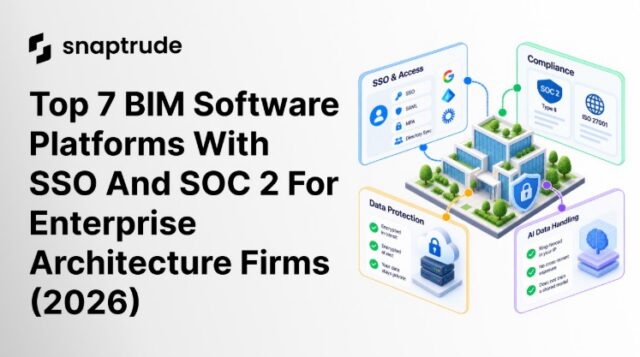
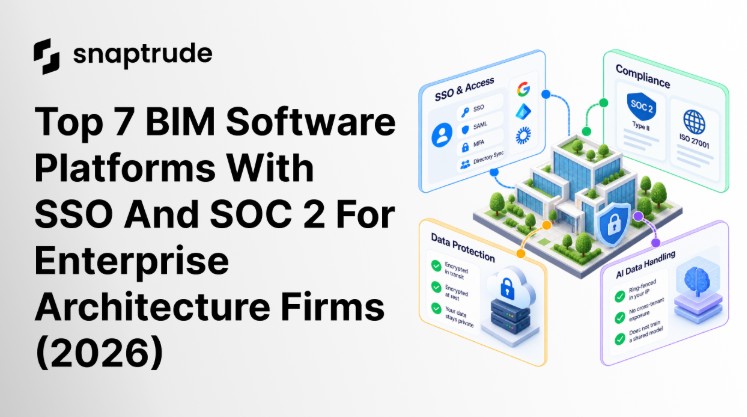
Security has become an important factor in BIM software selection as architecture firms handle sensitive models for hospitals, financial institutions, government facilities, and other major projects. A Snaptrude comparison examines seven design and BIM platforms based on single sign-on, or SSO, SOC 2 compliance, ISO 27001 certification, pricing, and workflow capabilities.

Snaptrude reports SOC 2 Type II compliance and ISO 27001 certification, while its Enterprise plan provides SSO, SAML, multifactor authentication, and directory synchronization. The browser-based platform supports workflows from site studies and massing through constructability documents. Its AI agents can assist with zoning, programming, massing, site analysis, and sketch-to-BIM tasks while keeping generated geometry editable and traceable.

Autodesk Revit remains a strong choice for documentation-intensive projects. Autodesk provides SSO with Revit subscriptions and maintains SOC 2 and ISO 27001 attestations for several AEC cloud services. However, firms should confirm exactly which certifications apply to the cloud services connected to their Revit workflows.

Speckle offers SOC 2 Type II certification and SSO on paid plans. Rather than replacing BIM authoring software, it provides a data and interoperability layer for moving, governing, and checking information across applications.

Allplan stands out for structural and precast detailing, backed by ISO/IEC 27001:2022 certificates associated with its parent company, Nemetschek. Public information about Allplan SSO and SOC 2 support remains limited.

SketchUp, Finch3D, and Giraffe provide SSO for larger or enterprise customers, but the article found no publicly confirmed SOC 2 status for these products. Their strengths also differ: SketchUp targets concept modeling, Finch3D focuses on generative housing layouts, and Giraffe specializes in site feasibility.

The comparison stresses that published security claims should only begin an enterprise review. Architecture firms should request current audit reports and certificates while examining data residency, access controls, AI data handling, and whether customer models or prompts can train shared AI systems.

0FansLike
0FollowersFollow
0SubscribersSubscribe
Google search engine

Recent Articles

Trending Now