MIT Develops AI Copilot to Improve Structural Design and Manufacturability

"The idea is to tap into the brains of the designers and get them to infuse their domain knowledge as the design evolves," Josephine Carstensen says (source: MIT News; Getty Images).
“The idea is to tap into the brains of the designers and get them to infuse their domain knowledge as the design evolves,” Josephine Carstensen says (source: MIT News; Getty Images).


Researchers at the Massachusetts Institute of Technology (MIT) have developed an AI-assisted design system that allows engineers to influence structural optimization while it is underway. The approach combines machine learning, topology optimization, and human feedback to produce structures that are easier to manufacture and better suited to practical engineering requirements, tells MIT News.

Traditional topology optimization uses algorithms to determine efficient material distribution within a structure. Although effective in aerospace, automotive, and other applications, the process can be computationally expensive and produce designs that are difficult to manufacture. Engineers typically review completed results, often requiring additional optimization cycles to address undesirable features.

MIT’s system addresses these limitations by introducing human judgment during optimization. A machine-learning model identifies regions where designers are most likely to recommend modifications. Engineers can then adjust those areas while the algorithm continues refining the structure.

The researchers trained the model using synthetic feedback on thousands of designs, incorporating considerations such as aesthetics, structural performance, and manufacturability. This approach allows engineers to contribute their expertise without significantly slowing the optimization process.

In demonstrations, the human-in-the-loop system improved manufacturability and linear buckling load by 39%, adding only approximately 15 seconds to the overall design time compared with fully algorithmic methods.

Currently, users can make selected structural regions thicker or thinner. The researchers plan to introduce additional modification capabilities in future versions.

The technology could be particularly valuable for buildings and bridges, where construction feasibility, structural reliability, and professional judgment influence design decisions. It may also encourage wider adoption of topology optimization among engineers who remain skeptical of automated design tools.

Rather than replacing engineers, the system positions AI as a collaborative design assistant. By incorporating human expertise throughout optimization, MIT aims to make algorithmically generated structures more practical, trustworthy, and accessible across engineering disciplines.


Trimble Releases SketchUp 2027 With Modeling Tools

SketchUp 2027. (Image: Trimble)

LAS VEGAS, NV, Nov 13, 2026 – Trimble has released SketchUp 2027 with a non-destructive modeling system called Procedures and announced SketchUp Importer for Revit, which converts SketchUp components into Revit architectural elements. Announced at the Trimble Dimensions User Conference and 3D Basecamp, the updates also include a new collaboration capability built on Trimble Connect.

SketchUp 2027 Modeling and Documentation Features

The Procedures system allows designers to modify existing models. Integrated into SketchUp’s modeling tools and workflows, it supports design revisions and the creation of complex assemblies.

SketchUp 2027 also introduces several features for modeling, documentation and visualization:

  • Section Hatch Patterns: Applies patterns to section fills in technical drawings to distinguish materials such as brick, concrete and batt insulation. Designers can control the level of detailing.
  • Paperless Canvas in LayOut: Allows designers to draft in 2D at a 1:1 scale without selecting a page size or drawing scale.
  • AutoFit Live Components: Automatically configures and sizes components to fit any surface on which they are placed, removing manual scaling.
  • Spatial Preview extension: Displays a live SketchUp model in Apple Vision Pro using new SketchUp Universal Scene Description (USD) converters and Apple’s USDPreviewSession. Using Mac Virtual Display, designers can modify geometry and materials and view the changes without exporting files, uploading models or reopening a viewer.

“This is, so far, the best release ever, mostly because of two features: Procedures and Hatches,” said João Queiroz e Lima, architect & co-founder, CASCA Architecture & Design. “Procedures are intuitive and naturally feel like SketchUp. What I love most is how Procedures stack to create complex assemblies. Hatches are fast, work seamlessly and are just a subset of materials: vector-based and crisp. Their instant feedback is invaluable. Using Procedures and Hatches together has already changed my complete workflow.”

SketchUp Importer for Revit

The new SketchUp Importer for Revit transfers conceptual design models into Revit’s building information modeling (BIM) environment while preserving project data for documentation.

The SketchUp Importer recognizes SketchUp component tags and classes, maps them to Revit categories and converts them into Revit architectural elements. These elements can then be edited, scheduled and documented within Revit.

“Great design is iterative, and the tools designers use have to keep pace with their ideas,” said Chris Cronin, senior vice president of architecture and design solutions and education at Trimble. “With these new capabilities, we’re giving design teams more flexibility to explore, make changes and move their work forward, even as designs grow more complex, while preserving the intuitive experience that has always been fundamental to SketchUp.”

Trimble Connect Design Hub and Availability

Trimble also introduced Trimble Connect Design Hub (Labs), a communication and collaboration capability built on the Trimble Connect platform. The system captures messages between designers and clients and combines them with 3D models, file management and project administration in a single project.

SketchUp 2027.0 is available to Pro and higher-tier subscribers, including Studio for Higher Ed subscribers. Select features are also available to Go subscribers. SketchUp Importer for Revit is expected to be available in Nov’2026 for Studio subscribers.

Source: Trimble

About Trimble

Trimble Inc., established in 1978, is a technology company focused on creating tools that connect the physical and digital worlds. Based in Westminster, CO, the company serves industries such as agriculture, construction, geospatial technology, and transportation. Its products include GNSS receivers, optical devices, machine control systems, and widely used software and services. Trimble’s construction technology improves project efficiency by using data throughout each build stage. The company employs around 12,000 people worldwide. The company prioritizes innovation and sustainability, working to make industries productive, safer, and environmentally friendly.

AEC Digital Transformation Needs to Unlock Hidden Firm Knowledge

Source: Pirros.
Source: Pirros.


Digital transformation in architecture, engineering, and construction (AEC) has largely focused on cloud adoption, connected systems, and digital twins. However, Pirros argues that the industry has overlooked a critical step: making decades of accumulated project knowledge accessible and useful.

Architecture and engineering firms possess extensive information stored in Revit models, CAD drawings, BIM metadata, emails, requests for information (RFIs), and project documentation. Much of this knowledge remains disconnected from everyday workflows. According to Bluebeam’s AEC Technology Outlook 2026, only 11% of firms consider themselves fully digital, while nearly 40% experience collaboration difficulties across project lifecycles.

Pirros proposes a four-stage digital maturity model: cloud adoption, connected data, firm intelligence, and digital twins. The third stage transforms historical projects, standards, and design decisions into searchable information that employees and AI systems can access.

The benefits can be substantial. Pirros reports that customers indexing historical projects double their accessible firm standards within the first month. After a year, those standards expand sixfold to eightfold, revealing knowledge that previously existed but remained difficult to retrieve.

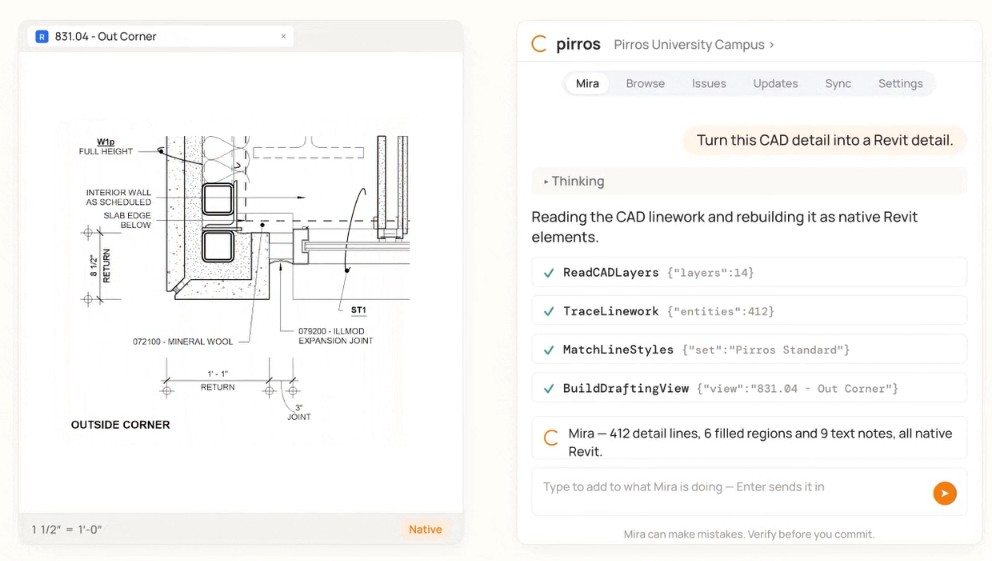
Legacy AutoCAD details represent another overlooked resource. Converting them into accessible Revit content helps firms preserve established design practices and avoid repeatedly recreating solutions.

AI integration further strengthens this approach. Through connectors such as Pirros Model Context Protocol (MCP), firms can make their details and families available within AI assistants, including Claude and ChatGPT. These systems can retrieve relevant information grounded in actual project history rather than generate unsupported recommendations.

The article also emphasizes preserving the reasoning behind design decisions. Senior architects can annotate standard details with explanations, questions, and lessons that guide younger professionals.

Ultimately, Pirros argues that meaningful digital transformation requires capturing institutional knowledge before pursuing sophisticated digital twins. Making existing information accessible creates a stronger foundation for AI-assisted design, collaboration, and decision-making.

Nidus Raises $30M for Defense Manufacturing Automation

Image: Nidus

NEW YORK, NY, Nov 13, 2026 – Nidus has announced $30 million in funding, backed by Kleiner Perkins and Costanoa to expand deployments of its AI-based robotics technology in U.S. defense manufacturing. Nidus develops and deploys foundation robotics models across America’s defense factories, using sovereign AI training practices.

Other investors include Ludlow Ventures, SF1, Absolute Partners, Tau and angel investors, including Chris Power, founder of Hadrian; Adrian Aoun, co-founder of Dulo, Foundational Industries and Seneca; and Nikhil Goel, chief commercial officer at Archer.

“I grew up in rural South Carolina and watched offshoring create the current industrial base crisis,” said Justin Sealy, co-founder and CEO of Nidus. “At this point, we can’t out-labor or out-scale our competition. We need to leapfrog the rest of the world by deploying physical AI that scales America’s existing industrial capacity. This is why we started Nidus.”

Robotics Deployment in Defense Manufacturing

Nidus exceeded $1 million in revenue during its first four months. The company is delivering customized models for wire-processing automation to meet Department of War security requirements.

“In physical AI, the value will accrue to players that prioritize deployment and customer value. And Nidus is the rare team that has actually deployed AI into the most locked-down environments in the country” said Aatish Nayak, partner at Kleiner Perkins. “The demand they’re seeing is a testament to the value of their mission and product. We’re thrilled to back Justin, Charu, Harrison, and Cane as they bring AI to the factories America’s security depends on.”

“The U.S. cannot rebuild industrial capacity through new construction alone. Nidus is taking a different approach, using AI and robotics to increase production inside existing factories,” said Greg Sands, founder and managing partner at Costanoa. “We backed Justin and the team at pre-seed because of their firsthand experience with the challenges of American manufacturing and their technical ability to address them. We believe Nidus has the potential to make a meaningful difference in how critical products are manufactured in the U.S.”

Funding and Expansion Plans

Nidus plans to use the funding to expand its team and technology beyond wire-harness automation into additional factory workflows and scale production deployments with U.S. defense manufacturers.

“We only build for American institutions that are vital for securing democracy,” added Sealy. “We believe in a future where American industry is self-sustaining and no longer dependent on foreign production. We’re building the infrastructure to make that future a reality.”

Source: Nidus

About Nidus

Nidus is a U.S. technology company developing AI and robotics systems for industrial manufacturing. Headquartered in New York City, Nidus develops robotic systems to operate manufacturing equipment and automate industrial processes. Its technology combines robotic hardware, software, sensors, computer vision and machine control systems. The company serves manufacturers, defense contractors and suppliers to the U.S. defense industry. Nidus develops robotic manipulation, automated controls and equipment integration technologies for factory operations. Its engineering activities include mechanical design, electrical integration, robotics development and manufacturing automation. The company also develops software to manage industrial equipment and reduce manual intervention. Nidus products are meant for use in manufacturing facilities and industrial production environments.

AI Plan Review Helps Architects Catch Code Violations Before Submission

Source: Pirros.
Source: Pirros.


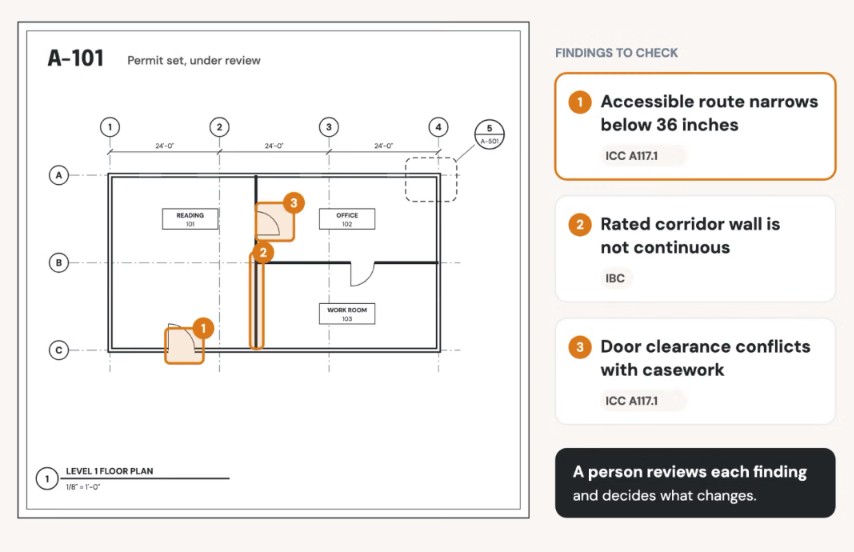
Artificial intelligence is changing the way architects and building departments review construction drawings for code compliance. AI-powered plan review software analyzes drawing sets, identifies potential violations, and flags missing information before permit submission, helping design teams reduce errors and avoid costly revisions.

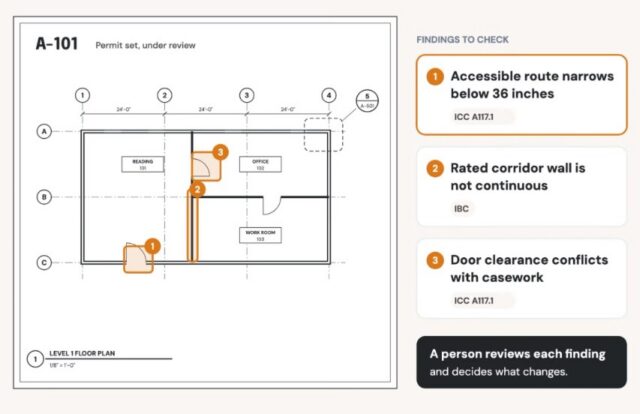
According to Pirros, these tools examine drawings against applicable building codes, including requirements for accessibility, fire safety, clearances, and structural standards. They also identify inconsistencies between drawings, specifications, schedules, and details. However, AI cannot interpret design intent, resolve complex regulatory judgments, or replace licensed professionals responsible for approving designs.

Building departments are increasingly adopting AI to accelerate permitting. Honolulu’s Department of Planning and Permitting uses CivCheck, an AI-powered screening tool, to identify potential compliance problems in residential applications. The department has reported approximately 60% faster residential review times.

For architecture firms, conducting AI reviews before submission can prevent repeated corrections and improve documentation quality. Pirros recommends selecting applicable codes, uploading project specifications, reviewing high-priority drawings, addressing critical findings, and repeating the process before final submission.

Pirros offers these capabilities through Project Review, part of its AI-powered Quality Management System. The platform checks drawings against the International Building Code (IBC), Americans with Disabilities Act (ADA) requirements, American Institute of Steel Construction (AISC) standards, and regional regulations.

Each flagged issue includes a reference to the relevant code provision and a severity rating. Teams can assign findings, document dismissals, and schedule recurring reviews through Autodesk Forma or Autodesk Construction Cloud integrations.

Pirros highlights Number TEN Architectural Group, which used the platform to identify overlooked sloped glazing and safety glass requirements before bidding.

Ultimately, AI plan review strengthens quality assurance by catching routine errors earlier, preserving review records, and allowing architects to concentrate on design decisions requiring professional judgment.

Cadence Introduces InnoStack AI Super Agent for Chip Design

Source: Cadence.
Source: Cadence.


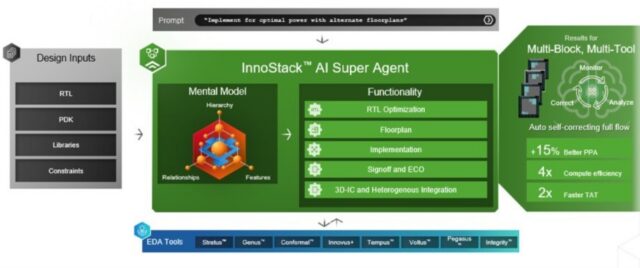
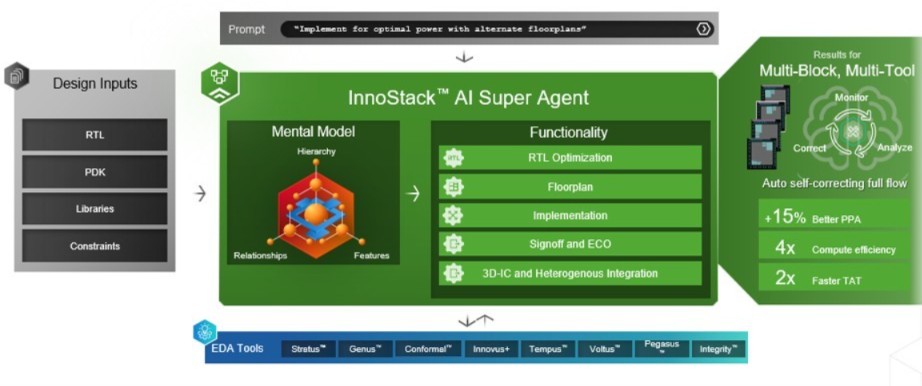
Cadence has introduced the InnoStack AI Super Agent, an agentic AI system designed to simplify digital chip implementation and signoff. By coordinating specialized AI agents across electronic design automation (EDA) workflows, the system helps semiconductor engineers evaluate design alternatives, optimize power, performance, and area (PPA), and reduce time spent managing complex implementation tasks.

Digital chip development involves interconnected decisions spanning synthesis, floorplanning, placement, routing, and verification. Changes in one stage can affect timing, congestion, or power consumption elsewhere. InnoStack addresses these challenges by translating high-level engineering objectives into coordinated tasks, running parallel experiments, and analyzing results through Cadence EDA tools.

The system supports five major areas: RTL optimization, floorplanning, physical implementation, signoff and engineering change orders (ECOs), and multi-die planning. It integrates technologies including Genus Synthesis Solution, Innovus+ Synthesis and Implementation System, Tempus Timing Solution, Voltus IC Power Integrity Solution, Pegasus Physical Verification System, and Integrity 3D-IC Platform.

Engineers can interact with InnoStack using natural language to investigate design issues, compare implementation strategies, and refine objectives. For example, when congestion near a memory macro causes timing violations, specialized agents can explore alternative placements, routing configurations, and density adjustments. Physics-based analysis and deterministic solvers validate the resulting design options.

A shared design context, domain-specialized AI models, and Cadence Native Skills help agents coordinate activities while maintaining engineering consistency across workflows.

Cadence is also collaborating with semiconductor manufacturer Rapidus to integrate agentic AI into advanced-node system-on-chip development. The collaboration targets up to a twofold improvement in design turnaround time compared with traditional workflows, although this remains a performance goal rather than a demonstrated result.

InnoStack represents a shift toward AI-orchestrated semiconductor design, allowing engineers to focus on evaluating tradeoffs and making critical decisions while automated agents handle repetitive coordination and experimentation.

Digital Manufacturing Platforms Transform Custom Parts Production

Source: Develop 3D.
Source: Develop 3D.


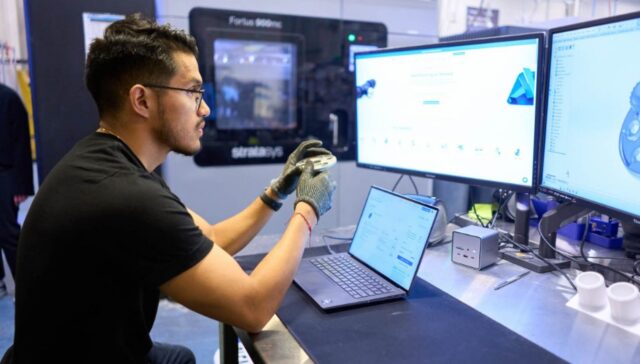
Digital manufacturing platforms are changing the way engineers and product designers source custom parts, offering faster quotations, broader manufacturing capabilities, and access to suppliers worldwide. This Develop 3D article examines leading platforms that connect digital designs with manufacturing services, including CNC machining, additive manufacturing, sheet metal fabrication, and injection molding.

The article categorizes these services into five groups based on their capabilities, geographic reach, and manufacturing specialization.

Global network orchestrators, including Facturee, Fictiv, Makerstage, Makerverse, and Xometry, connect customers with extensive supplier networks. These platforms offer flexible production volumes, material choices, and quality assurance. Xometry uses AI-powered quoting and integrates with Siemens Designcenter, allowing engineers to estimate manufacturing costs directly within their CAD workflows.

Hybrid production platforms, such as ARRK, Materialise, Protolabs, and Quickparts, combine in-house manufacturing facilities with external supplier networks. Their services support everything from rapid prototyping to specialized manufacturing and higher-volume production. Protolabs, for example, operates its own facilities while extending production capacity through Protolabs Network.

Specialized regional platforms provide localized manufacturing expertise, faster shipping, and reduced customs complications. Companies including 3DPRINTUK, FIT AG, Makelab, Ryse 3D, Shapeways, and Stratasys Direct Manufacturing focus on technologies such as selective laser sintering, metal additive manufacturing, and large-format 3D printing.

Metal manufacturing specialists, including Geomiq, Getitmade, JLCCNC, Meviy by Misumi, and SendCutSend, emphasize CNC machining, sheet metal fabrication, and rapid turnaround. Meviy incorporates AI-driven quoting, while SendCutSend specializes in affordable sheet metal production without minimum order requirements.

The article highlights the growing importance of digital procurement in product development. By connecting CAD designs with manufacturing capabilities, these platforms help engineers evaluate suppliers, compare production options, and accelerate manufacturing decisions.

However, selecting the right platform requires balancing cost, quality, delivery speed, manufacturing expertise, and geographic considerations.

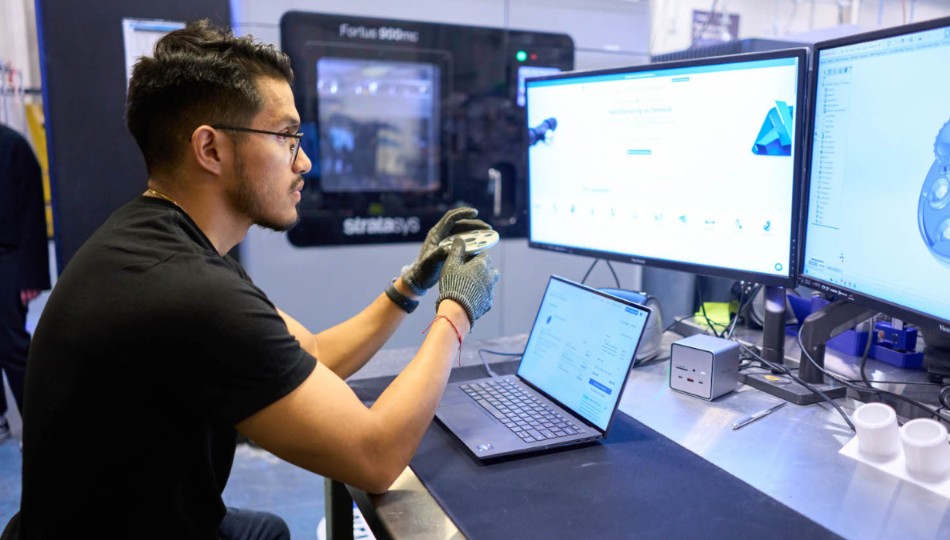
AI Adoption in Manufacturing Demands New Engineering Skills

Source: Machine Design.


Artificial intelligence (AI) and automation are transforming manufacturing operations, creating demand for engineers with skills extending beyond traditional mechanical and production expertise. However, workforce shortages and outdated training programs threaten to slow technology adoption across the industry.

In an interview with Machine Design, John Kraus, vice president of operations at Jabil, discusses the changing skills required in AI-enabled factories. Citing Deloitte research, the article notes that approximately 40% of core advanced manufacturing skills change within five years, highlighting the need for continuous learning.

Kraus emphasizes that successful automation begins with simplifying, optimizing, and standardizing manufacturing processes. Without these foundations, even sophisticated AI systems may fail to deliver consistent results. Engineers must therefore understand not only manufacturing fundamentals but also software, hardware, controls, and design for automation.

AI is also shifting engineering responsibilities from reactive troubleshooting toward predictive, data-driven optimization. Technologies such as automated visual inspection, advanced analytics, and predictive manufacturing enable engineers to identify potential problems before they disrupt production. Consequently, data literacy is becoming as important as conventional engineering knowledge.

Addressing these challenges requires manufacturers to invest in workforce development rather than relying exclusively on educational institutions. Jabil maintains relationships with technical schools, trade schools, or universities at more than 30 U.S. manufacturing sites, providing equipment, curriculum support, mentorship, and practical training opportunities.

Kraus particularly values partnerships with smaller trade schools and community colleges because they can adapt curricula more quickly to changing industrial requirements.

Upskilling existing employees is equally important. Experienced engineers and technicians possess institutional knowledge that cannot simply be replaced by software. Combining their expertise with AI training helps organizations preserve operational knowledge while developing new capabilities.

Ultimately, Kraus argues that manufacturers must invest in people alongside technology. Engineers who combine manufacturing expertise, automation knowledge, analytical skills, and adaptability will be better prepared to design, operate, and improve increasingly autonomous factories.

Reliable Industrial Robotics Requires More Than Smart AI Algorithms

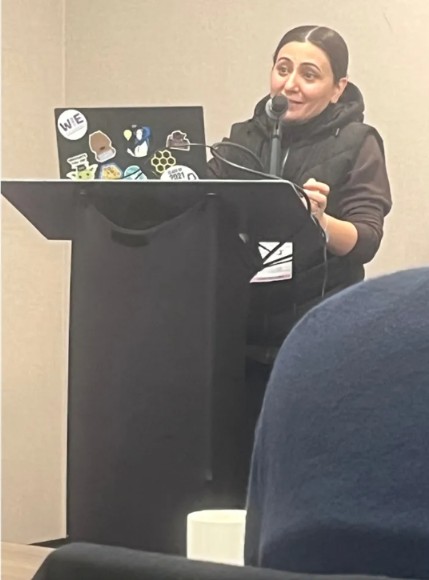
Robotics researcher Dr. Ilknur Umay said engineers using physical AI to implement automation must also understand the capabilities and limits of robots (source: Spencer Chin).

Artificial intelligence (AI) is accelerating advances in robotics, but sophisticated algorithms alone cannot guarantee reliable industrial automation. Engineers must understand the physical capabilities, limitations, and behavior of robots to translate AI-driven intelligence into practical manufacturing applications, tells Design News.

At ADM Montréal 2026, independent robotics researcher Dr. Ilknur Umay, formerly of Kuka Robotics, discussed the challenges of transforming physical AI into dependable industrial autonomy. Her presentation emphasized the gap between impressive robotic demonstrations and systems capable of operating consistently in production environments.

Although robots are learning increasingly complex tasks, factories often struggle to deploy these capabilities reliably. Real-world conditions introduce uncertainties involving material stiffness, object handling, visual interpretation, and physical contact. Fragile grasps, unexpected part movements, and ambiguous sensor information can disrupt operations, even when AI models correctly interpret their surroundings.

Umay emphasized that reliable robotic behavior requires more than visual recognition and language-based reasoning. Robots also need accurate force information, appropriate task instructions, and an understanding of physical constraints.

A robot may perform individual repetitive tasks successfully but struggle when circumstances change or additional decisions become necessary. Addressing these limitations requires connecting high-level reasoning with executable physical actions.

Umay advocates an integrated approach that combines symbolic task planning with spatial awareness and robot-specific constraints. Such systems must continuously monitor execution, process feedback, and adjust their actions when unexpected conditions arise.

For example, when a component behaves differently than expected or a safety concern emerges, the robot should identify an alternative action that remains physically feasible and safe.

Execution monitoring, feedback mechanisms, and recovery strategies therefore become essential elements of industrial autonomy. These capabilities help robots respond to changing conditions rather than simply following predetermined instructions.

As factories accelerate automation, Umay argues that engineering teams must prioritize dependable operation over demonstrations of AI capabilities. The central challenge is developing robotic systems that can consistently translate intelligent decisions into safe, repeatable physical actions.

AI-Powered Drawing Checklists Improve Construction Document Quality

Source: Pirros.
Source: Pirros.


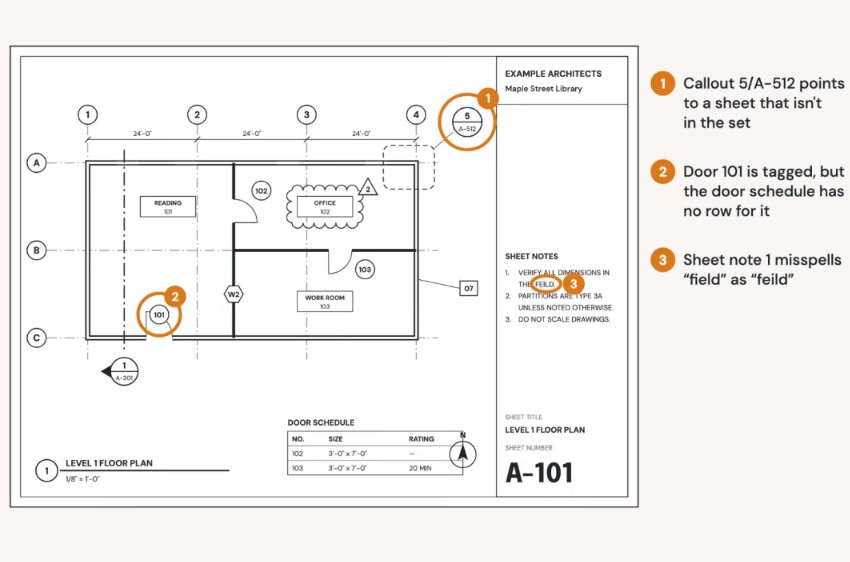
Construction drawing errors can lead to costly revisions, project delays, and coordination problems. A structured quality assurance and quality control (QA/QC) process helps architecture and engineering firms identify inconsistencies before issuing drawing sets. Pirros outlines a systematic approach that combines standardized checklists with artificial intelligence (AI) to improve drawing accuracy and review efficiency.

The process begins by freezing a dated drawing set, assigning reviewers, and examining drawings by series. Each sheet must be checked for accurate title blocks, revision information, references, scales, annotations, spelling, and compliance with company drafting standards.

Additional checks address discipline-specific requirements. General sheets must contain accurate building code information, while floor plans should align with structural drawings and schedules. Elevations, sections, and details require consistent dimensions, materials, and references. Coordination reviews verify that architectural, structural, mechanical, electrical, and plumbing systems agree.

AI can automate repetitive checks, including identifying missing references, inconsistent annotations, outdated code requirements, and discrepancies between drawings and specifications. However, decisions involving design intent, construction feasibility, and final approval remain the responsibility of qualified professionals.

Pirros offers an AI-powered Quality Management System that reviews drawing sets against selected building codes, company standards, specifications, and consultant documents. The platform identifies potential issues, provides supporting code references, assigns severity levels, and allows reviewers to document decisions.

At Number TEN Architectural Group, the system reportedly identified missing requirements involving sloped glazing and safety glass before a drawing set was issued for bidding.

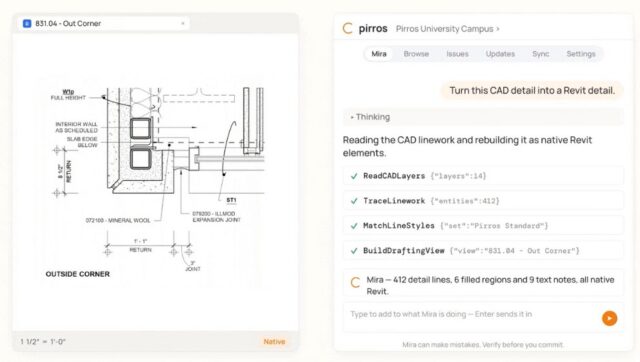
Pirros also offers Mira, an AI agent for Autodesk Revit that checks drawing views against company templates, including line styles, dimensions, hatches, tags, and keynotes.

The article emphasizes that effective QA/QC requires consistent procedures throughout design development rather than last-minute reviews. Shared checklists, documented decisions, and AI-assisted verification can help firms reduce errors, improve accountability, and maintain construction documentation quality across projects.

0FansLike
0FollowersFollow
0SubscribersSubscribe
Google search engine

Recent Articles

Trending Now